The Wider arts sector
For getting involved in the wider arts sector, I decided to attend a short course that lasted over two weekends. This course was aimed for learning more about pattern cutting and was more of an introduction to pattern cutting. Aside from attending this course, I also attended two events in the fashion industry. These gave me more of a taste of going into the fashion industry and more of a feel of the industry. In this section, I will explore and evaluate my experiences when I attended these courses along with the two events.
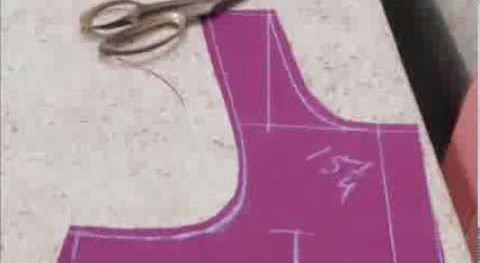
Pattern Cutting Introduction Two-Saturday Course:
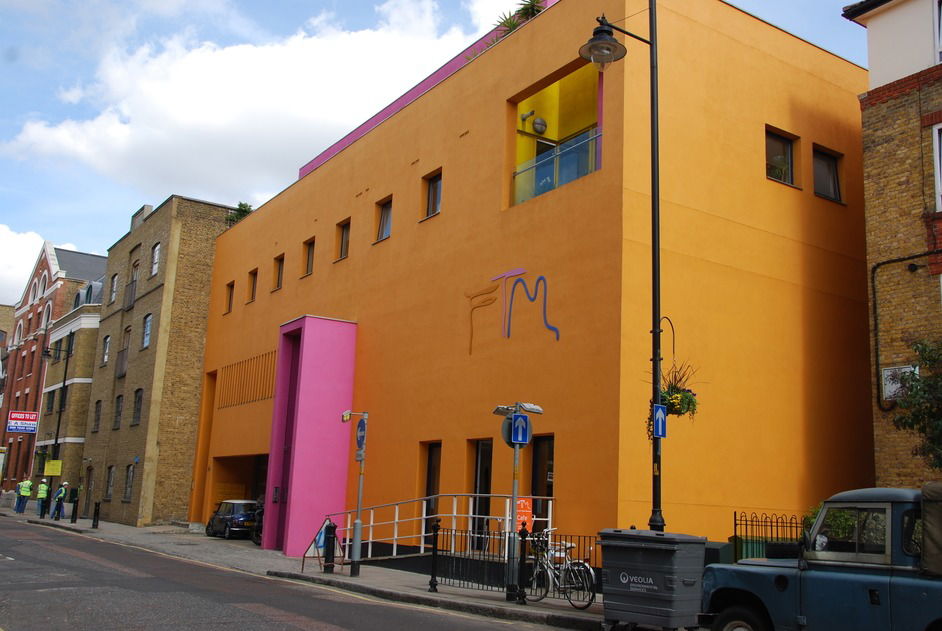
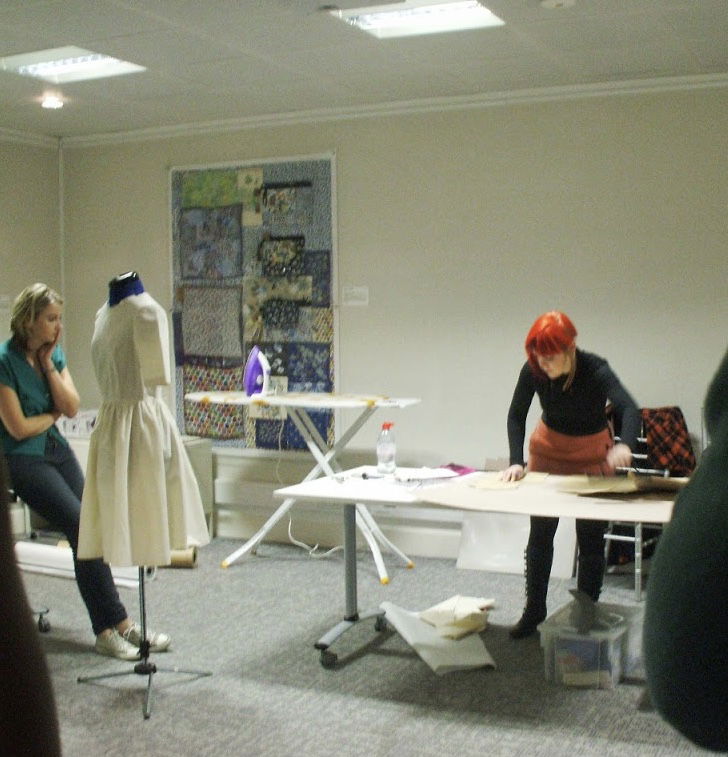
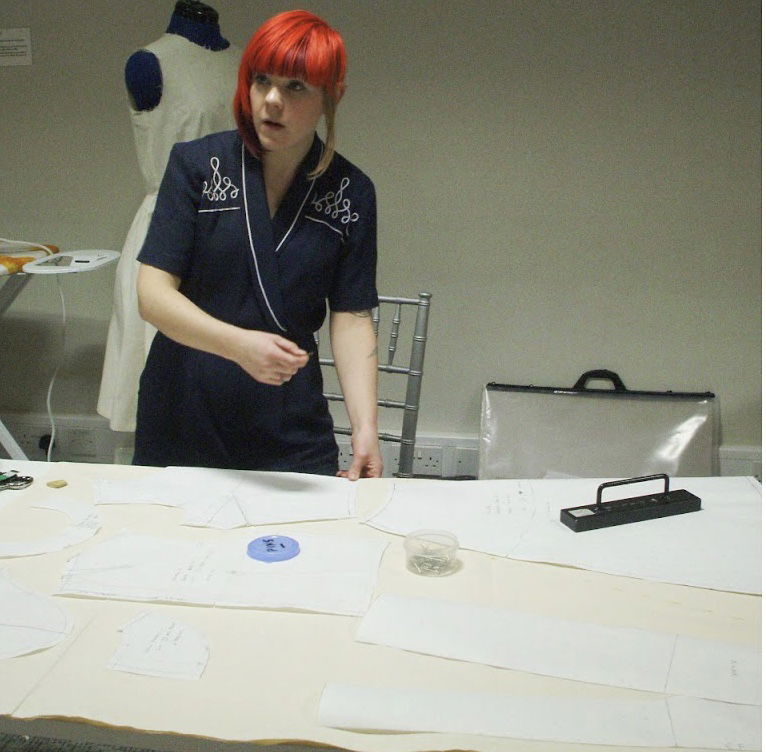
Firstly I attended the two weekend course. This course was held at the Fashion and Textiles Museum, on Saturday 23rd February 2019 and Saturday 2nd March, this course lasted all day from 10:45am till 4:30pm each of the two days. This course was led by the creative pattern maker Michelle Lewis, who is currently developing a sustainable fashion label. She has worked in London as a creative pattern cutter and designer for Zandra Rhodes and Kitty Joseph since the year 2009. She has also freelanced as a pattern cutter for influential London Design houses including Alexander McQueen, Nicole Farhi, Erdem and David Koma. Whilst doing this course and teaching at the Fashion and Textiles Museum part time, she also teaches part time at the London Metropolitan University. And since 2014, she has been working in the fashion industry in Bangkok in Thailand and has explored the textile and fashion traditions all over Thailand. She has returned back to London in January 2016 and since then has been inspired by her experiences and connections in Thailand and has began developing a sustainable and ethical clothing brand, which is mainly based on weaving and using natural dyes.
Before living and working in London, she completed a BA of Creative Arts in the University of Melbourne in 2003 and a Diploma of Fashion at RMIT University in 2006 in Melbourne in Australia. After she completed her studies, she launched her own fashion label called Ok Carnivale, that stocked several Australian specialist boutiques from 2006 till 2009.
She has worked as a pattern maker for London's most renown luxury fashion labels, such as Zandra Rhodes (as I have mentioned above), Alexander McQueen and Nicole Farhi. She has recently been employed internationally to develop patterns for Burberry.
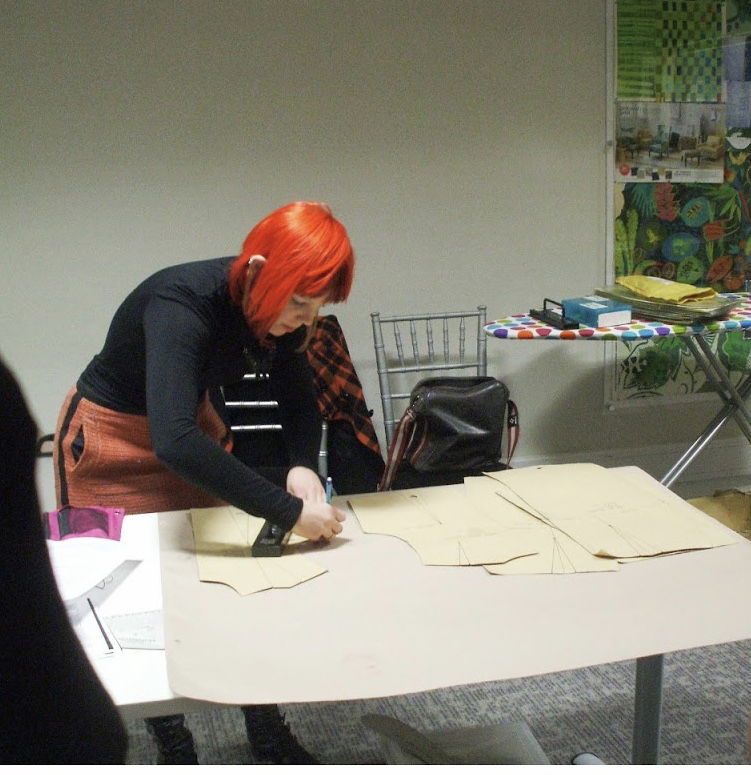
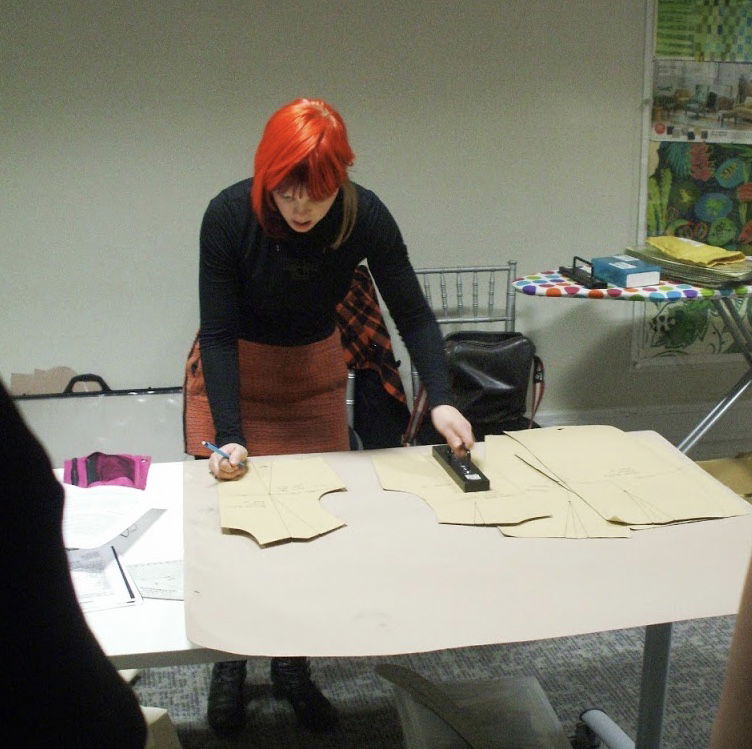
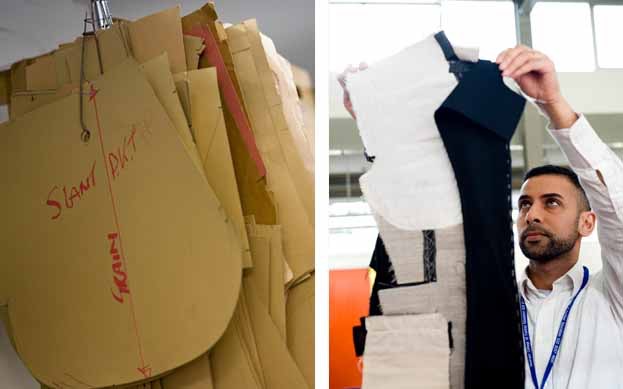
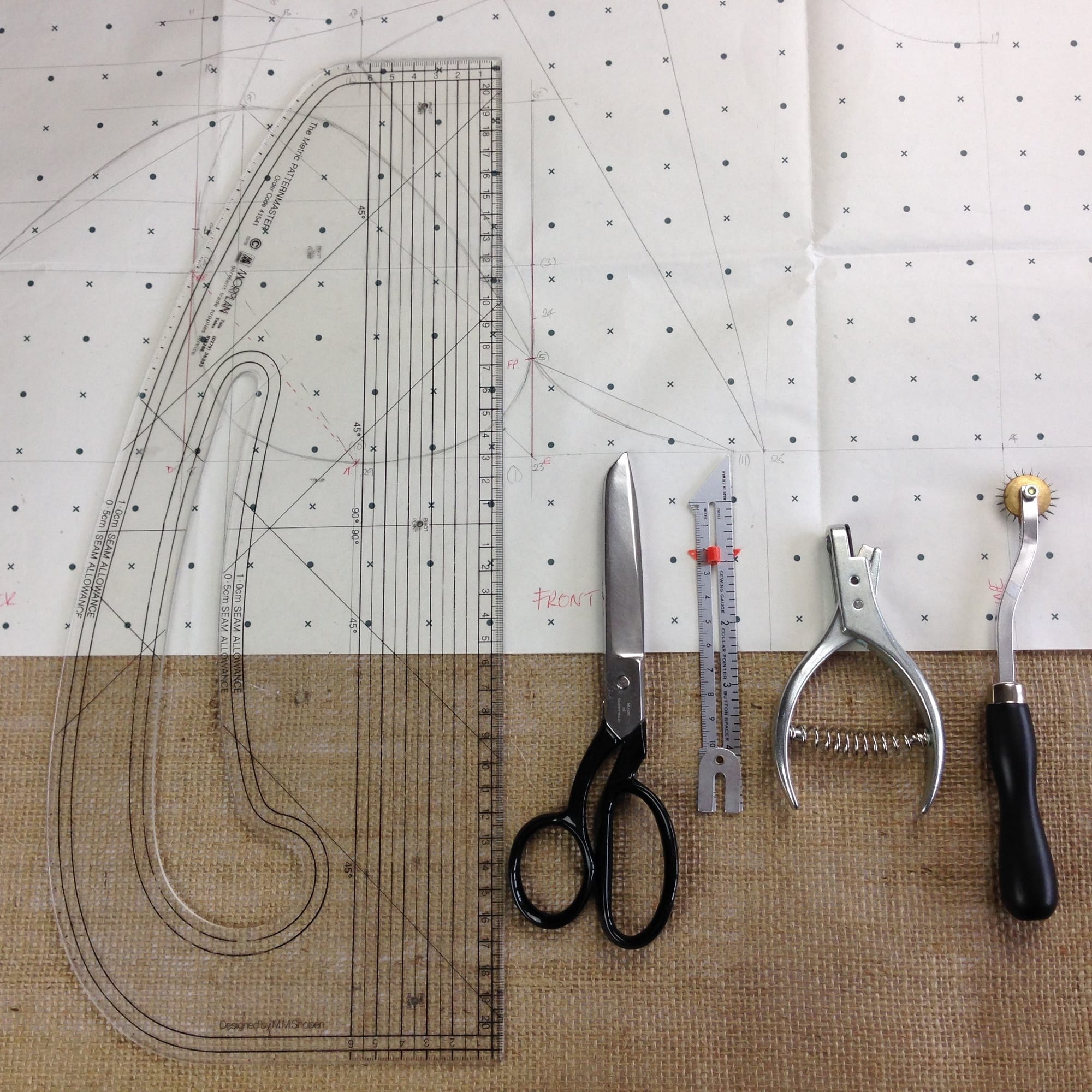
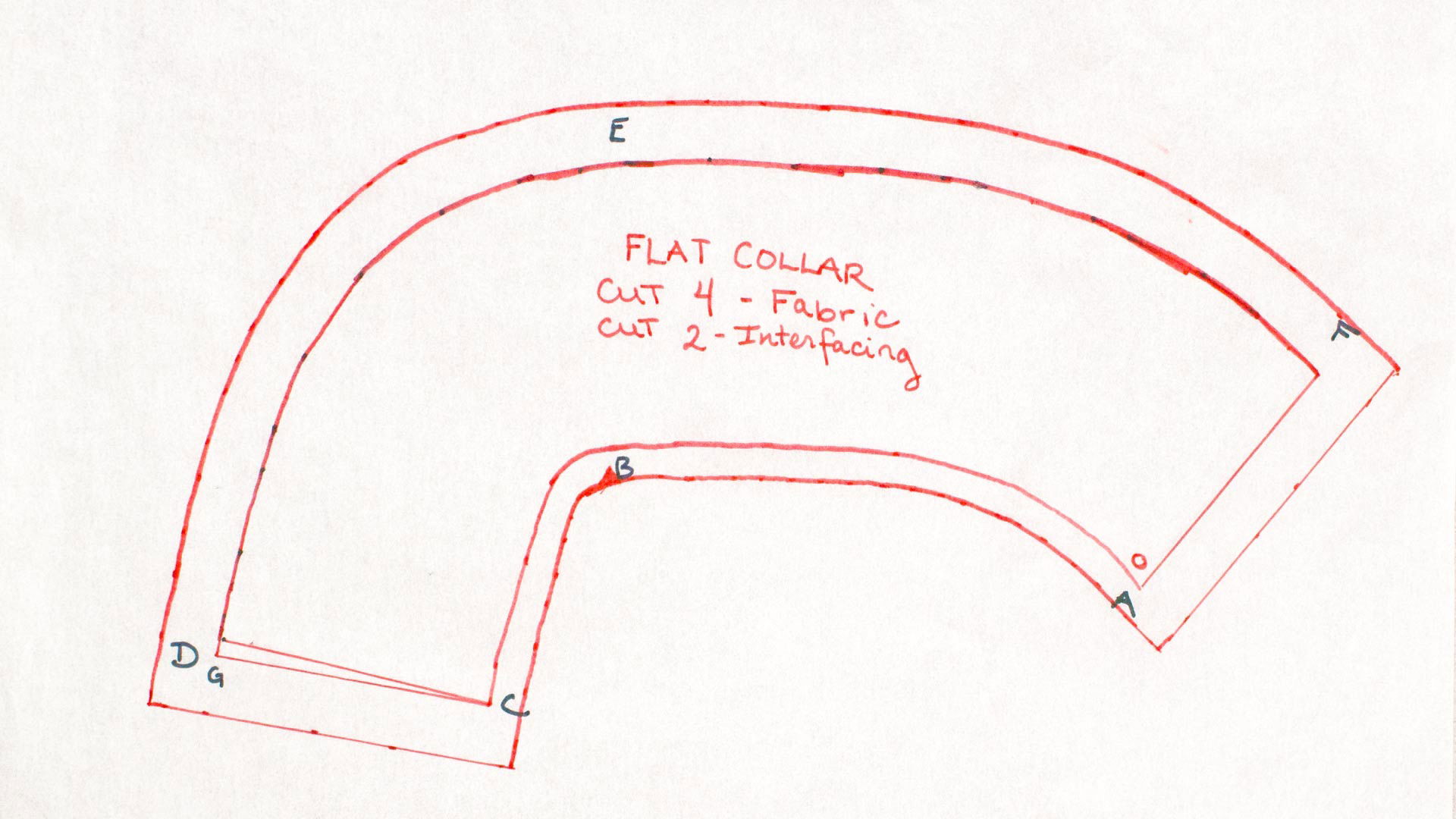
This course would be solely taught by Michelle Lewis but there would also be some helpers depending on numbers at the course. This course was meant to cover the basics and the basic rules of flat pattern cutting specifically. This two day course focused mainly on using fashion blocks to create womenswear garment components including simple sleeves and skirts. This process also included bodice dart manipulations, style lines and how to add fullness through gathers and pleats. We were also taught on how to use a block, identify balance lines, take measurements from the body and how to make basic fitting adjustments, dart manipulation, pivoting and slashing to create style lines and design components such as pleating and gathers, work with seam allowances and sew a toile, pattern terminology and how to use specialist equipment. These demonstrations in the course used size ten fashion blocks to make it all more inclusive by using an "average" size.
To attend this course, there was no need to have pattern cutting experience, which was very good for myself personally as I have not had much experience in making pattern pieces from scratch but I have used store bought pattern pieces before and I have experimented making my own pattern pieces but have not been taught professionally. Learning how to do pattern cutting is a key skill when trying to get in the fashion industry as it is key for someone to know how to sew but to be even more successful, it is key to learn how to do pattern cutting so that you can design your own designs and so it can be commercialised if you have made your own patterns. This is a subject matter in textiles which I wanted to learn more about and I have watched video tutorials on it but I did think that it would be a really good experience to get professional help along with this, so that I could also ask any questions to a professional in person. This course was advertised for beginners wanting to learn the principles as well as anyone who may have dressmaking experience but who now wants to experiment with their own patterns. The participants were also told to bring our own metric tape measure, fabric shears, paper shears, fine steel pins, fine pointed tracing wheel, HB pencils and felt tip pens. We were provided with calico and specialist equipment at the course.
The price of the whole course was £190 but included materials and exhibition entry. On the first day, we focused mainly on simple skirts and basic sewing techniques in the morning, to accommodate all the participants needs and so that Michelle Lewis could look at what skills level everyone was at, to then go from there and make sure that the next steps and activities were appropriate for everyone. There were about ten other people there, more or less, aside from me, and they were all university students but mainly older, so there was no one really my age. They had all done sewing before and we were all basically on the same level but of course there was slight differences between everyones skills naturally. The first few activities of the course that very first morning were again mainly so that Michelle Lewis could figure out everyones capabilities and what to do moving forward. And after these activities where we looked at A-Line skirt patterns and just recapping basic sewing techniques by hand and using the machine, we then moved on two looking more into dart manipulation and how to change the shape of a simple A-Line skirt to more body con and tight fitting or even to just have a different silhouette such as a fit and flare. This was really interesting to see in my opinion because you can have a few simple pattern pieces to form one type of skirt and then add lines for gathering and pleats and it changes the whole skirt. It really shows that by using these techniques, you can change a certain item of clothing to a completely different fit. I will definitely apply these techniques used to the next item of clothing I make. We then focused more on adding more shape usong gathering and pleats specifically and just continuously doing this for a few hours. We did have a break in between the start and lunch time just so that we could have a breather between the "topics". After this short five minute break, we then went straight on to looking at the same thing on gathering and pleats but except that instead of doing it on a skirt, we looked at doing it specifically on a top or bodice part. So it was more on how to give the top the form for a woman to wear and to adjust to all the curves of the body on the top half. This was more complex than the skirt by a lot as if there was a pleat on one side, it would have to be most likely repeated on the other side of the top too so it was a lot more complex to make sure that both sides were even and placed at the correct angles and areas. I did make a mistake at the very beginning where I draw the pleat lines too low down on the pattern piece paper, but as Michelle Lewis corrected, I definitely did learn from my mistakes and I asked her how could I know for next time where to place it. She then gave me some advice that there was a certain amount of centimetres that you had to take away from the top half of the top to almost direct you into where you should draw the pleat lines depending on what the size you were making the top was and depending on the size of the person going to wear your top was. This definitely helped as it was more of a one to one discussion and she helped me to do the correct thing using this technique. After this, there was a half an hour lunch break were we were recommended to stay in the museum and have either our packed lunch (if we had brought any) or buy something from the cafe downstairs, as they advised us that there was probably not enough time to leave and come back in time. So I went to the cafe and sat with a few of the university students and they told me about what courses they were doing which was super interesting to me as I again got to find out more about the universities from a students perspective so it would make me more aware when applying. After this lunch time, we then made our way back upstairs to where we started to learn more about seam allowances, this did not take us very long as everyone was very aware on what they were and how to incorporate them into our clothes and for what purpose. The seam allowance is just a couple of centimetres (about one or two centimetres) that you have to add on to your fabric so that the garment does not end up being too tight fitting because you used up the space to actually sew the panels together. So that is why the seam allowance is so important and all of us knew about it so we moved on from that mini topic really quickly after she gave us a few demonstrations. We then moved swiftly on to how to sew a toile. I had no idea what this was as I have never heard of this terminology before and a toile is basically a draft version of a garment. So essentially it is a practice run of your garment and is usually made from a cheaper fabric so that you can test the fit of a particular garment before cutting into your real fabric which tends to be more expensive. She also taught us that a toile can also be referred to as a muslin, so she just wanted us to be aware of this before moving forward. This was especially tricky and I honestly did find this technique very challenging and even a bit frustrating as it took a really long time to actually make it and then in the industry, the next step would be to see if there were any corrections that needed to be made and sometimes to even redo the toile itself before making the actual garment using your final fabric choice. However I learnt the importance of this and why it is actually used so much in the industry, especially in high couture fashion labels. As a whole, this process of sewing a toile (or muslin) takes a longer process obviously, but it saves the company money in the long run as no expensive fabric has to go to waste when experimenting on the fit and the smaller design flaws. This took up the majority of the afternoon and after doing this, we had a quick and short lesson on some pattern terminology. This was a really nice way of ending the day on a more relaxing note after all the work we had to do during this first day. After this section on learning about the pattern terminology, we were free to leave and the next lesson would be the following week. We learnt words such as armscye, which is the opening in a bodice where the sleeves are attached, so this is basically the word in pattern terminology for an armhole. Another word that stuck out to me and that I learnt that day was; "ease" and the "ease line". There are two different types of ease; the wearing ease and the designer ease. This will affect how tight or loose fitting a garment will end up being. The wearing ease is added to allow garments to move with the body. On the other hand, the designer ease is more about the designers preference on what the style of the garment will be. Certain types of garments such as woven garments, will need wearing ease to allow movement and for the person wearing it to be comfortable to be able to move in it. The easing line is a short and broken line with dots at either end which have an arrow to show which direction to mark the area to be eased. I have never heard of these specific pattern terminology before today so that was another really useful thing that I learnt on this first day of this course. However one thing I would have changed was that we could have maybe had the terminology lesson at the beginning so that we were fully aware of all the words that we were using during that duration of the first day without having to ask, instead of having it at the end. However it was a really nice end to the day and we could always apply these words to the next lesson either way. I left this first day with a lot of new found knowledge and techniques which I will definitely try incorporate in my next design pieces in the future.
The following weekend was a step up in difficulty from this first day, as we had to finish off all the topics that we had to get through in this weekend. We got in the next day of the course, the following Saturday, and we had to get straight on with the work, starting off with using fashion blocks again to create garment components such as simple sleeves with the measurements for a female body. This was fairly simple as we did this the last Saturday when we were making the bodice patterns. This was essentially the same process but even easier as sleeves do not require dart manipulations in the sense that bodices and top parts of the garments do to give the shape and structure, so this was a nice introduction "welcome back" activity. After doing this, we then focused on identifying balance lines. When Michelle Lewis introduced this topic I had no idea what was in store for us as I have never heard these terms. She explained what it was and the process of it, and explained that there were two main types of line balancing that meant two different things but that were both relevant to the fashion industry. The first meaning was essential to the total overall design of the garment. And in this meaning, there are three types of balance; the first being formal or symmetrical balance. And this is when two sides of a design are alike on either side of its vertical centre. And the balance in the use of colour is essential to get the best effect. The next type of balance is informal balance or asymmetrical balance, where the purpose of this is to use space, colour and a variety of shapes and components to produce this overall effect. The last type of balance is radial balance as we learnt, it is when the major parts of the garment design, radiates from the central part of the garment, creating almost a sunburst shape and effect. The next meaning of the line balance is in terms of production in the textiles industry. It is an assembly line made up of several work stations and at each station different processes are done. The key to this going effectively with no work pile ups between station is that the lines must be balanced, so hence why this is also known as the balance lines. So work must get through each workstation at the same time thereabouts to work properly and efficiently.
After learning about this, we then moved to a completely different topic on how to take more complex measurements from the body, and we covered this slightly in the previous weekend. And we also learnt how to make basic fitting adjustments through these measurements. This process is key to make tailor made outfits in the fashion industry, even more so in high couture rather than high fashion, as clothes are expected to be of the best quality in high couture whereas fast fashion is all about the speed that new collections come out at. We received so many tips about taking measurements from the body as this is the first initial step in making a garment, and if this goes wrong, then the rest of the processes needed to be done in order to make the garment will all go wrong. So she gave us lots of important tips and even gave us a handout of the importance of making the correct measurements and tips along with advice. Some of advice was even on how to stand the person who you were tailoring the clothes for, for example, the person being measured should stand up straight on both feet and their feet should be about fifteen centimetres apart from one another, this ensures the body is at its best posture so that in this way it is easier to collect all the measurements. She also gave tips on what the person should wear, for example, it is really important that the person being measured should wear tight, fitted clothes as if they were baggy clothes, this will give you the wrong measurements. However, wearing lingerie is better as it will leave no room for errors when taking the measurements. Then she went on to give tips on the tape measure, such as to keep it level and parallel to the ground at all times that you are making horizontal measurements. She then also said that if you are taking measurements of a person, that you should always stand on the right side of the person. These were among a few more tips that she gave us, which were definitely very useful to learn about. Then the last thing we looked at was more on dart manipulation and more terminology specific to this. We learnt what dart manipulation actually is, which is when you move darts around the pattern block to where ever you want, and this is done for both a better fit of the garment or because of the design and the preference of the designer as well. As this course was more specific to flat pattern making, we learnt about dart manipulation in terms of this specific area. So dart manipulation in flat pattern making basically lets you move a dart from its original area to a new area on the pattern. Moving a dart is designed by choosing a pivot point and shifting the dart to this new area. I learnt that this is useful in order to get a better fit on the garments and it changes the whole look of the garment. We also learnt more about darts themselves which are a feature on woven garments especially to make them fit the body better and are also used on knit patterns too, especially to give the garment made by these materials a form and moveable. There was someone who was not quite sure what a dart was so she asked Michelle Lewis, and we got a brief recap on what it meant, so darts are wedge shapes in a pattern that are used to control the fullness and to shape a garment to the body. She then gave specific examples of where they can be used, such as on the bodice of a garment and the purpose of the darts on a bodice is to shape the fabric around the curves of the bust. And these are mostly commonly positioned on the side of the bodice and also at the waist, but of course it is the designers choice on where to place them in their designs.
After learning and experimenting with pivoting and slashing techniques in pattern making and drawing and positioning darts on our pattern blocks to experiment with these new techniques that we learnt, it came to the end of the two weekend course. This course was so useful in finding out so much more about pattern making and cutting and I found it very helpful learning all the techniques and top tips from an industry expert. I thoroughly enjoyed the course and would have loved if maybe there was an additional day where the participants could use these techniques and maybe even design and make a garment using some of these key techniques under the guidance and expertise of Michelle Lewis in case we needed any help applying the knowledge we learnt at the course. Overall, I really recommend this course and the teacher was amazing.
Comments from practitioner leading the course:
After attending the course, I emailed the course leader; Michelle Lewis, to get a few comments about my work and progress overall in the duration of the two weekend course. I gave her a few points on where I wanted some feedback on specifically such as for example, I asked her for feedback on how well she thought I did on the course looking specifically at learning new skills. After sending her email, she replied a while later and gave me a few comments which I will attach below:
"You were very hard working and work ethic was good especially when tackling new skills."
"Occasionally you had a few gaps in your knowledge of the fashion industry but were quick to ask inquisitively to better your knowledge."
"I was very impressed with your work, you always tried to complete all the tasks to the best of your abilities."
"Well done on completing the course!"
Reflection on the weekend course:
Looking at the course, I learnt so many new techniques, which I have gone in depth on above. I also definitely feel as if I was out of my comfortable zone in this course, which definitely pushed me with the textiles elements in the course along with building my communication skills. Being out of my comfort zone was definitely a good thing, as I pushed myself to my full capabilities at the moment to power through all the activities in the course so that I could learn as much as I could possible do from the course. From this course I gained a lot of knowledge, skills and techniques which I will definitely incorporate in my next designs and work. It was a very useful experience and I am very glad I chose to do this to extend my knowledge on the fashion industry outside of what I already know.
Media and Fashion - Celebrating Diversity Event at City Hall:
Aside from attending this course, I also attended two events in the fashion industry.
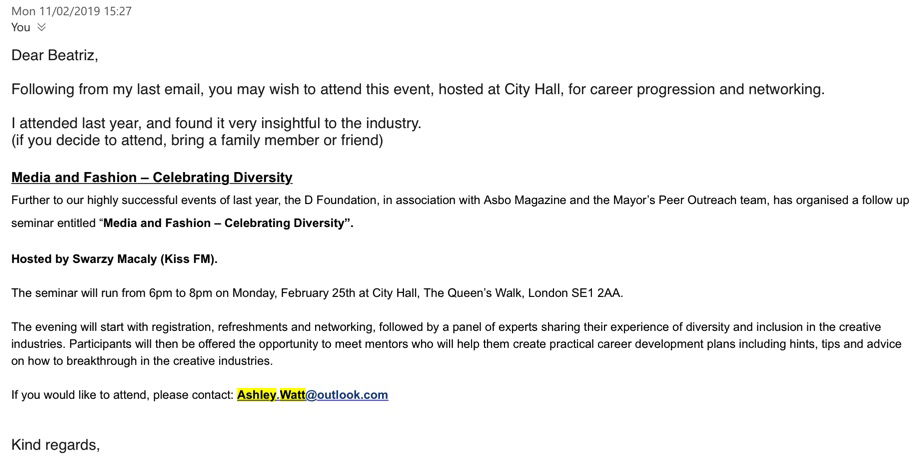

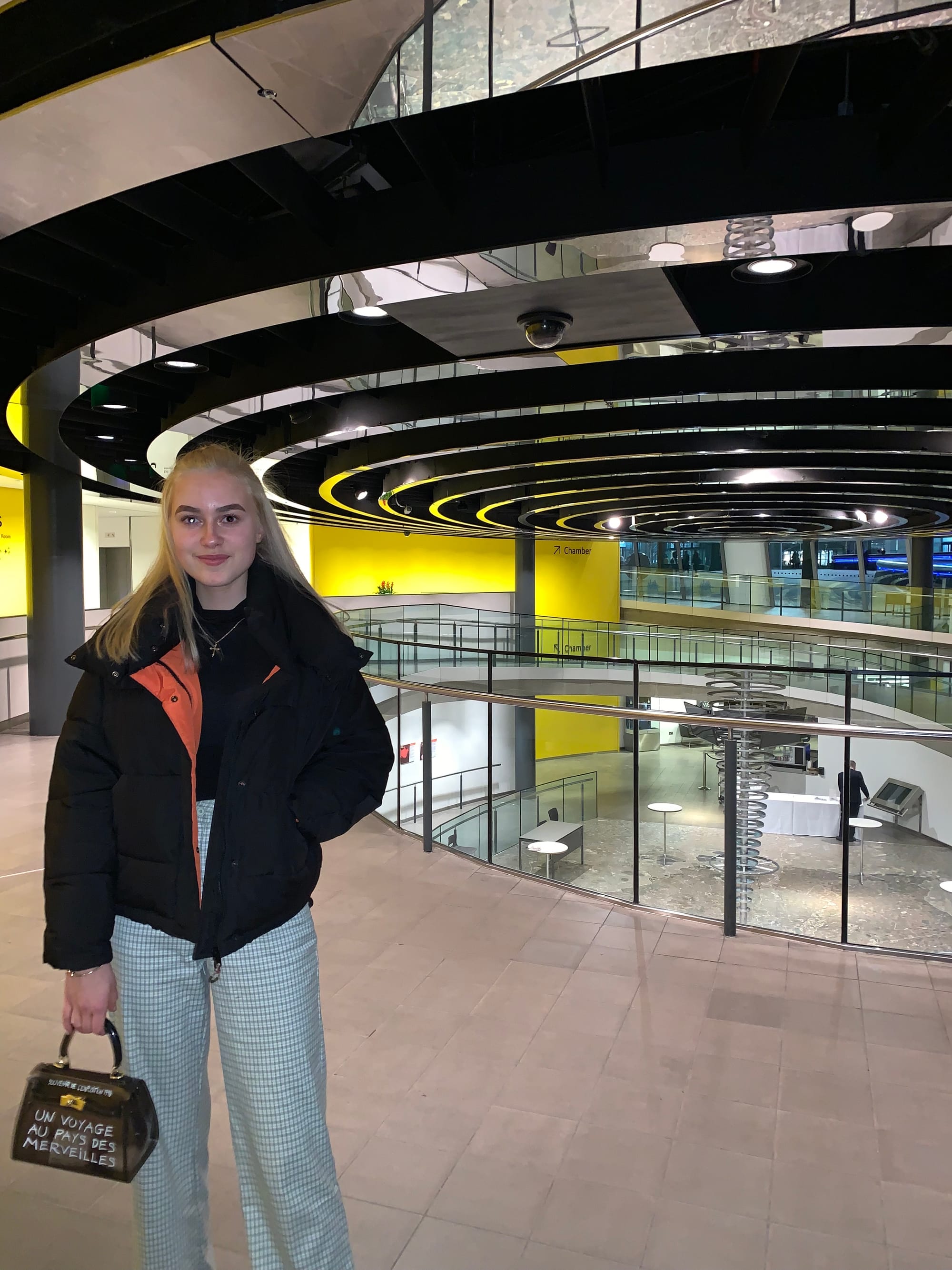
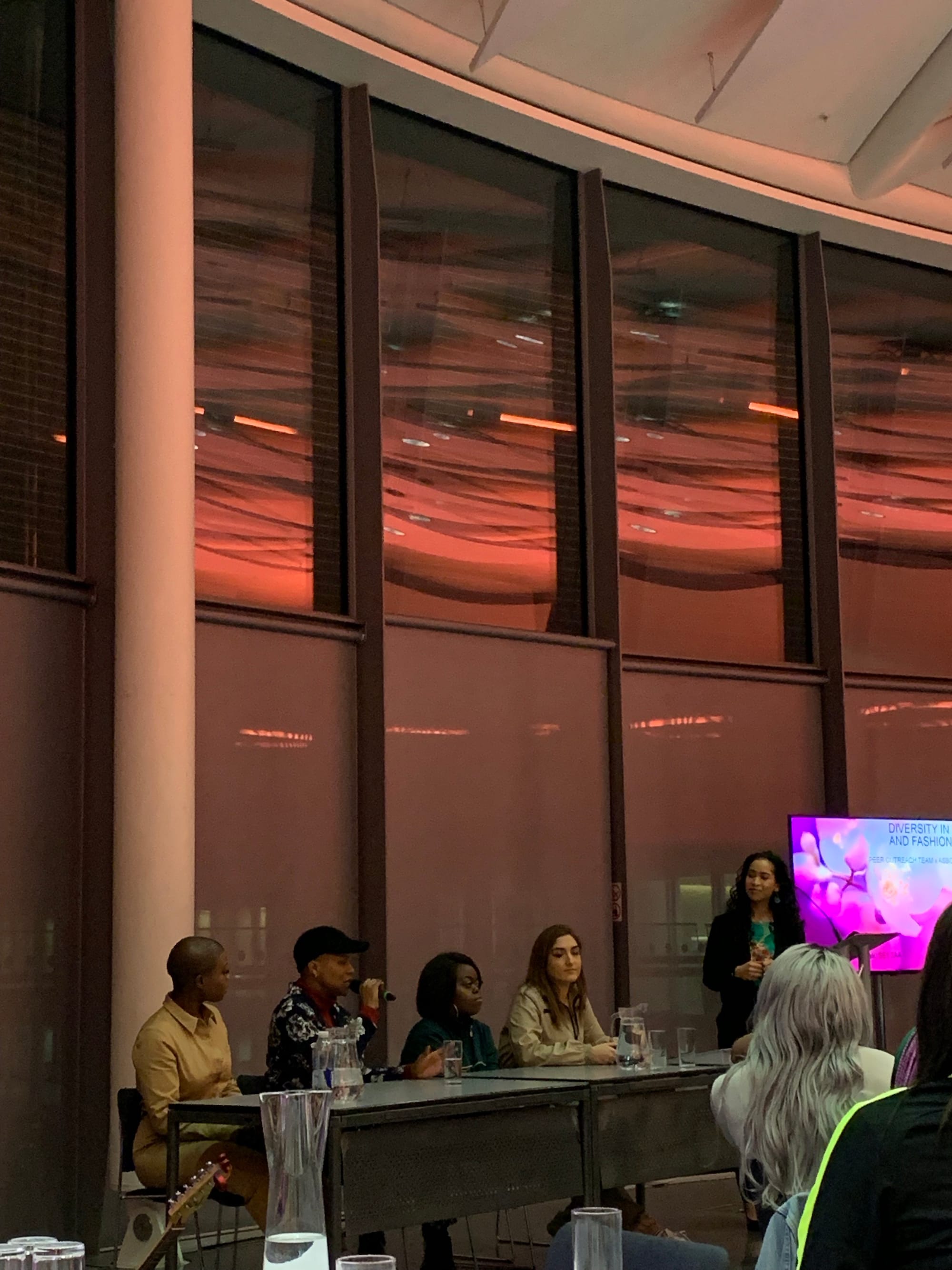
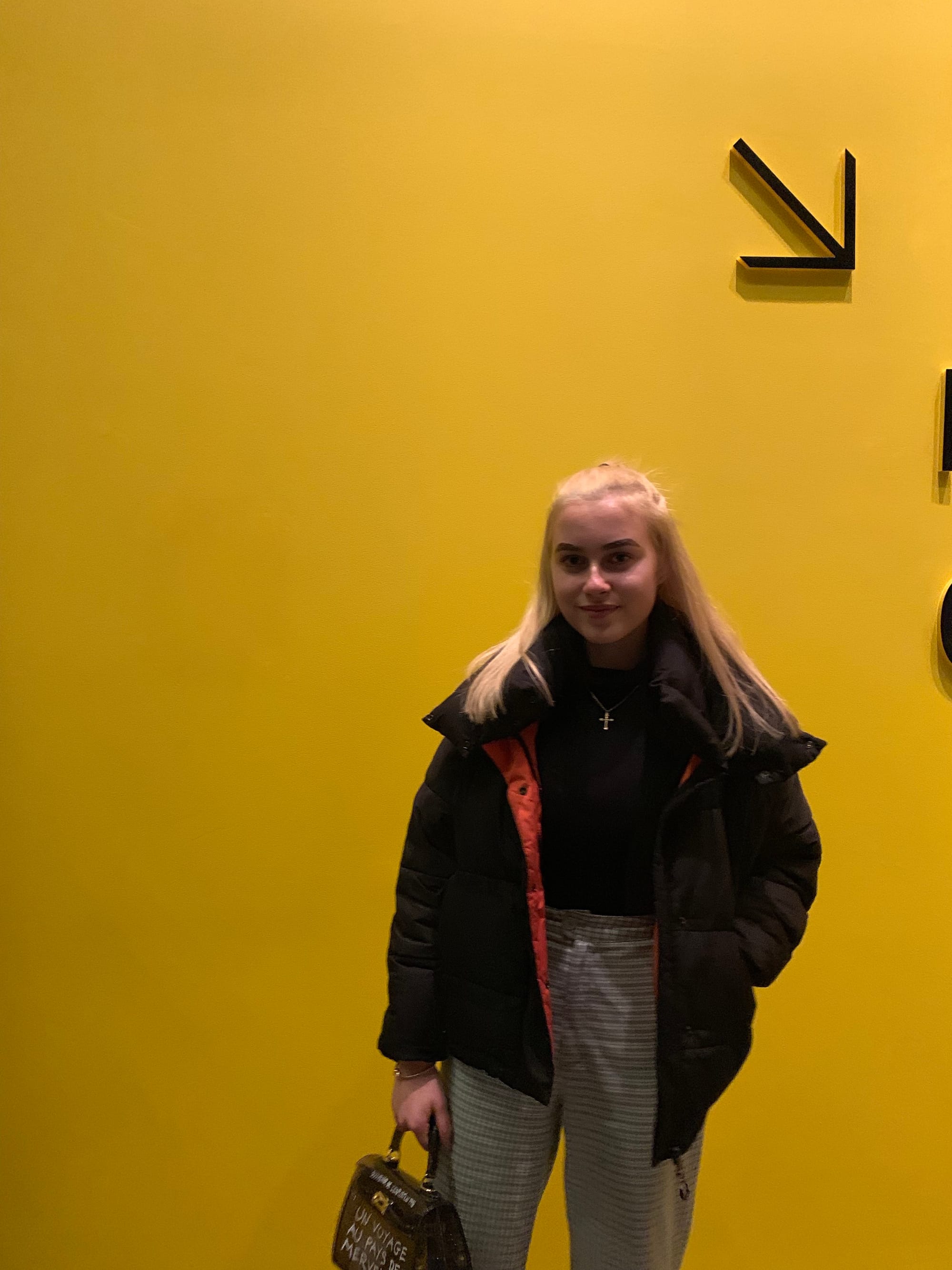
The first event was hosted at City Hall for career progression and networking. This event was also to give participants more of an insight in to the industry. The event was titled; "Media and Fashion - Celebrating Diversity." They also held this event last year which was highly successful, which I unfortunately did not attend as it seemed like an incredible opportunity. I was invited to attend this event from one of my contacts that I made through one of the workshops that I did at the V&A Museum. This event was invitational only so I was very fortunate and grateful to have been invited by this contact. The event was organised with the D Foundation, in association with Asbo Magazine and the Mayor's Peer Outreach Team. It has been organised as a follow up seminar to the highly successful event the year before. This event was hosted by Swarzy Macaly who is a radio host at Kiss FM Radio. This seminar ran from 6pm till 8pm on Monday 25th February at City Hall, in the Queen's Walk in London SE1 2AA. The evening started with registration at the reception of city hall, followed by refreshments and networking. This when then followed by a panel of experts sharing their experience in diversity and inclusion in the creative industries. After this, participants like myself were offered the opportunity to meet mentors who will help them create practical career development plans including hints, tips and advice on how to breakthrough in the creative industries.
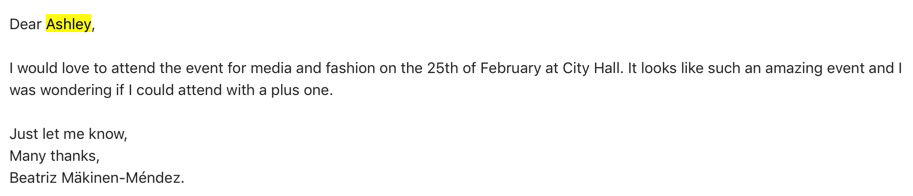
The screenshots above are of emails exchanged from myself, the organiser of the event and the contact I have who invited me. I made this contact through a workshop course in the V&A and she very kindly emailed me inviting me to attend. After receiving the email, I was very thankful and sent an email in reply thanking for the opportunity and the invitation and that I would be attending. I then emailed the email address that was written in the original email sent to me, to RSVP and confirm my place to attend. On the second image above, that is a screenshot of my email to the event organiser asking to attend and the following screenshot is of the event organiser's response.
I found this event incredibly helpful and an insight into the world of fashion.
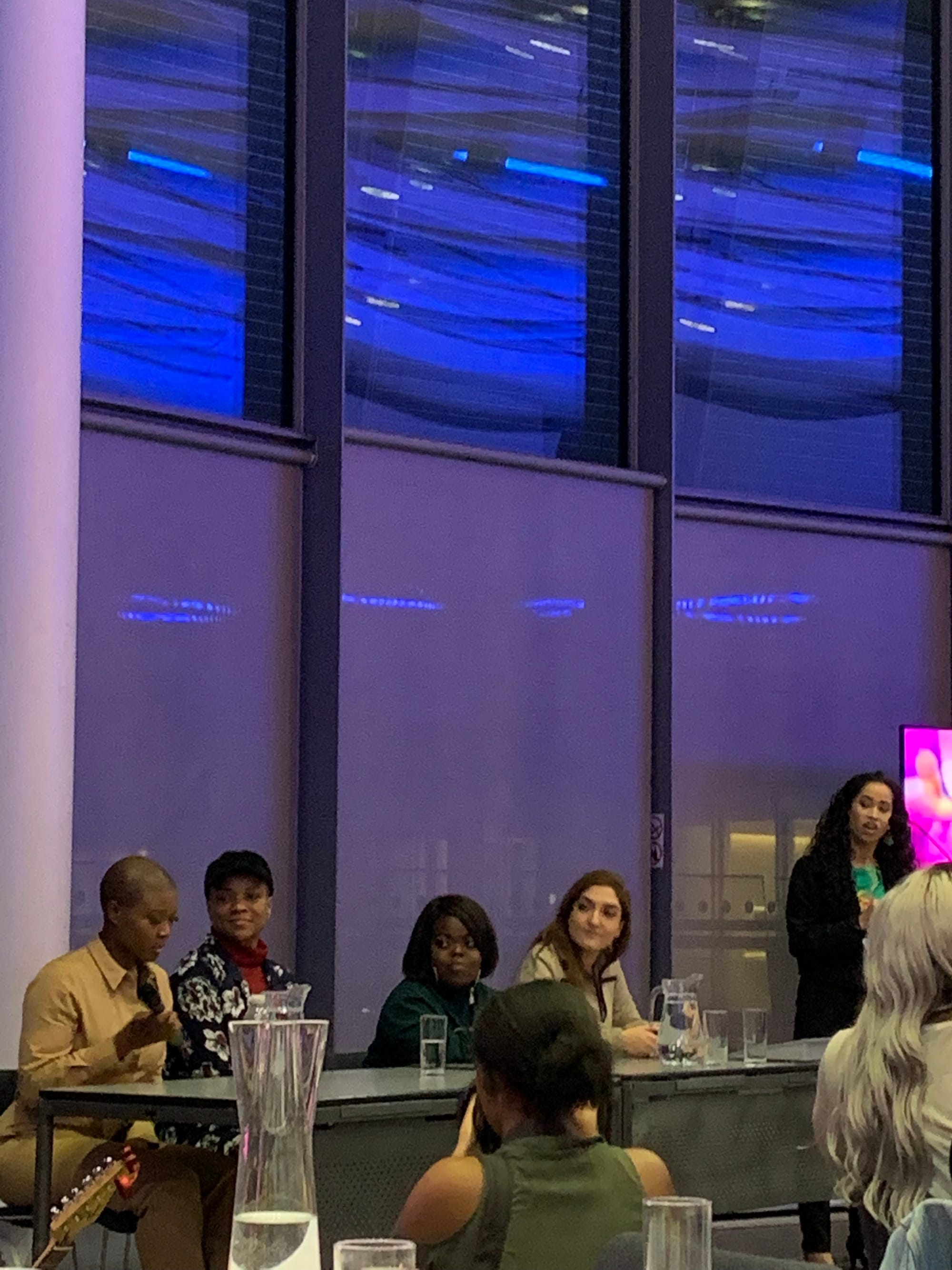
When I arrived to City Hall for the event on the day, the first thing we had to do was to get registered by the people at the door and have security checks. After this, we were allowed to enter into the event hall and into the building. We were then ushered into the correct event room. There was a time period from about 6pm (which is when I had arrived) to 6:30pm where the sole purpose was to get everyone on the guest list registered and when you were in the event hall, there was a chance to grab nibbles, snacks and refreshments. There were tables and chairs set out, there was a whole row of tables at the back full of delicacies and refreshments. There was also a table with microphones set up for the panel, and a main staging area where there was a microphone and stand. After the registration had been all done, the event commenced and the first thing that happened was an introduction and a general housekeeping announcement from the host, Swarzy Macaly, who as mentioned before, is the host of Kiss FM. She was a brilliant host and really knew what she was doing, she was so confident and made the event really enjoyable. After her introduction, where she introduced herself and other members of staff working, she also outlined the timings of the event and what the seminar agenda was for that evening. This was then followed by a performance from a lady called Malunga. Malunga is a singer/songwriter and has written her own original songs (two of which she performed yesterday for us) and they were really well performed, sung and written. She also told us that her songs are available to listen on all major streaming sites such as Spotify, Apple Music/iTunes and Soundcloud. This was a really enjoyable performance as she also really got the audience involved in her performance whether it was getting everyone to sing her chorus at some point to even getting people to clicking or clapped to the song. After this performance, there was a panel talk and Q&A session for about half an hour. There were four women on the panel and then Swarzy lead the questions for them. The four panellists were called; Natalie Worgs, Fatima Timbo, Maria and Obwawe. These four women were from different sides of the fashion industry and doing completely different things in the same industry. I thought this was really interesting and really good to see how different the jobs can be in being in the same industry. Natalie Worgs is a fashion facilitator, events organiser, stylist and photographer. It was really refreshing to see that even if you go down the route of fashion and do a very specific degree or course whether in university or as an apprentice (or even down another route to secure a qualification) that this does not mean in any way that you will do the same exact thing for your whole career and that you can always branch into different aspects of the creative industry. She explained about herself a bit more in detail at the beginning, when the host; Swarzy, asked all the panellists to explain a bit more about their careers and what they do now along with how they started off. She explained how she went to university to study a marketing course which did cover editorials and more fashion related content, but that it was more aimed and focused on the marketing and advertising industry. After doing this, she went to secure a job as a freelance visual merchandiser which again was what she did go to university to study so she did know quite a bit about the industry already.This was her first job and from there she went on to work behind the scenes in fashion and used her industry expertise, knowledge and experiences from her work over the years to help and support emerging fashion designers, brands and labels. Currently, she works as a freelance fashion facilitator and consultant, and also has founded both Fvshion Dvting and Girls About Peckham. Fvshion Dvting is more of a blog and movement and a business for her love for styling and photography. Most of this has gone on to their own public instagram site where she posts pictures from when she has styled garments and outfits along with accessories, and also about their purpose. It is mainly focused on the images that she has styled and actually directed along with photographed herself. Her other business venture; Girls About Peckham is also more of a blog initiative, which she has posts all the images on to her instagram on @girlsaboutpeckham and there's a hashtag that she came up with #girlsaboutpeckham. The purpose of this initiative, is about the girls and teenagers and women growing up in Peckham and about their identity, style, power and about the environment. Natalie Worgs styled all the photos again and she takes the photographs and leads the movement campaign. She finds people in Peckham who she thinks has a really unique style or just someone that she believes could work on the campaign, and asks them about it along with telling them more about what type of things they would do if they agreed to work with her. If the people agree to do it, she finds about them as an individual and their background, then she experiments with style and looks with photoshoots and posts it on the site. It was really interesting how she built a platform for herself not just once but twice and how she uses it to empower others who don't have a platform like herself and to make as many people feel like they can express what they think and that their voices are heard. More in the panel, she talked more about social media itself and how it can be a powerful business tool but there is such a harsh light on it by many of the general public and how she wants to change it to be in a more empowering and positive light because she did even say that without social media sites such as instagram, she doesn't believe that she could have built two successful labels without the attention that she received from her followers. The next panellist, was a lady called Fatima Timbo, who is a social media influencer, model and YouTuber, along with working in fashion. She first started off as a finance trainee but then moved to work in the creative industry as she felt that it was her passion and that it was really what she wanted to do with her life. Fatima shared her struggles with achondroplasia, which is a bone growth condition that causes disproportionate dwarfism and how impacted her entry into the creative industry. She said that it was important for the industry to become more acceptance of people who are different and more acceptance on disabilities without judgement. She still feels that some fashion organisations are solely looking for a more white based and non disabled people to work for them, but since her entrance in the creative industry scene, she has been confident in herself and spoke out about these issues so she definitely thinks that the industry has changed in the few years that she has worked in it to become slightly more tolerable to her as a black, disabled woman. She has also taken to online sites such as youtube and instagram to share her story and to try to empower other disabled women in particular, but to anyone who is slightly different to be more confident in yourself and to show that she has become so successful and that everyone else can do what she's done too. Her message was very moving and it was so interesting to hear how her experiences and herself as a person has changed so much over the last couple of years. The next panellist was called Maria, who is also a stylist and designer, however she did say that she wanted to open up a new business venture in the creative industry and open up a new designer label. She has her own small boutique open in central London and wants to expand this label while also opening a new business venture. She explained to us when answering the first question that the host asked, about finding more about what her career has been about and what she has done so far in the industry. She did an internship in fashion in a small boutique and since then has carried on with the boutique and then went on to do an accounting and finance course and then opened up her own label boutique. This was really interesting to see as it showed that to get in the fashion or creative industry, you do not always have to go in a more traditional route and have to go to university, and that you can actually go through an internship or apprenticeship. It showed me that there are more options to get into this industry. The last panellist was another lady called Obwawe, who again was more in the fashion industry rather than media. She explained how she went through the more "traditional" route by going to university and studying a finance course again but with fashion on the side. However she soon realised her passion for fashion during the side course and realised that she wanted to dedicate her career or at least the start of her career in fashion, so she went on to do a mini internship after university to gain some experience and she did admit that she had to do a lot of free jobs at the start to gain the experience that she needed to secure herself a job in a really competitive industry. She then received a counter question from the host Swarzy, to ask her when did she stop doing free jobs and start asking or looking for paid jobs. She then answered that there was a point that she got to where she realised that she did have the passion, the drive and the sufficient amount of experience so then eventually she started to look for proper paid jobs. This lead to what she called the "real start of her career". There were a few more questions asked by the host before opening questions up to the floor and getting audience members to ask the panellists questions. There were only about three questions asked in total because each of the four panellists gave really long answers to each of these questions so it took a while to get through, but it was really interesting to see how each panellist answered and responded to each question differently. The first question was about what their dreams were for the future in terms of their careers in the creative industry. Most of them answered how they want to gain more of a following in their label or boutiques and went on to how they will go about doing so and actually achieving this, to show the audience that if you have a dream, and you really want to achieve it, that it takes a lot of planning, perseverance and commitment to follow through to actually achieve the "dream" that you want for yourself. I thought that this was a really helpful way to look at this and that it was useful to hear this point of view. They did each say their own personal plans moving forward and that they will either work more and do more styling and photoshoots and create more content to upload and post more frequently for example. The next question was about what their proudest moment of their careers were. Fatima who was the model and social media influencer, said that her proudest moment was after attending so many casting calls, that she finally got signed by a modelling agency. She said that it took a lot in her to actually go every time to all these modelling cast calls and to not give up hope on getting a call back to model. She also said that after going viral in a video on holiday, she also said that that experience was also one of her proudest in her career. In the video, she is on holiday in her home town and was dancing next to the pool while her friend filmed her as a joke. She was not going to post this video on to her instagram as she felt that she looked "fat" and was not wearing any makeup so she felt insecure, however she still posted the video and it went viral basically overnight, and she received so many comments about how people were inspired by the video and it showed that people with a growth disability can still be "beautiful" as many people disagree about this in our society. This really was inspirational and I learnt that even the work or content that you think is the worst might be considered the best by your followers. It does not directly link to fashion per se, but it inspired me to also consider designing more inclusive clothes for all women of different heights and body shapes. There is a really big market of targeting clothes to all bodies to be more diverse in fashion in current day, but what is not seen very often is actual diversity. For example, out of all the fashion shows I have attended, there has only been one occasion that I have seen a disabled person walking on the runway. This shows that fashion still can be more diverse with the clothing itself and who labels portray to be their target market. The final question before the end of the Q&A was about what their biggest disappointments were or biggest regrets in the industry. They each went on to answer the question and it was so refreshing to see what they all thought looking back on their mistakes or regrets in the fashion or media industry. The first regret was about starting "too late" but she then went on to say that it is never too late to start on something, whether a new career path or switching jobs or even taking up a new hobby, whatever your age, but she did regret not doing the work experience or internships when she was younger as she felt as if this held her back and made her have to do a lot of free and unpaid jobs to catch up her lack of experience once she got out of university. She strongly encouraged the audience members who wanted to go into this industry or any other industry to get their work experience and internships done before university or apprenticeships as she felt that there is not always the time to do it during your course. Another regret was about not being confident enough during a styling photoshoot, as the panelist explained that she had been an assistant during a styling photoshoot right at the start of her career and she had styled all the outfits in the photoshoot, and when asked when she got back to work the next day who had been in charge of styling, she allowed the head of the photoshoot to take the credit instead of her, and the individual who actually stole her credit about doing the work, actually got promoted significantly in her job. Since then, the panellist admitted that she had regretted it for a long time regretting all the benefits she could have reaped from this promotion and how much she would have loved the work and doing it. But she did admit that she also over time, has gotten over it and took it as a learning curve and that she learnt to be more confident and to always take credit for her work.
After the panel talk and Q&A, there was another performance for the audience. The performance was from a girl who was actually twelve years old and who was really successful in what she was doing. Her performing name was "Diamond" and she had written a couple of songs herself, went to get them produced with a label who had her work through when she uploaded her songs on Soundcloud. Her songs are now also out on iTunes and Spotify to stream. It was unbelievable to see the amount of success this young singer had and everyone was in awe with her songs and also with the fact that she was only twelve. She was.a great performer and she performed two of her own original songs which were really good. After this performance, it was around 7:30pm and it was the time for the breakout session to meet the mentors. One of the two event organisers, Andrew, went around before everyone was allowed to go off to network, to explain who the mentors were and what they were doing in their careers. This was helpful to actually pinpoint who the mentors actually were and for me to see who I was more likely to go to considering there was a finite amount of time to network before the event was over. There were about ten mentors in total and there was about a bit less than two hundred guests so it was quite hard to secure a chance to go network with one of the mentors. However as soon as Andrew had introduced everyone and said that everyone was free to start networking, I went straight to talk to one of the mentors who worked in Asbo Magazine, this was the magazine that was actually sponsoring the event. I went to him to find out more about fashion journalism and to find out more about how the magazine works and to find out more about how he got into fashion. He originally went to university to study finance (much like some of the panellists at the event) and then discovered and went into the fashion industry by "accident" as he said. However he said that he does not regret ever joining the fashion or media industry as he says he absolutely loves his work. I also asked more about fashion journalism as I want to keep my options open for the future so I wanted to know more about what they do and what it was like to work at Asbo Magazine. He gave me lots of advice and tips and he told me to definitely apply for an internship at Asbo Magazine and gave me the contact information. This network opportunity was really helpful as I got an opportunity to perhaps internship this summer with Asbo Magazine and contacts. Then I talked to yet another worker from the same Asbo Magazine, to find out about his work and more about the Magazine from a different perspective. I also received lots of different advice and contact information from this fashion journalist. Again he told me that I should apply for an internship at Asbo Magazine but he did say that it was highly competitive so he gave me some tips on the application process and also encouraged me to start a fashion blog to build a "platform" for myself, especially to get into the fashion industry and fashion journalism. This makes you stand out from the crowd especially in the application process to the Asbo Magazine and even university or apprenticeships. From talking to both these workers from Asbo Magazine, I received so many tips and pieces of advice which I found really helpful and will definitely listen to. The last person I had time to talk to was one of the panellists in fact, who was Natalie Worgs who again was the stylist and photographer, along with other jobs in the fashion industry. I talked to her about the panel and about her work, and she asked more about myself as well. I told her about the fashion show that I made a collection in for a few years in a row and I showed her a few pictures of the clothes. She told me she absolutely loved them and she told me that she especially loved one of the fur jackets I made. She asked me a few questions over the jacket and asked me what price I would sell the jacket for if I made it again for her in a different colour such as hot pink and a bigger size. I was really surprised that she wanted to buy a jacket from her and I was really taken aback so I did not know what to charge but I was super flattered over this. She then gave me her phone number and email address to contact her to arrange over the jacket as she said she was super obsessed. This was absolutely amazing to me as it is such an exciting opportunity and I am really happy that I did approach and talk to her. Without this event, I would not have gotten so big an opportunity at this stage. She also then asked me if I was interested in styling which I said that I was, as I love styling outfits and also again I am not sure what part or aspect of the fashion industry I really want to get into just as of yet, so again as I said before I want to keep my options open. She then asked if I was interested in doing a few bits of work experience from her; doing styling and helping out at photoshoots. I said that I would love to do this and she had already given me her contact information so she just told me to contact her and she would arrange the work experience. I was really pleased with the overall outcome of the event as I received so many tips and pieces of advice from so many industry experts along with being invited to doing work experience and also being asked to apply to do an internship at a fashion magazine. After this networking session, there was a closing speech from the host Swarzy and then a final closing poem/spoken piece from a lady called Mwila. This spoken piece was about diversity and equality which was very fitting as the whole event was about diversity in the fashion and media industry. Most of the event was about fashion so by ending on a speech about diversity really tied the event together. After this closing piece, the event was over and there was another opportunity to network more or to just go straight away. I stayed for a while to talk to some more people, not just to the mentors and panellists, but to also talk to some other participants, and I met a few university art and textiles students and I found out more about the courses they were doing and their thoughts on it in their personal perspectives as students. This was also really helpful for me to see different students thoughts on different art universities and the courses. After this, I did leave the event and by that time it was about 8:30pm. Overall I found the event super useful and gained so much from the event, I would definitely love to come to the next one if they organise it again next year and would definitely recommend to anyone interested in the industry to have come along.
Depop Fashion Styling and Buying Event:
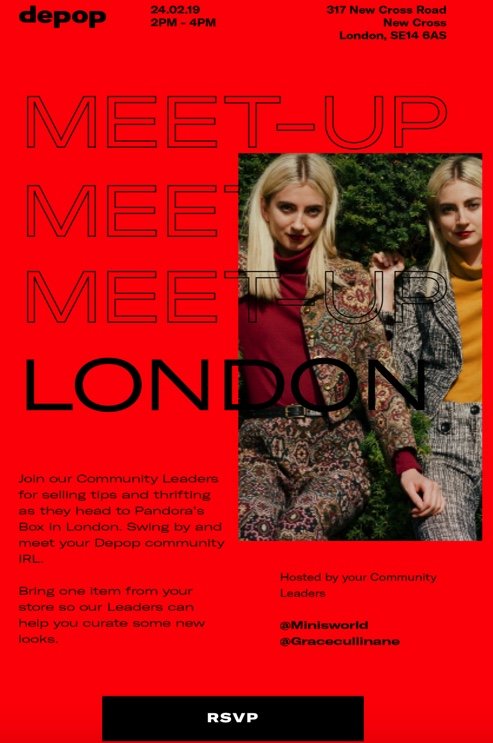
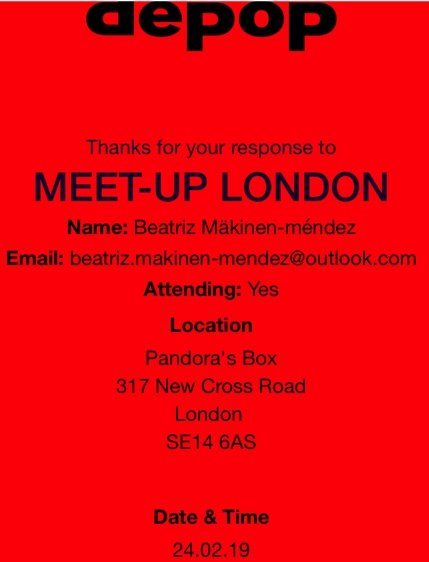
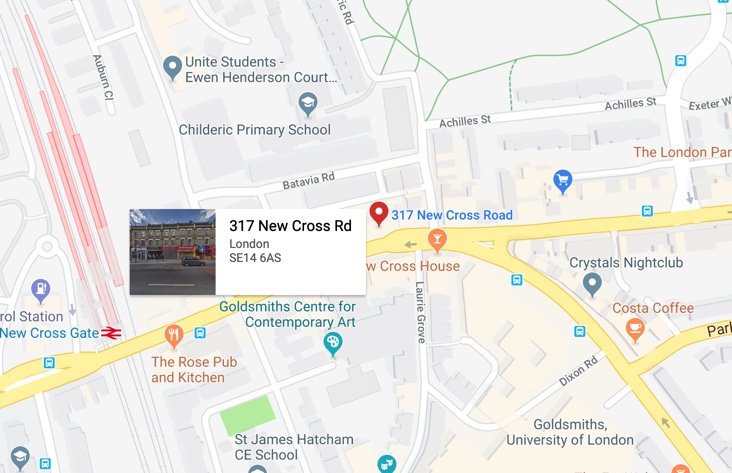
The final event that I attended was also invitational only through the app Depop, this again was very exciting and again I am incredibly grateful to have been invited to the event. This event was held on Sunday 24th of February 2019, from 2pm till 4pm at 317 New Cross Road. The main aim of this event was to join the community leaders of the app Depop and to get selling tips and more advice on how to sell your own handmade clothes on the site and how to be successful and draw attention from it. This event was held in Pandora's Box in London and there was also a styling session where you could bring something you made and they would help you to style it into an outfit as there would be an opportunity to also go thrifting and pick out some clothes to pair up with the look to give you more inspiration on what to pair with the piece of clothing you made, so when it came to taking pictures of the piece you made to sell it, you could show the diversity of what could be worn with it to attract more buyers to actually purchase it.
I was emailed about the opportunity straight from the app Depop team. Along with an image of the poster to advertise their event. It really caught my attention and I wanted to find out more about it so I read through it and thought that it could be an exciting opportunity to attend and find out more about selling clothes on the app, along with meeting two of the most handmade clothing sellers on the app in the area. I then RSVP to confirm my place, along with a plus one so that I could attend with one of my friends. I then received a confirmation email which confirmed my place to attend the event.
On the day, I arrived to the event location, which was really close to Goldsmiths Centre for Contemporary Art along with Goldsmiths, University of London. This was nice to pass through and see the Goldsmiths as it is somewhere where I am exploring the possibility of applying to attend for a fashion course at University level. So it was also nice to pass these places and get a feel of what the facilities hold from what you an see on the outside. When we reached the event, we got registered and ticked in to the guest list that the worker standing at the door was holding and after that we were free to enter the venue. At this point, the event organisers were mostly waiting for everyone to come in who was waiting to get ticked it and to settle down. Whilst we were waiting, we had an opportunity to get some refreshments from the side and to network and talk to some of the other people who attended the event. I talked to a couple of people, some were my age but most were slightly older, and I got to know more about what they sold on the app and how they balanced making and sewing with other commitments such as going to school and having a well balance of everything. I also learned more about what these people sold and had photos shown to me of their "online shop" on Depop. It was very exciting to see how everyone had very different clothes that they made and sold so it was also very interesting talking to them to find out more about their concepts and how they came up with these ideas. After talking for a bit, the event organiser came out on to the floor and announced if she could get everyones attention. She then went on to introduce the two community leaders as they came on to the floor. The community leaders explained themselves and what they did a bit. The first community leader which her handle on Depop is @minisworld, explained how she achieved all the attention she received on the app and how she reached 11,000 followers on her site and how she sold over 500 items on her shop since starting. She said that it did take her quite long to reach such a high number of a following on her clothes on the app, but she gave a strong piece of advice on how she did it. She went on to say how yes it did take long for her to achieve all she received from the app and to be titled a community leader for the app, but she said that it was important never to give up why you started selling your clothes and to always just envision what you want to take away from the experience; either if its gaining a name for yourself and your clothes or just doing it for fun. She said that it is incredibly important to dedicate a certain amount of time and dedication to the app and to customers, whether someone liked a piece of your clothing on your site and you message them first asking if they are interested in that piece of clothing to try get a sale, or if its just taking the time to make and upload all the photos on the site. She also mentioned that customers were the number one reason for your success and the followers, so you always had to make sure to be the loveliest version of yourself on the site to promote yourself and the name of the shop. She said that making sure customers are happy is an extremely important part of the selling. If the customer is not happy with your communication with them or not happy with the quality of the product for example, how it could ruin the chance of that customer shopping again and leaving a good review. Aside from selling her handmade clothes, she has since then bought and sold vintage clothes to her sellers to be that bit more successful. She said that there was a huge market for vintage and recycled clothes in the market in this day and age. Her last point, was about how everyone who wanted to make it big, needed a vision for their store and a unique label about themselves as there are so many people selling on this site, so it is really about why customers and consumers should buy from you instead of the next Depop seller. She said that personally, she focused on having recycled clothing to sell and that she used to recycle materials and fabric to make her garments before she went on to the world of vintage. Her comments and advice were extremely helpful and I definitely took on board what she was saying. The next community leader's handle was @gracecullinane, and she was again very successful on the app, having reached 41,000 followers and nearly 900 clothing pieces sold on the site. She focused particularly on photos and how that can make or break a sale, and also focused on her unique label as the previous community leader mentioned. The first point she went across was about the photos and how if you are ever online shopping, your sale massively depends on the photos you see on the site. She said that in some cases it is also very helpful to also add a video on the clothing when selling to show potential customers how the clothes sit on the body and how they actually look like with movement and when actually wearing it. She said how it was incredibly important on background, lighting and the quality of the photo itself, along with the pose, and condition of the clothing. If the clothing was wrinkled and on a hanger, it would definitely not attract a lot of attention and customers to buy. She said that she always models herself and takes her pictures on her phone which is really good quality. She said how this is not about getting yourself the biggest and best and most expensive camera on the market, but to actually just use even your camera on your phone but to make sure that it is good quality, for example she said that she used an iPhone 8 to take her pictures and that is was fully capable to do so. She said that pictures have to be clear and to always have a clear background so to not distract sellers from the clothes themselves and to also represent yourself in the best light possible and to make it look like you are a clean and organised person, so that they can trust you more on the condition of the clothing itself. She showed us a short clip of behind the scenes of her taking one of her pictures which showed her opening the curtains for natural lighting, decluttering the background, ironing the clothes and then her making different poses so it shows the potential customer how the clothes sit on the body to make them more likely to buy.
After the two community leaders had finished their portion of presenting and talking, they opened the floor to questions. There was a lot of people who asked in terms of their own online shops on this app and one specific question asked how to gain more followers and attention, and to this one of the community leaders responded that it was all about giving the consumer what they wanted, which was attention, a good offer, and good communication; always being friendly etc. And that you could be incredibly successful and have sold a lot of items of clothing, but not have a huge following, which was also just as fine. They did say when you have sent your clothes over through the post to the customer, to maybe even attach a small business card or printed note (something that looks professional, not like you've spent a few seconds scribbling something down) which promoted your shop, and to thank the customer for their purchase and to encourage them to follow your shop on Depop. I asked a question on more about a unique label for your shop, so I asked more about there can only be so many things that entice and encourage buyers to buy more, but there is such an increase of saturation especially on making sure clothes are eco/environmentally friendly and how you can use this label among the sea of other buyers who also label their clothes in this way, and how to stand out from these sellers, just as the first community leader did. The answer I received was from the first community leader as this question was more focused on how she became so successful in her own retrospect. She told me that the label will just push you forward in a direction and market but then it is up to you that your photos, your communication and your clothes stand out from the crowd. She also said that recycling clothes had been something she had been passionate about and spun her little online shop on the app from her passion, and that it will be obvious for customers and other sellers who is actually passionate about what they are selling and who is not. She then went on to say that although there is a large gap in the market which is filling up quickly and is becoming very popular over recycled clothing instead of fast fashion, she said that it was important to also have your own unique selling point as it were on what the products you are selling are. She said yes if you're clothing is recycled or the fabric and materials have been recycled, advertise that as it is a unique label and popular at the moment, but then also maybe find another label such as vintage (of course only if you're selling vintage) or retro for example. I thought that what she said was very helpful and the importance of having a unique selling point for your shop to attract more customers. They also answered questions on Depop itself (the app) and some tricks and tips for getting more out of the app itself.
After the floor was open to questions, and there was a lot of questions asked from participants, here was an opportunity to network more with these two community leaders and to actually meet them and ask them any other questions face to face. It was so lovely to meet them as they were both so nice and so welcoming on answering your questions on how to be successful with your own "business" on the app and how to grow. They also made sure to try include everyone and to talk to as many people as they could which was so nice of them to do so and go round talking to everyone.
After this, there was the styling session, where the two community leaders gave a little tutorial on personal shopping and styling to then use in your shop. They said that there was nothing wrong if you wanted to venture more than selling your own clothes on the app, and also selling other clothes which you don't use anymore or have hand picked to sell on your shop. They both said that they sold their own clothes for a while before hand picking vintage pieces to sell on their site. They gave tips on knowing your customer base and your followers and knowing what to pick out for your store. They said that buying clothes to sell on your shop was an investment in itself because there is no point doing so if no one buys it and you are left with a hole in your wallet. They gave tips on starting out with smaller quantities of purchases and not starting at the more expensive side of clothing to sell, as most people are looking for basics that are cheap. She said that this was always a risk you had to be willing to take a there is no guarantee that the clothing that you hand pick from your shop is going to sell. She said that being proactive with sellers makes it easier to sell the clothes and to always message those who pressed like or save on your outfits to start a conversation with the potential customer. They also said that this gives you an insight of being a buyer as a job in the future, but obviously at a much smaller scale, and that if this part interested you that it could always turn out to be a possible career choice if you are interested in going into the fashion industry but are still unaware on what path to take.
In this styling session, both community leaders had picked out a couple of clothing items from their shop and there was a clothing rail full of clothes to pick out and give advice on what goes best. They gave some tips on styling such as how if you are trying to sell a certain pair of trousers on your site, and you need a full outfit picture and obviously you would need to wear a top half along with the trousers you are selling, but you aren't selling the top, it is important to choose a basic top that goes with the trousers but does not distract the potential customers from the trousers themselves. They said that choosing muted colours to go with the piece of clothing that you are selling is best as the muted colours of the other clothing pieces (which you are wearing in the picture but not selling) will kind of blend and go into the background so potential customers only focused on what you are selling, in this case the trousers. They also gave some more overall styling advice and invited members of the audience to go up and show one piece of clothing from their own shop (which we were instructed to bring) and to get the participant to show them how they would personally style the piece of clothing and then receive advice on how the two community leaders would style the clothing themselves and give the participant more advice. I personally brought a top that was on my Depop that I was selling, and I received advice how as the top was quite loose and oversized fight, how styling it with some tight leggings or leather pants would be the best way to style. They showed me the finished look of how they would have styled it and it looked so good so I definitely took that point that there should always be a contrast between tight and loose aspects in an outfit.
After this styling session, there was an opportunity to ask any final closing questions before the event wrapped up and the host gave a little summary of the day as a whole and thanked us and the community leaders for all attending. After this, we were all free to go.
I definitely did find this experience, very different to anything I've ever gone to do or see but I did think it was definitely very interesting and found the advice very useful. I thought that the styling session was my favourite bit and I do think that I definitely want to explore that area of fashion a bit more in the near future and have already done some research and looking into a Fashion and Styling course that is held by the University of the Arts London in the summer for a week which I am looking into doing. This event gave me more of an insight on selling tips to sell clothes on an app and also different sides of the fashion industry at a smaller scale. I learnt more about the role as a buyer in the industry and more about styling.
However, one thing that could have been better in my opinion, was to have more community leaders present as when it came to meeting them and talking to them individually, as there was only two of them and certainly a lot more participants, it did take quite a while to get through everyone and the event did run over slightly by about 30 minutes.
Overall, I found this event very interesting and would definitely recommend and was definitely worth the visit.
Before I went to these events I researched a bit more on them, and I originally found out about the first event through an email subscription that I have with the Fashion and Textiles Museum about a new course workshop. I then went on to their website; https://www.ftmlondon.org/whats-on/ to check out the course details a bit more. I then wanted to find out a bit more on the course leader and I researched Michelle Lewis to find out more of her role in the textile industry and what area she was specialised in using the website; https://londonsartistquarter.org/artist-hub/users/michelle-lewis/profile and https://uk.linkedin.com/in/michelle-lewis-137a9241. I then found out about the second event through a previous connection in the industry as I have mentioned and to find out more about it I looked more into the magazine that was sponsoring the event; Asbo Magazine on their website; https://www.asbomagazine.com. This gave me more of an insight as to what the magazine is about and what the direction of the event could possibly be and gave me more of an overall idea on the event itself. The final event, I found out through an email from depop (the online selling app) and I then read through their flyer and googled more information of the event using their website; https://www.depop.com/events/.
