Research and Review
Exhibition Reviews:
Balenciaga Exhibition Review:
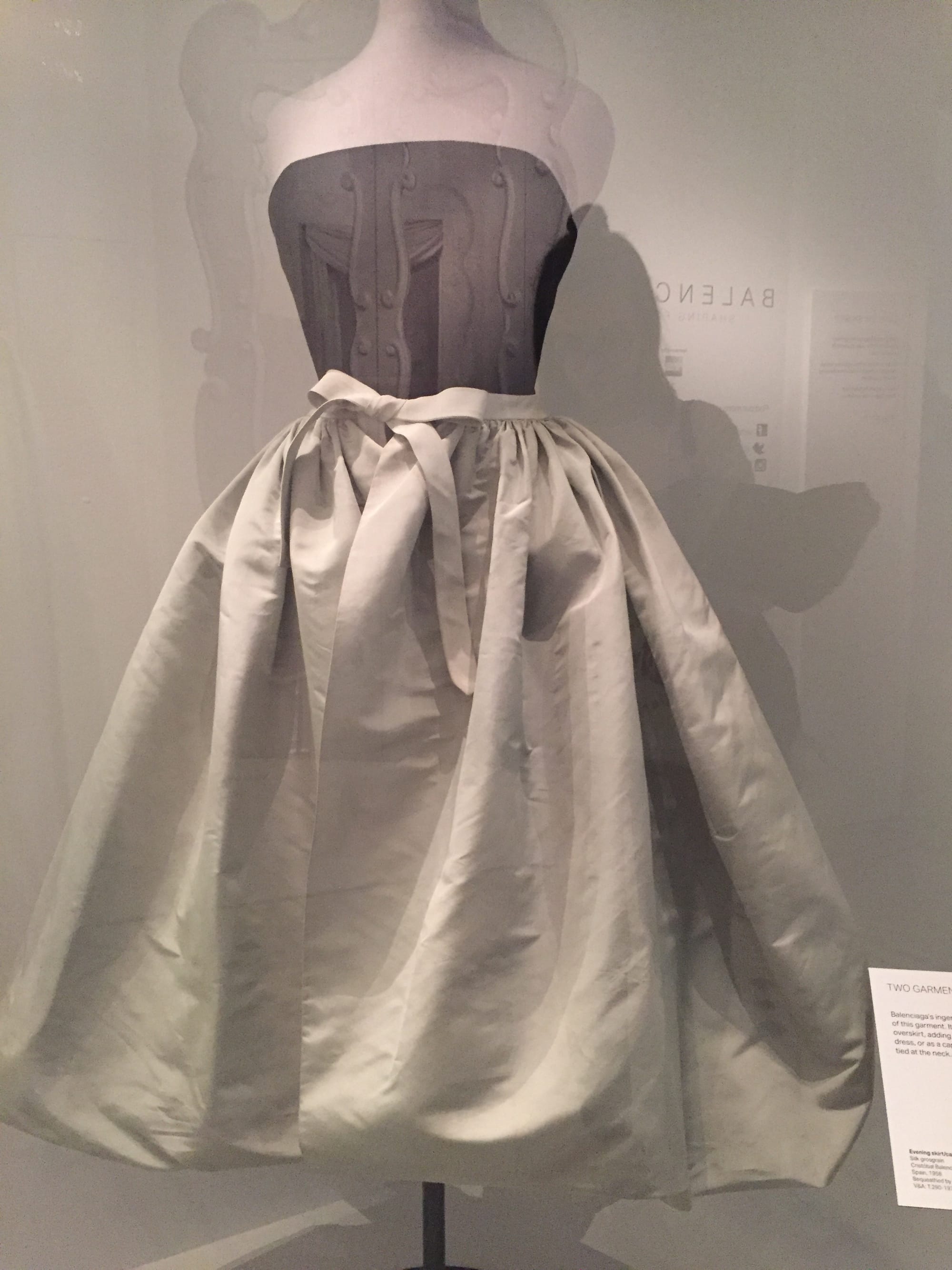
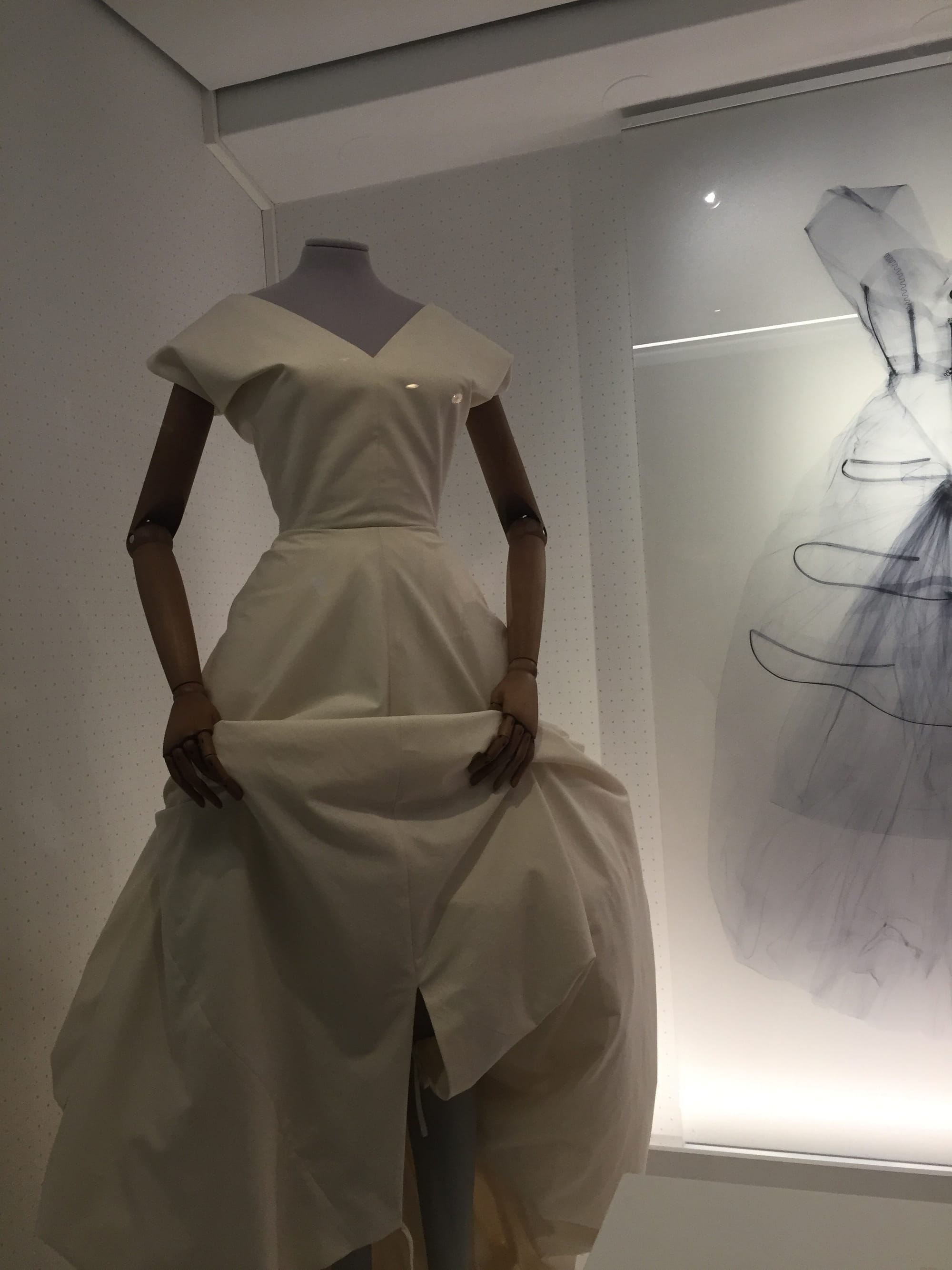
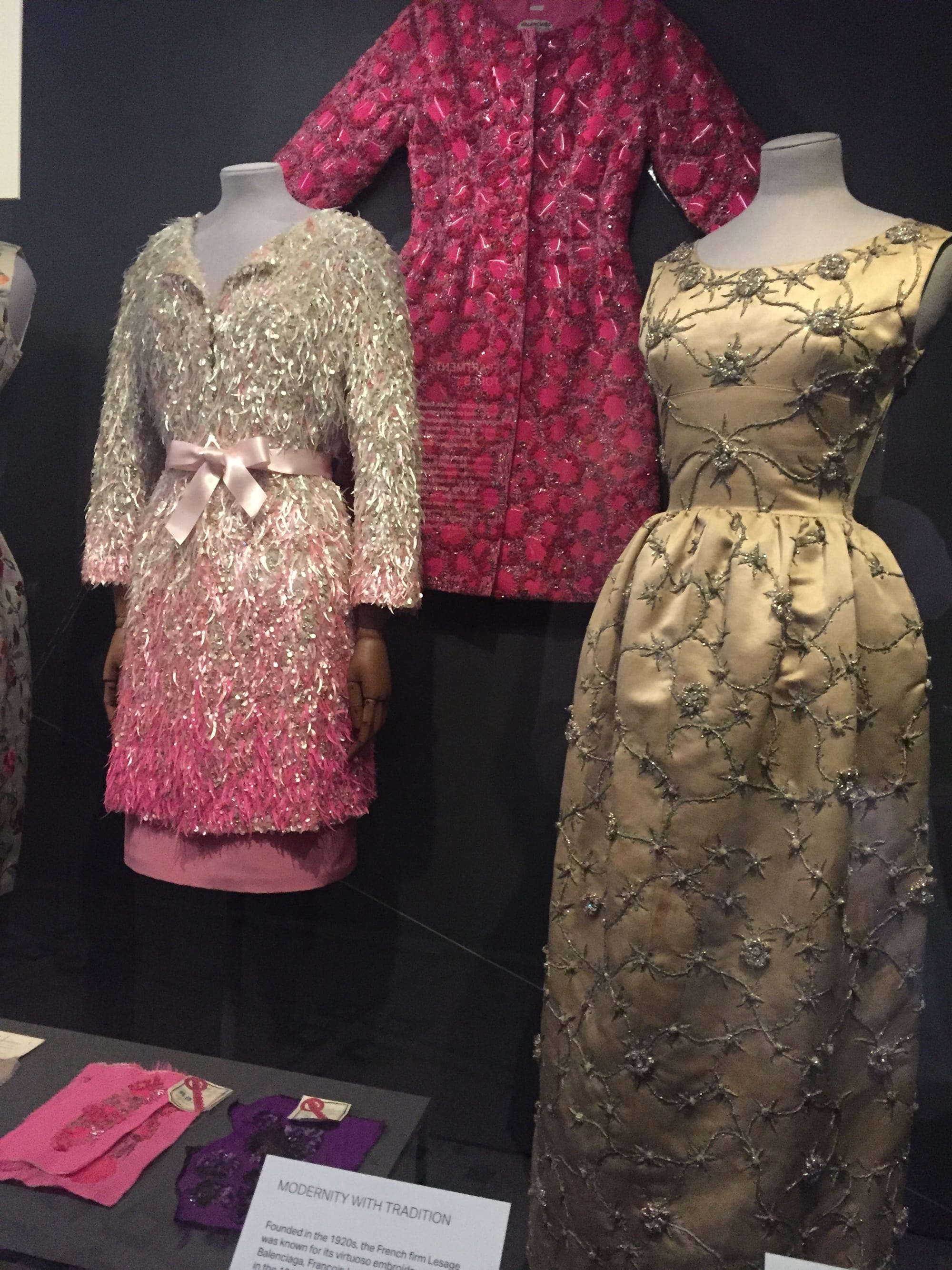
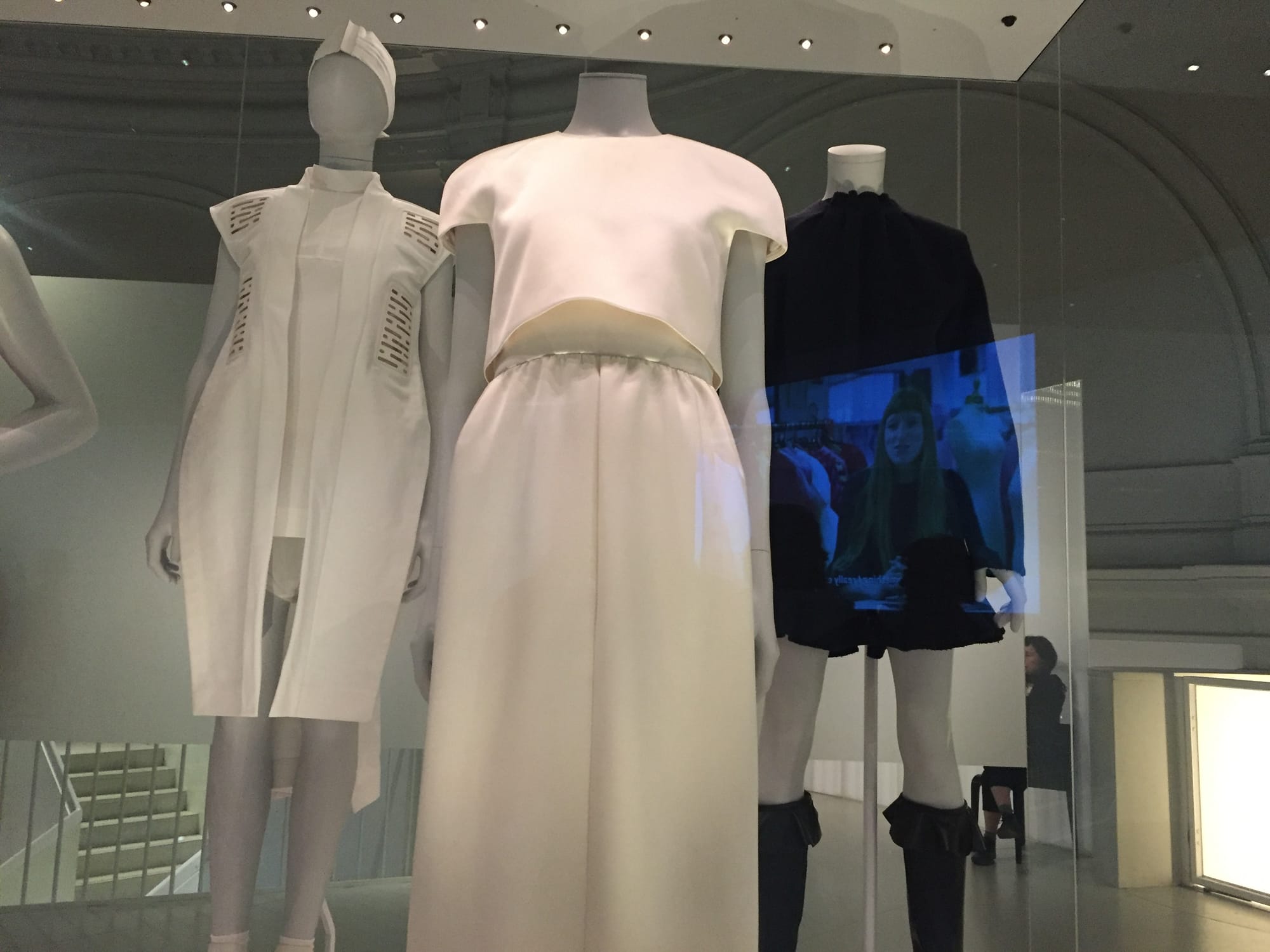
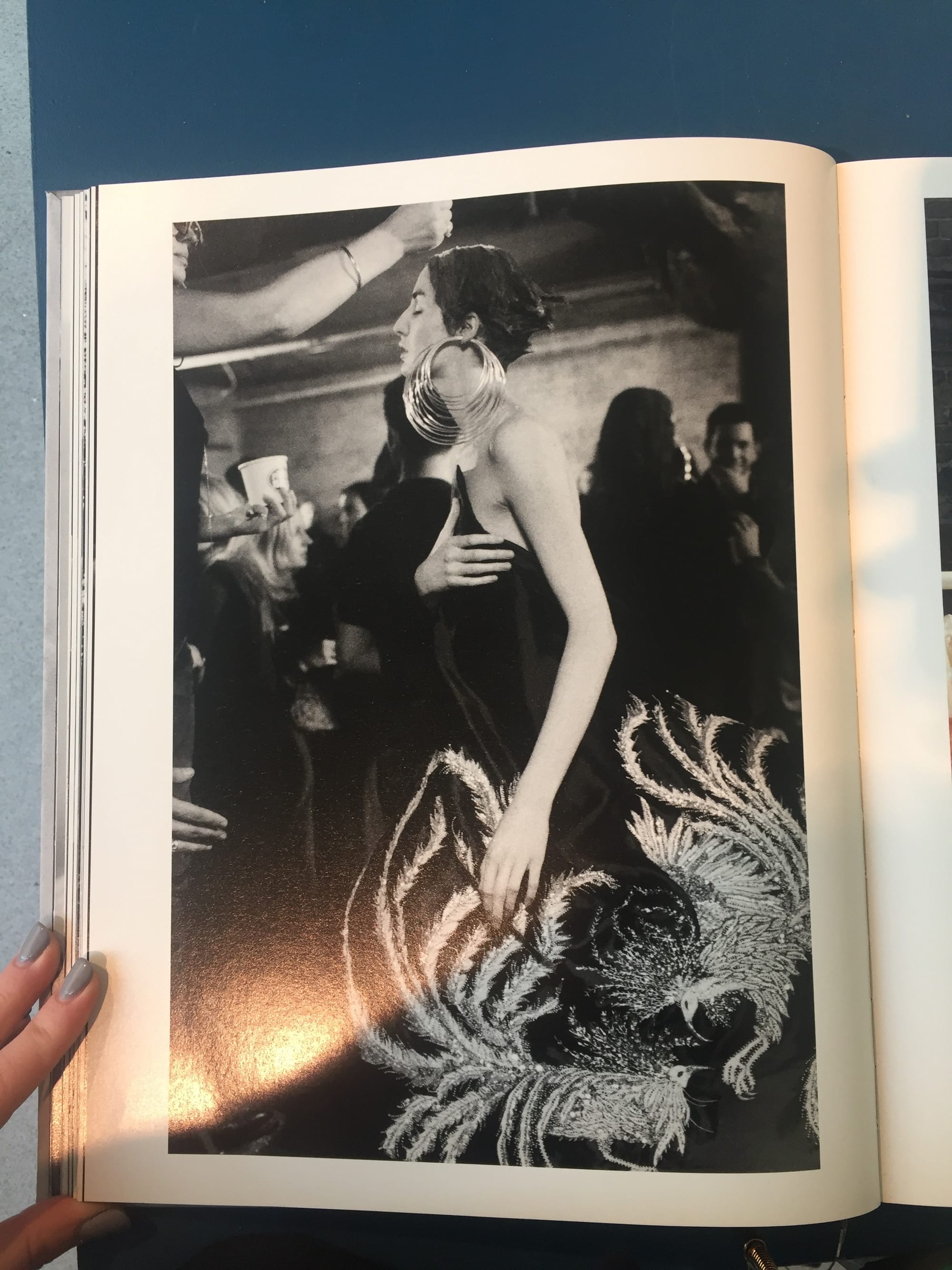
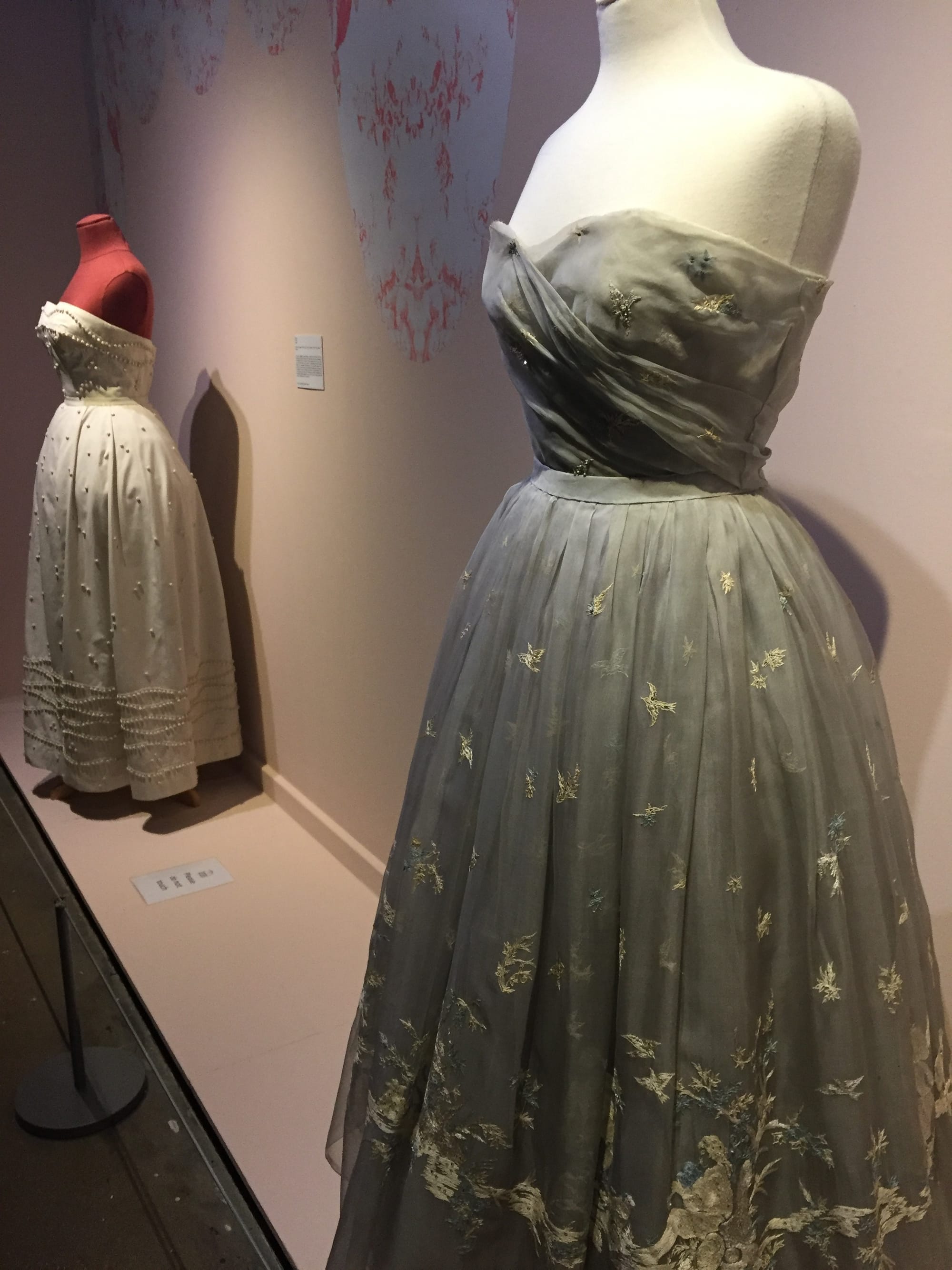
On Saturday the 21st of October 2017, I attended a course at the V&A Museum but before I went to the course, I visited the exhibition displaying the work of Balenciaga.
I learnt a lot about the designer, Cristobal Balenciaga, in the duration of my visit at the exhibit. Balenciaga was one of the most popular fashion designers of the 20th century. His clothes were characterised by their sculptural quality, and his ability to choose such dramatic use of textiles, colour and texture. At the time, his workers and the general public knew of him as The Master, as his work, especially the techniques he used, were unlike anything they had seen before.
It has been about one hundred years after Balenciaga had established his first dressmaking business in northern Spain so far. His legacy lives on and his work still shapes fashion in couture and on the high street today.
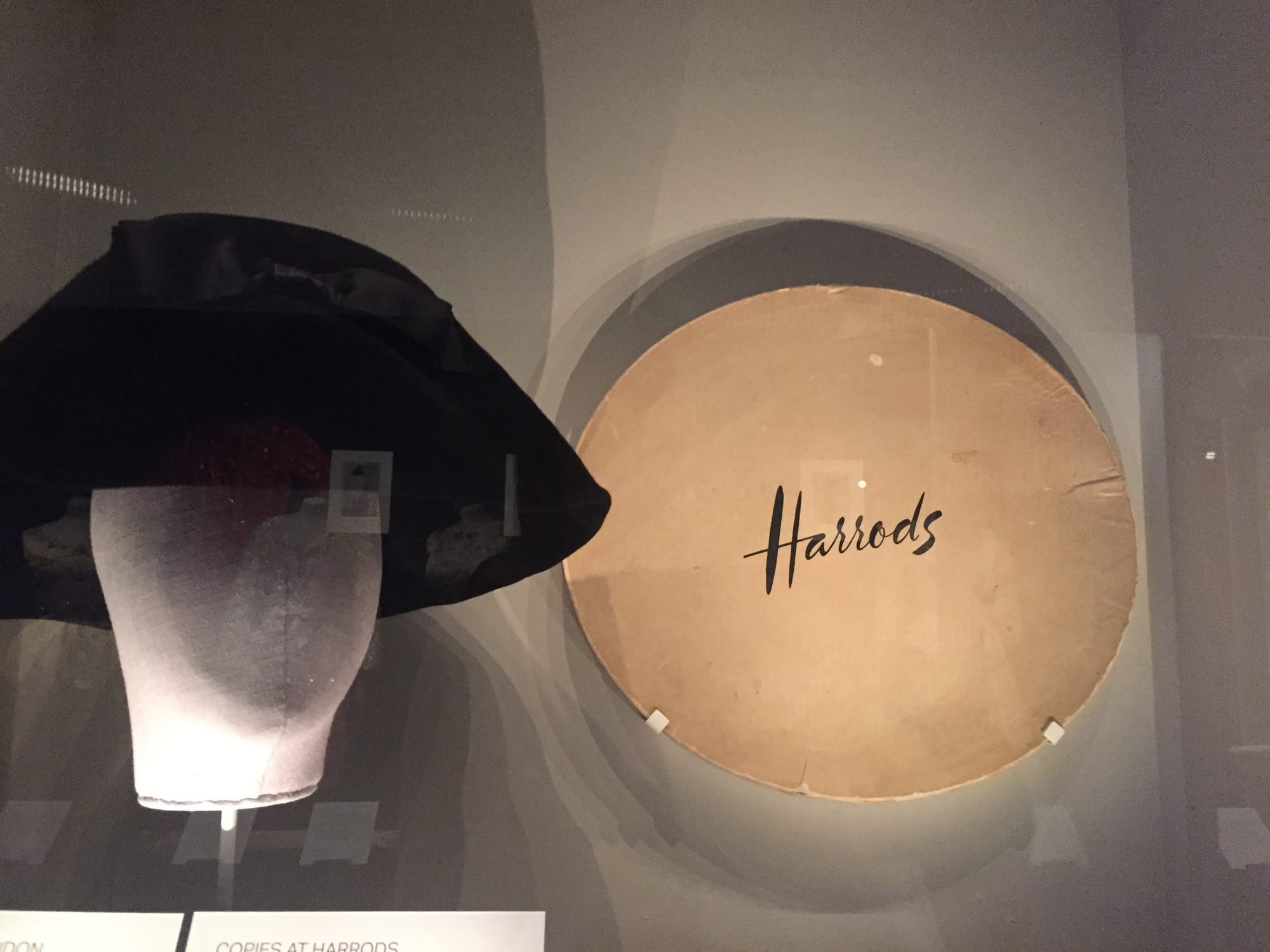
The exhibit contained many collections of Balenciaga dating back from the 1950s and 1960s.
The exhibition was spread over two floors, the first floor focused on the earlier work of Balenciaga and the famous clients he tailored for. These were mainly outfits for female clients although male clothes featured too but at a lower quantity.
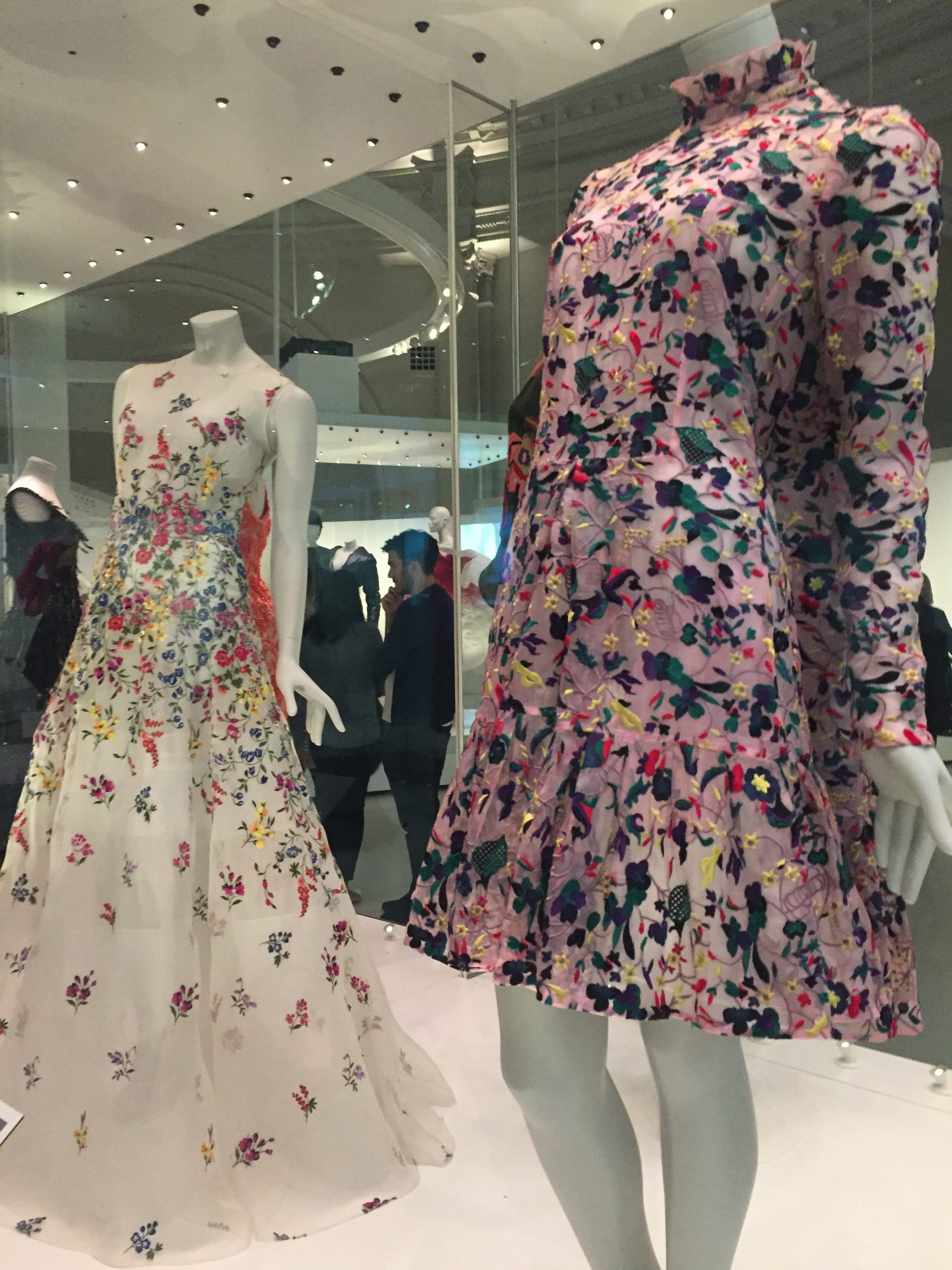
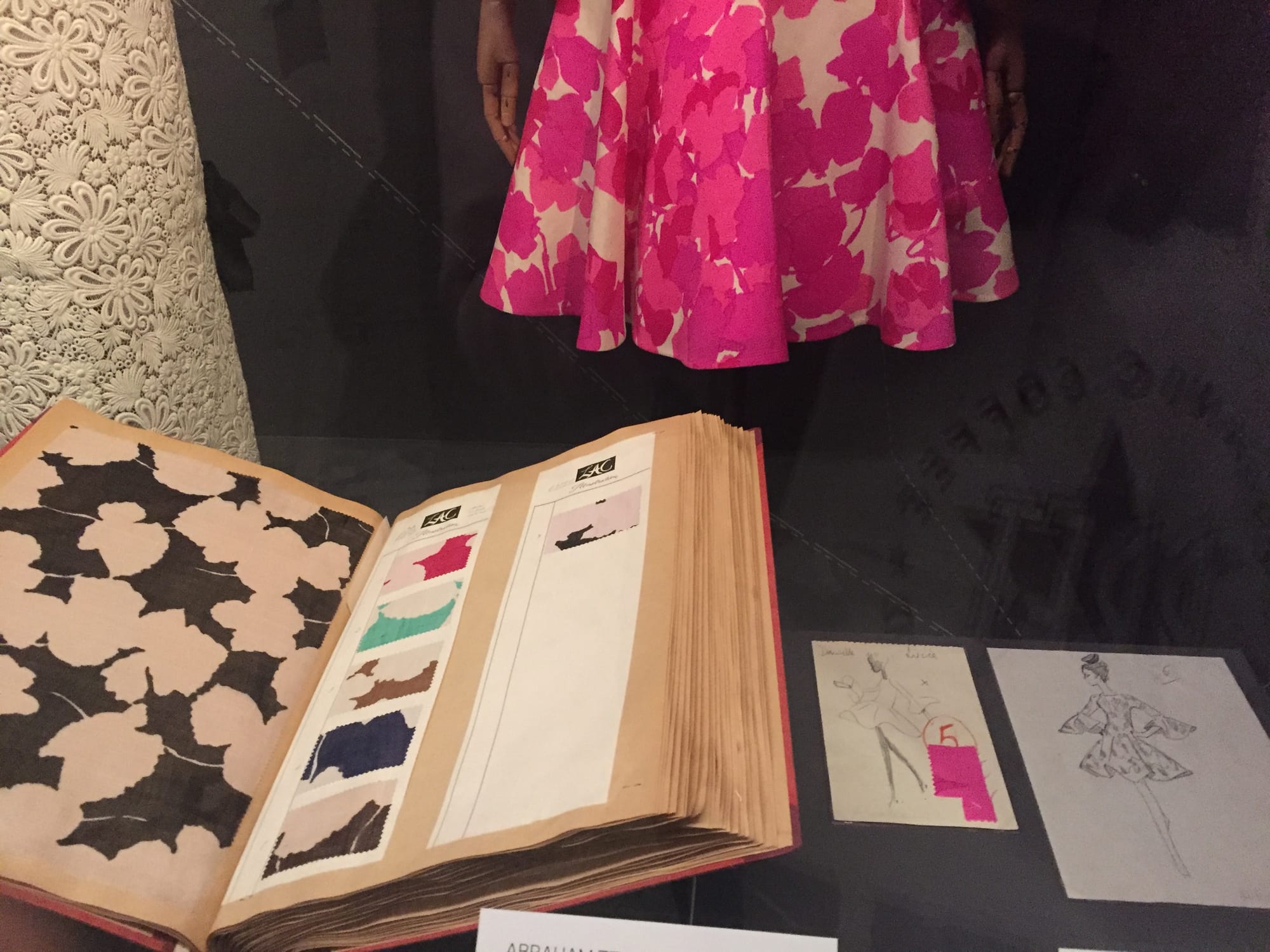
The top floor exhibited his final works which explored modernism, different shapes and I also spotted a lot of different textures of fabrics used such as sequinned skirts and floral embroidered dresses.
My favourite piece of work he did in his lifetime was probably a navy blue puffer jacket coat which was featured as one of his last works. I liked it so much because it would be something I would even wear today and it would be something I would be able to find in shops today even though it was made a couple of decades ago.
There was also a couple of floral embroidered dresses that I saw which were very modern and chic. On the bottom floor, there was an interesting concept of an outfit which was a dress and a cape but it could also transform into a top part and a dress. Either way, the outfit looked like it was meant to be like that and was fool proof either way.
There was some outfits that I was less keen on such as a dress made completely out of plastic and there was plastic tubes coming out of the dress from all directions making it look very uncomfortable and not aesthetically pleasing either.
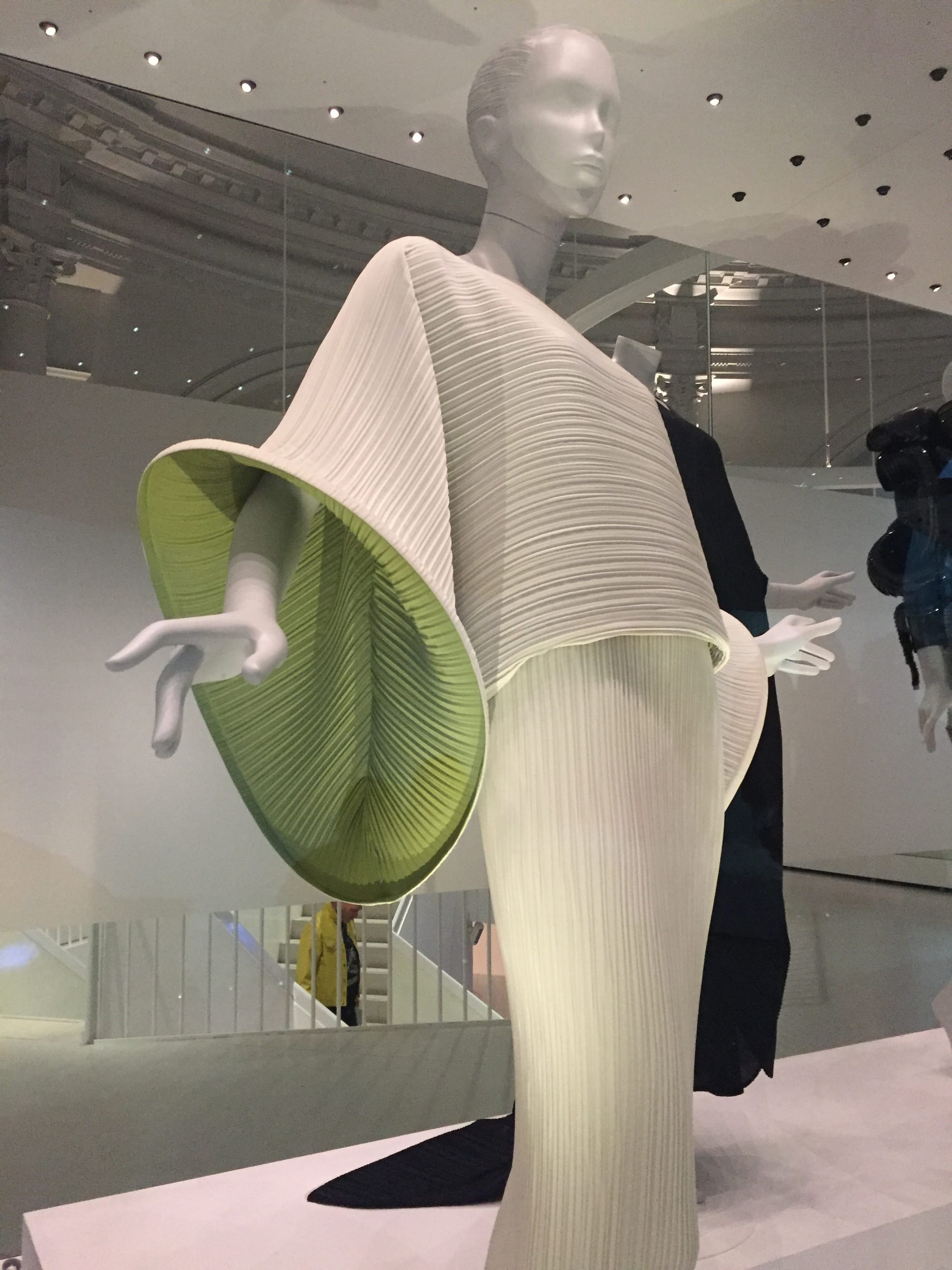
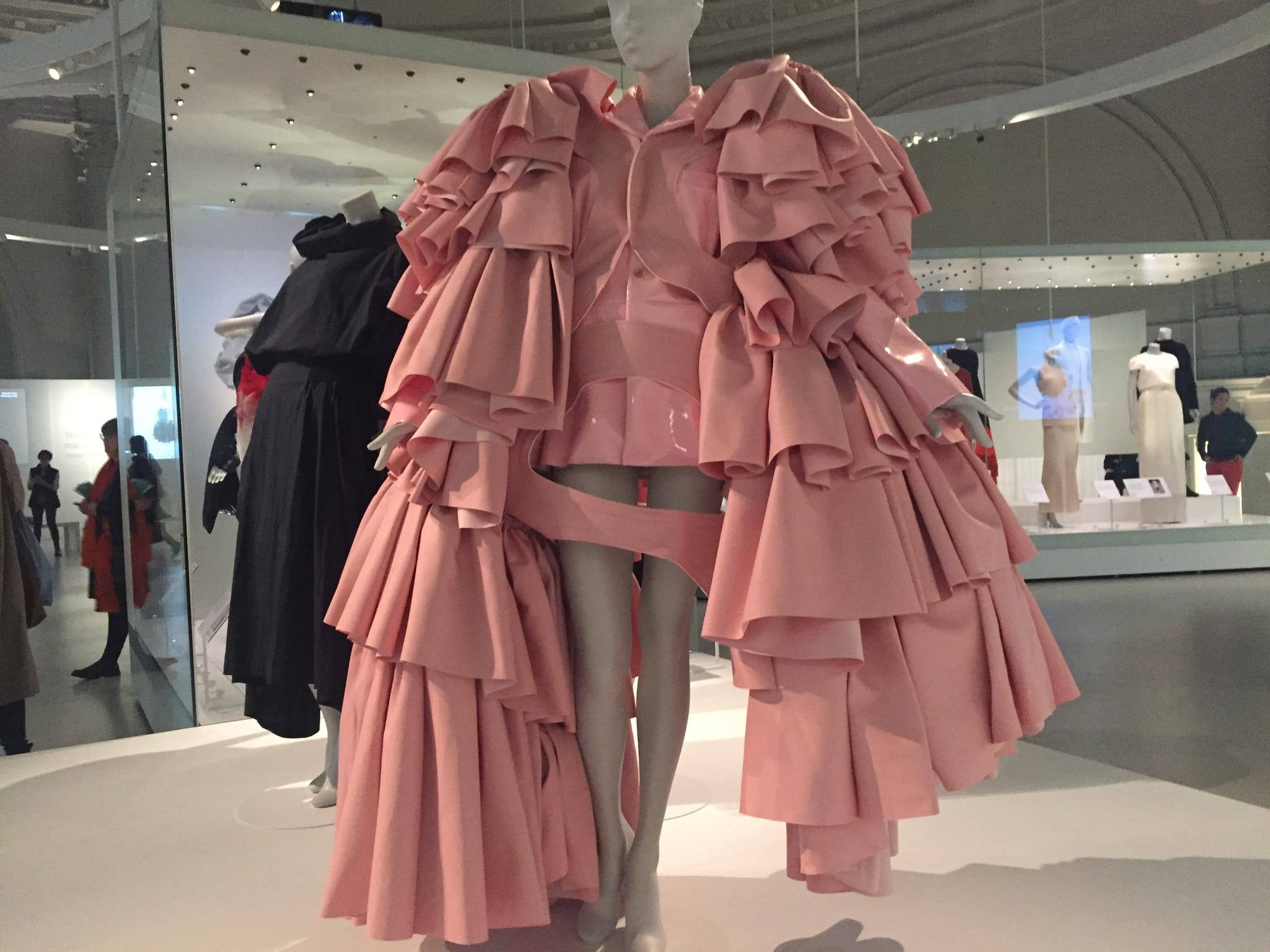
There was also a circular shape dress which looked just like a circle on the mannequin, which did not look practical in the slightest and neither very nice looking. It was tulle and very thick layered, Balenciaga really explored texture and ombre colours in this work of art.
The main art forms involved were designing, making and music.
I have seen exhibits similar to this Balenciaga exhibition such as the Undressed Exhibit I went to last year, which was also at the V&A Museum. It was similarly set out across the two floors as well.
The fact that Balenciaga’s work was so original and creative really was unexpected to me as I had never really come across his work before.
Overall, I found the exhibition really good and interesting as I learnt a lot more about the designer and his work. There was nothing bad I took up on in this exhibit and I took a lot away from this exhibit which was helpful to me.
Fashion Together Exhibition:
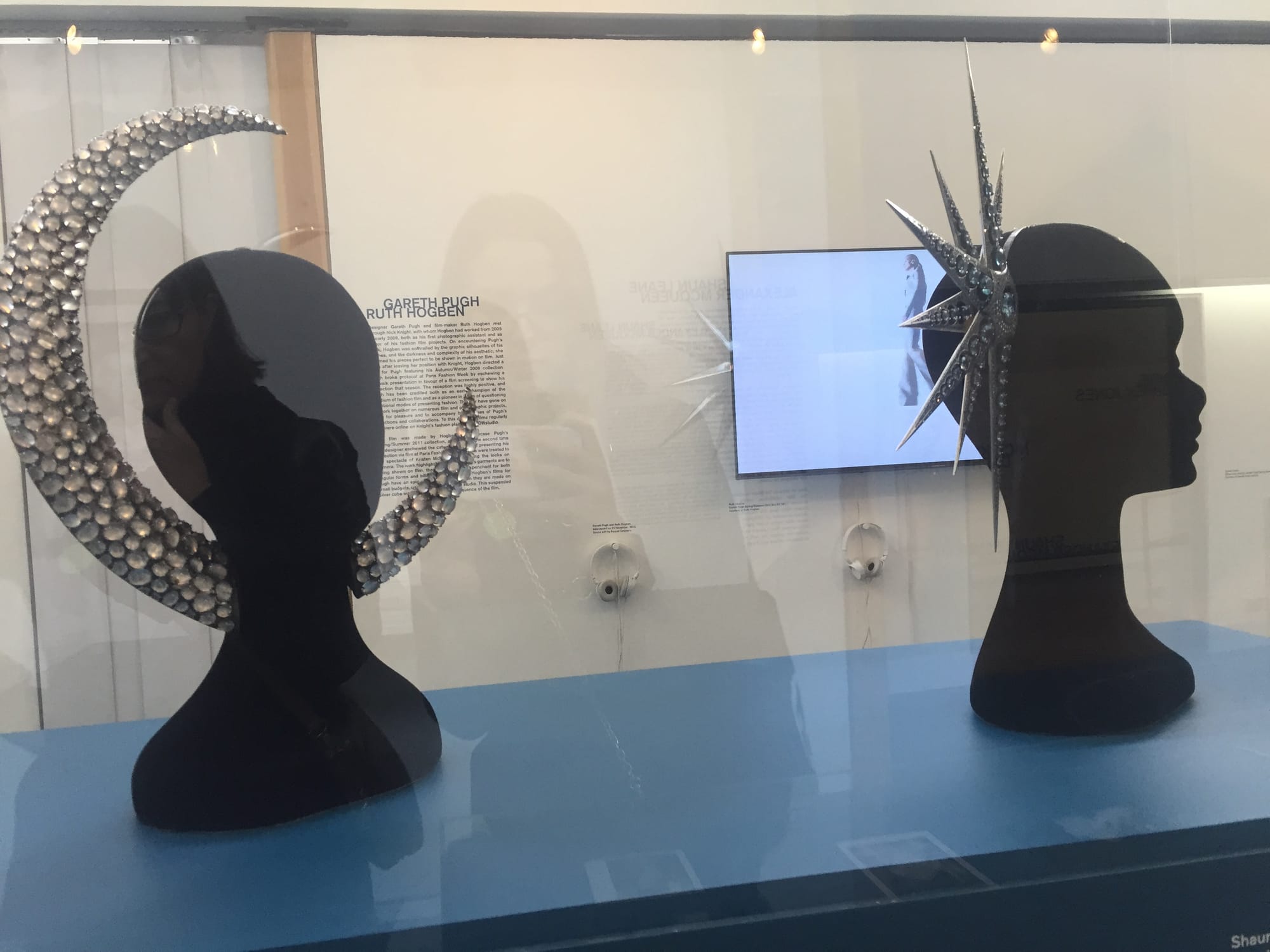
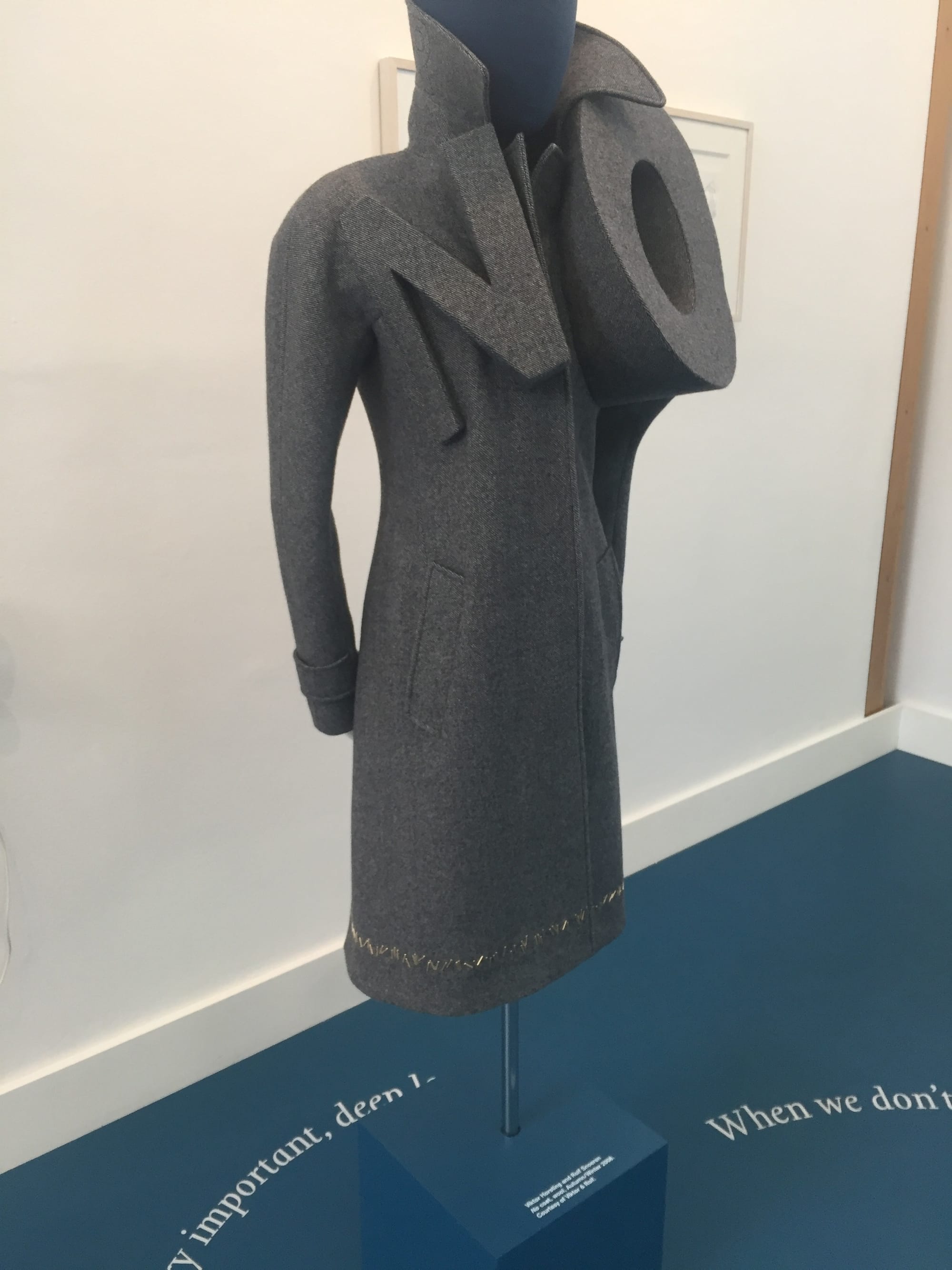
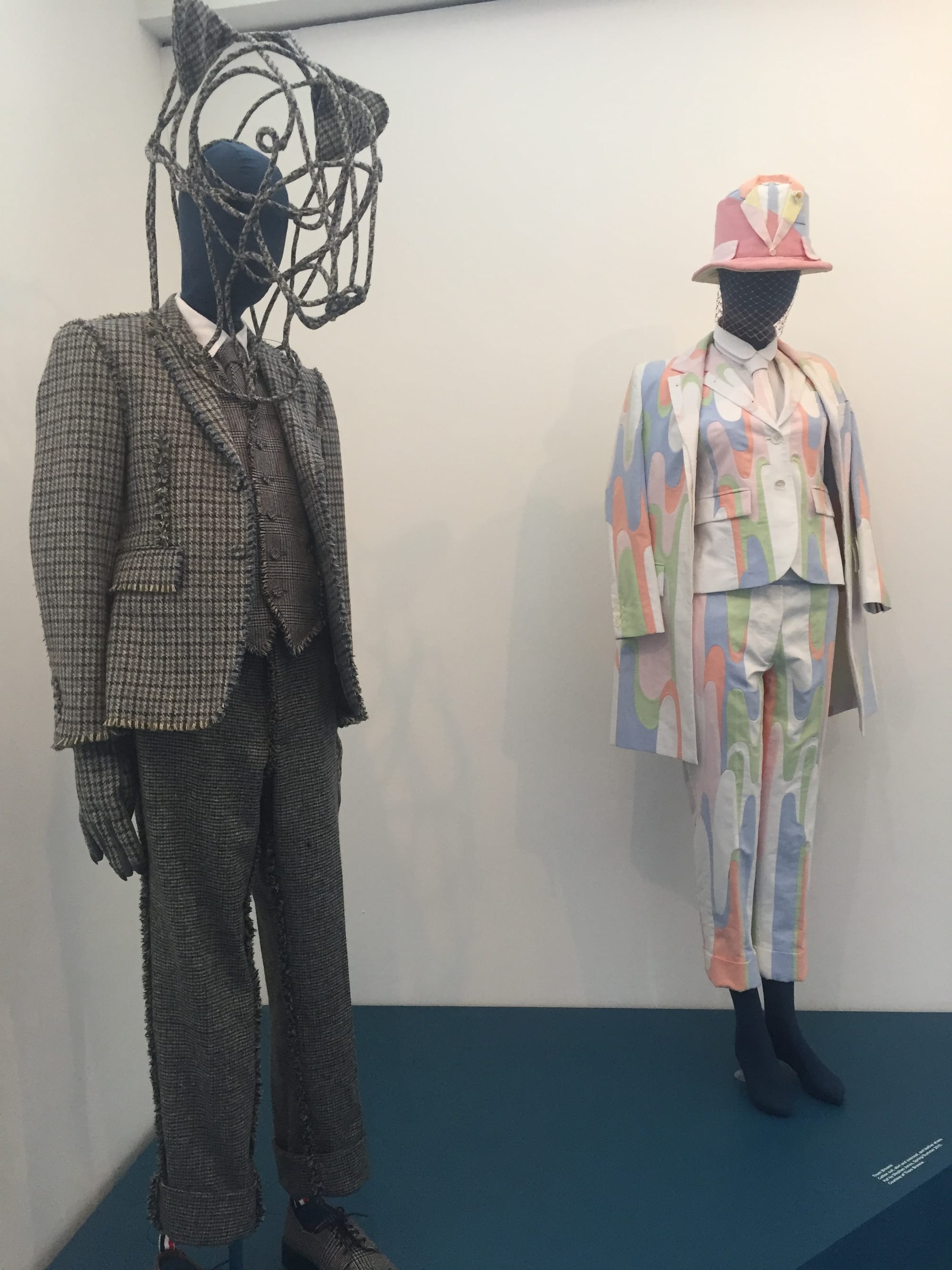
On the 2nd of December 2017, I went to an exhibit in the Fashion Space Gallery located in Westminster. The aim of this exhibit was to focus on the collaborators in the fashion industry instead of individual designers. There were seven selected duos whose collaborated work was shown on display, these were: Rick Owens and Michele Lamy, Nick Knight and Daphne Guinness, Shaun Leane and Alexander McQueen, Viktor Horsting and Rolf Snoeren, Inez van Lamsweerde and Vinoodh Matadin, Gareth Pugh and Ruth Hogben, and Thom Browne and Stephen Jones.
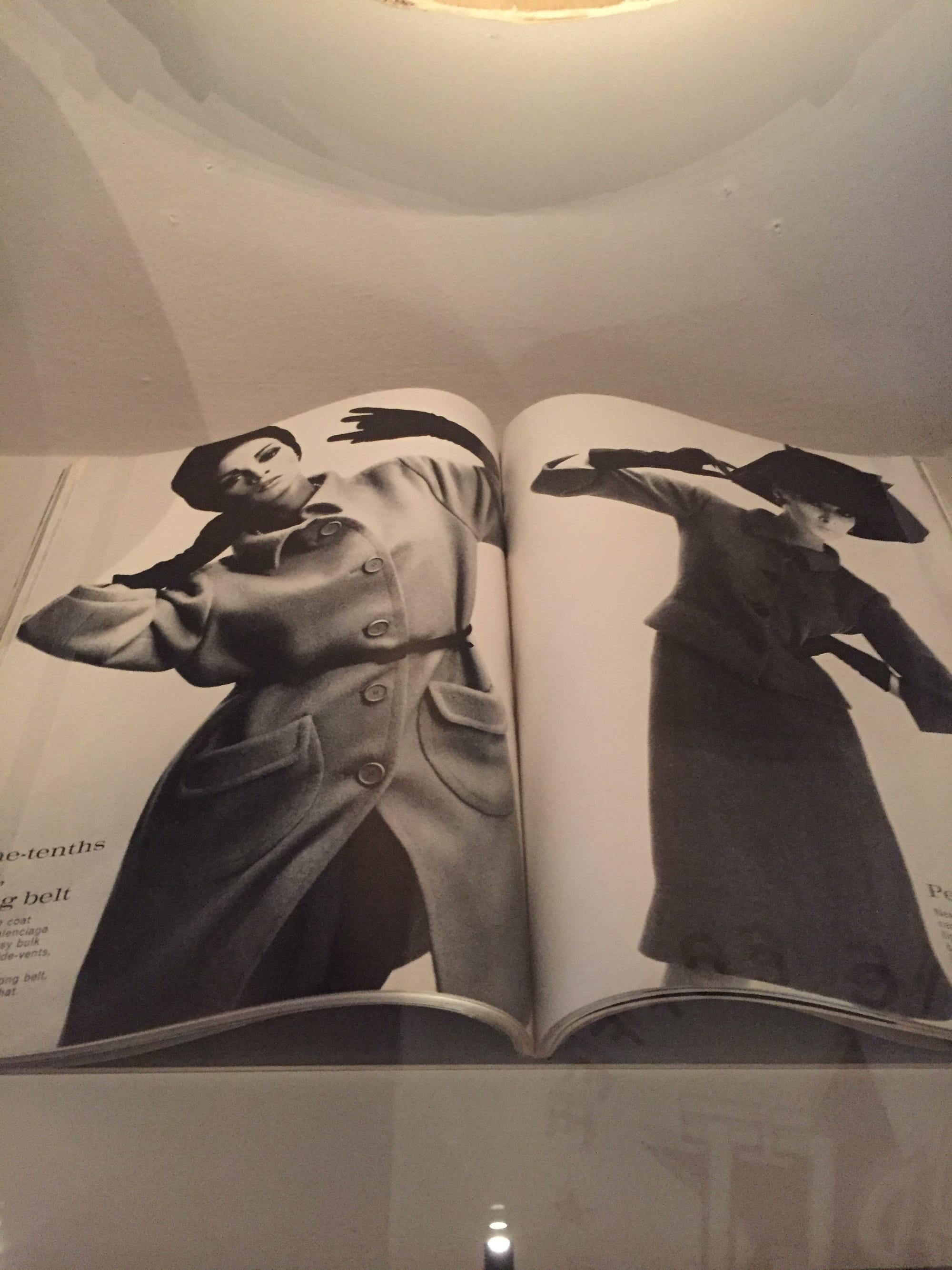
Apart from these selected duos work, there were also chosen objects which showcased the work from a range of roles within the fashion industry, from photographers and film-makers, to designers and milliners. Some examples of these objects were rolls of film and hat patterns.
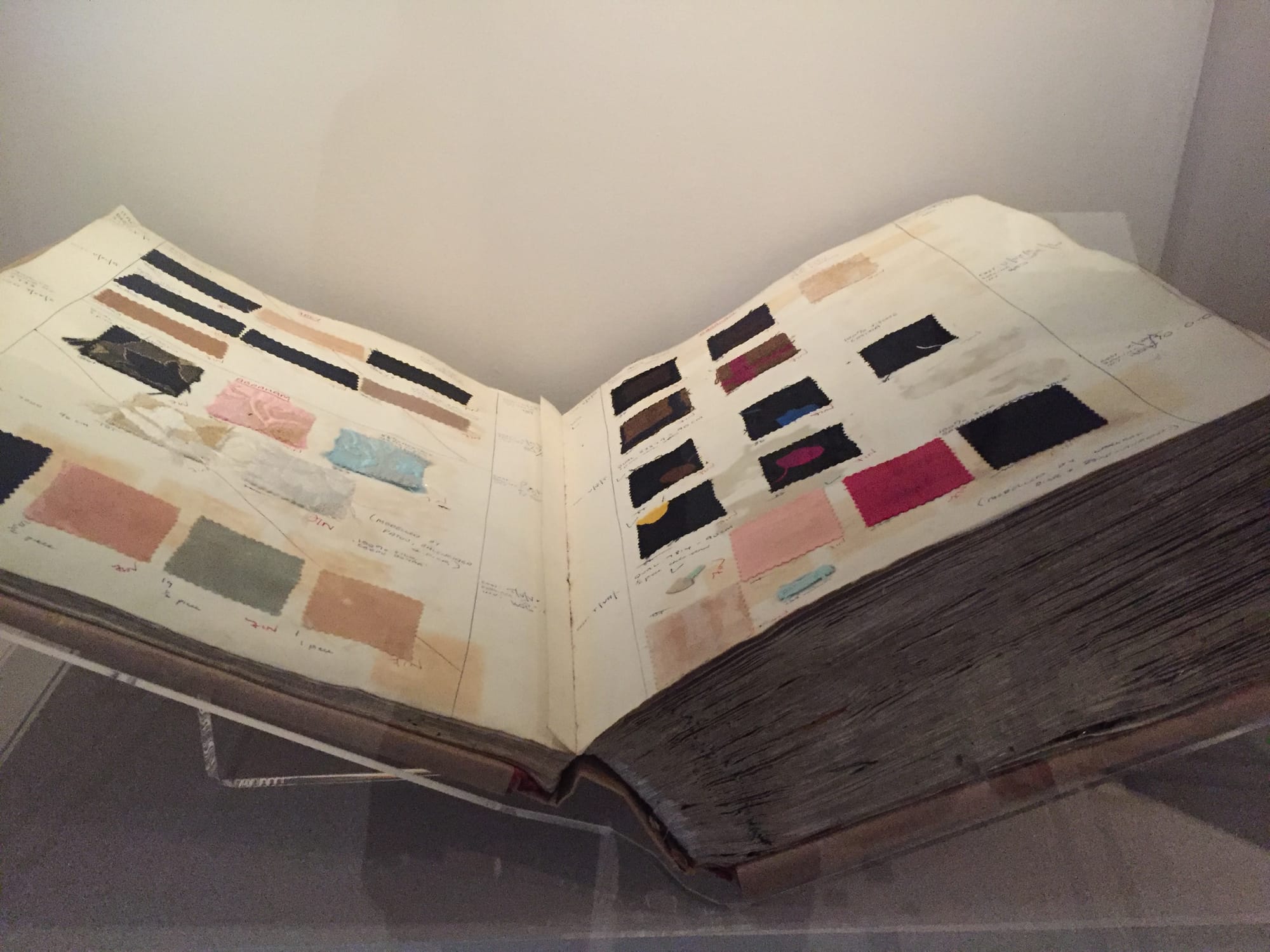
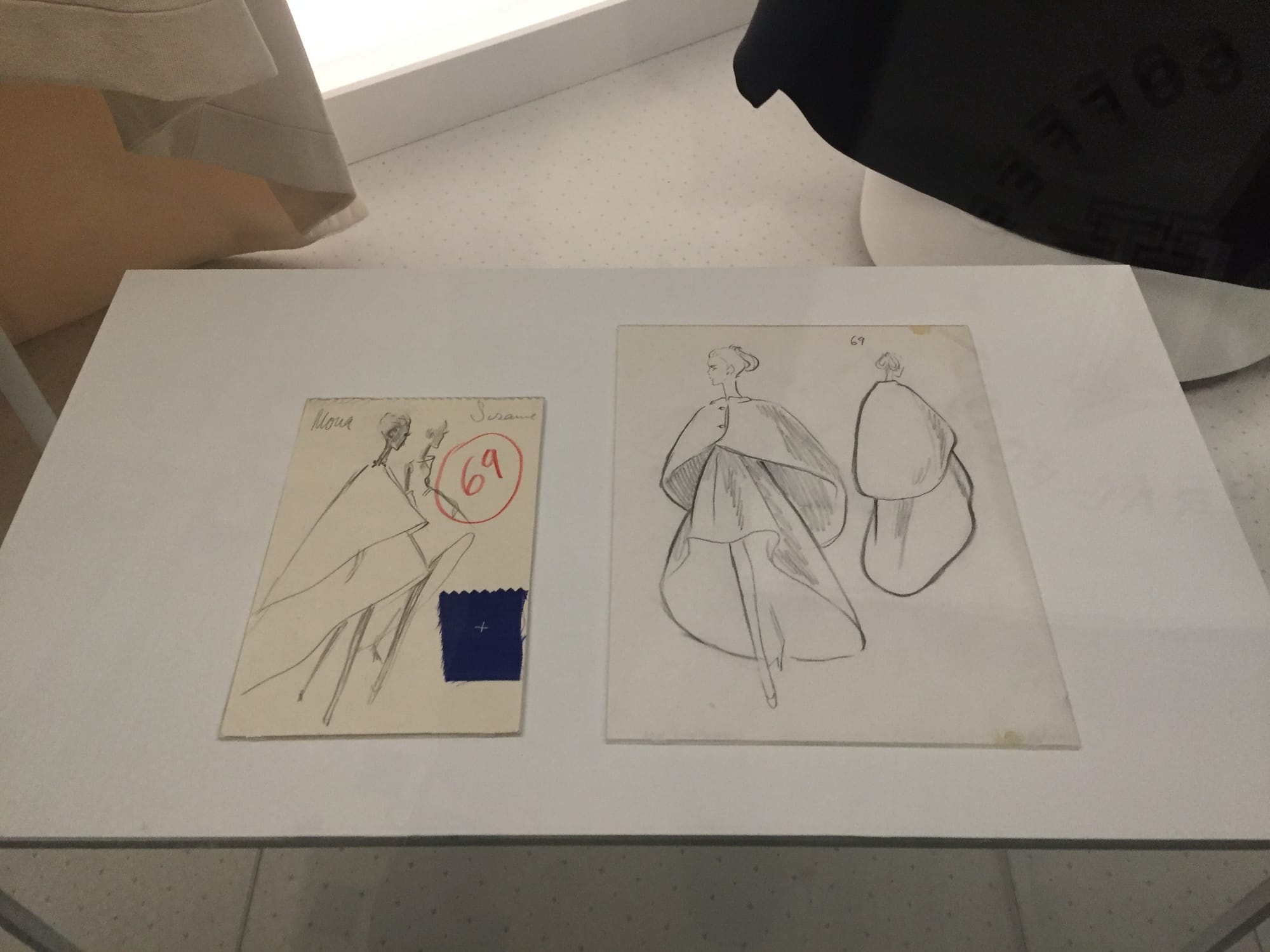
There were also notebooks, drawings and hand written notes to show each pair’s creative process and the interactions had between the two during their creative collaboration.
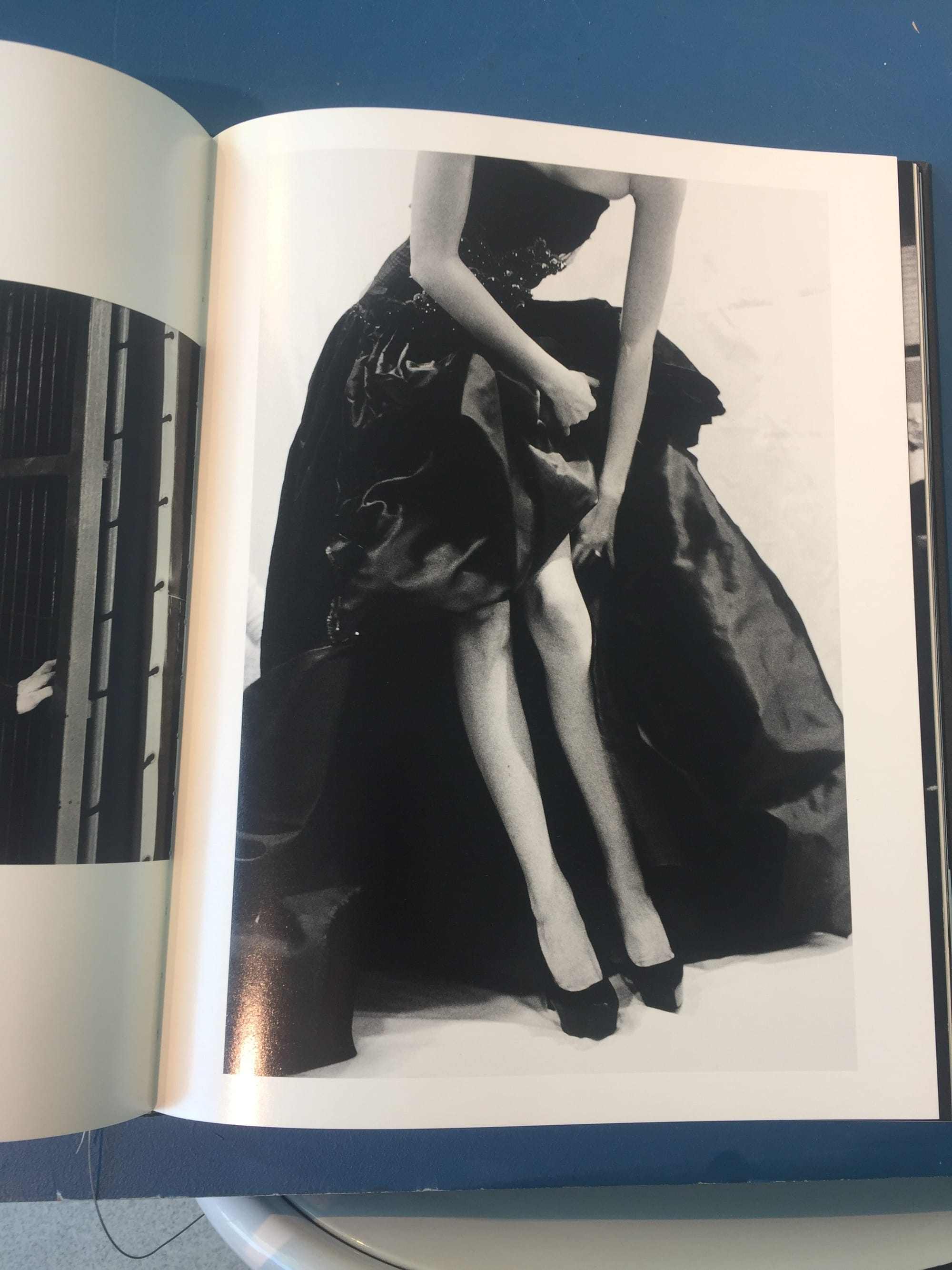
The first thing which was laid out in the exhibit was a big table filled with fashion magazines and fashion books to read and look through. Some of these books acted as archives documenting past fashion shows featuring big brands such as Givenchy. Other books were anecdotes of the designers experience in the fashion industry and others memoirs such as Stephen Jones Souvenirs Book and Viktor&Rolf Fashion Artists.
After this part, there was one big room in total, which contained various examples of work done by these collaborators. My favourite work on display in that room was probably the two suits which were both very unique and one was very colourful.
The art forms involved were designing, sewing and making.
I have seen exhibitions similar to this such as the 1920s exhibit at the Fashion & Textiles Museum, which both had a similar and small exhibition space but both were very interactive because you could touch and feel several things on display.
What I thought was unexpected about this exhibit was the magazine and book space at the front which you could sit down at the table as long as you wanted to and read. With the amount of fashion books available, it acted as a library which was strictly dedicated for fashion. These books were very helpful to give me an insight on behind the scenes of the fashion industry.
What I liked about this exhibit was that it was very interactive which helped me to connect more with the work on display. I also liked the message it was giving off that collaborations take a lot of team work and in the end two heads is better than one and will produce better work than if it was an individual’s work.
What was less good about this exhibition was that it was a really small exhibition space so there was not a lot to see, which a bit disappointing because I was really curious on seeing an exhibit solely focusing on collaborations instead of individual work.
I learnt more about some designers that I have not heard of before such as Shaun Leane who collaborated with Alexander McQueen who I have heard of before. Something I learnt about Shaun Leane was that he is a British jewellery designer and that he has a successful jewellery brand which has helped him win four times the label of the UK Jewellery Designer of the Year award.
I took away that team work pays off and only works with clear communication as shown by several hand written notes on display between the designers.
Overall, I really enjoyed this exhibit and would recommend.
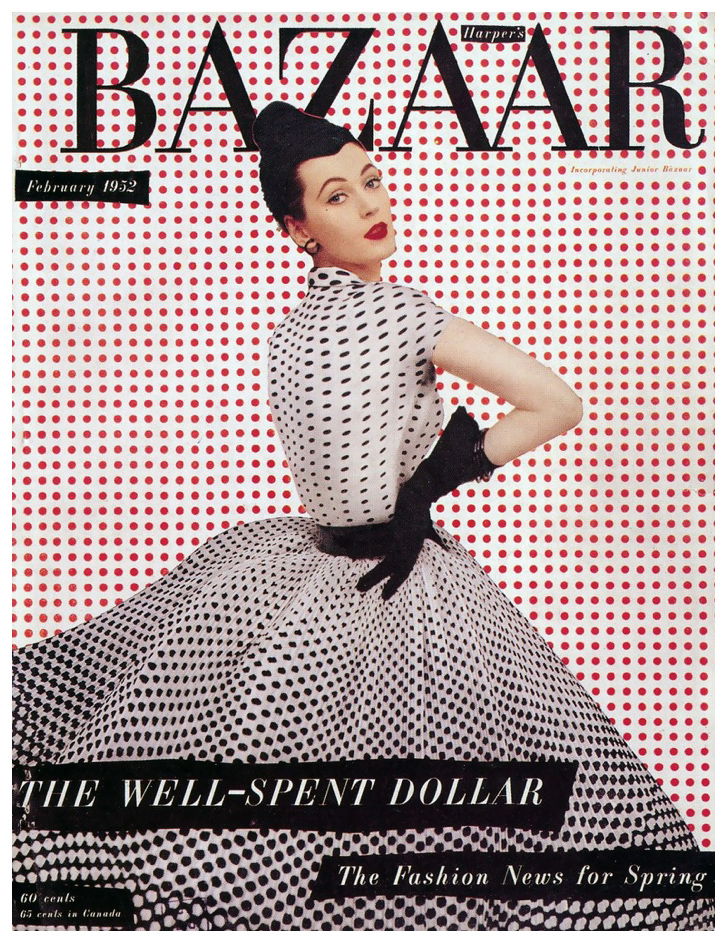
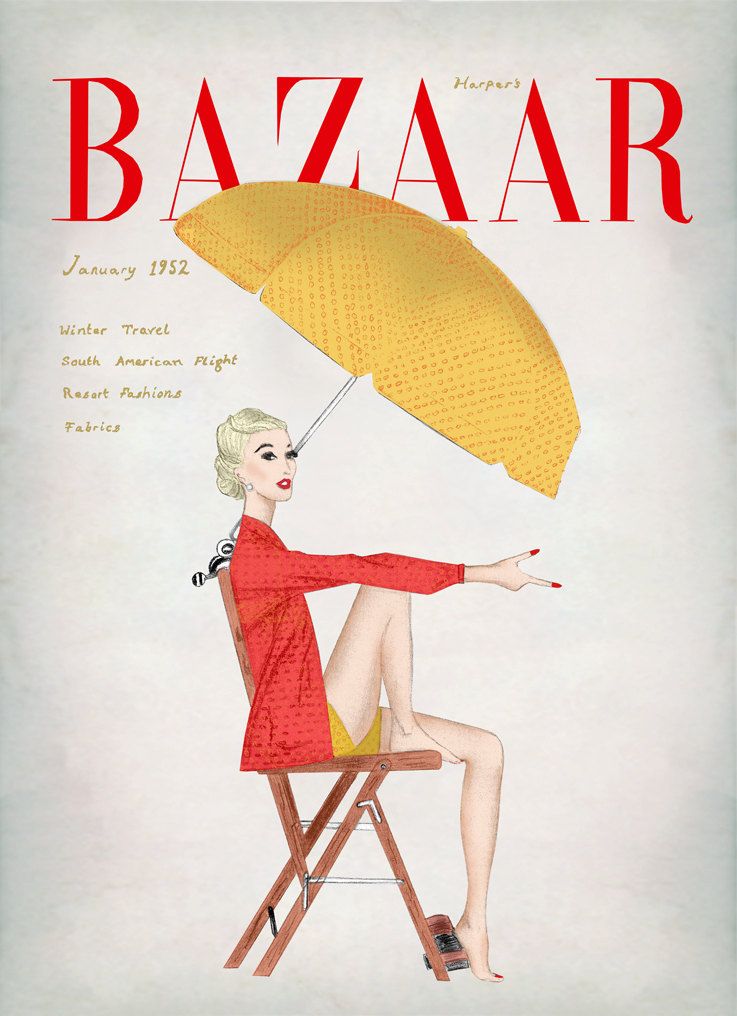
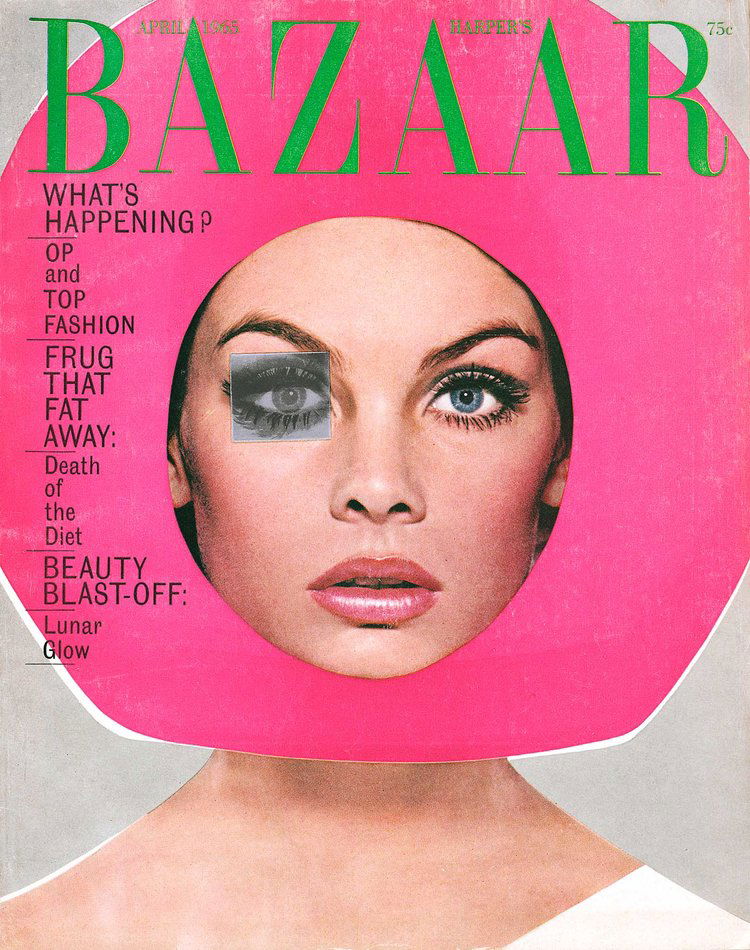
Harper's Bazaar Exhibition Review:
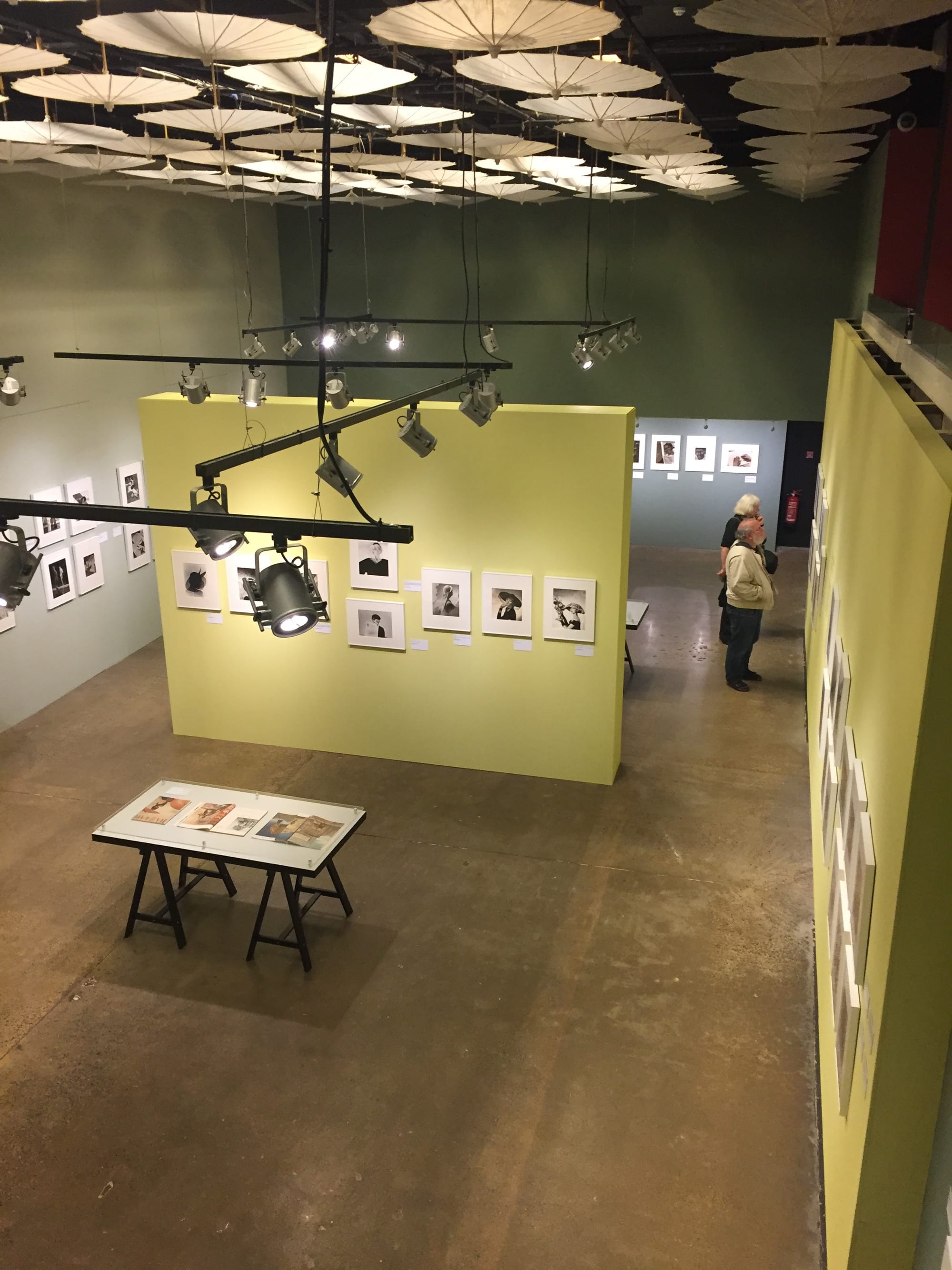
On Saturday the 19th of November 2017, I went to three exhibits at the Fashion and Textiles Museum, including a viewing of the Wallace Sewell exhibit, a fashion photography exhibit and this one.
Personally, this exhibit was my favourite one out of the three as I particularly liked the aesthetics, colour and the layout of the exhibit.
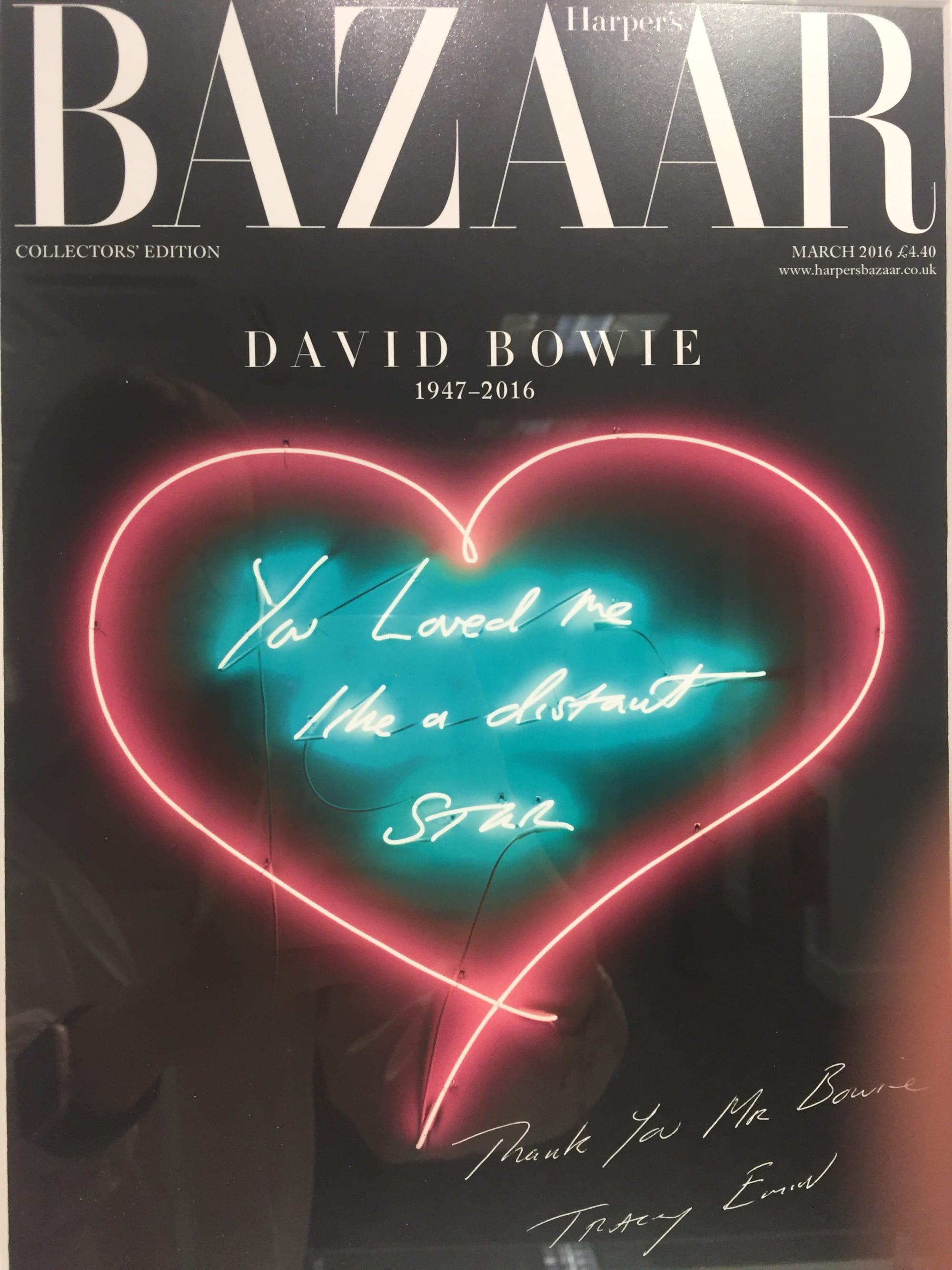
This exhibit was trying to showcase the 150 years anniversary of the magazine and the people behind it.
This exhibit’s aim was to showcase America’s first fashion magazine, Harper’s Bazaar and to show the immense amount of work put behind the magazines and all the jobs of the team behind the iconic magazine. These jobs would be editors, photographers, stylists and writers. And all of them dating back to 1867.
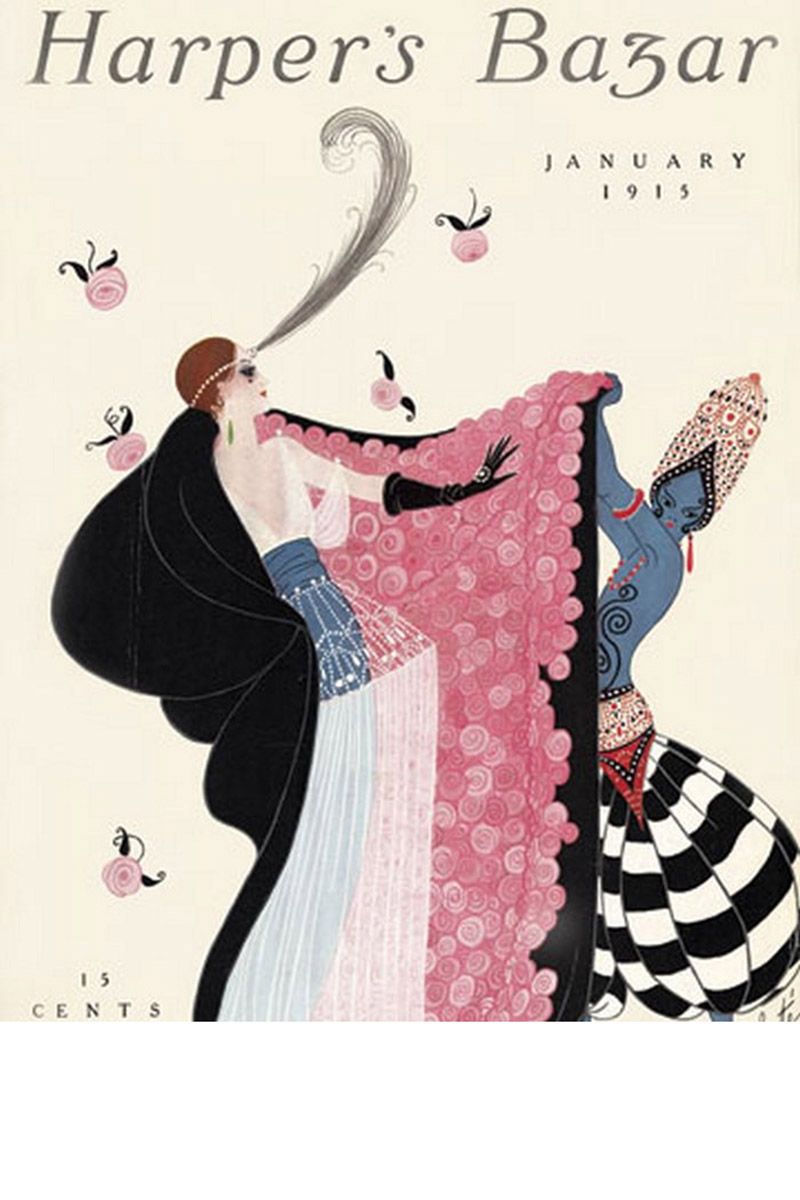
From the very first years of the magazine, it began as a broadsheet which was aimed at the higher class of society who were rich and fashion forward. Since then, Harper’s Bazaar has changed into a magazine which became devoted at looking at women’s lives through fashion and how people could express themselves with what they were wearing.
The first British edition was published in 1929 in October which tried to help promote British talent, including the likes of designers, photographers and artists.
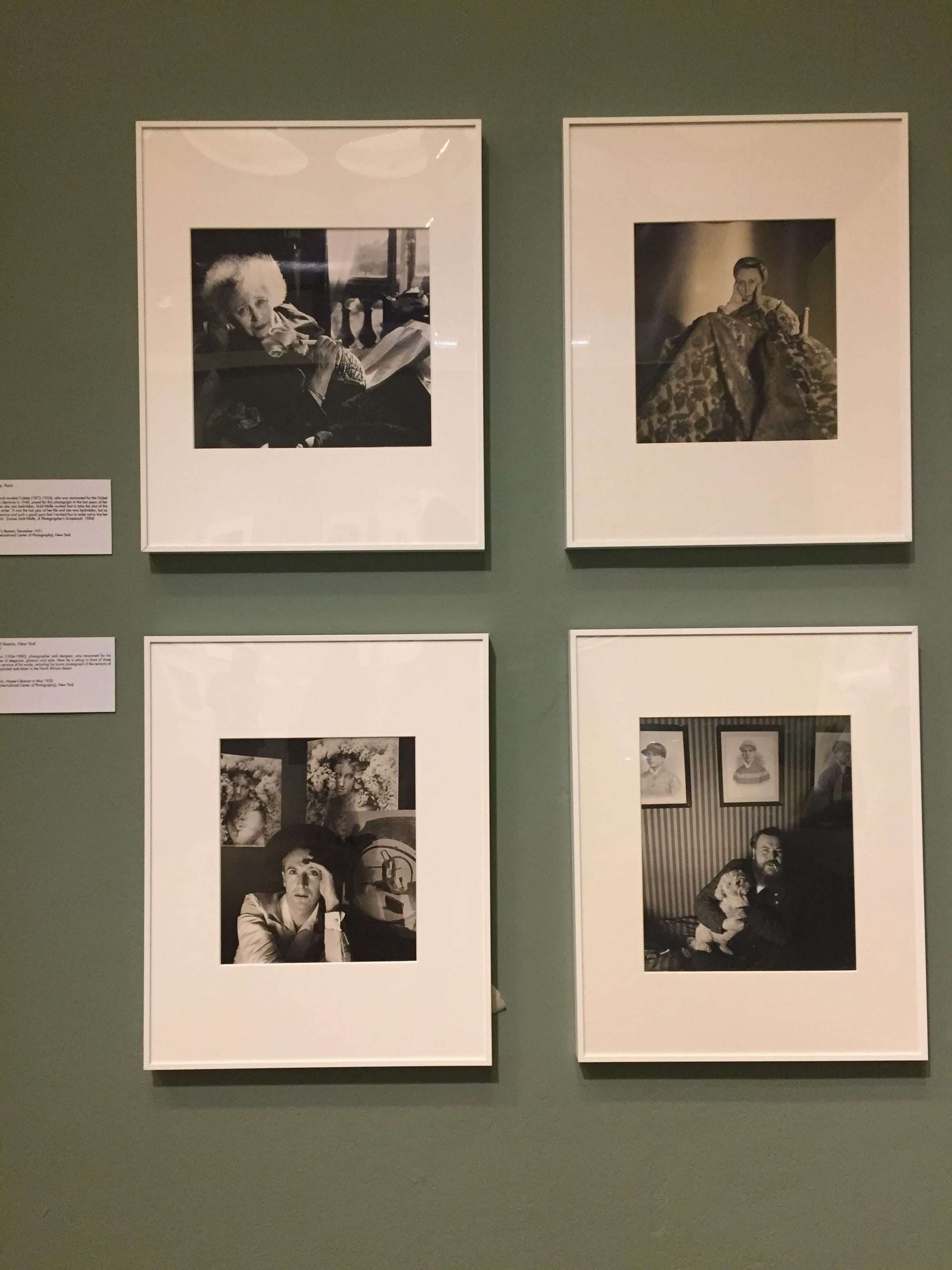
Some of the people displayed and mentioned were the likes of Louise Dahl-Wolfe, Lillian Bassman, Cecil Beaton, Man Ray and many other more.
The main art forms were photography and designing.
I have seen another exhibit like this which was the same one I saw this day, about the fashion photography exhibit. As there was no physical pieces on display, just images. Which is not such a bad thing because normally I would just glance over these images, and not really take notice of them. However in the exhibits it was allowed to get quite close to these images to really examine what was going on in them.
I liked how the exhibit was set up as it was just set up in a white, plain room, and all the images of the magazine photos and images were dotted all around the wall so there could be a particular, strong focus on each individual image.
However I would have liked even more images be available to see as it is not very often you can come across a vintage magazine edition from the 19th Century. And saying this, there could have been even some modern editions of Harper’s Bazaar magazines today dotted around the room so people could have picked one up and flicked through or read through it.
I learnt a lot about this magazines such as a lot of the key facts about the dates and the actual origins of the magazines, which is really fascinating as picking up a copy of a Harper’s Bazaar magazine now, I would never have been able to guess it had such a long history before it.
Overall, I found this exhibit so eye-opening and I really enjoyed visiting it and being able to get up and close with all these vintage editions.
Louise Dahl-Wolfe Exhibition Review:
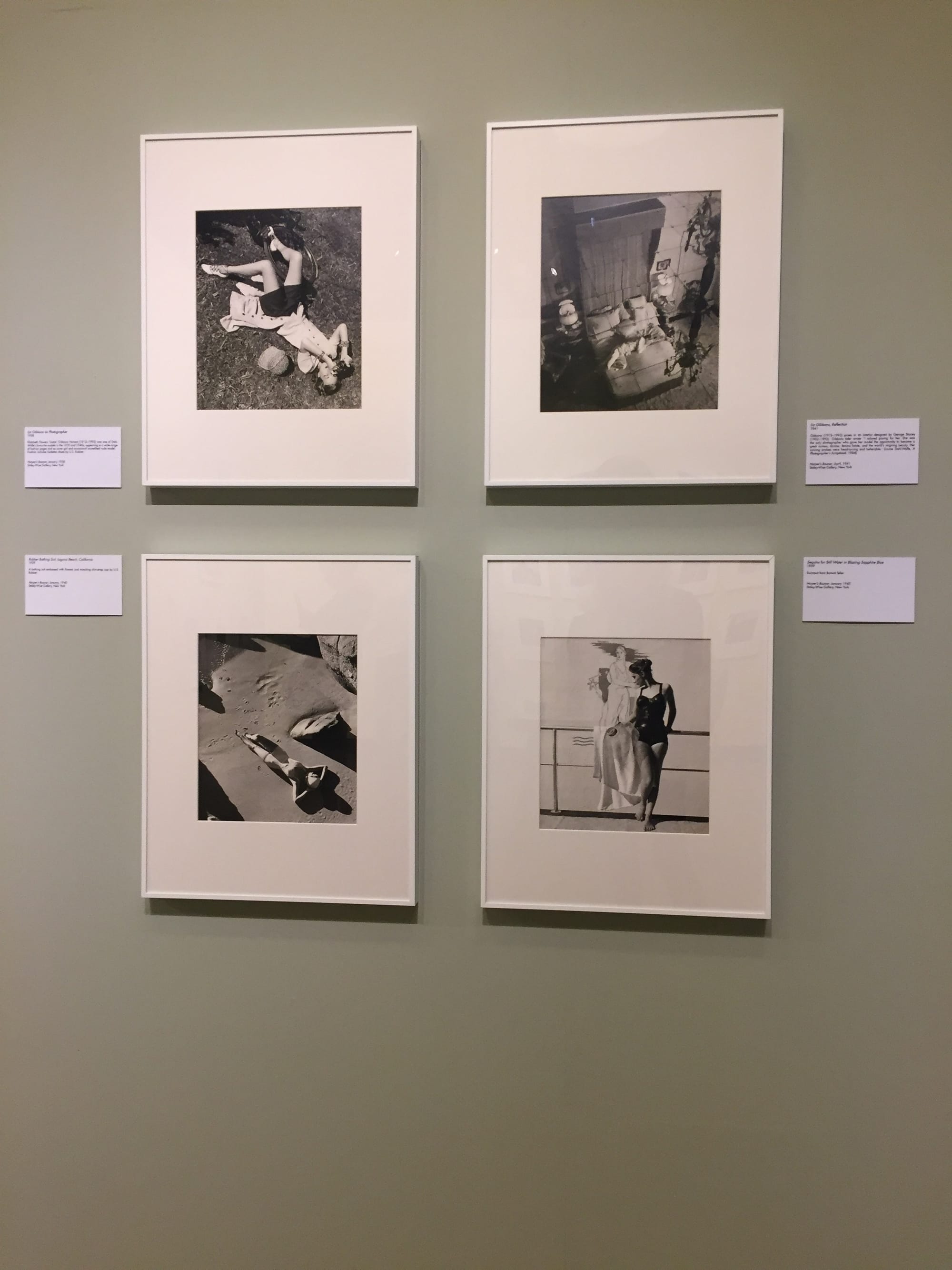
On Saturday the 19th of October 2017, I paid a visit to the Fashion and Textile Museum and saw an exhibition solely focusing on the work of Louise Dahl-Wolfe.
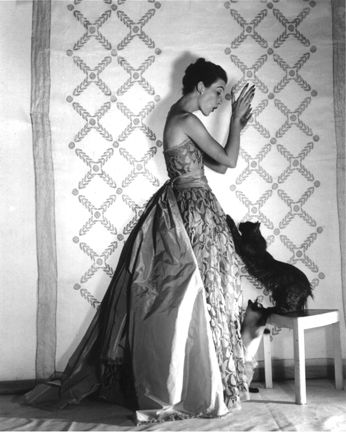
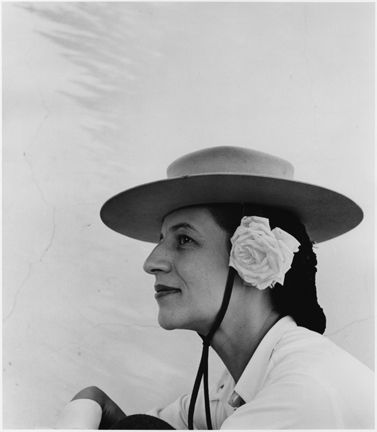
Louise Dahl-Wolfe was an iconic women fashion photographer and played a key role in the first part of the 20th Century. This exhibit tied in very nicely to the Harper’s Bazaar exhibition as Louise Dahl-Wolfe actually working with the magazine for a large portion of 22 years in her life, as a leading photographer and contributor to the magazine.
Louise contributed over 86 covers for the magazine, 600 coloured photos and 2,000 black and white images. She often photographed in exotic locations and was rarely taking photos inside but instead outside which was a key theme in her line of work. Some of the exotic locations she went to include the likes of Cuba, South America, Spain and Mexico.
She always made sure her work was carefully and precisely planned to the very last detail.
The exhibition itself featured over 100 photographs going through three major decades in history, from the 1930s to the 1950s. And looks at all the fashion couture designers she worked with such as Chanel, Balenciaga and Dior. Also looking at the models she worked with such as Suzy Parker, Lizzie Gibbons and Evelyn Tripp.
Louise Dahl-Wolfe also tried to capture images of key authors at the time, working alongside the likes of Christopher Isherwood and Colette. And Hollywood stars such a Bette Davis and Vivien Leigh.
The main art forms involved were photography and fashion.
The best thing about this exhibit is that there were so many images to see and practically the majority of the whole museum was dedicated just to the work of this influential fashion photographer. You could just spend the whole day looking at her work. My favourite thing about her work was looking at all the fantastic and bizarre locations she went to just to capture a photographer that millions would see later on.
It was so inspiring to see a women in her position with such a high success in her career even though the circumstances in those decades were not the best, and she went so far.
I thought there was nothing I would have immediately changed to this exhibit expect maybe even have more images if that would even be possible as there were already so many there, but I would have liked to see even more of her work as it was so good.
I learnt a lot of this photographer as I never knew of her before this exhibit which talked so much about her life and influences.
I definitely took away that photography is also a main part of the fashion industry because it is all great making the most exquisite dress for example, but without a good photographer, there really is not any justice being paid to the dress and it cannot be shown and presented around the world and at a large rate.
Overall, I really enjoyed this exhibit as it was so interesting to see all the work put together by just one person and would definitely recommend for others to go pay a visit and view her work.
Wallace Sewell Exhibition Review:
On Saturday the 18th of November 2017, I visited the Fashion and Textiles Museum to see the exhibition celebrating the brand, Wallace Sewell, and their 25 year anniversary of being textile designers.
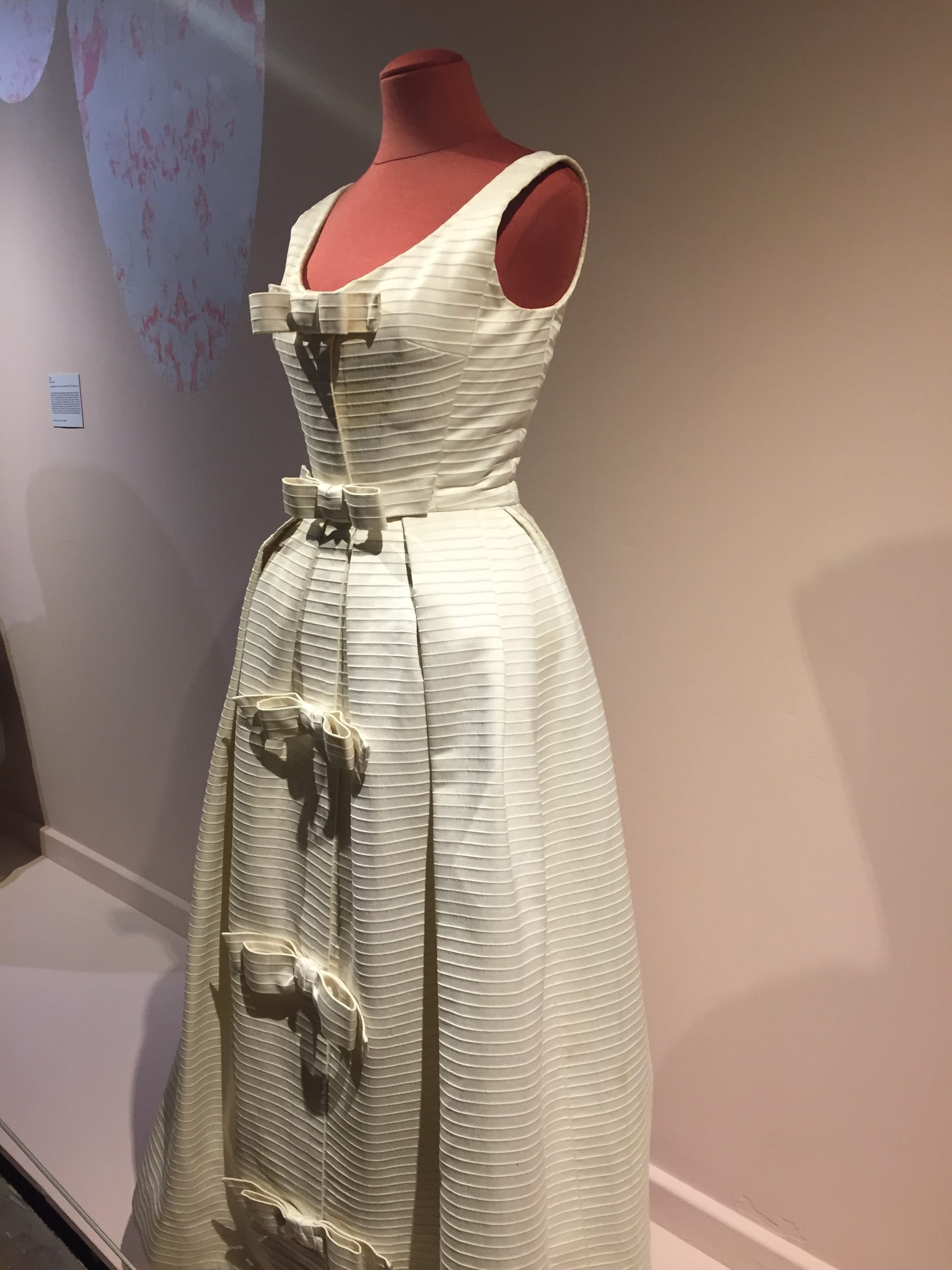
I arrived at the museum and sectioned off on the top floor was the exhibition space for Wallace Sewell. Although there was only a limited amount of space for this particular exhibit, there was a lot compacted into it, with the display of the clothes on the mannequins and the information boxes.
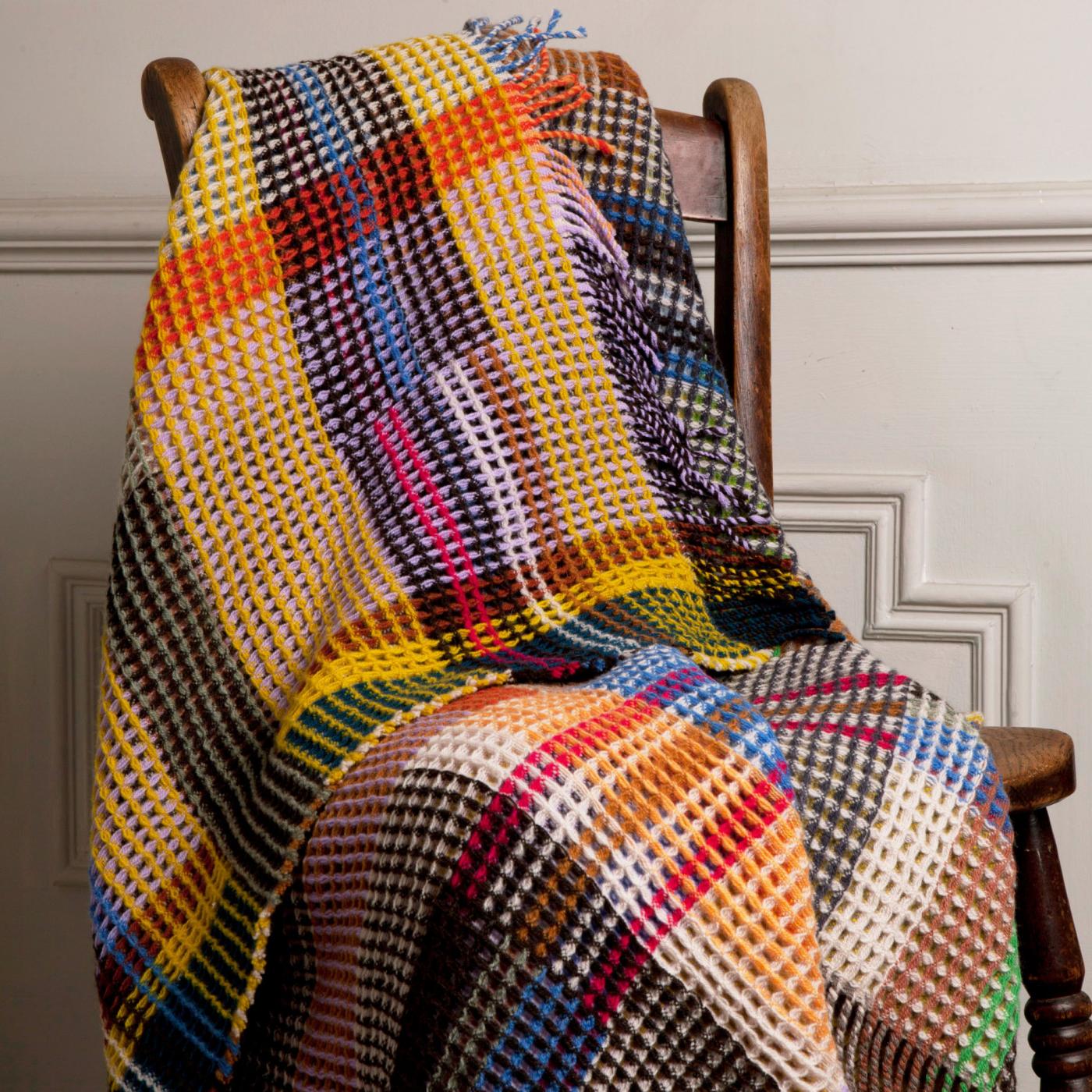
Wallace Sewell is a design studio, which specialize in woven textiles. This brand was founded in 1992 by two textile designers; Harriet Wallace-Jones and Emma Sewell.
They take inspiration mainly from the countryside but also the city, looking at the colours and textures. They are also very influenced by the aesthetic of the Bauhaus era.
Wallace Sewell weave quality fabrics using traditional methods. They like to use a large range of colour and a lot of geometric patterns in their work, and make everything from scarves to cushions. Their most famous piece of work is the fabric pattern which can be found on the seats on public transport in London.
Their work can be found in over 200 shops all over the world, including the Tate and MOMA.
The exhibit I visited particularly focused on the highlights 25 years in the industry had brought to them and what they had achieved and produced.
What I found most inspiring was that this business was founded by graduates of the Royal College of Art, and I had found this so inspiring because they had started such a successful brand at such a young age.
The art forms involved were mainly just that of designing and making.
I have seen exhibits similar this Wallace Sewell exhibit such as the Fashion Through the Ages Exhibit back last year, and it was similar because there was a lot of clothes and information on display and it had the same feel to it.
The fact that there was not a lot of space given for this exhibit was a bit unexpected as I would have thought that a brand such as Wallace Sewell themselves would have had a lot more to show so it was a shame that not a lot of space was available for them to show off their work more.
In general it was a good exhibit as a learnt a lot more about the brand than I started off before the exhibit. However, I would have wanted to see more of their work if only there was more space available for them.
I learnt that there are more than one way of traditional woven crafting, such as using the symmetrical and diagonal weave or tablet weaving.
Overall I enjoyed this exhibit and will definitely look out for their work in shops and on display in the future.
Traditional Portuguese Clothing Exhibition Review:
On the 30th of December 2017, I travelled to Portugal with my family for a day trip and went to the fashion and art museum to see the traditional Portuguese fashion exhibit.
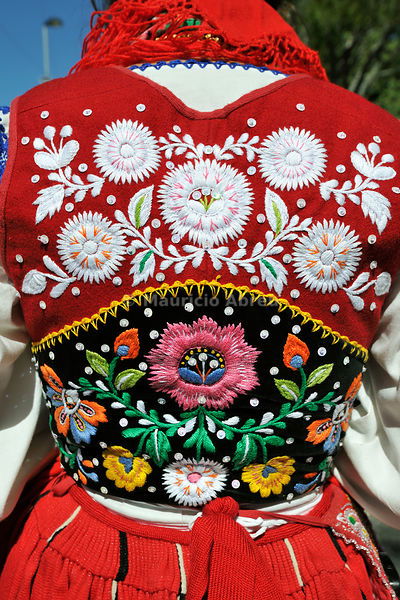
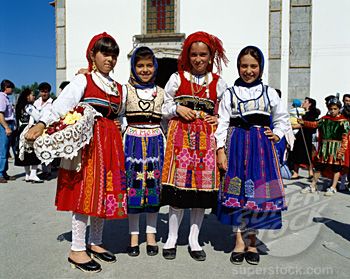
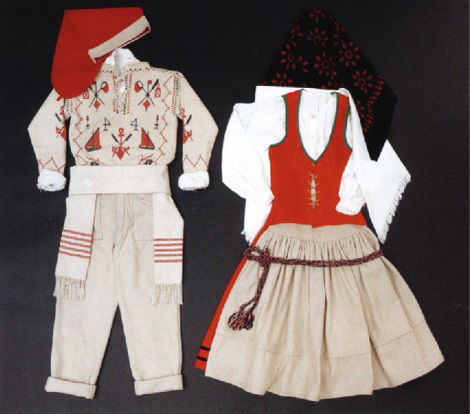
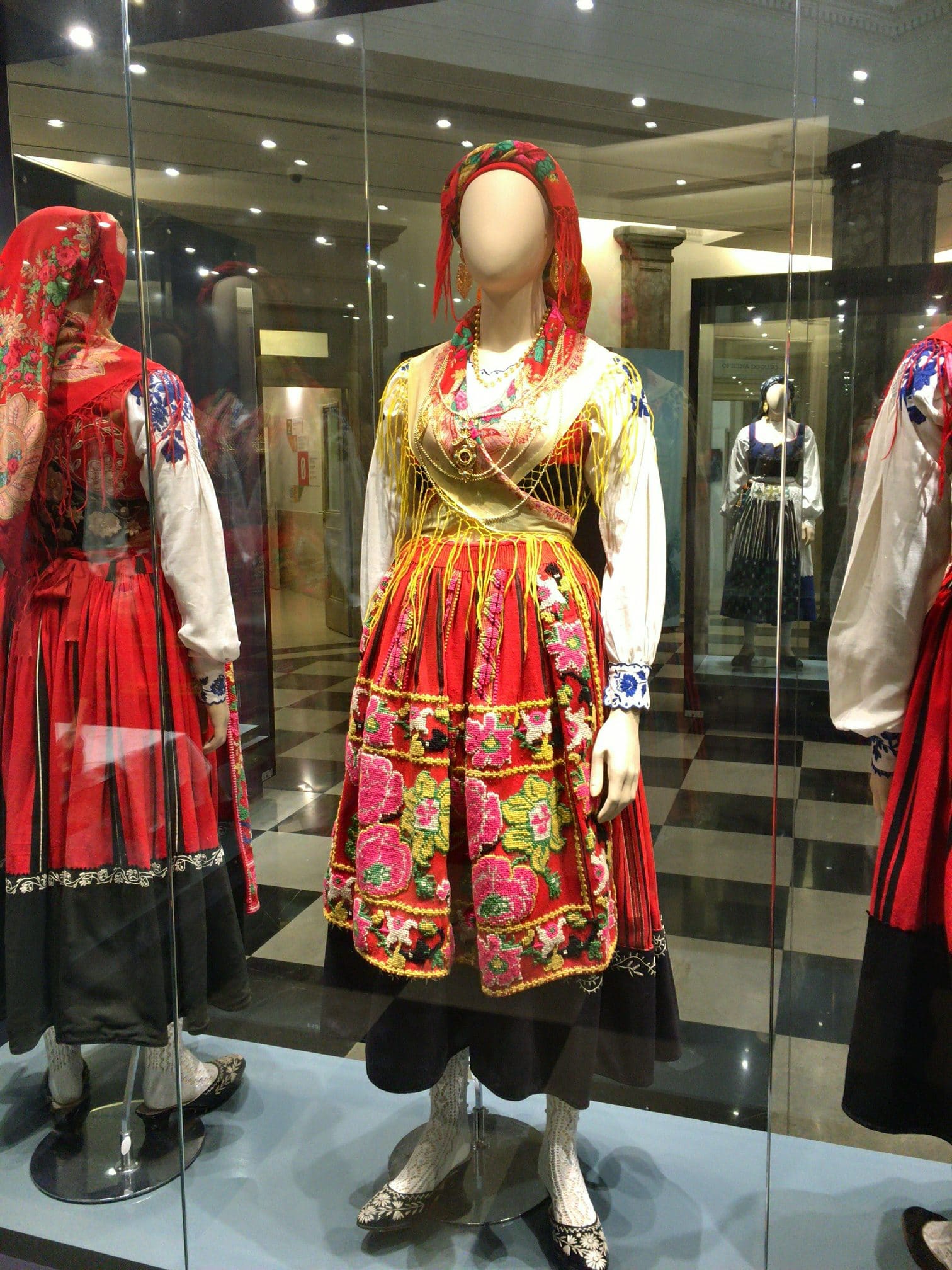
This exhibit went over four floors and all the space was completely dedicated to displaying authentic Portuguese outfits dating back several decades and plenty of information about things such as the origins of the outfits and how different classes would have dressed differently. Unfortunately only the outfit at the entrance was allowed to be photographed but the rest of the exhibit was not allowed to be photographed so I have used pictures from the internet as secondary sources.
The first floor was mainly dedicated for what the lower class people would have worn, these types of people were the likes of peasants and maids.
The second floor was for a slightly higher status than the peasants, and this floor was mainly looking at male fashion. This floor looked at the clothing that farmers, merchants and craftsmen would have worn.
The third and fourth floor were generally what only higher class people at the time would have been able to afford and were mainly very traditional looking dresses. These dresses would usually be either vibrant colours such as reds or darker colours such as greens, navy blue and blacks. These dresses would in some regions usually have celtic patterns embroidered onto them which is because the Northern part of Portugal is a Celtic land.
These traditional dresses for the higher class would not be used daily but mainly for special occasions in Portugal like the Saints’ Feasts or a Folk show.
These dresses would cover most of the body as Portugal was highly religious and devoted Catholics and they believed that these dresses should be very modest. The dresses would have long sleeves and would be very long, always either touching the floor or at least over the knee.
Another example of a type of traditional dress, which was aimed at engaged women, used more expensive fabric and the linen were of very fine quality. The women would also wear a silk scarf to wrap around their head and shoulders to cover them even more which symbolised that they “were waiting until marriage” and were modest.
A more excessive example of a traditional outfit would be for a “Mordoma” which means in Portuguese; the women in charge of all the servants in the house. Now in this case the outfit would not contain long white sleeves like the majority of the dresses but a black embroidered jacket.
My last example was a wedding dress thought to be from a woman with the upmost class and power. These type of dresses would be very rare and tailor made. This wedding dress was handmade with silk and used over 50,000 Swarovski crystals and apparently took about 950 hours to make.
I have seen exhibits similar to this one such as the V&A’s Through the Ages Exhibit which showed fashion and objects from the past such as this exhibit did. However no exhibit that I have been to before, was done to such a big scale like this one.
I like that there was so much information available to read through but I would have liked to be able to take some pictures, especially from the wedding dress which was a fantastic piece of work.
I learnt a lot about the Portuguese culture and about their traditional outfits which I enjoyed as I did not know anything about it before. Overall, it was a really interesting experience.
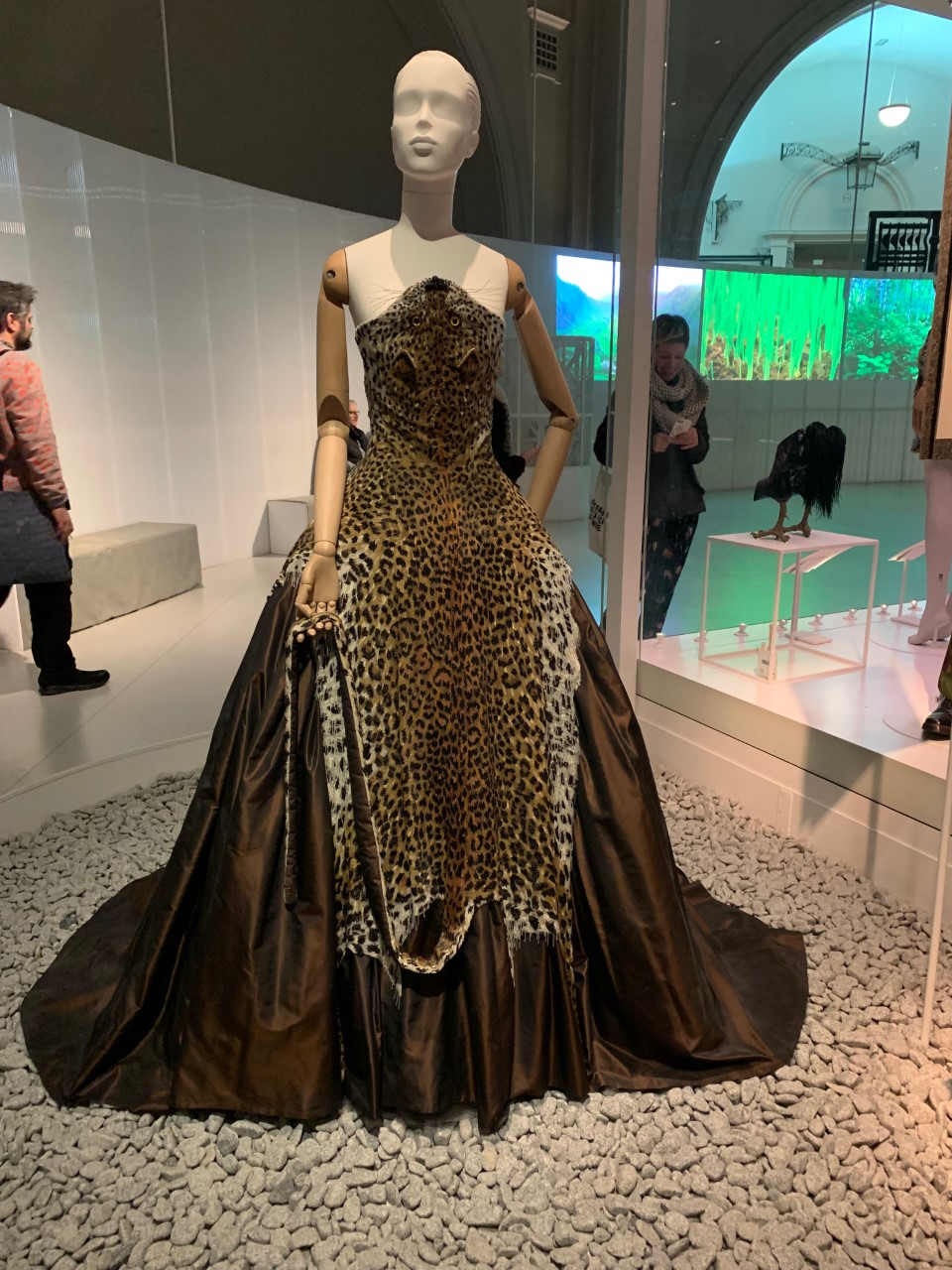
Fashioned from Nature Exhibition Review:
On Saturday the 1st December 2018, I went to the Victoria & Albert Museum to visit the Fashioned by Nature exhibition that they had on display.
The purpose of the exhibition was to explore the relationship between fashion and nature from all the way back to the year 1600 to the current year. The exhibition showed the inspiration that some pieces of fashion drew from nature and also highlighted the harmful effects on thenatural environment of the ever growing scale of the fashion and clothing industry.
The exhibit was focused on trying to answer to main questions; 1. How can we design a more sustainable fashion industry? 2. What can we learn from the past?
This experience examined how clothing production has changedover time and the challenges faced by everyone in modern day society; to create and buy clothes that are beautiful and responsibly sourced, and to value our clothes more.
At the entrance, there was three pieces of advice on the wall that the producers of the exhibit placed there to encourage viewers to buy more sustainably. The three pieces of advice were; choose carefully: look good.Wear wisely: feel good. Recycle: be generous.
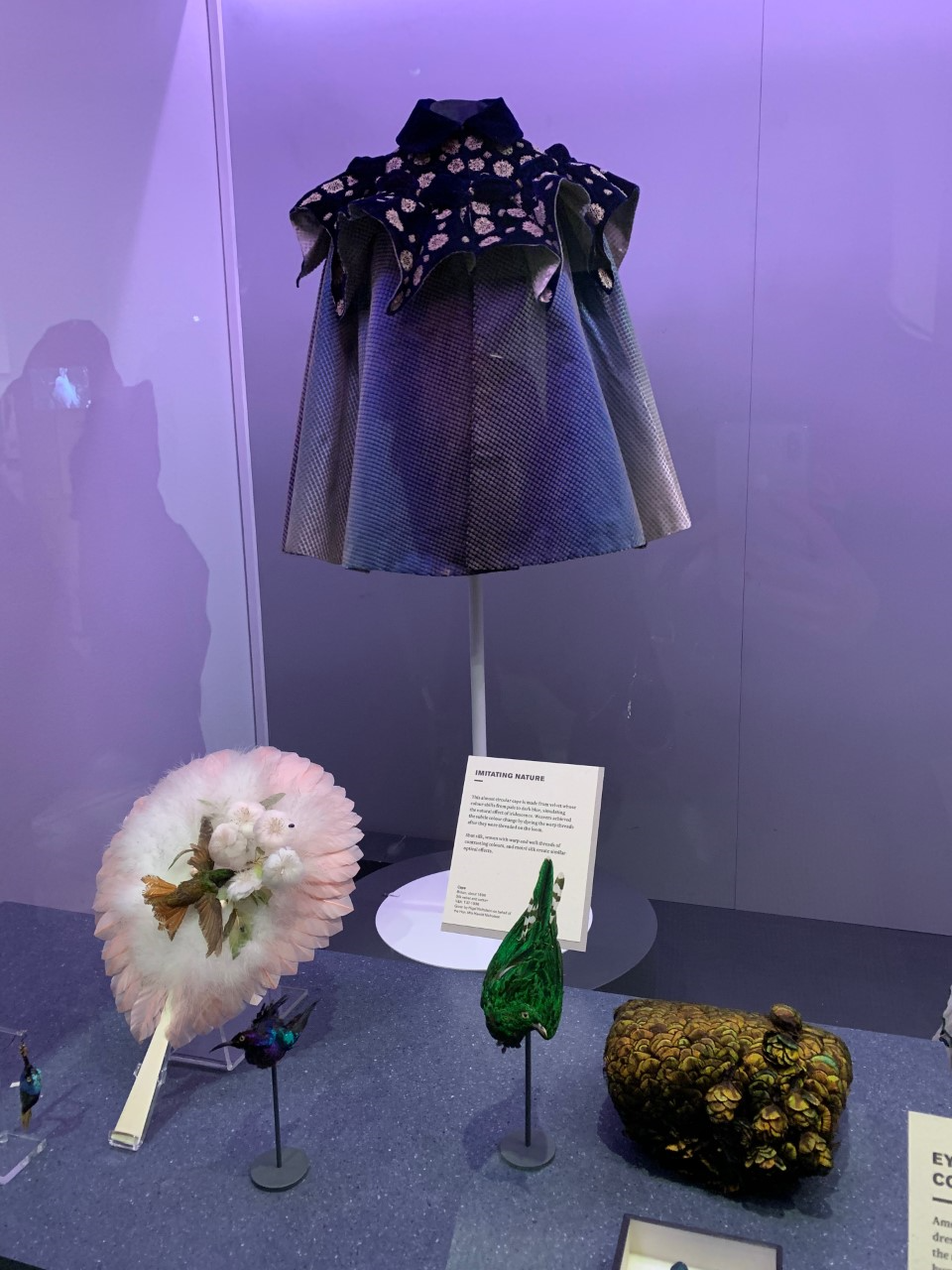
There were 300 objects on display to highlight how dependant the fashion industry is on nature for inspiration, energy and materials. There were some beautiful garments and accessories by Christian Dior, Dries van Noten and Philip Treacy, to show how nature is so powerful and inspirational and how these designers drew inspiration for their own designs and styles.
The designs from Calvin Klein and Stella McCartney showed how modern designers are creating desirable and exciting sustainable fashion.
The exhibition traces 400 years of fashion and questions what can be learnt from principles in fashion of the past. It is a celebration of the creativity and innovation in the fashion industry and asks how the industry can design fashionably whilst respecting, protecting and celebrating the natural world.
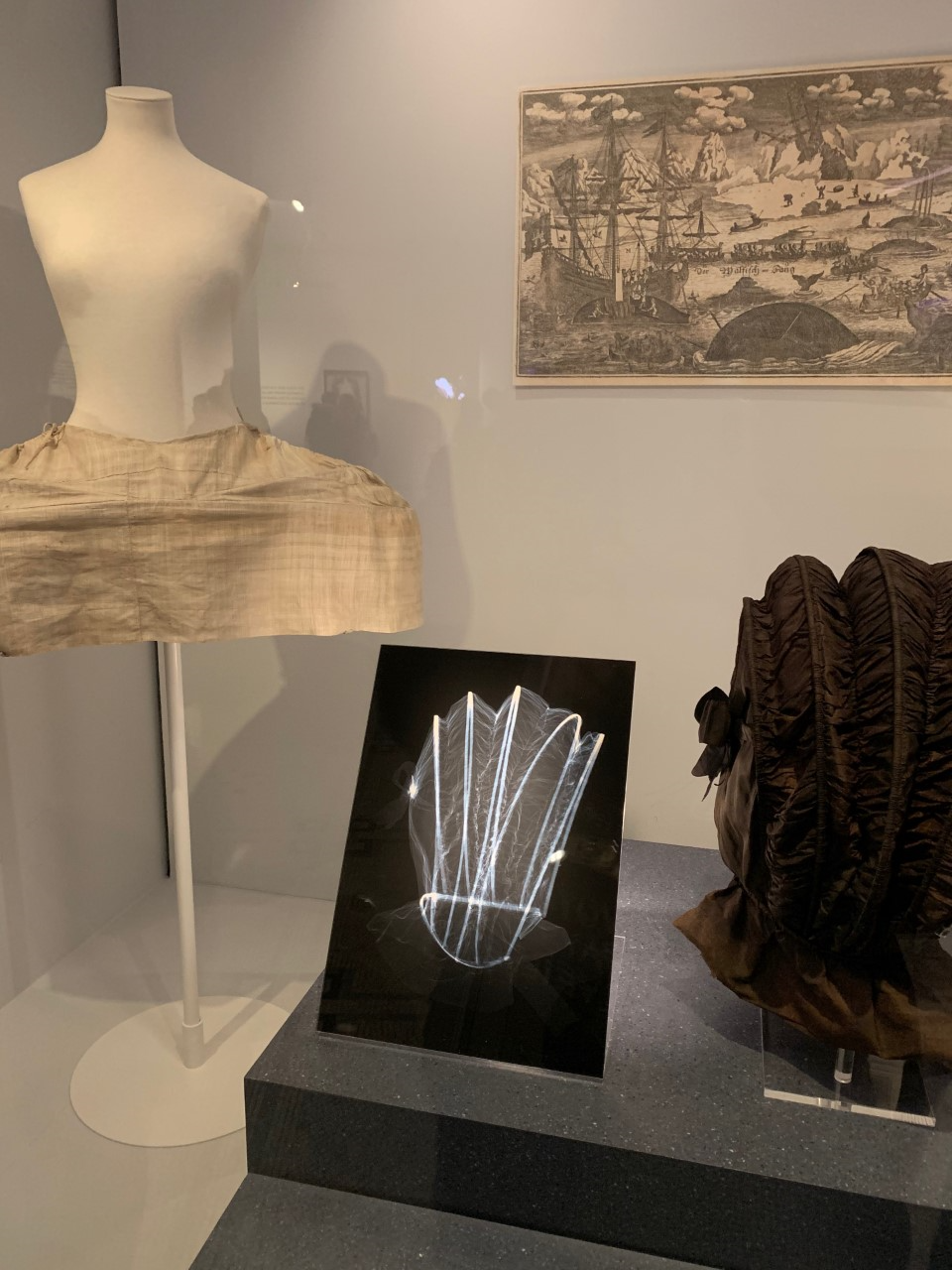
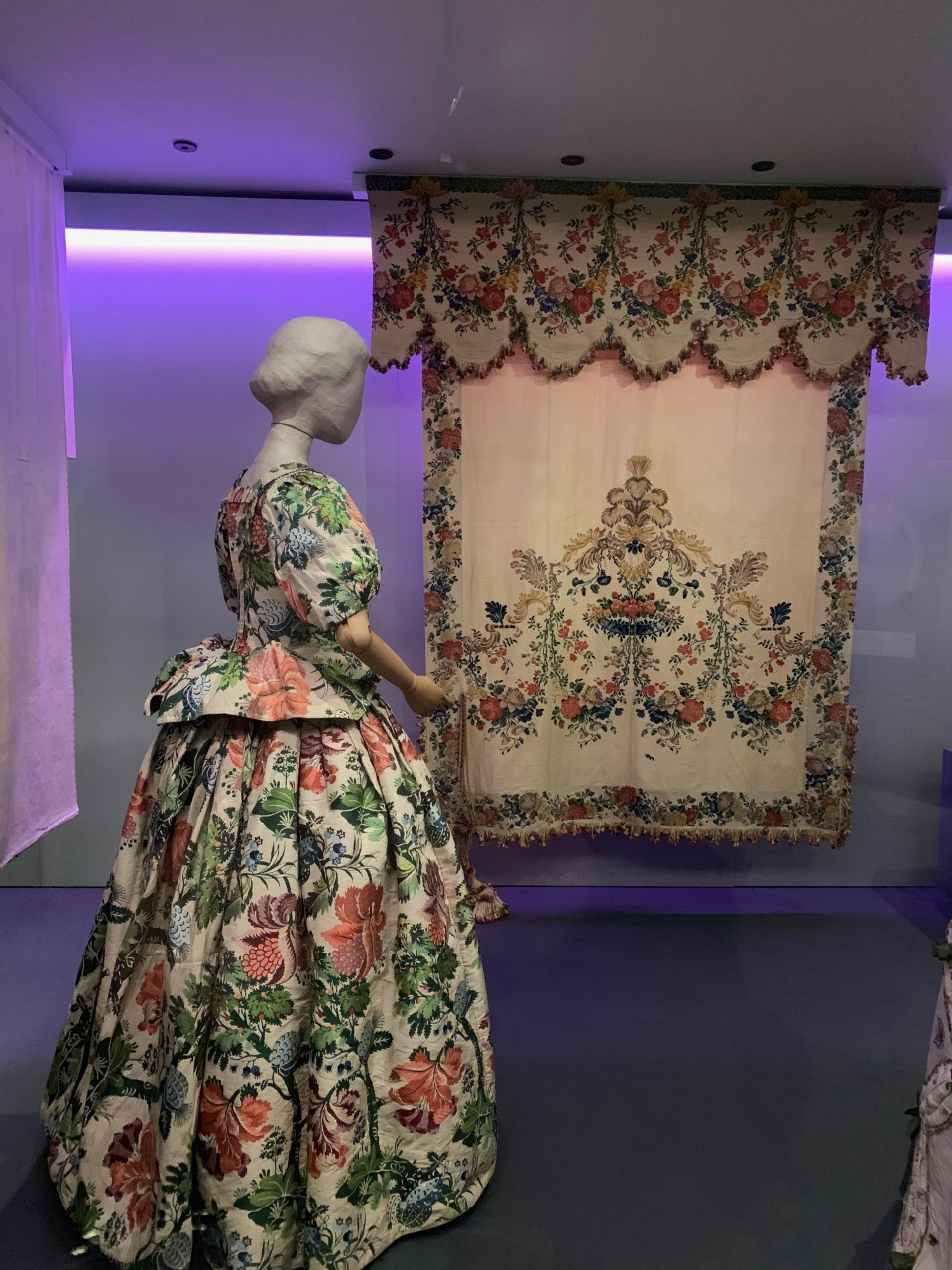
There was a lot of information on materials, which I will be summarising what I learnt from the exhibition. The first material which was focused on flax. Linen is made from a plant called flax. This was worn from upper class to lower class from the years 1600 to 1800. This was used because flax fibres are strong and absorb moisture and conduct heat well. It was a very common material although it lacked elasticity so it was not stretchy. This material was used to make underwear, gowns, waistcoats, accessories, lace and linen.
The next material which was the exhibition was focused on was whalebone and cane. Whalebone, otherwise known as baleen, was used to stiffen and shape women’s clothing and also to make accessories. Baleen is cut from the upper jaw of baleen whales. It is strong, light, flexible and pliable when the material is heated.
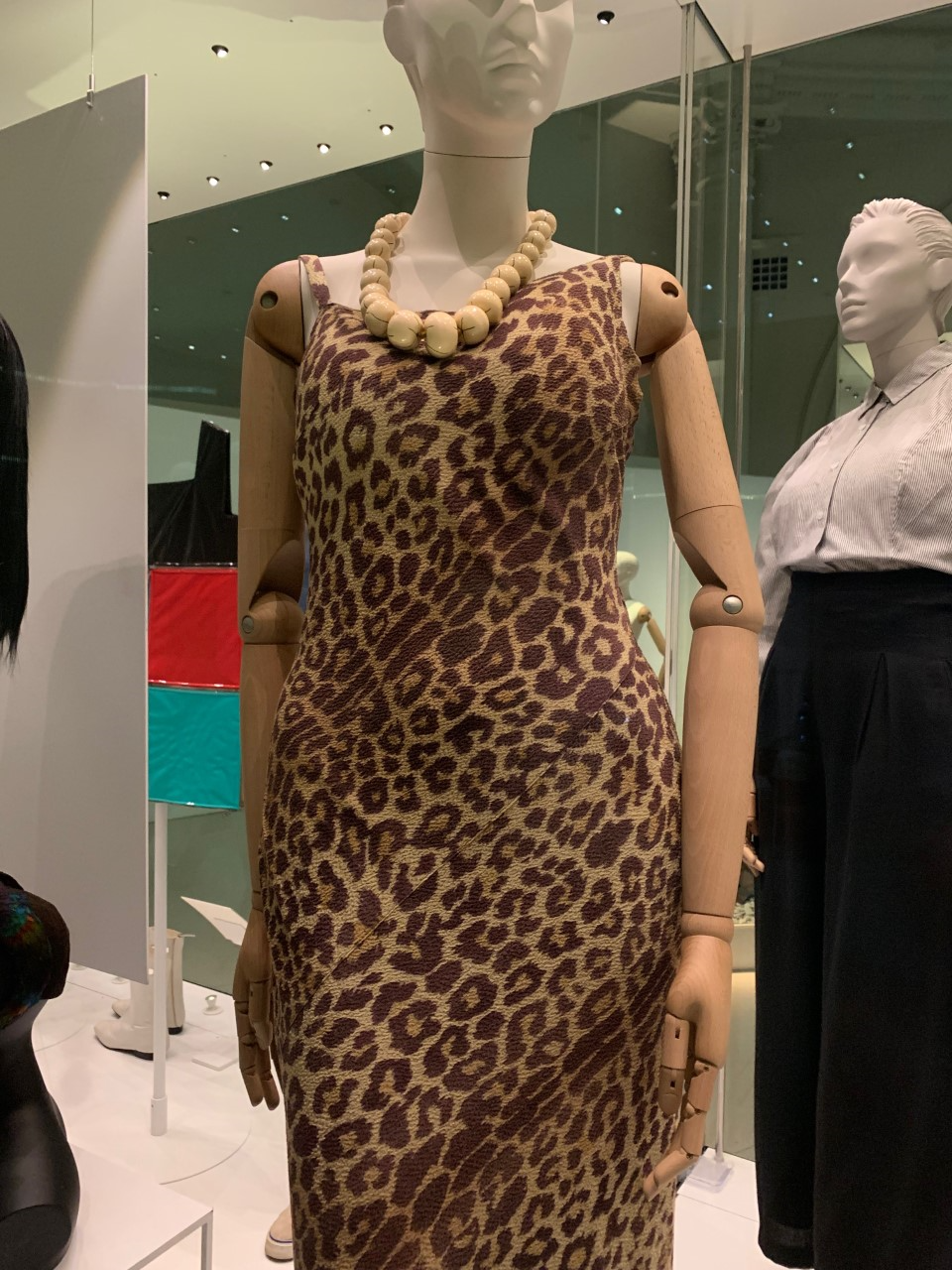
Moving more on to more contemporary materials used in the1930s, was a material called textured rayon. The fabric imitated leopard fur which was fashionable to wear at that time period. Rayon was manufactured from wood pulp and converted to viscose rayon using a chemical called carbon disulphide.
Once this chemical was released into the environment, it produced air and water pollution and a horrible smell. The factory workers who were exposed to these fumes were in high risk of nerve damage and heartdisease.
There was a necklace on display shown in one of the pictures above, which was very sustainably made and was made of casein. Casein was usually made from dried milk curds reduced to powder, then water was added and hardened in a solution with a chemical called formaldehyde.
There was some beautiful and eccentric head pieces on display made by a hairstylist and make-up artist called Katsuya Kamo. These dramatic headpieces are made from both natural and man-made materials. The designer also collaborated with prestigious fashion houses such as Junya Watanabe and Chanel.
There was a piece from a designer called Diana Scherer who trains the roots of plants to grow in intricate structures, which creates a 3D textile. When the roots are fully grown, she removes them from the soil and cuts off the plant stems. These pieces which she produces are not yet suitable to be worn but the designer hints that more research is being made from her part to create a more sustainable fashion future.
The art forms involved in this exhibit were designing, making, sewing and embroidery.
I have seen various exhibitions at the Victoria & Albert Museum before like this one. It was similar to exhibitions I have seen before in the sense of the set up. The clothes were on display with paragraphs of information either on the walls or on small cards below.
What was unexpected about this exhibition was the pieces themselves which took hours and hours of work from a large team of people. Some of the pieces were so detailed that it was impossible to imagine and believe how someone actually come about to produce and make that garment.
I think what went worked well in the exhibition was that there was such a range of different pieces and garments from such a long period of time, and so many facts and information readily available to read and listen to from even the year 1600.
I think what was less good about the exhibit was the sound track in the background of various wildlife. I think it was a good detail to add bearing in mind that the exhibition was based on nature, but I think itwas turned up a bit too loud in my opinion, which was a bit distracting when trying to read the information located around the exhibit.
Overall, I really enjoyed this exhibition and I took away alot of information and facts, mainly of materials, fabrics and processes in the fashion and clothing industry.
'The Favourite' Costume Exhibition Review:
On Saturday the 2nd of February 2017, I visited the exhibition displaying the costumes and wigs from the historical movie; ‘The Favourite’. This exhibition was located in the Kensington Palace and was an exclusive exhibition to see all the behind the scenes information about the movie and to actually see the costumes and wigs in real life.
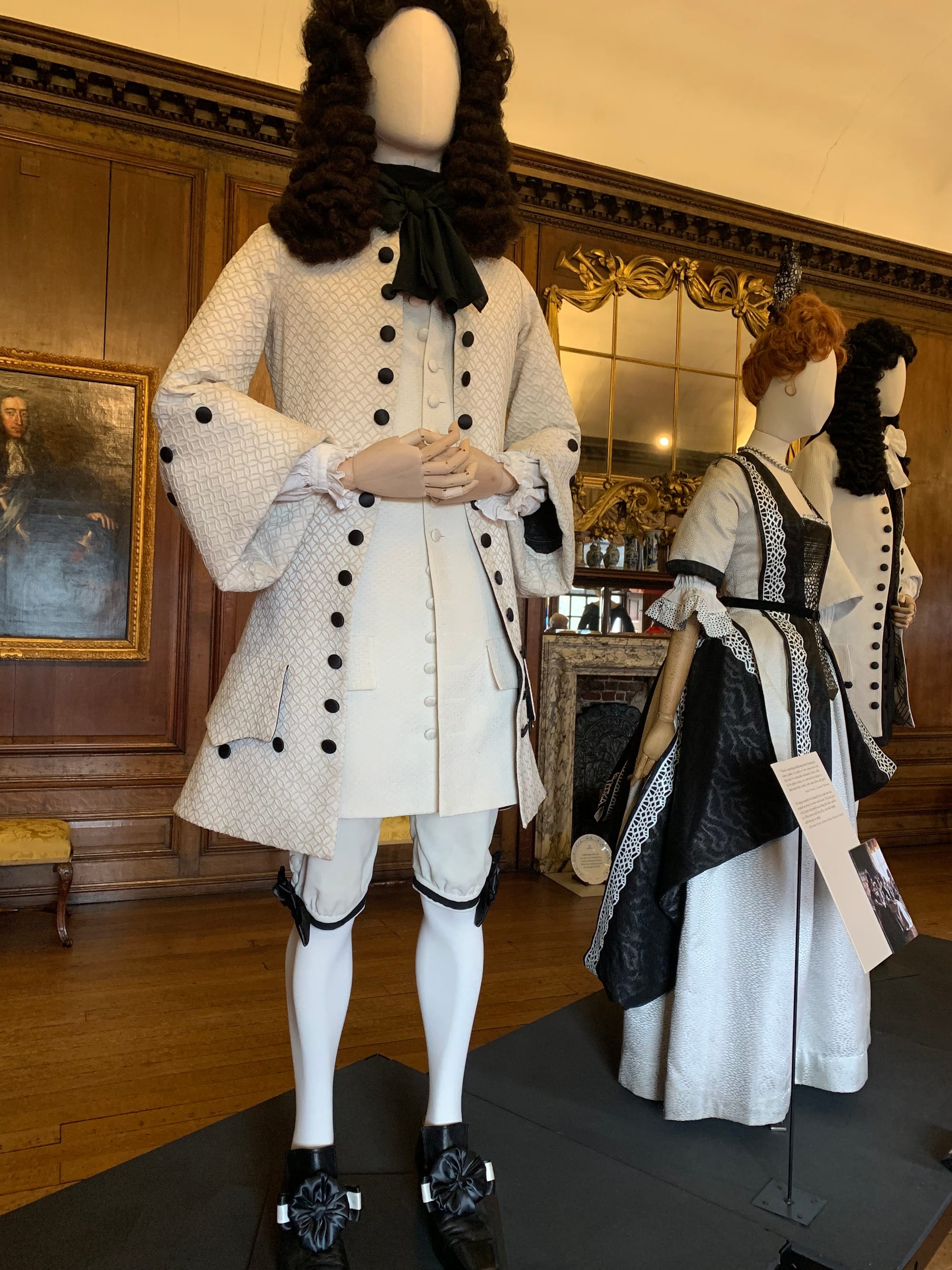
Sandy Powell, who is a three time Oscar winning costume designer, created the costumes that I saw on display for the feature film ‘The Favourite’. The wigs that were on display were styled by the film’s hair and make up designer, Nadia Stacey. It was also very fitting how the costumes were on display in Kensington Palace where many of the historical events that inspired the film took place in. The film itself explores the relationships and power struggles of Queen Anne and two of her closest female attendants. The film’s story and plot is mainly told through the clothes, the acting, writing, sound and design. While the costumes take inspiration from 18th century silhouettes, Sandy Powell experimented with colour, fabric and design to create a modern interpretation of courtly fashion.
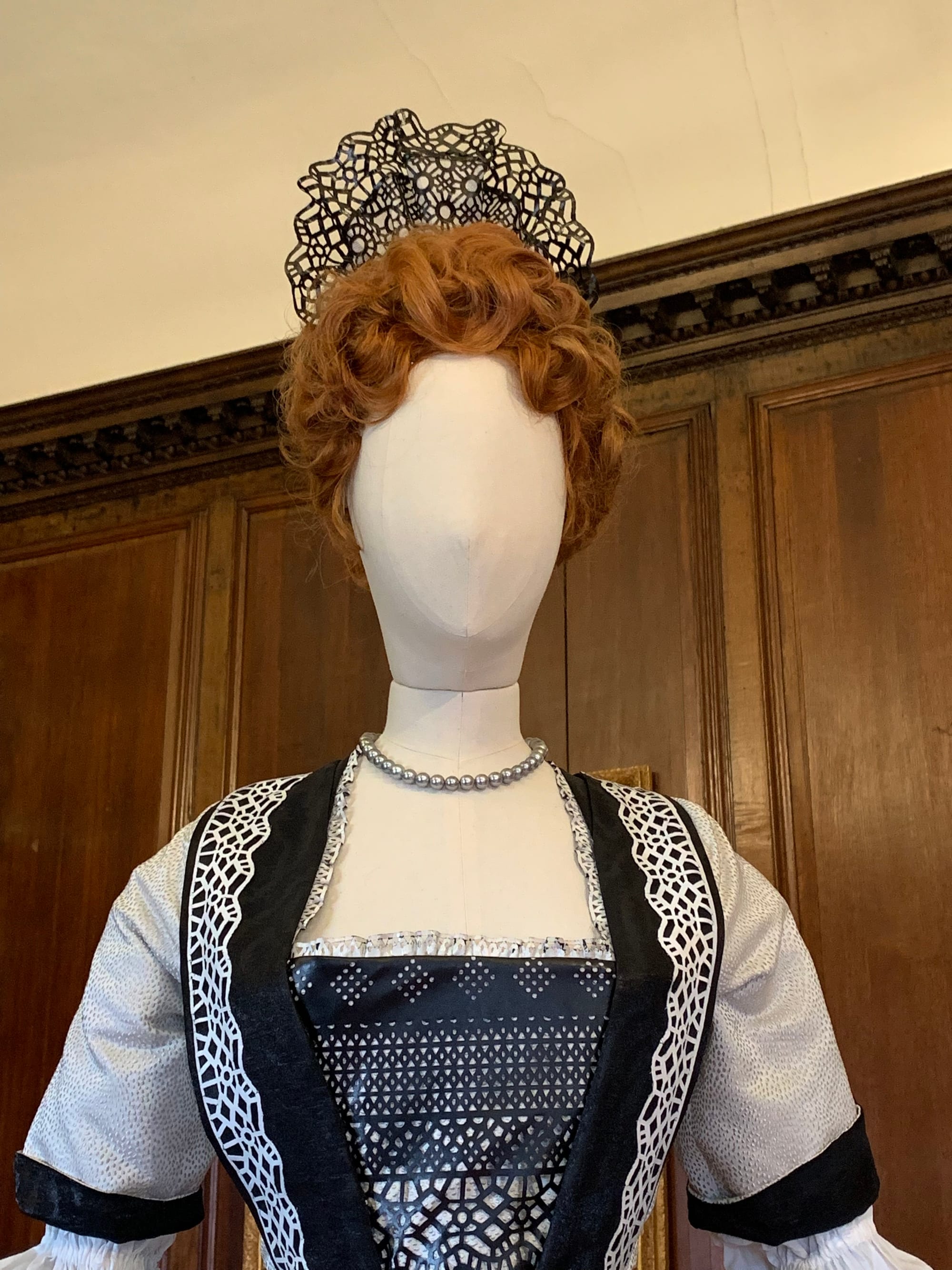
Powell was even quoted to say; “I knew it was going to be period yet slightly off the wall and there was an element of stylization involved – all the things I love.” Sandy Powell limited the colour palette of the designs of the costumes for the film. It was a new experience for her as she always likes to incorporate a lot of colour in her designs. However, for “The Favourite” film, she eliminated colour completely from the film. Especially in the scenes taken in the palace, she restricted the colours to strictly black and white but with some silvers and greys incorporated. Sandy Powell wanted to focus a lot on the army of courtiers and servants in the film aside from the monarchs as the monarchs are usually the ones who are focused on the most. Powell thought to incorporate a lot of detail into the costumes of the courtiers and the servants as she thought that these people were even a bit more important than the monarchs as they were the ones who made everything run smoothly behind the scenes. They also had access to the Queen and probably even saw things that others could not see. Powell wanted to explore the stories these people could tell us and what insights they could give us today.
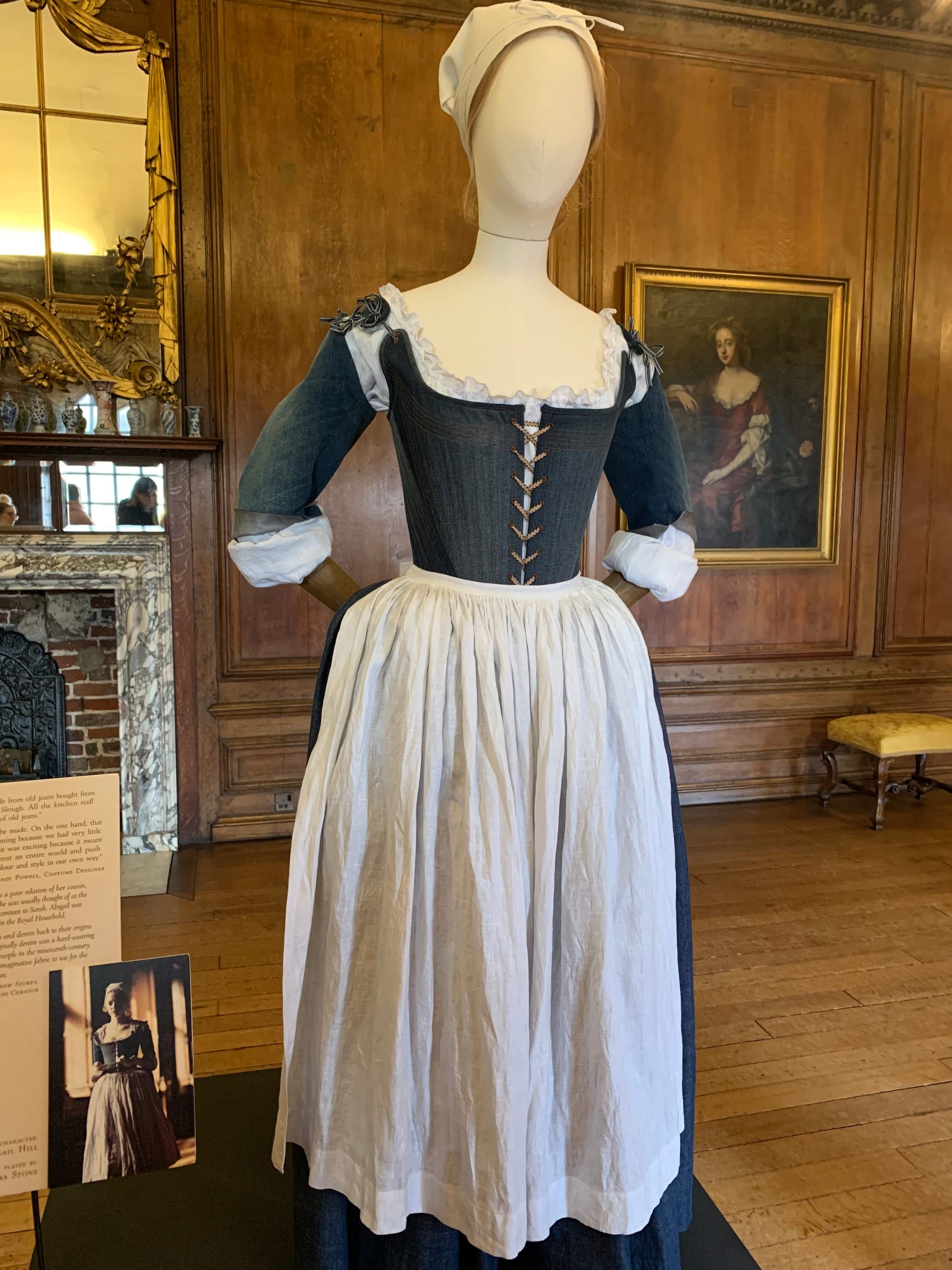
One of the costumes I saw at the exhibit, had a bodice made from old jeans bought from charity shops near Slough. In the film, all the kitchen staff’s costumes are made up of all these old jeans. Everything had to be handmade as that was one of the main design briefs that the costume making department were given. The costume department found it quite daunting that everything had to be handmade as there was such little time that they were given to do so. On the other hand, they also found this design brief very exciting because it meant that they were able to invent an entire world and push things in terms of colour and style in their own individual way.
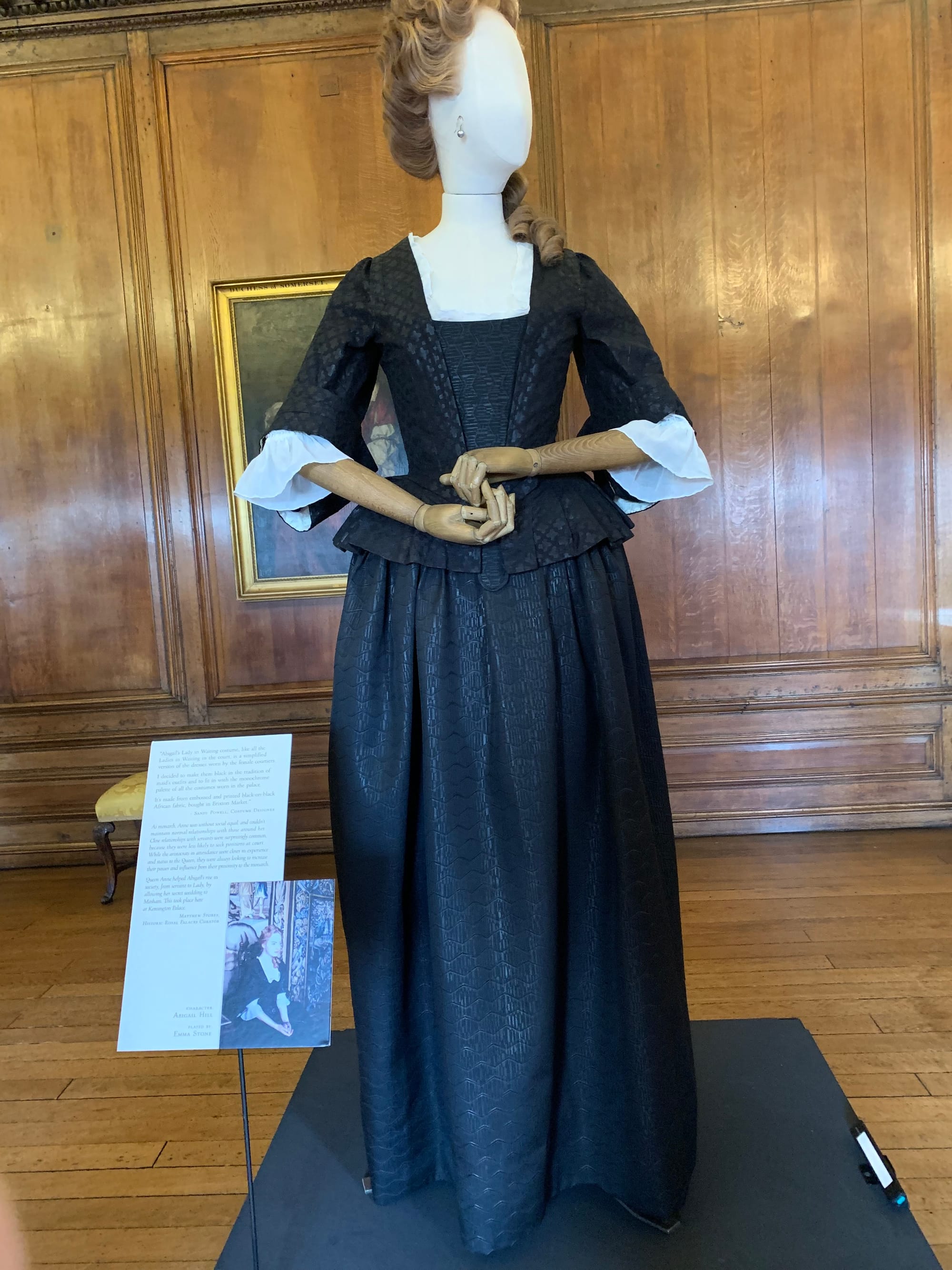
There was a character called Abigail Hill played by Emma Stone, who was written to be of poor origin originally but to have a cousin of a high class, this was the character Lady Sarah Churchill. Abigail was thought of as the more gentle, supportive, contrast to her cousin, Sarah. Abigail was given work as a servant in the Royal Household. The costume made out of old jeans that Abigail wore at the beginning of the film, brings jeans and denim back to their origins as working clothing. Originally denim was a hard wearing fabric worn by working people in the nineteenth century, so it was an intelligent and imaginative fabric to use for the eighteenth century servants.
There was a lot of history involved in the movie and a lot of research made by all the writers and costume designers. There was also a particular focus on Queen Anne and who her favourites were, which is one of the main issues discussed in the movie. Queen Anne did not enjoy the same limelight as the other female monarchs in British history. However, she was an incredibly effective stateswoman who ruled during a very difficult time in British history. Anne had a close personal and was suspected to also have had an intimate relationship with one of her childhood friend, Sarah Churchill who was the Duchess of Marlborough. Their friendship became particularly strained when Sarah’s cousin, Abigail, joined the Royal Household. The cousins had completely different political views, and both used Anne to further their own personal goals by competing for her favour. After an argument, Sarah blackmailed Queen Anne. She accused the monarch of a close, intimate relationship with Abigail. Same sex relationships were incredibly frowned upon at the time, so this was obviously a very serious accusation made at the time. However, the claims were not confirmed so there is no public, official theory to confirm this argument. Although there were letters from Anne revealing passion between the two.
There was another costume for the character; Abigail, for her lady in waiting costume, and like all the letters in waiting in the court, it is a simplified version of the dresses worn by the female courtiers. Sandy Powell decided to make the dress black in the tradition of maids outfits and so that the costume would fit in with the monochrome palette of all the costumes worn in the palace. The outfit was made from embossed and printed black on black African fabric, which was brought from Brixton Market. At monarch, Anne was without social equal and could not maintain normal relationships with those around her. Close relationships with servants were surprisingly common at the time because they were less likely to seek positions at court. While the aristocrats in attendance were closer in experience and status to the Queen, they were always looking to increase their power and influence from their proximity to the monarch. Queen Anne helped Abigail’s rise in society, from servant to Lady, by allowing her secret wedding to Masham. This event actually even took place in the Kensington Palace.
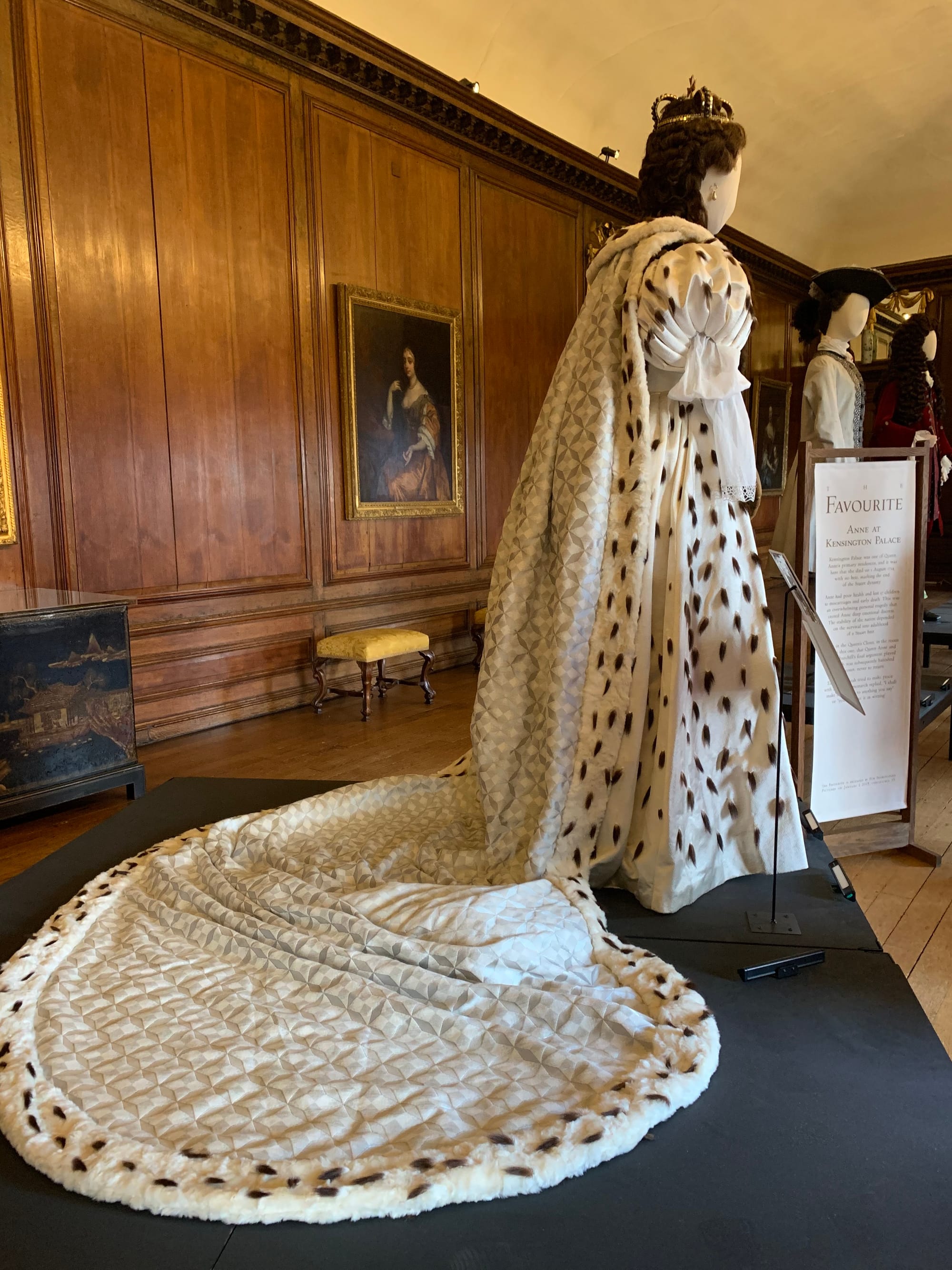
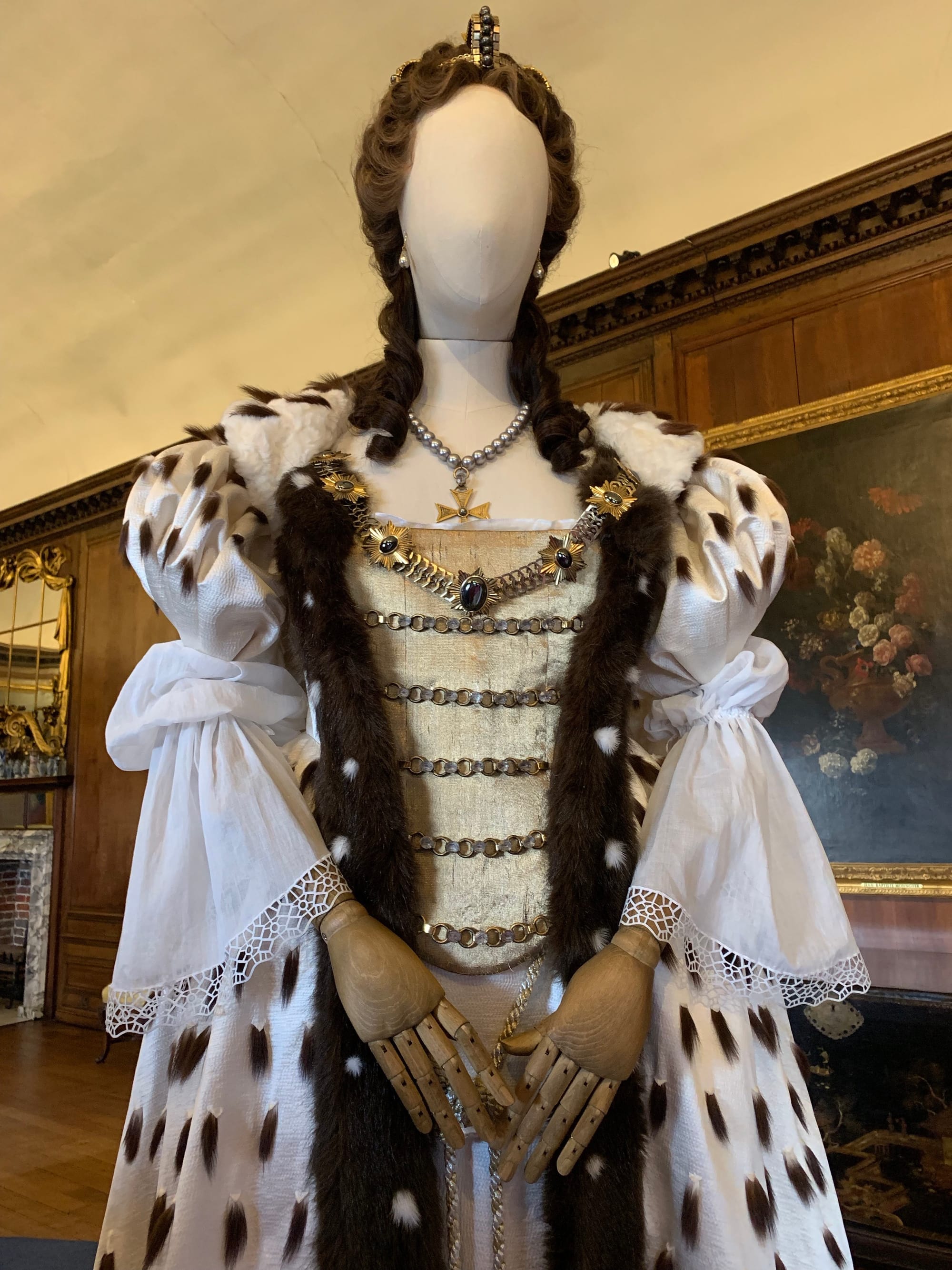
Another spectacular piece made and designed by Sandy Powell was the costume for Queen Anne who was played by Olivia Colman. This costume was the one that was the most closest copy to the actual robes of state that the Queen wore while addressing the Parliament. The shape and silhouette of this costume is based off those courtly portraits but the details are completely made up and stylized.
Queen Anne’s reign is very often forgotten about. These robes serve as a reminder of her role as a stateswoman. Her strong convictions, belief in stability, and the need to steer a path of moderation at a difficult time resulted in a successful reign which saw the creation of the United Kingdom.
Another costume made for the character; Sarah Churchill, who was played by the actress Rachel Weisz, had a very masculine outfit in one of the scenes. The costume designer never thought of the costume as being masculine and the character Lady Sarah is in control and manages to maintain her control for quite a long time. She is a commanding presence and she wears the pants in the same way as Katherine Hepburn did. That was the point of reference for her as a character.
Masculine dress on a woman was not uncommon at the time. Noblewomen wore more masculine clothes for leisure, such as for hunting. This outfit on display had a very strong basis in what people wore at the time. Lady Sarah influenced Anne to further her husband’s political career. People around the monarch were jealous of favourites, not because of a moral judgement on same sex relationships (as those were frowned upon at the time) but because favourites had access and power over the monarch that rivals wanted.
The costume made for the characters; Robert Harley and the Duke of Marlborough who were played by Nicholas Hoult and Mark Gatiss, had extremely extravagant costume. Harley was even described as being a peacock, an utterly over the top flamboyant dandy. His dress is similar to all the other male characters but his dress had over the top ruffles, frills and a lot of extra lace. Everything is a little bigger and more exaggerated than all the other male characters. And since the actor who played Harley was six foot two, with his three inch heels, he towered over everyone else which added to the look.
The politicians as it was indicated in the script, are defined by their colours. The Tories are in blue and the Whigs are in red.
Men at the time wore wigs usually made from horsehair or human hair. Through colour, fabric and the embellishment of clothes they could show off their status and wealth. War with France was controversial. Abigail’s cousin, Robert Harley wanted an end to the war. Sarah’s husband, the Duke of Marlborough, was commander of the English forces. Queen Anne was a political moderate, using her influence to steer the course between two parties. In the early eighteenth century the monarch could not rule without Parliament. Politicians were far more powerful than they ever were before.
The many art forms involved in this exhibition were; designing, sewing, making fashion clothing and obviously all the art forms involved when making a movie such as acting, set design, lighting etc.
I have seen similar exhibitions to this such as the Fashion Together Exhibition in Westminster, in the sense that the clothes were not constricted to glass cases but instead were displayed on mannequins dotted around the room. There was also quite a lot of direct quotes from the costume designer and a lot of descriptions such as those displayed in the Fashion Together exhibit.
However, it was also a very original exhibit and unlike any exhibit I have ever seen, due to the fact that this exhibition displayed clothes actually worn in a movie so it was like a behind the scenes.
Overall I found this exhibit very interesting as I learnt a lot about costume designing and working on a set of a movie, along with a lot of history and research that went into making the movie.
Diana: Fashion Story Exhibition Review:
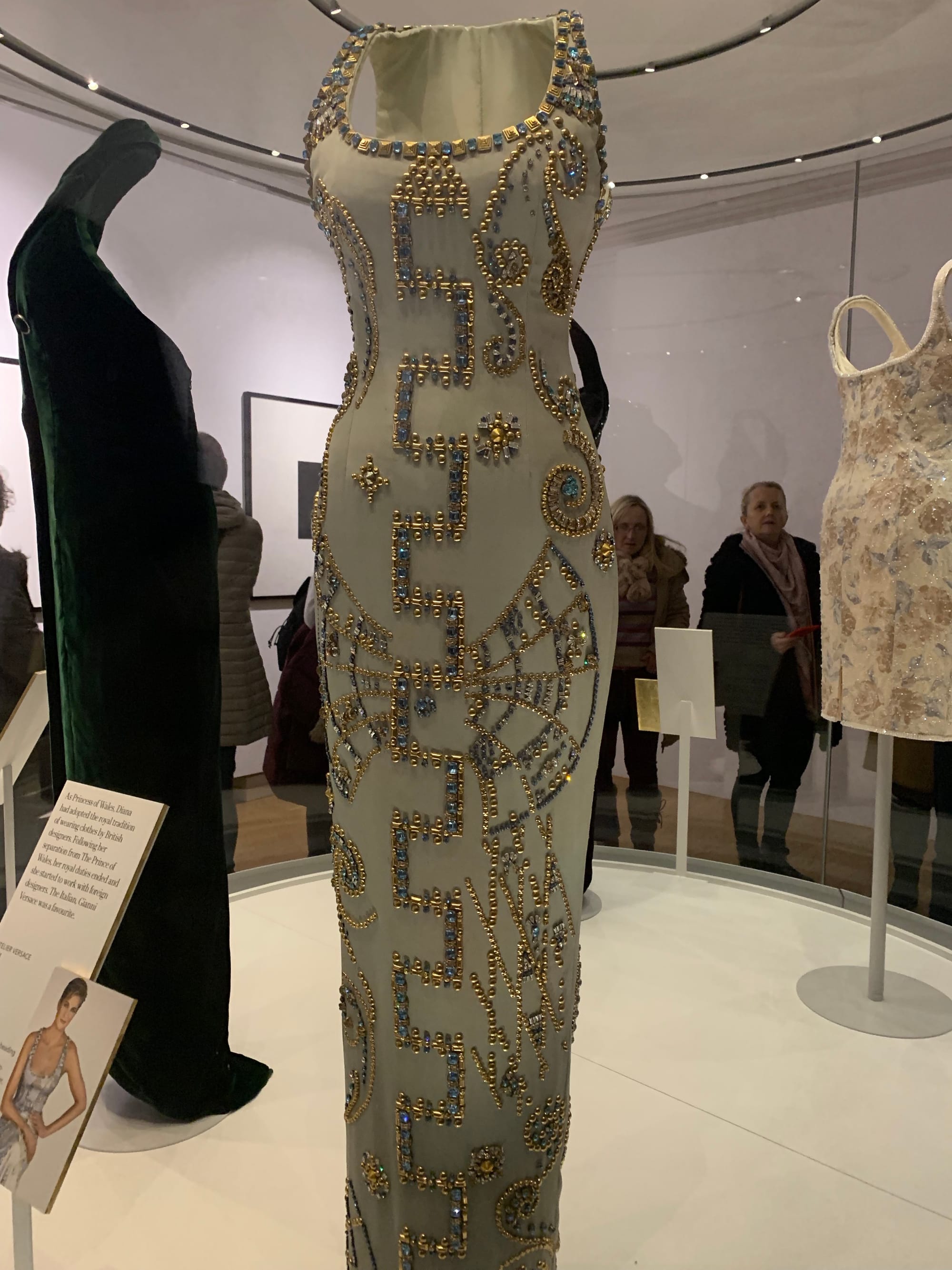
On the 2nd February 2019, I went to Kensington Gardens to see the Diana: her Fashion Story exhibition. The aim of this exhibit was to focus on Princess Diana’s incredible fashion and her style journey as a whole.
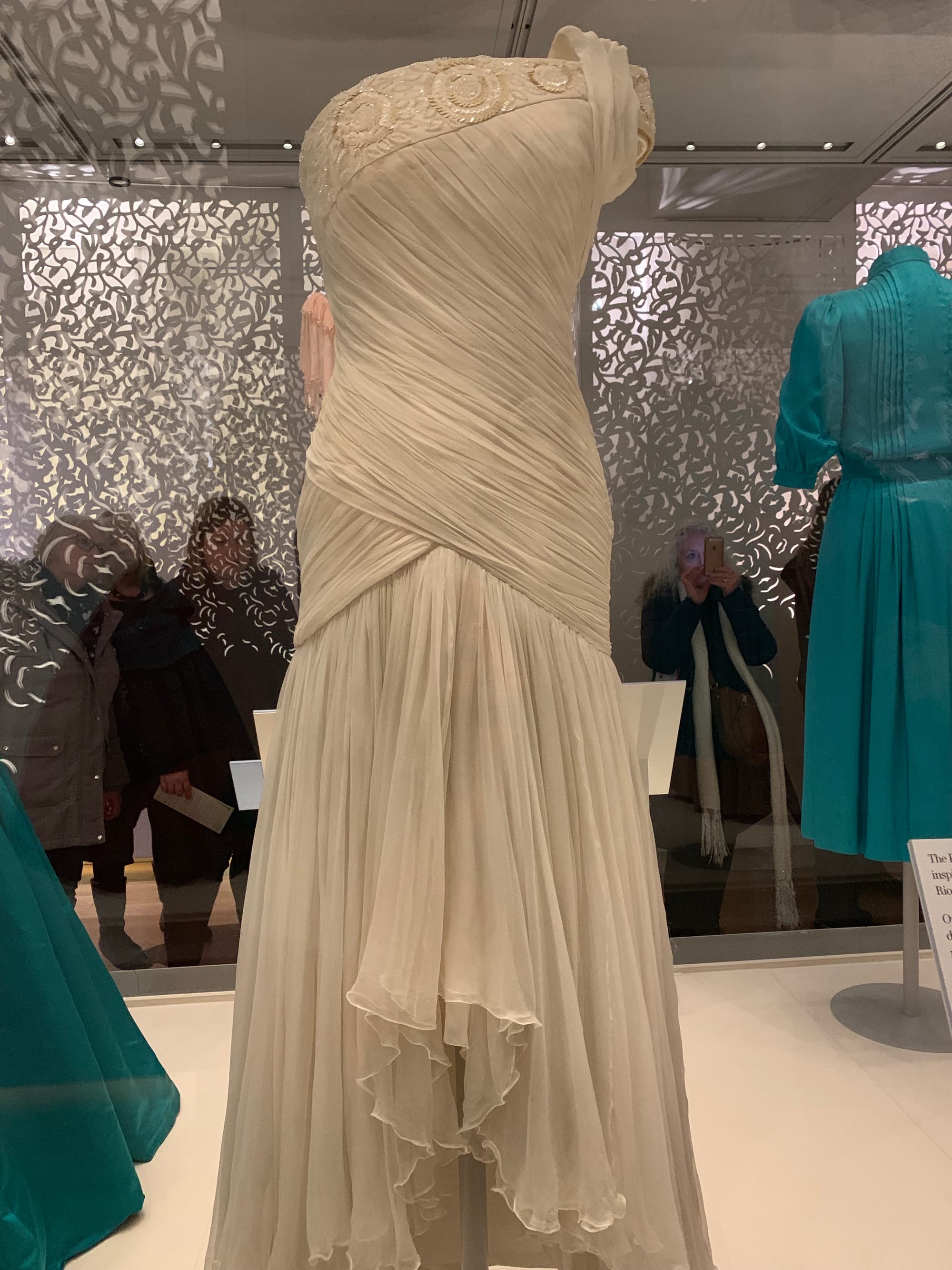
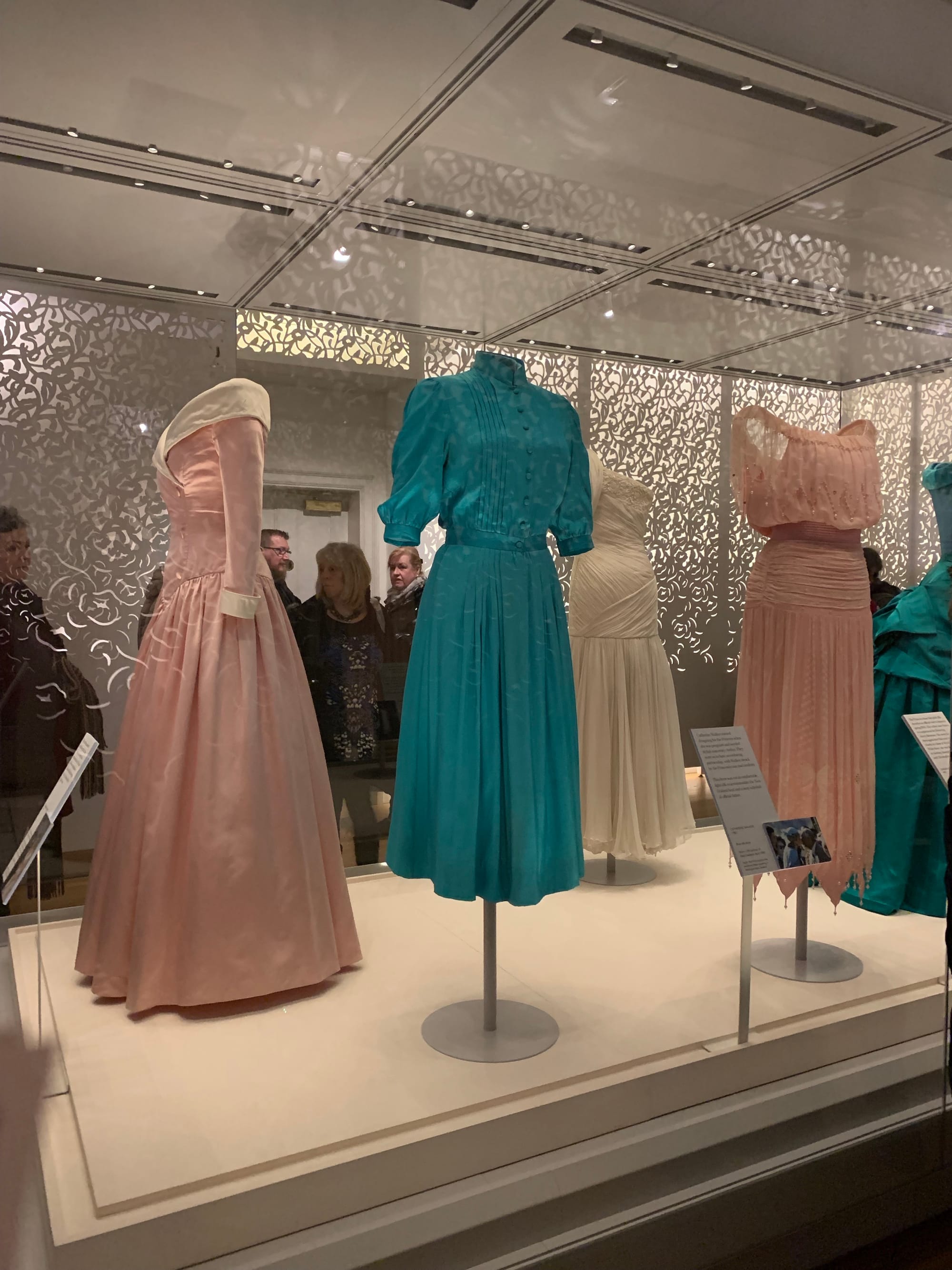
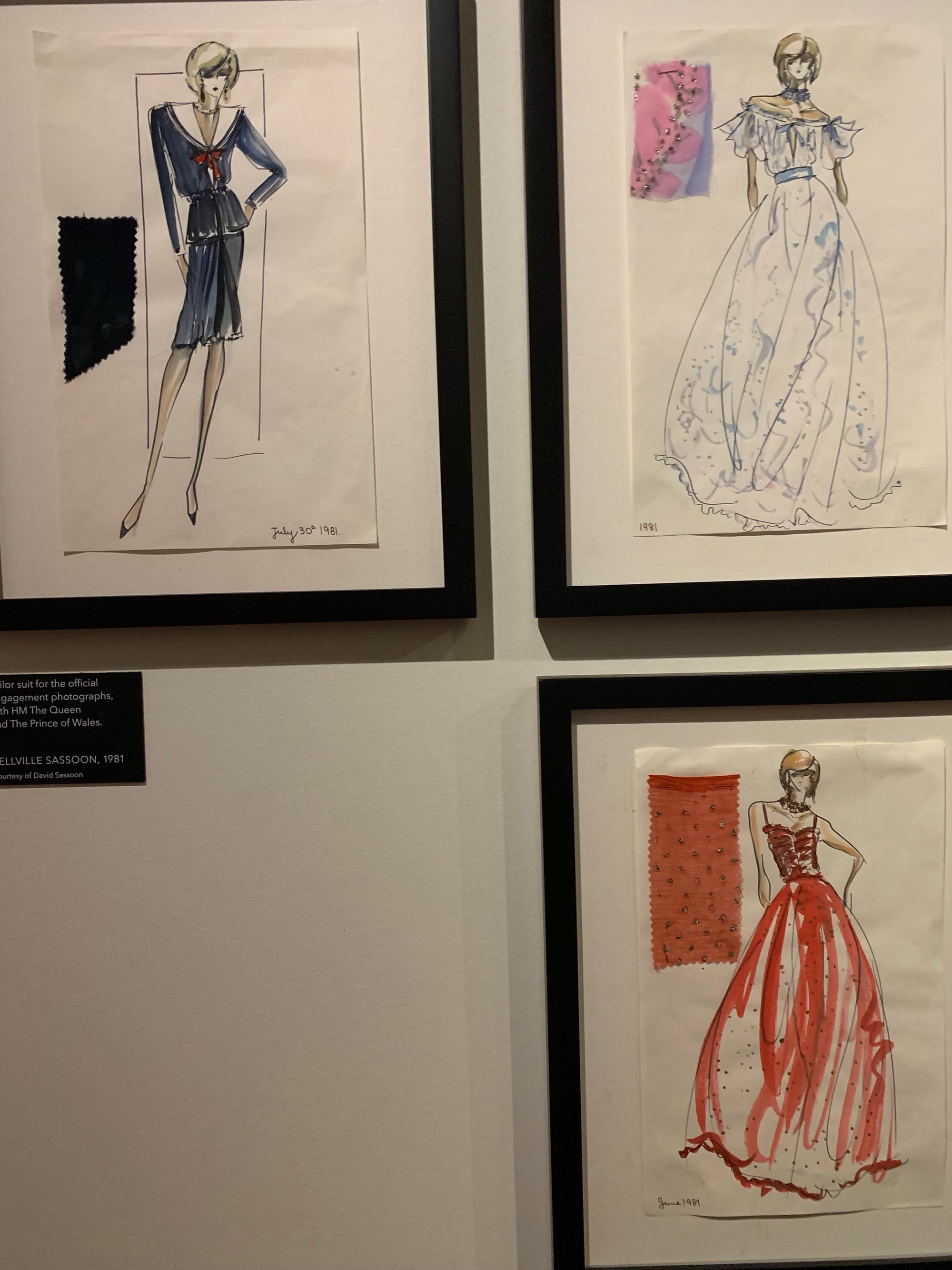
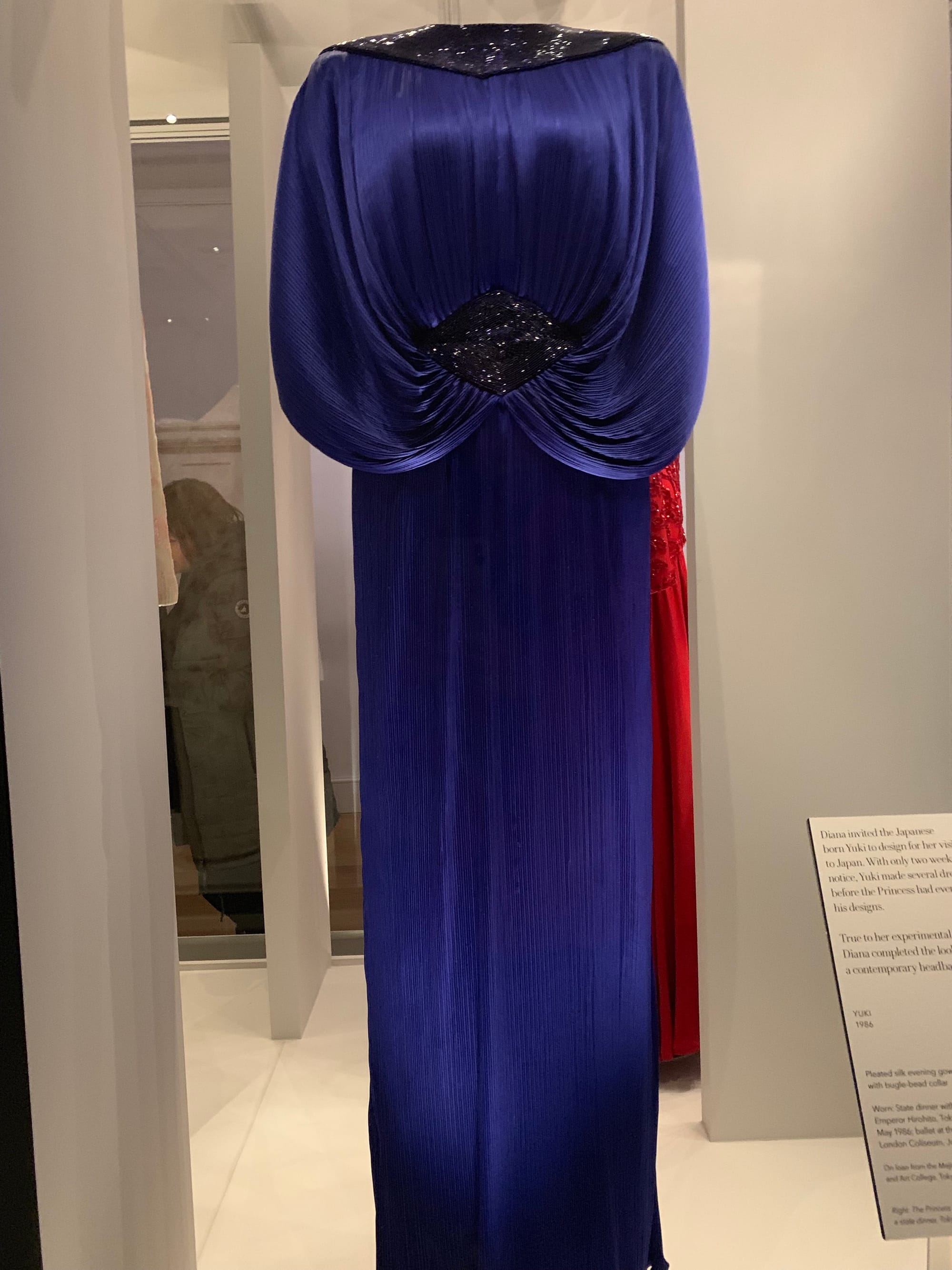
The exhibition was laid across several rooms on the same floor, and in each separate room there was a different type of theme communicated across. For example, in one of the rooms, it was solely dedicated on exhibited the outfits that Diana wore to charity events and there was a video playing on the wall through the projector of Diana attending these charity events. The video focused on the clothes she wore, it showed pictures of her meeting people at these charity events and it also gave quotations of certain pieces of dialogue that was said about or at the event. In that room, there was also a lot of information and images located on the walls and on small stands to show key pieces of information, such as about who designed and made the clothing that Diana wore, the concepts behind the designs and about the charity events themselves. In another room, it was solely focused on her fashion after her divorce with Prince Charles, which was really interesting to see how her style and herself as a person changed for the better after the divorce. Her fashion became more liberal and more tasteful in my opinion. The last two rooms were more focused on physical drawings from designers who designed and made clothing for Diana, along with more garments that she wore in the early stages of being married to Prince Charles.
Diana, Princess of Wales was one of the most famous women of the 20th century. She combined the allure of royalty with the fascination of international celebrity, and the press commented on every detail of her life and style. The Princess crafted her public image carefully and soon learned how to use it to engage and inspire people all over the world with her fashion. The outfits in the exhibit, tracked her evolution as a princess, trend setter, humanitarian and as the women that she was, whose ability to connect with people remains powerful even to this day and age.
A quote that was displayed on the wall from Jasper Conran who is a fashion designer said; “whenever the princess discussed her clothes with me, part of it was always, “What message will I be giving out if I wear this?” For her, that became the real language of clothes.”
The young Lady Diana Spencer was unfamiliar with the world of designer fashion. Her entire wardrobe comprised a single dress, one shirt and one smart pair of shoes. The rest she borrowed from her friends.
Following her engagement to HRH the Prince of Wales, the soon to be started to meet designers she liked, and to assemble a working wardrobe. Her quite public demeanour earned her the nickname ‘Shy Di’, but in private Diana had a much more playful and informal side which charmed many of the designers she recruited to help craft her image. Many became loyal and steadfast friends. As Princess of Wales, her early style choices popularised the romantic fashion movement of the 1980s, with light colours and lacy, flowing fabrics. A former beauty editor of Vogue recalled ‘Diana always knew what she liked’, and she ‘loved anything with frills and ruffles’.
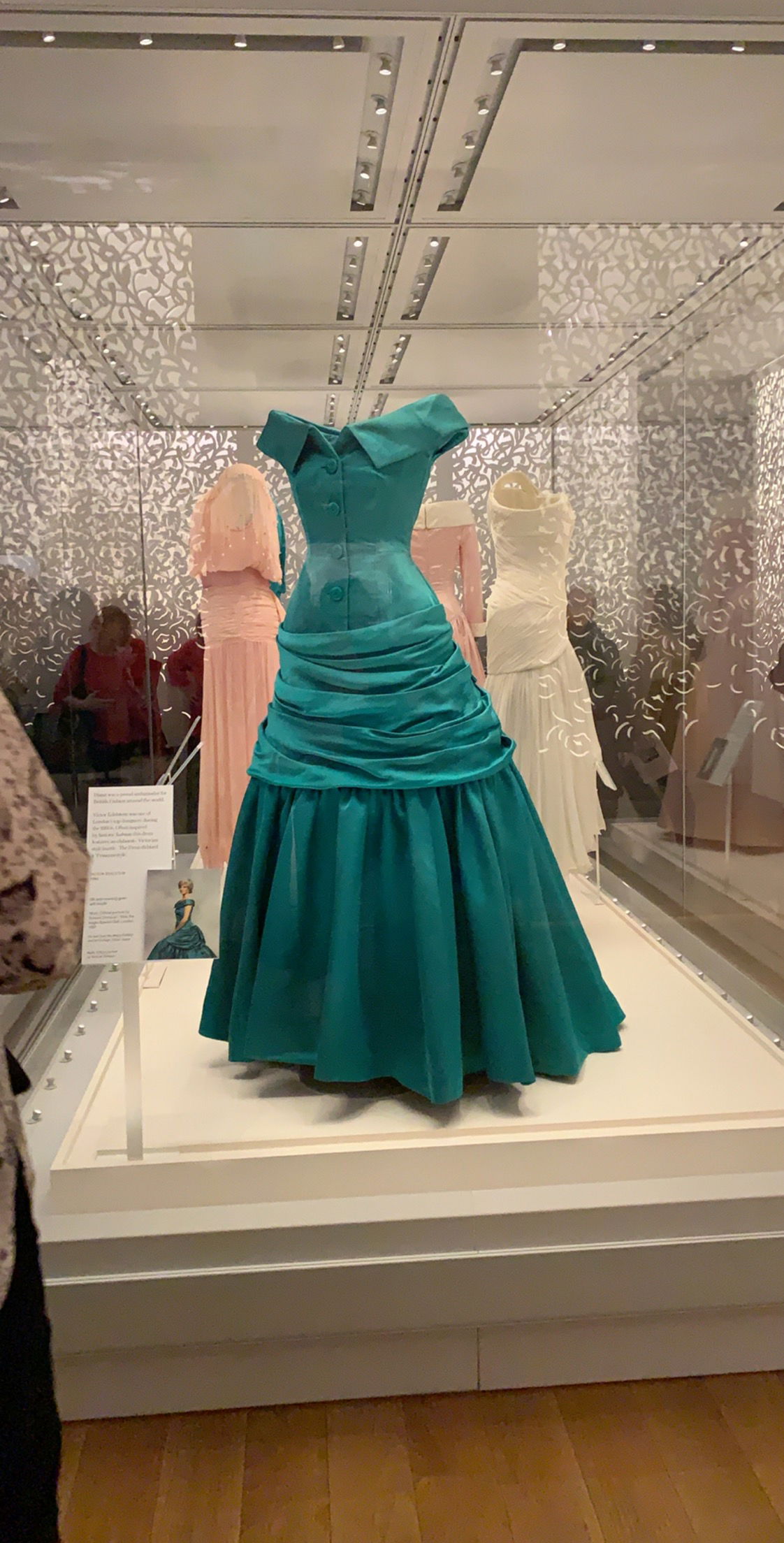
Diana was a proud ambassador for British Fashion around the world. Victor Edelstein was one of London’s top designers during the 1980s. Often inspired by historic fashion the first dress he designed and made for Diana, featured an elaborate Victorian-style bustle. The press dubbed it “Princess-style”. This dress was the product of Victor Edelstein in 1986. It was titled the silk satin evening gown with bustle and was worn by Diana in the Anglo-Spanish Ball in London in 1987.
Another dress on display was one that the Princess wore a sari-inspired dress to the ballet in Rio de Janeiro in 1991. On the same trip to Brazil, Diana deliberately and conspicuously removed her gloves before shaking hands with an AIDS patient. The gesture made international headlines and helped dispel public fear of the disease. This sari-inspired dress was designed by Gina Fratini for Hartnell in 1991. It was titled the white silk chiffon gown trimmed with sequins and beads.
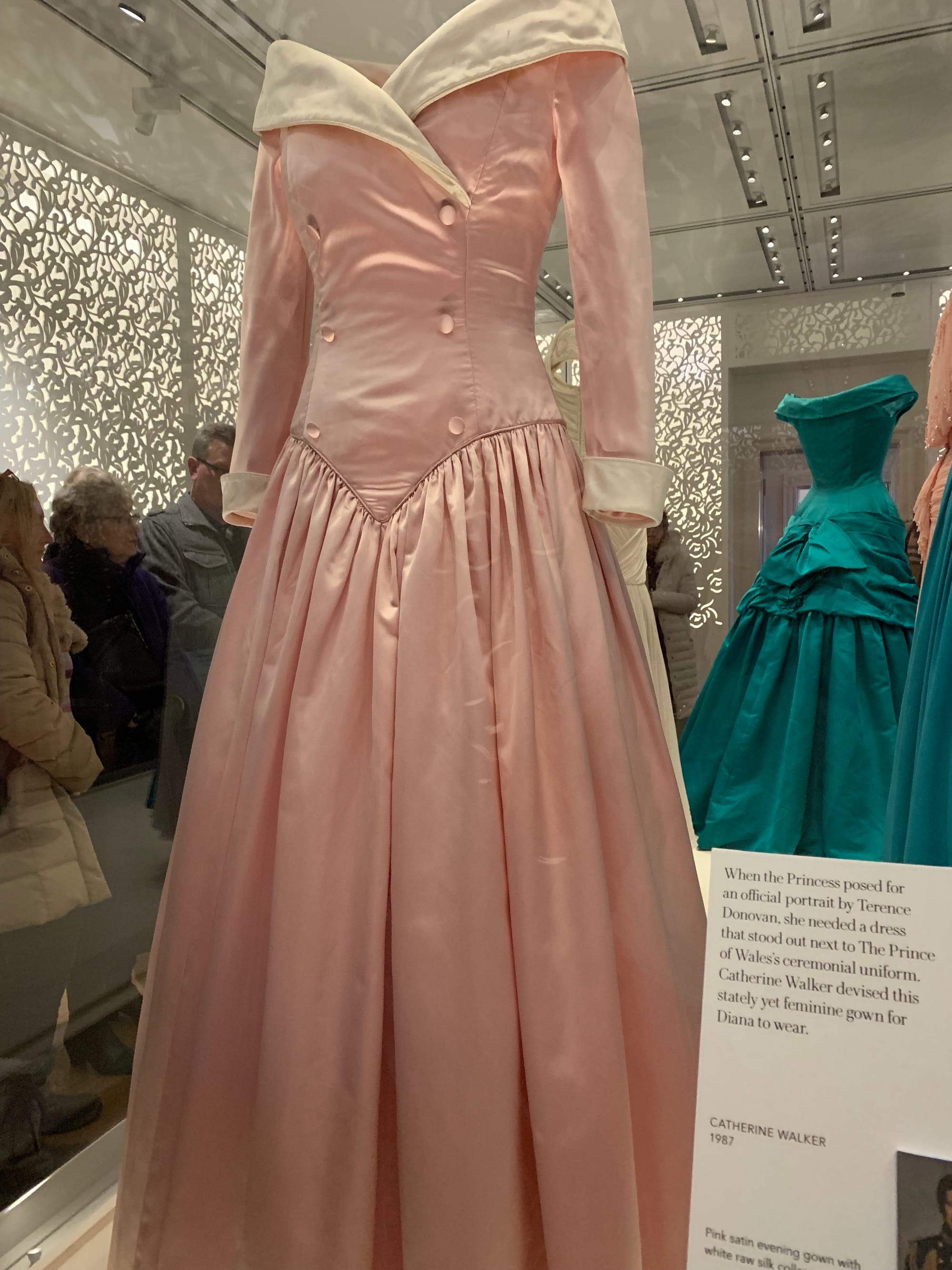
When the Princess posed for an official portrait by Terence Donovan, she needed a dress that stood out next to the Prince of Wale’s ceremonial uniform. Catherine Walker devised a stately yet feminine gown for Diana to wear. This gown was titled the pink satin evening gown with white raw silk collar and cuffs. It was worn by Diana in several occasions; for the official portrait, in 1987 at an official visit to Germany and Turkey, and in 1988 at a formal banquet for the President of India.
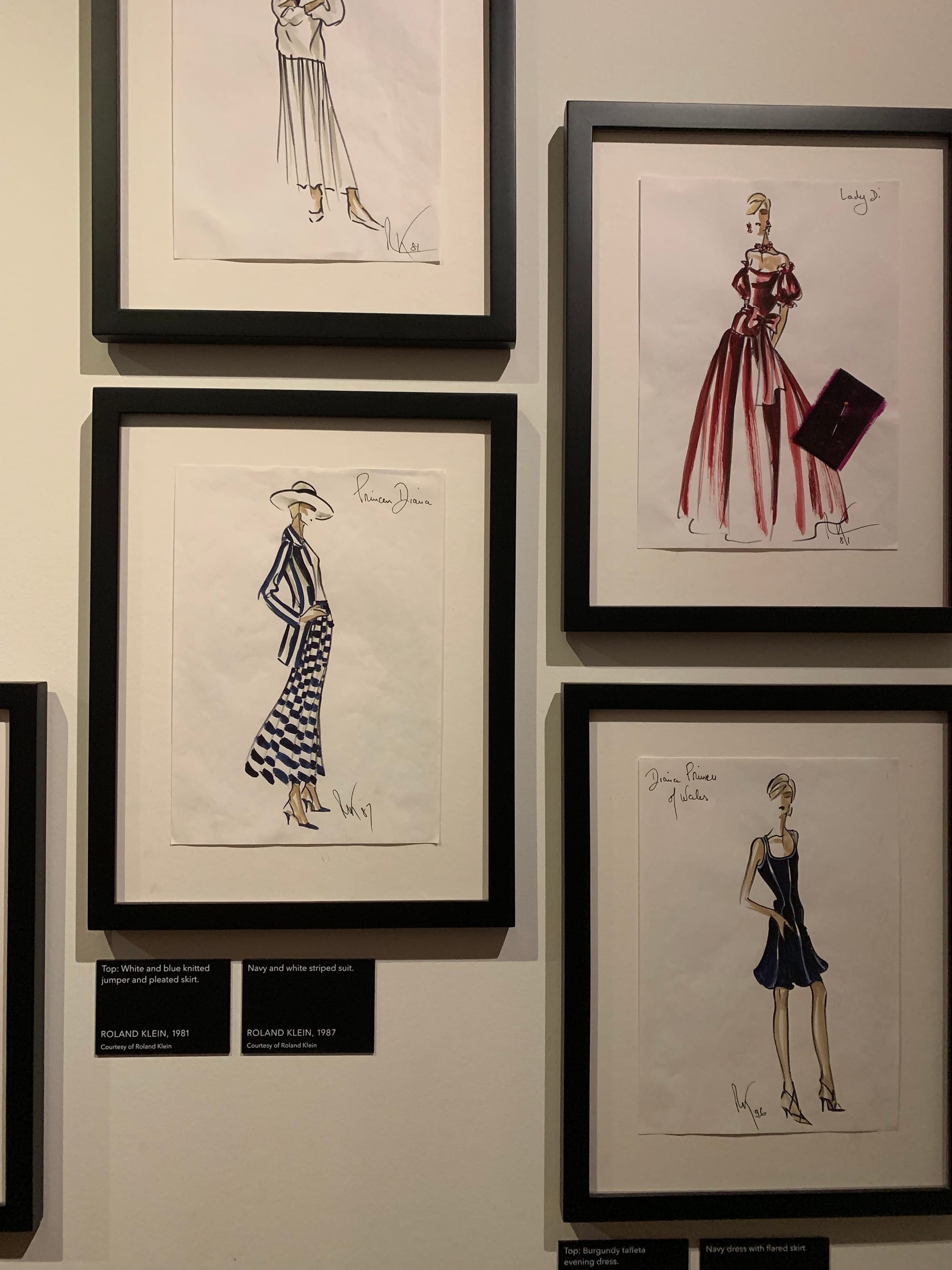
Another fashion designer; Roland Klein, commented that; “she was very influential; she put London fashion and London designers in front of the public at large. When she was wearing something that was photographed it had an immediate effect.”
Diana’s patronage could catapult unknown designers to fame, and her glamorous wardrobe raised the profile of British fashion worldwide. The Princess’s close relationships with key fashion designers also helped shape her own image. Each public engagement had its own clothing requirements, both practical and aesthetic. The Princess sometimes commissioned designers to create bespoke garments for specific appearances. Once briefed, they would prepare sketches for her to review. Together they would finalise the look, sometimes sitting on the floor, flicking through fabrics and images. Diana often made notes on the sketches which were on display at the exhibition. She usually suggested changes or commented on particular details she liked.
Diana also became one of the most photographed women in history. From the moment her engagement to the Prince of Wales was announced in February 1981, there was a huge demand for news about her. Her image on the cover of any magazine could increase circulation by 40% and her fashion choices influenced popular tastes.
Diana learned the unwritten rules of royal dressing, selecting appropriate dresses for different events. As she herself explained in 1985, ‘you’d be amazed what one has to worry about, from obvious things like the wind… and you’ve got to put your arm up to get some flowers, so you can’t have something too revealing and you can’t have hems too short.’
Diana’s fashion choices became increasingly sophisticated through the 1980s, as she learned what would work for public engagements and press photographs.
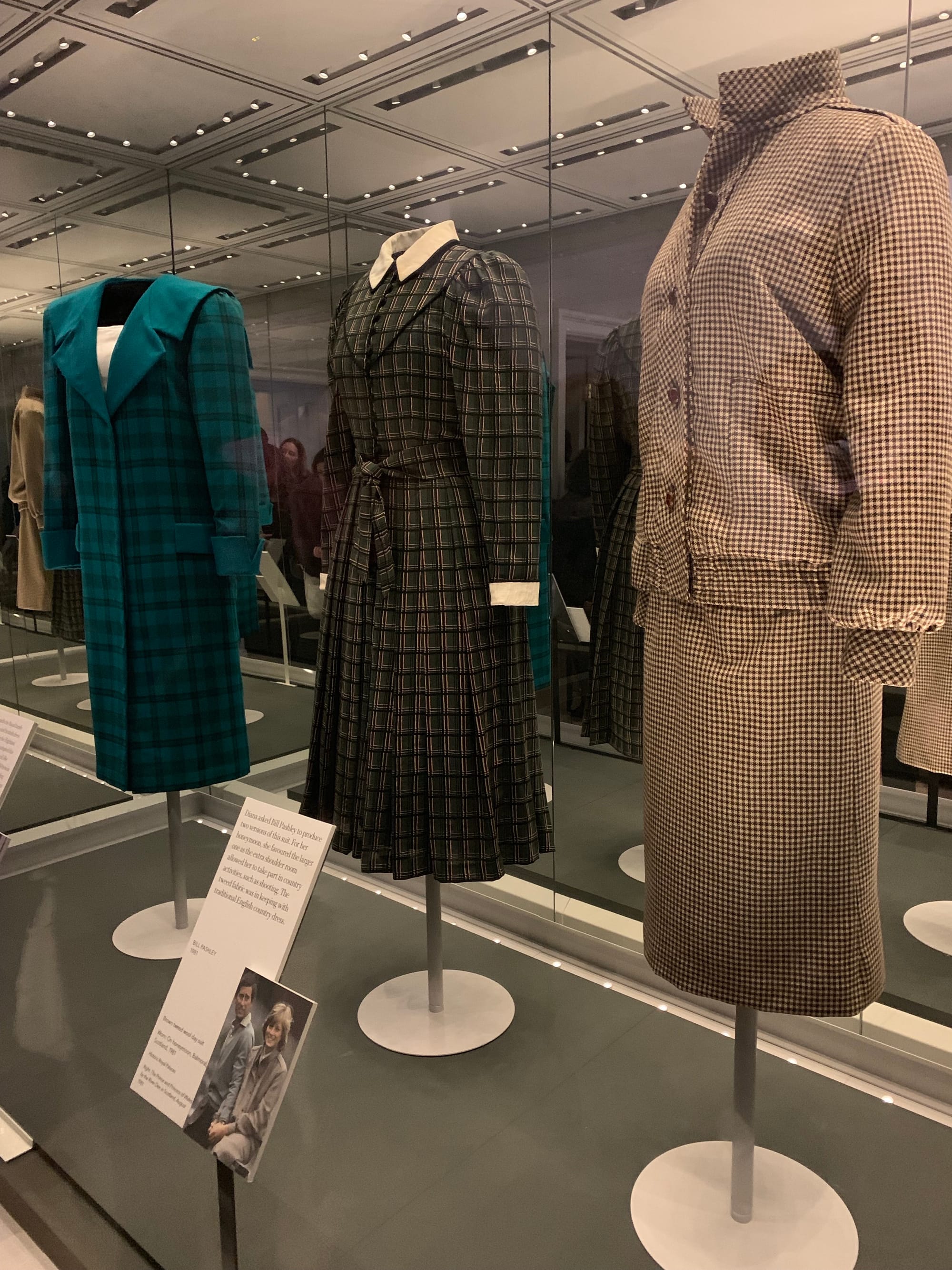
Diana asked Bill Pashley to produce two versions of a suit. For her honeymoon, she favoured the larger one as the extra shoulder room allowed her to take part in country activities, such as shooting. The tweed fabric was in keeping with traditional English country dress. Bill Pashley made this suit in 1981, in which he titled the brown tweed wool day suit, which again was worn on their honeymoon in Balmoral in Scotland.
Traditionally, the Royal family wear tartan and Scottish dress when attending the Highland Games, and Diana adopted the unwritten royal protocol. She added a contemporary 1980s twist to this tradition with contrasting white collars and cuffs. This design saw its influence reflected in the high street at the time. This garment was produced by Caroline Charles in 1982, and was titled the plaid day dress with white Peter Pan collar and braid details, which was worn to the Braermar Gathering in the Highland games in Scotland.
In 1985, Diana became more comfortable with her style and commented that; “sometimes I can be a little outrageous, which is quite nice. Sometimes.” Diana was a modern princess and understood the rules of traditional royal dress, yet often broke with convention, making surprising and sometimes dramatic fashion choices. The press picked up on her experimental style and increasingly shone a spotlight on her. She abandoned the royal protocol of wearing gloves, as she liked to make direct contact when shaking hands. She was also the first royal woman to be photographed wearing trousers for evening events, and often wore black, which was usually only worn for mourning by the Royal Family.
Diana also took inspiration from theatre, opera and ballet. A passionate patron of the arts, she wore many of her most glamorous gowns to performances and gala events. Some of these outfits were on display to see at the exhibition.
Moving on to the next room which was mainly focused on the outfits she wore to charity events, the first thing on display was a big quite on the wall before entering the room, which read; “she (Diana) would never wear a hat to a hospital, because she said you couldn’t cuddle a child with a hat on.” This was said by a milliner called Philip Somerville.
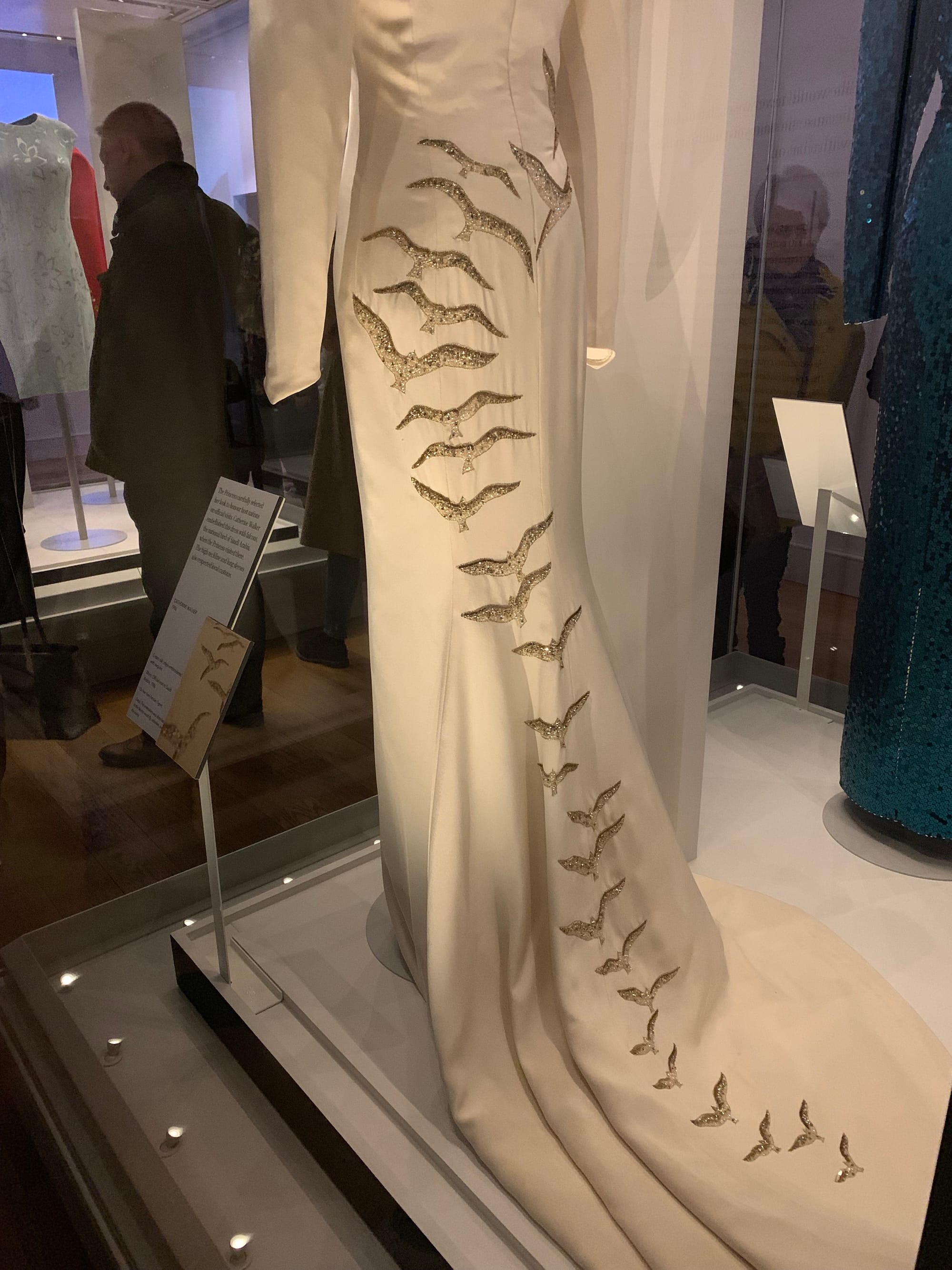
Diana was a working woman from origin, and she attended around 130 public engagements a year, each with different clothing requirements. For overseas tours, her gowns conveyed diplomatic messages, honouring the hosts by incorporating national embellishments on the garments. By contrast, her other outfits could be cheerful and informal. She called them her ‘caring’ clothes, and often wore accessories that children could play with.
Diana’s style was overtly glamorous during the mid 1980s. She adopted glitzy embellishments and wide shoulder pads. The press dubbed her ‘Dynasty Di’, after the hit US TV series that featured extravagant fashion. However, during the late 1980s and 1990s, Diana worked more with the designer Catherine Walker. Walker’s designs favoured streamlined silhouettes that flattered Diana’s tall frame.
David Sassoon commented on Diana as a person and in terms of fashion, saying; “there was a tremendous change from the shy little girl who I had initially dressed to this overly glamorous woman. She was very charismatic as a person, not just because she was a princess. She had this caring quality. She had compassion.”
Prince William suggested his mother could auction her iconic gowns to raise funds for humanitarian causes. Inspired by her son, Diana sold 79 of her most famous dresses in June 1997. The sale was held at Christie’s in New York and raised £3.4 million for AIDS and cancer charities. The press reported on the auction as a symbolic event. Diana was closing a chapter on her royal life and style and focusing on charitable work.
We will never know what Diana’s next chapter was to be. The princess died on the 31st August 1997 following a car accident in Paris. Her legacy as a person and her fashion, still resonates today through the causes she championed and the people whose lives she touched.
The art forms involved were designing, sewing and making.
I have seen exhibitions similar to this such as the Fashion through the Ages exhibition displayed in the V&A, which was set out in a similar layout in the sense that it was fashion separated through sections and ages, such as in the exhibit where the clothes were separated through the years that Diana wore certain outfits.
What I thought was unexpected about this exhibit, was that it was an exhibit about just one person. I have never been to an exhibit where it displays just one person’s outfits and clothing worn. I have seen single designer exhibits but not of someone’s collated wardrobe. This was a fun, new experience to have seen to see a variety of different designers but with a similar style that Diana liked to tie them all together as a collection.
What I liked the most about this exhibit was that it was laid out through the ages, it showed the transition between the very beginning of her fashion journey till the very end of her last years alive.
What I liked less about the exhibit was the fact that it was so incredibly packed and busy so I wish there was less people who went so I could have taken my time to see everything more. However this just goes to show that Diana and her fashion were very popular and well known and it shows the success of the exhibition itself.
I learnt more about Diana herself as a person and her interests and style was, and a lot more about her fashion and what she liked to wear. I liked how this exhibit paid tribute to her and her life.
Overall, I really liked this exhibition and would definitely recommend to everyone as you learn about a fashion icon and about key events in Diana’s life too.
Royal Jewellery Exhibition Review:
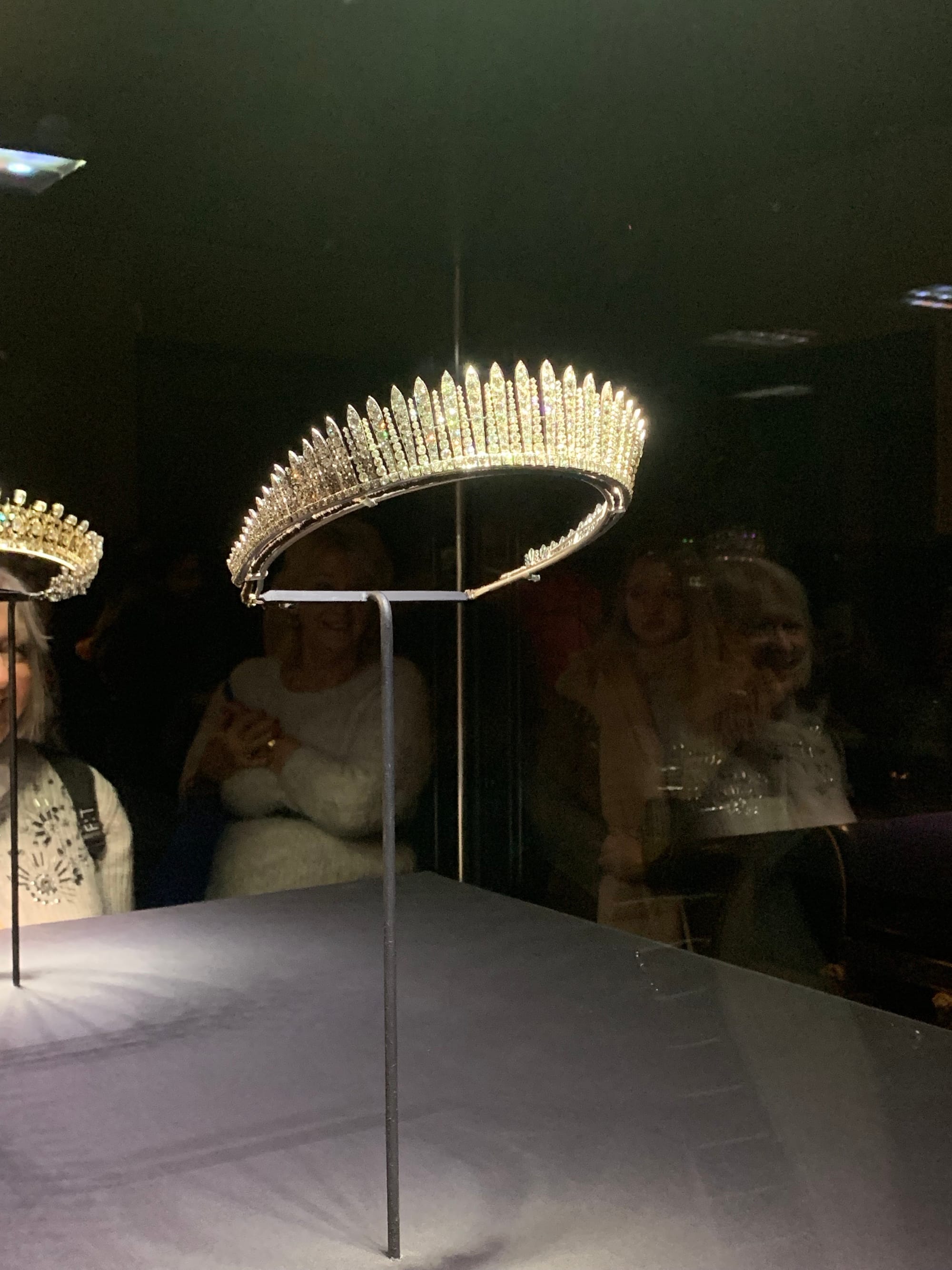
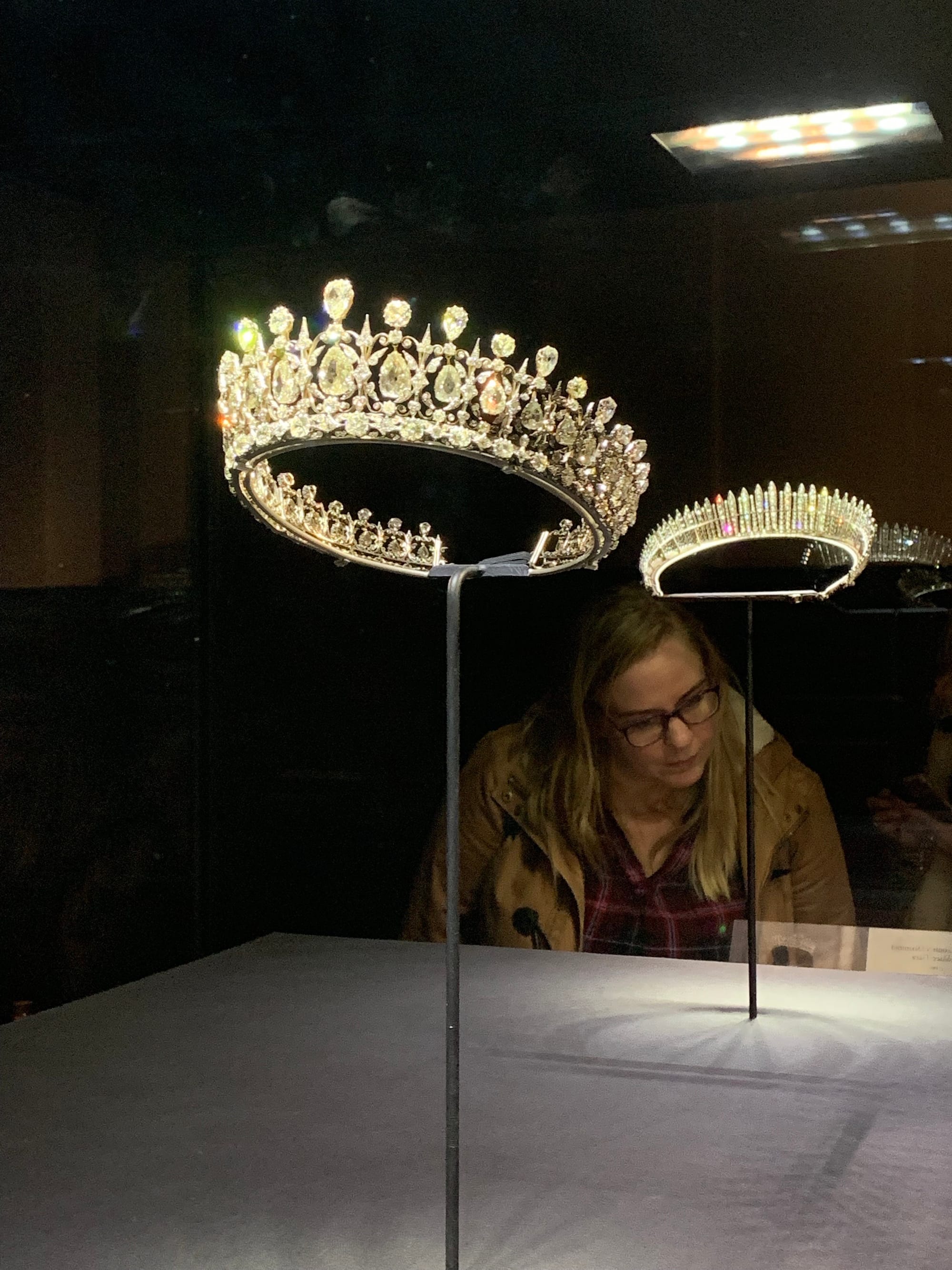
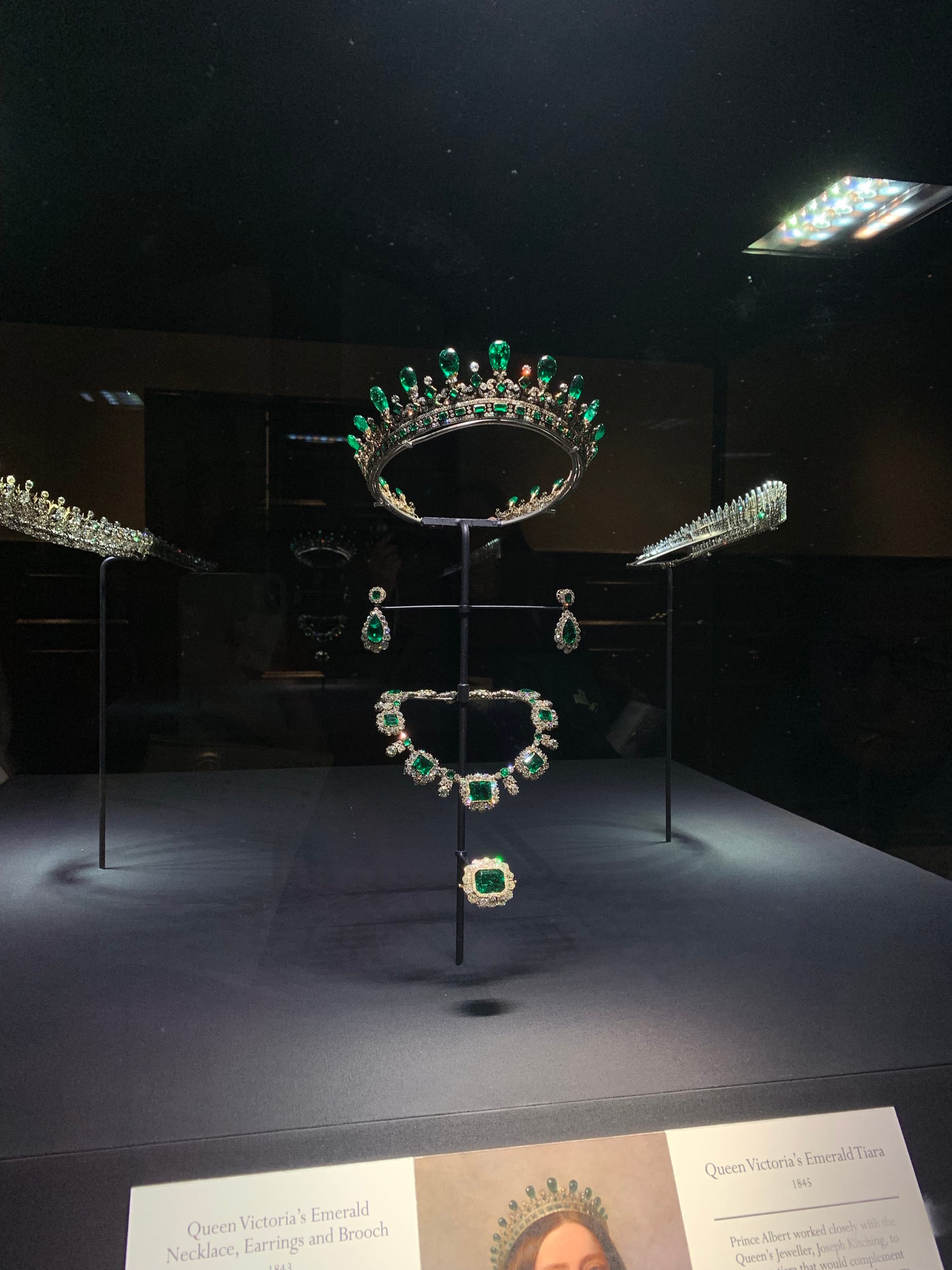
On the 2nd February 2019, I went to see the royal jewellery exhibition, located in the Kensington Palace. The aim of this exhibit was to display the exquisite collection of jewels, from tiaras to earrings.
The exhibition was all laid out in one small room as there was not a lot of things on display. As jewellery is also quite small, it also takes up less space. This was a really small exhibition but had a lot of information readily available for viewers to read and to inform the public more about the jewellery collections on display. Most of them were royal gifts, mainly from Queen Victoria and Prince Albert who commissioned many bespoke gifts for each other, from their engagement in 1839 and throughout their 21 year marriage.
Albert was fascinated by jewellery and enjoyed designing beautiful pieces for his wife. Victoria’s diaries reveal her great admiration for her husband’s talents; “Albert has such taste, and arranges everything for me about my jewels.”
Victoria and Albert’s children and grandchildren continued the tradition of giving gifts of jewels to mark significant events.
In the exhibition, there was Princess Louise’s diamond necklace tiara that was hand crafted in 1890. This tiara was a wedding gift to Queen Victoria’s granddaughter Princess Louise from her parents, Bertie and Alexandra, Prince and Princess of Wales. The design was inspired by traditional Russian costume. Family ties between British and Russian Royals meant the style became popular in Europe in the 19th century. Its clever construction means it can also be worn as a necklace.
Another tiara on display in this exhibition, was the Fife Diamond Tiara which was made in 1887. Princess Louise, Queen Victoria’s granddaughter, was given this tiara on her wedding day by her husband, the Duke of Fife. Designed by popular Parisian jeweller Oscar Massin, the pear shaped diamonds are ‘swing-set’ allowing them to move and catch the light when the tiara is worn.
Another set of jewellery on display was Queen Victoria’s emerald necklace, earrings and brooch that was made in 1843. Prince Albert designed this matching set of jewels, called a patrture, for Victoria. The Queen wore the set to a banquet at Trinity College Cambridge to celebrate her husband’s appointment as chancellor. Victoria noted other occasions on which she wore this set including to Prince Alfred’s christening, when she paired them with the lace from her wedding dress.
Prince Albert worked closely with the Queen’s jeweller, Joseph Kitching, to design a tiara that would complement Victoria’s emerald and diamond parer, displayed above. This exquisite piece demonstrates Albert’s creative abilities. The Queen, delighted with the gift, wrote in her diary of her husband’s ‘wonderful taste’.
The main art forms involved were designing and making.
I have seen exhibitions like this before where I have only gone to see accessories such as the Undressed Exhibition at the V&A, where the whole exhibition is based on accessories and counterparts of an outfit but not the outfit itself.
What I thought was different about this exhibition was that this whole exhibition was based solely on royal jewellery gifts from the 19th century, which I have never seen something quite like it. I really liked seeing specific jewellery pieces and finding out more about specific jewellery designers.
What I think could have been improved about the exhibition was the amount of jewellery on display. I think more jewellery could have been displayed as it was quite a limited number. If there was more jewellery, it would have been more enjoyable for the public to get more of an insight of the type of jewellery from the 19th century and more of an insight on exquisite and expensive regal jewellery.
I learnt a lot about the jewellery itself, why it was made, who made it and who wore it. I found this exhibition interesting because it gave me an insight into the 19th century jewellery. Overall, I really enjoyed this experience.
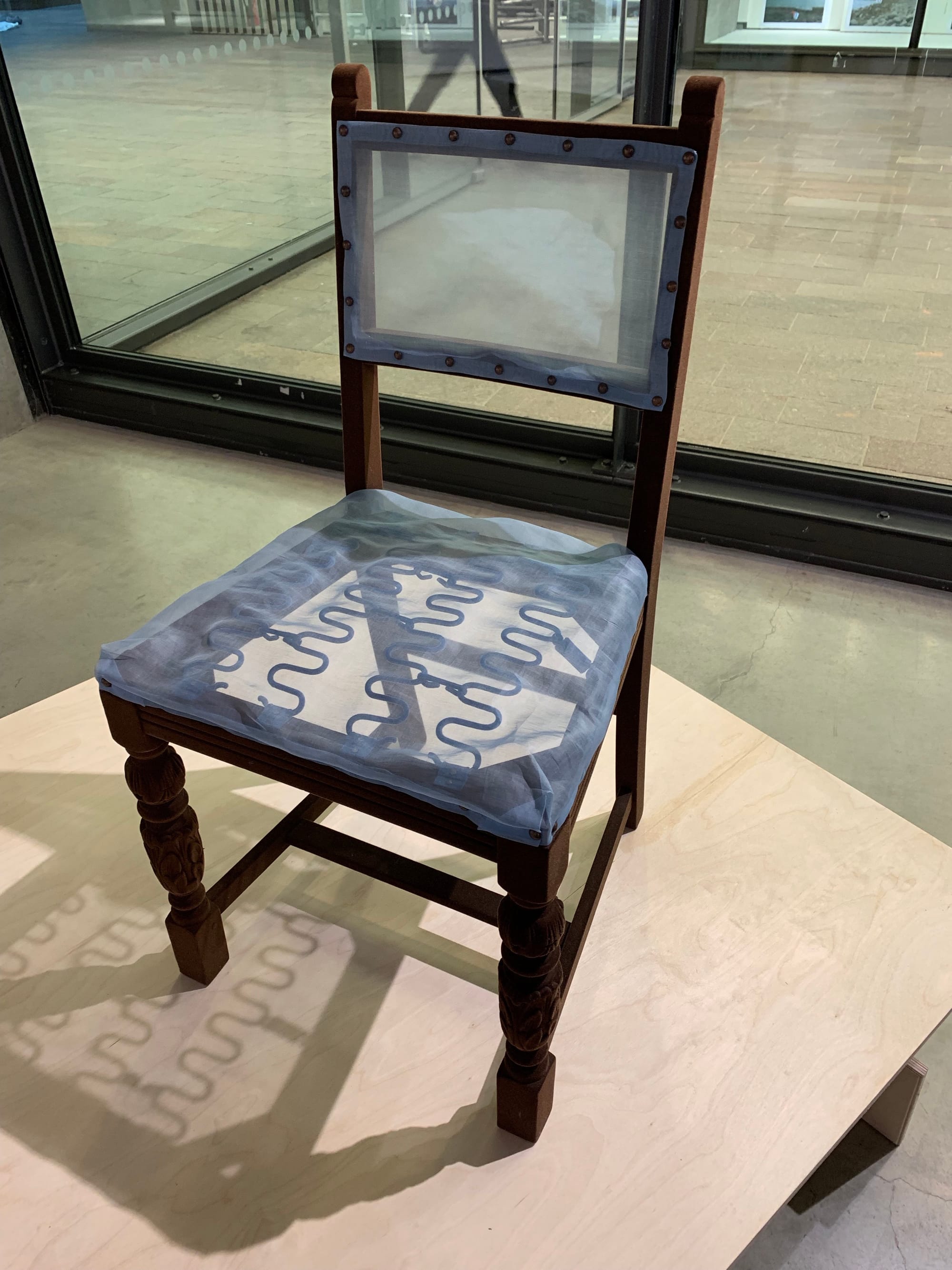
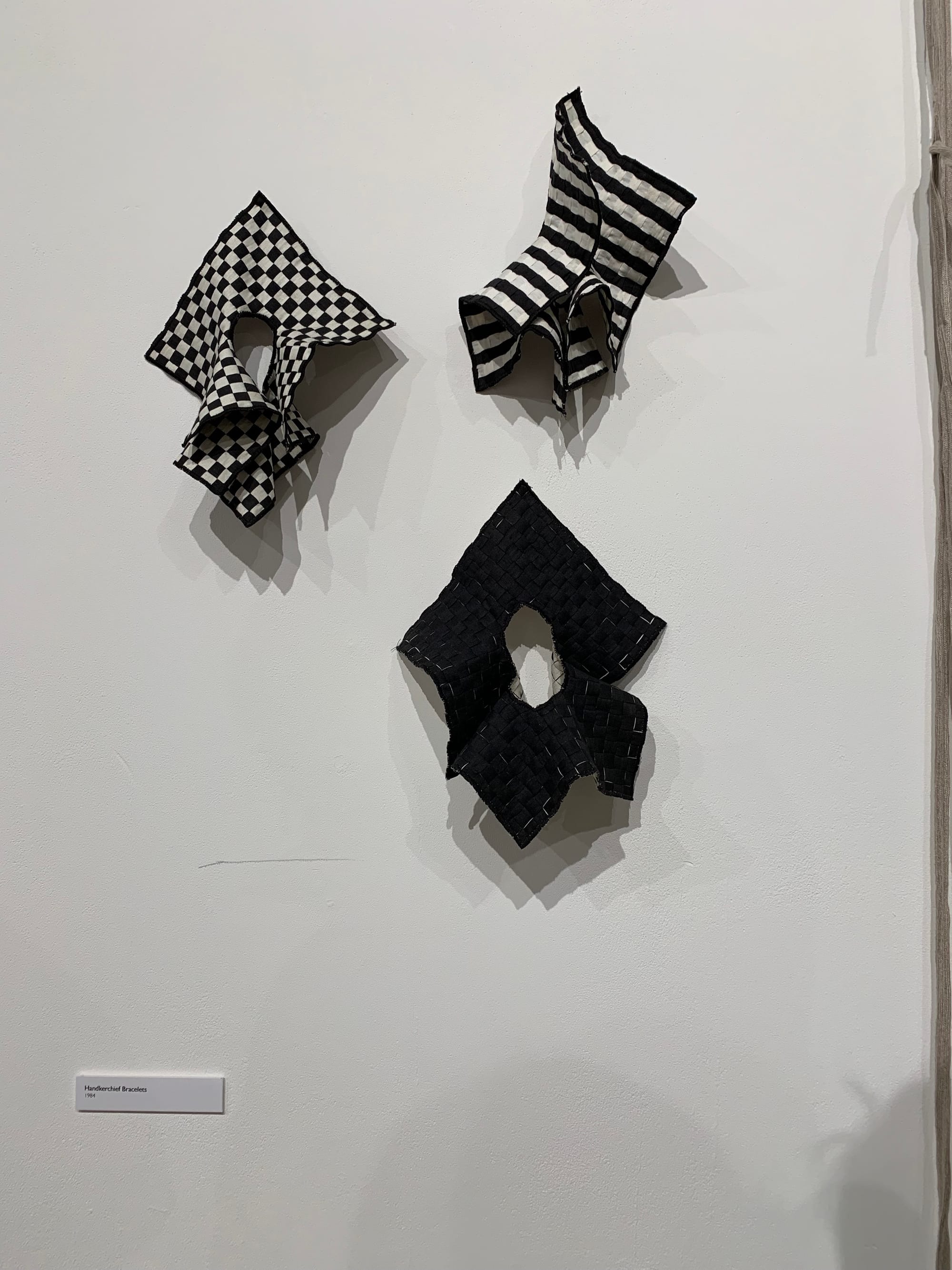
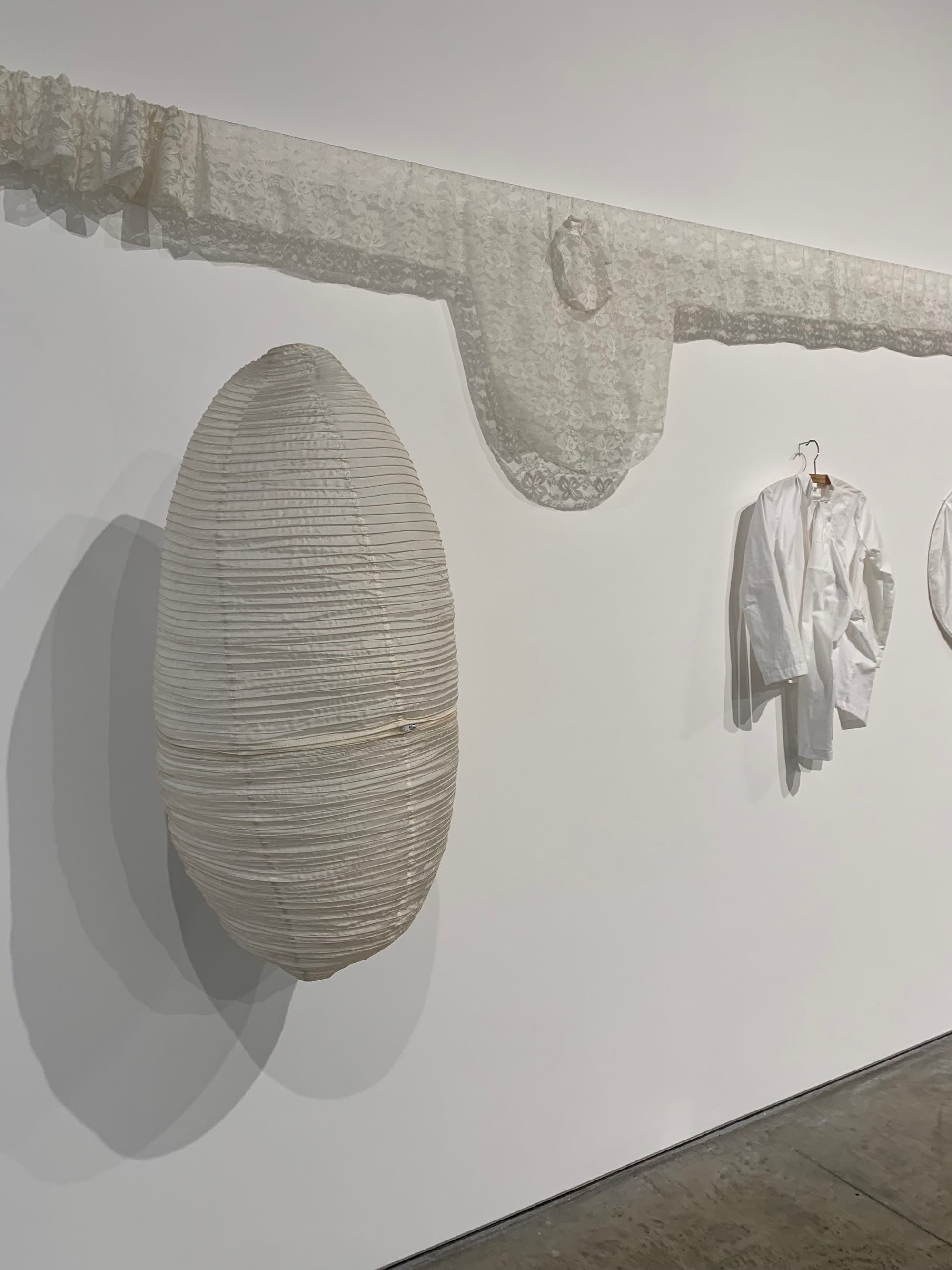
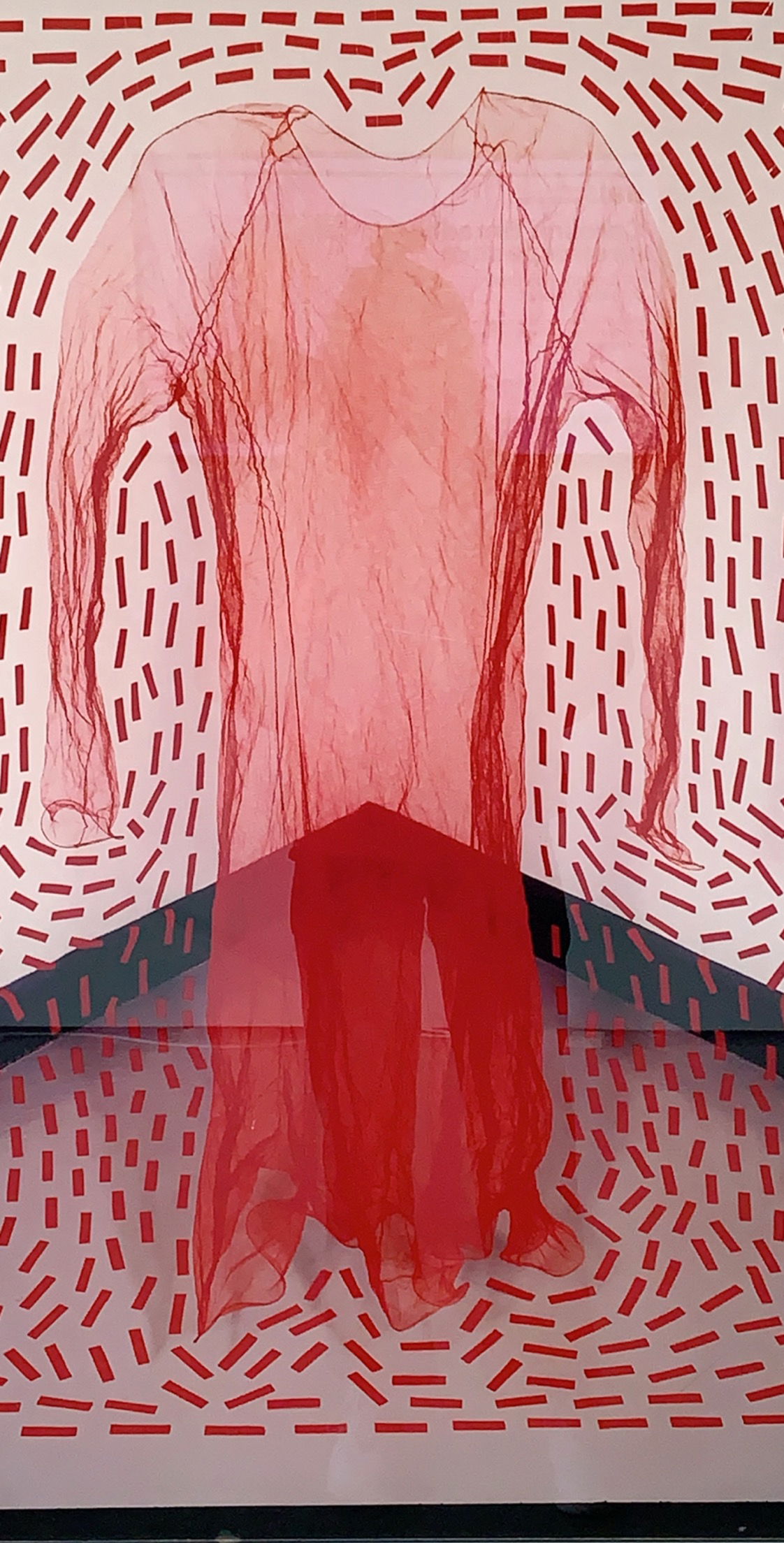
Caroline Broadhead Exhibition Review:
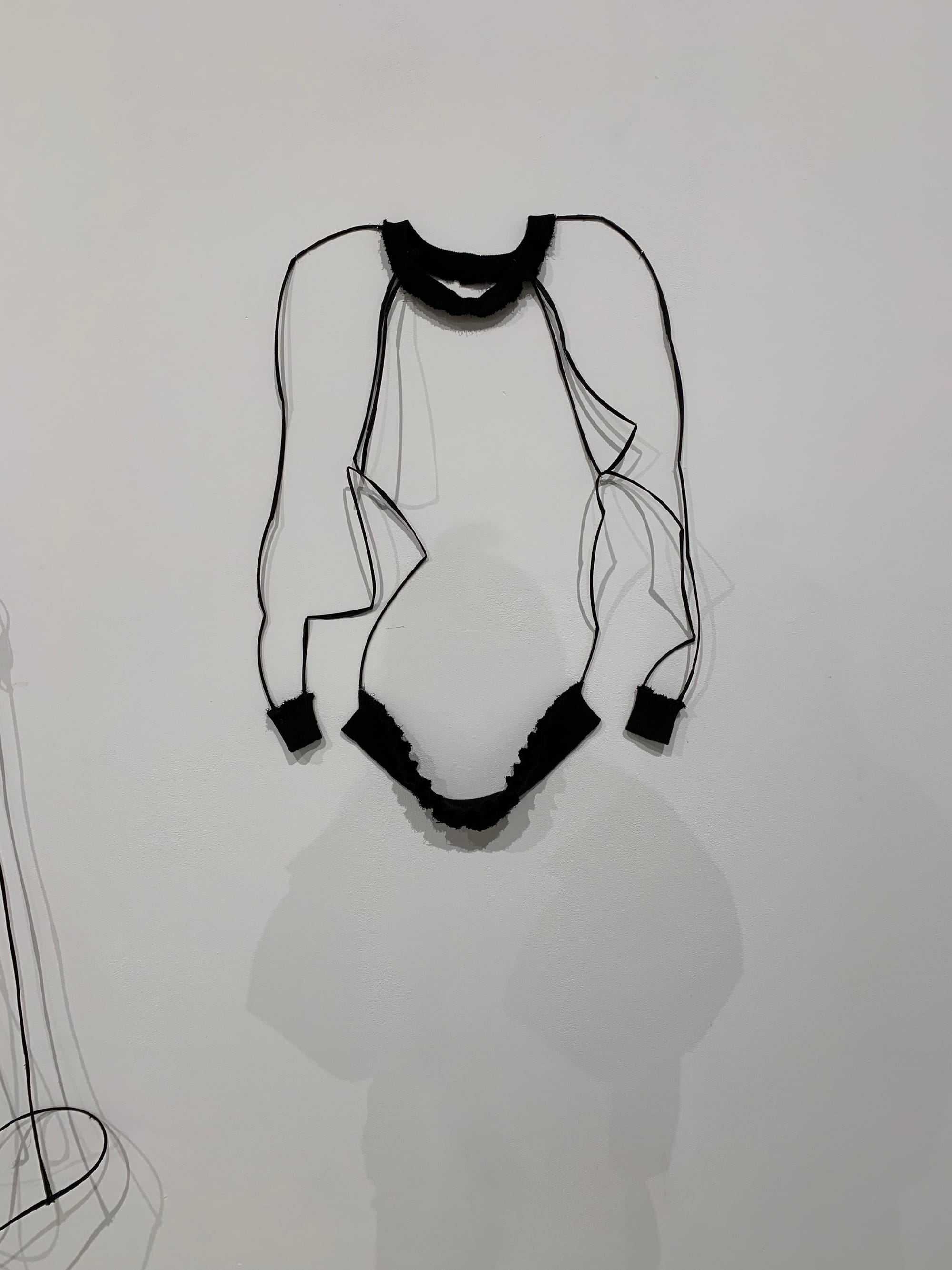
On Saturday the 2nd February 2019, I went to Central Saint Martins University, to see their exhibition that they had on display in their dedicated exhibition hall. The aim of this exhibition was to show off the amazing lifetime of work from Caroline Broadhead. Caroline Broadhead has several disciplines in the arts and specialises in a few different aspects such as in both textiles and fine art.
Caroline Broadhead has produced work from over four decades and has reached across sculpture, installation, performance, textiles and photography yet her work always consists on that haptic contact between body and thing. Her work begun with working in jewellery and then incorporates several different disciplines such as thinking about the body, the object, touch and motion.
Following nearly a decade as programme director of jewellery and textiles and course leader of BA jewellery design, Caroline Broadhead gathers together over a hundred pieces for this retrospective exhibition. In this exhibit, the key was to share and celebrate a career dedicated to thinking, making and teaching through the meaning and power of objects.
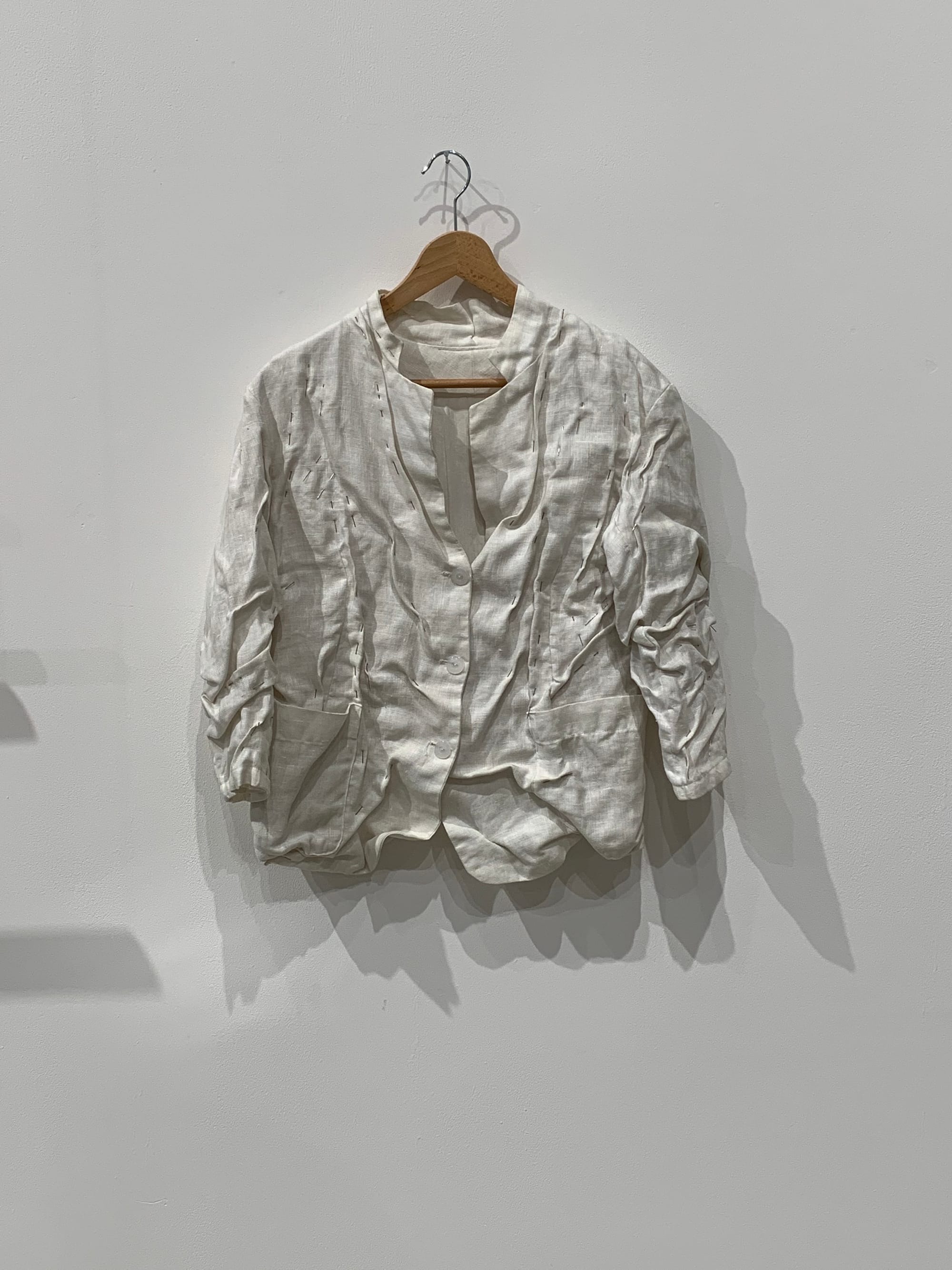
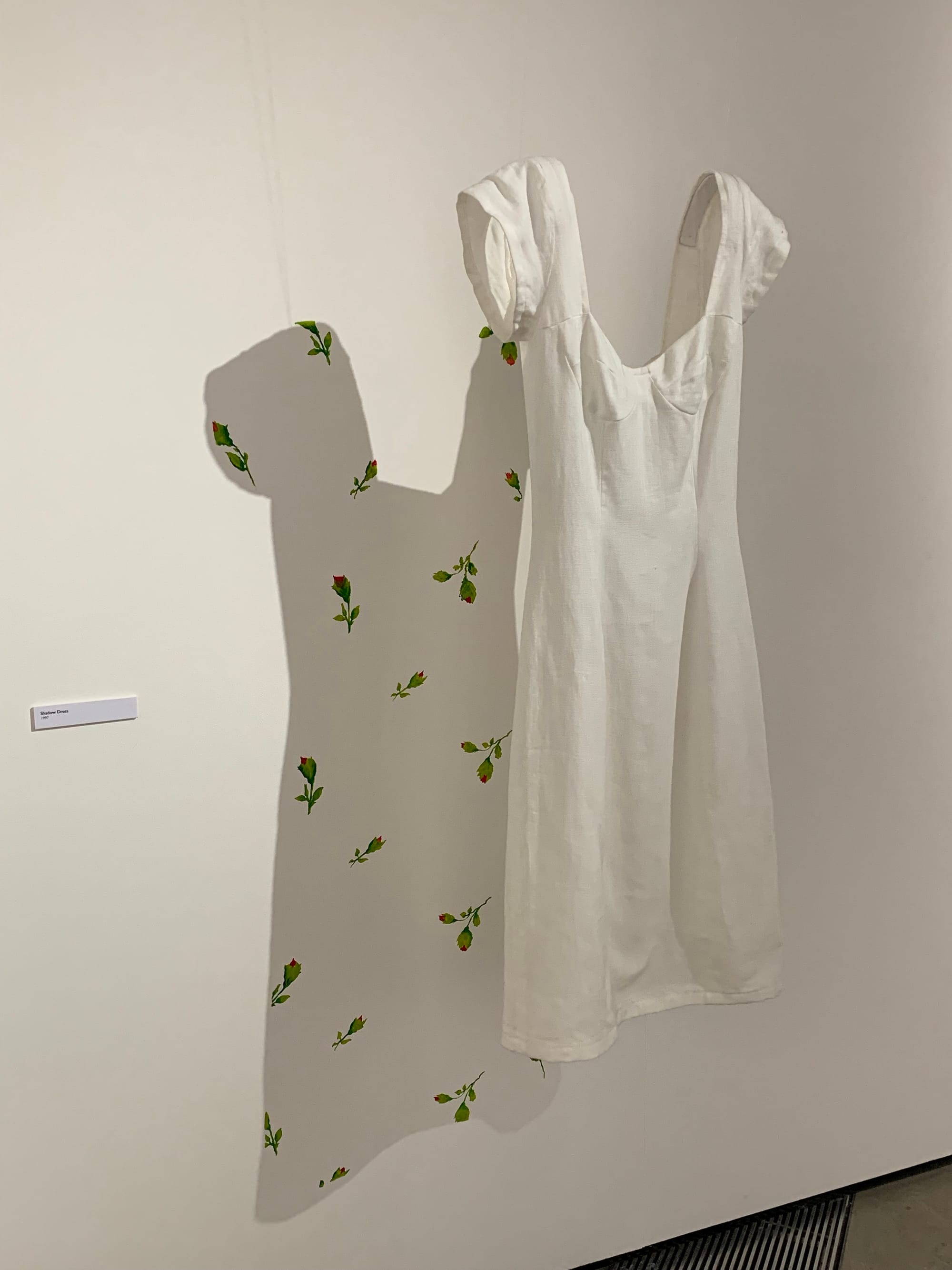
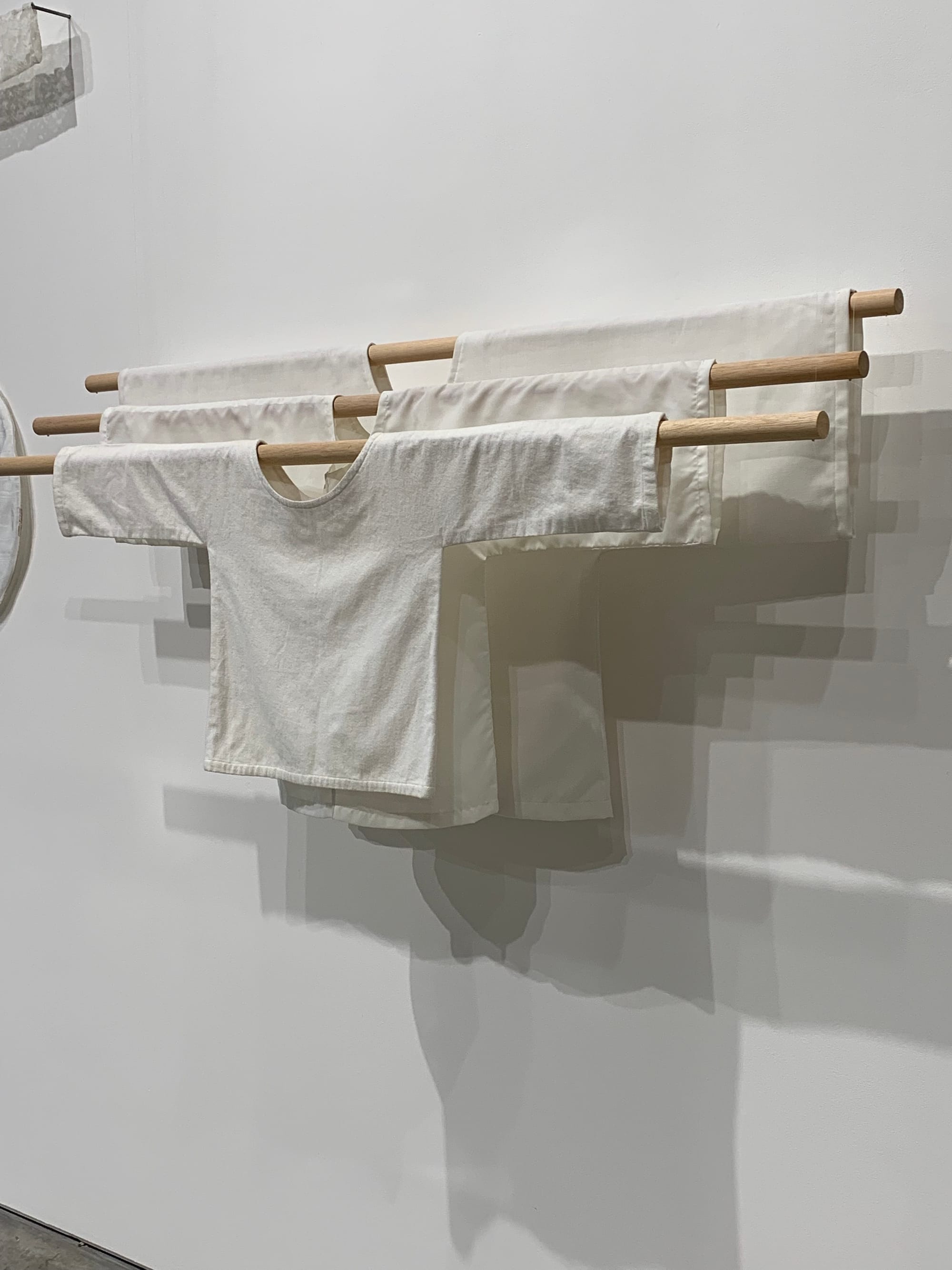
The first objects that were on display and that I saw were titled “Seven Ages” and there were seven pieces in this collection. This collection was made in 1986 and each object has a different title aside from the umbrella term naming it unanimously as a collection. The first object was called “cocoon”, the next was called “stretch”, then “uniform”, then “curling up”, then “carrying people”, then “crumple” and then the last object was titled “seam”. This collection was about tracing a life from birth to death in seven parts, this piece referred to the “All the World’s a Stage” speech in Shakespeare’s ‘As You Like it’. Each piece in the collection was made with a different white fabric to indicate the associated activity or stage. It took about over two years to complete this collection and when Caroline Broadhead started out this collection, she started off with a self imposed directive for pieces to be able to be worn, but during this period, she realised that the wearability of these pieces were not an essential element. As they were being made, she was taking measurements from her own body and trying them on, and performance became another way of presenting and exploring them.
Another garment on display was the ‘Twin Shirt’ made in 1984. There were three garments that were unified as a collection; the ‘Wraparound Shirt’, the ‘Shirt with 7 Necks’ and the ‘Twin Shirt’. These were embodied gestures of putting clothes on and taking them off. They followed the form of the body, but when not being worn, they extended and referred to less tangible, multilayered and more complex aspects of a person.
Caroline Broadhead also did a collaboration with Angela Woodhouse to create ‘Censor(ed)’. They both were awarded a Maven Commission to create a dance work which engaged with the themes in Jenny Holzer’s work shown as part of the Tate Gallery’s Artist Rooms. Work such as ‘Purpose’ which followed a yellow and white colour palette, represented documents obtained by Holzer under the Freedom of Information Act, showing censored elements obliterated with black ink. Holzer’s LED piece which was blue and purple, titled ‘Tilt’, had very visual assault of bright, flashing messages, which became a significant element in the experience.
Censor(ed) took its central theme of being able to see or not being able to see and was performed at the Lightbox in Woking. The audience were split on both sides of the performer and framed within black taped rectangles on the floor. Censor(ed) referenced the desire to know what is hidden from view, playing with the notion of secrecy and control. The two artists invoked an image, widely used in the media, where the eyes of an assailant or a victim are blocked out with a black rectangle to protect their identity. The intimacy of the dancer being in close proximity to the audience appeared to make her available, one of us, but with her eyes blocked out the audience were shut out and this was intended to create some discomfort. She was dressed in a formal, black, transparent garment suggesting both authority and vulnerability, and this was compounded by the subtle gestural language that could indicate her to be perpetrator, arbitrator or victim.
In 2006, Caroline Broadhead made another piece titled; “Exchange of Views”. The concept behind this was that windows form frames through which we view the world. The tradition of hanging net curtains at the windows interferes with this two way exchange of looking out and looking in, controlling curiosity and privacy and interrupting the gaze onto the screen of fabric. Where Caroline Broadhead lived and worked in north London, most windows have net curtains. These conform to a certain social convention and are primarily for privacy, but looking through windows at the end of the day when the light is fading and people have turned their lights on inside, you feel compelled to look inside and everything tat was intended to be shielded by the curtains is lit up and in full view. The idea of this piece was to create a spectacle of the very thing that is meant to deny one.
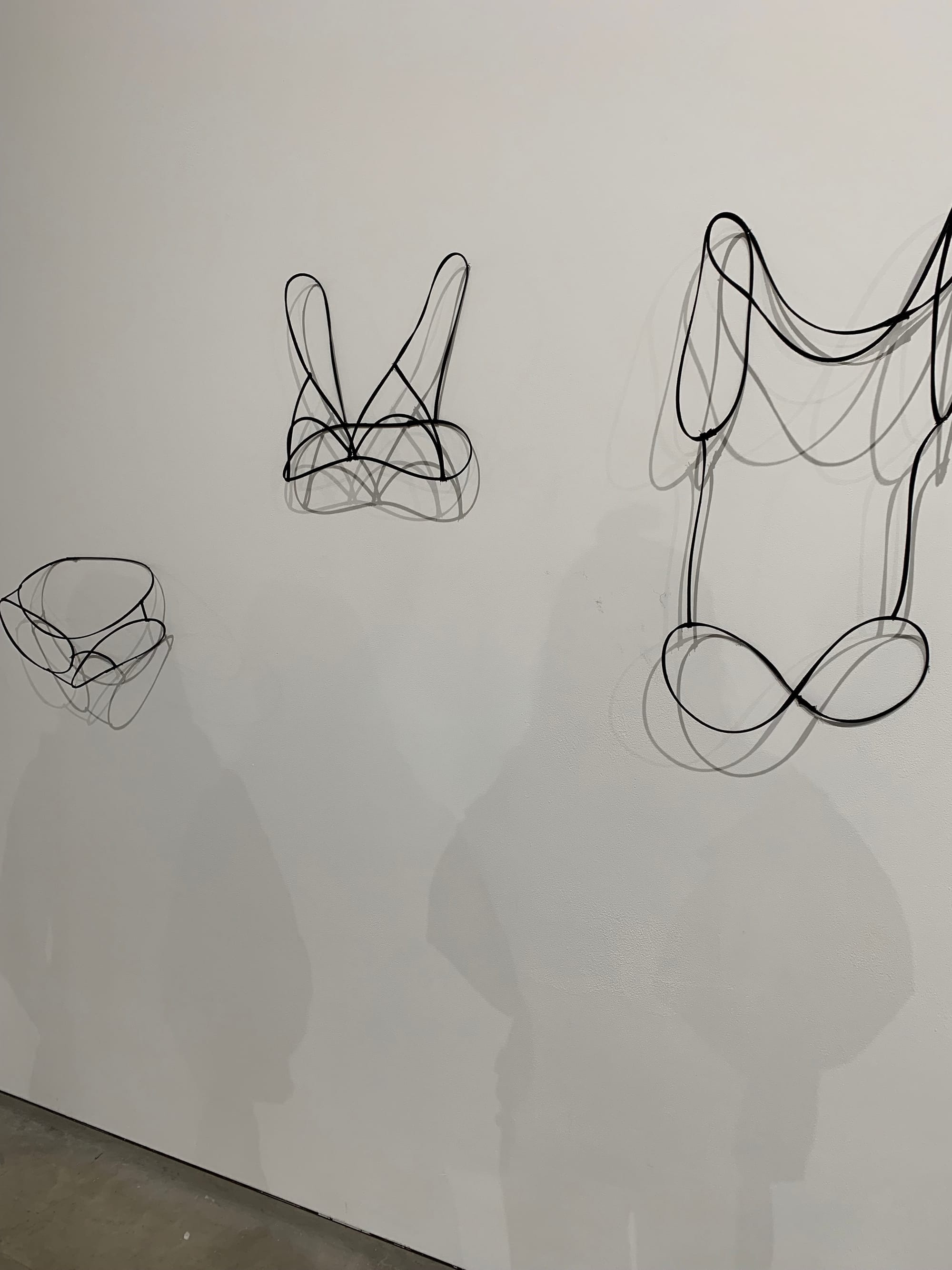
There was a lot of wired, sculptural garments and also a lot of furniture that Broadhead had made on display, but the last piece that I will mention is about a structural sleeve that was on display at the very end of the exhibition room. This piece used one strand of nylon woven round and round to create a very elastic net. After a series of shorter bracelets made in the same way, Broadhead wanted to make the piece as large as the body allowed, so by using the body as a measure, the piece extends to where it cannot go any further stopping at the top of the arm. The intention was for the piece to do two things at once, to have two different characters. Off the body, the bracelet looked unlike a piece of jewellery. On the body, it covered the arm like a second skin, translucent and flexible. Broadhead became increasingly interested in the theatrical and the possible, rather than the practical.
I’ve been to exhibitions similar to this one, such as the Fashion Together exhibit in Oxford Street. It was similar in the sense that everything was open and not enclosed in glass cabinets much like most exhibits.
Again it was something fairly new that I saw as I have never been to see any work made by the particular artist so it was interesting to see her work and how she has dedicated her whole life to the arts, as well as seeing her journey and understanding her thinking behind each piece and collection.
The main art forms involved were making, designing and sewing.
Overall, I enjoyed the exhibit due to the amazing multi disciplinary skills displayed by Broadhead in this exhibition, but I would have liked to see even more items of pieces she has made or even more descriptions and information for the public to get a real sense of each individual piece.
Fashions Finest: Let’s Talk Fashion Business With Sue Mee Maudsley:
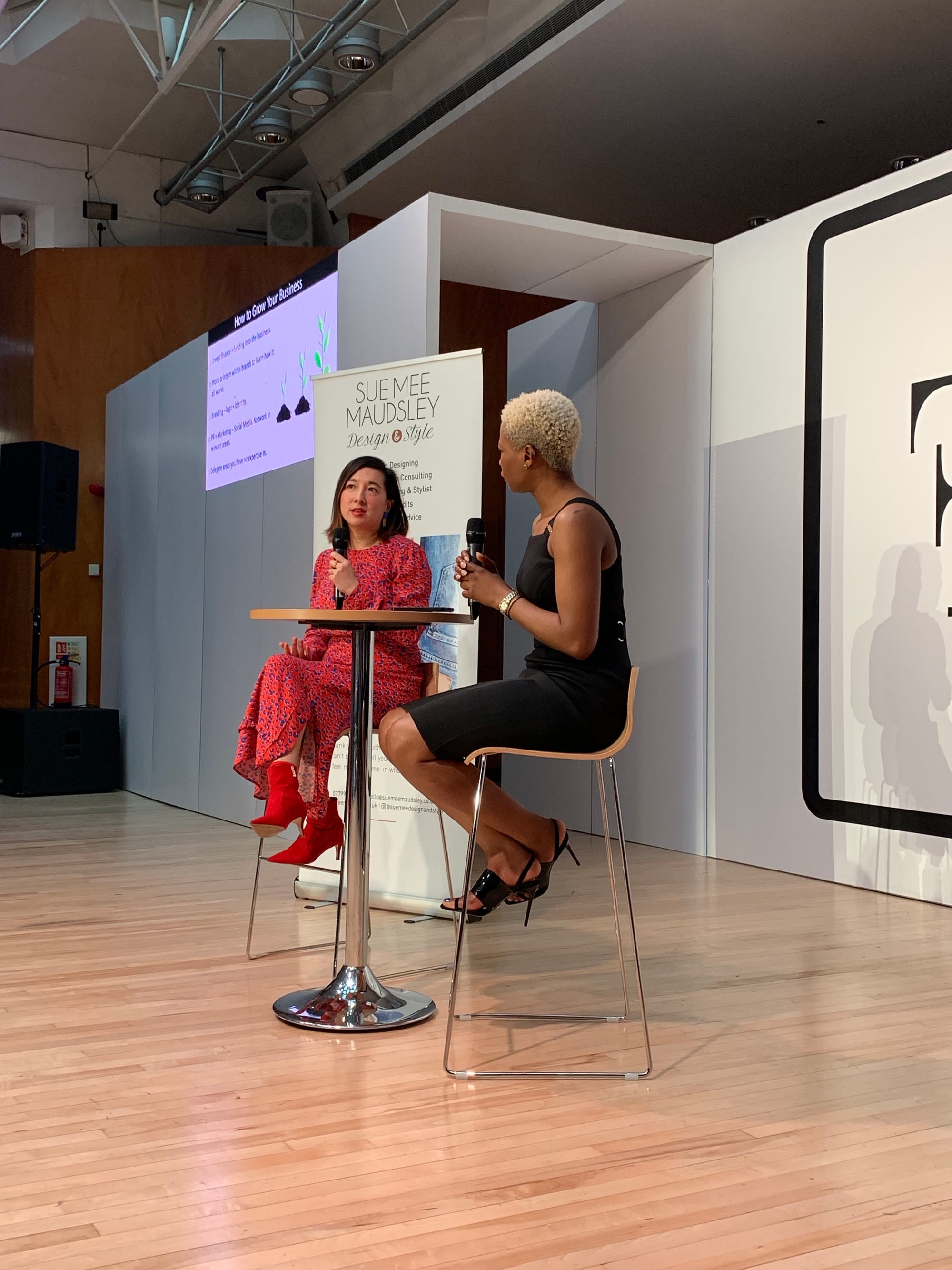
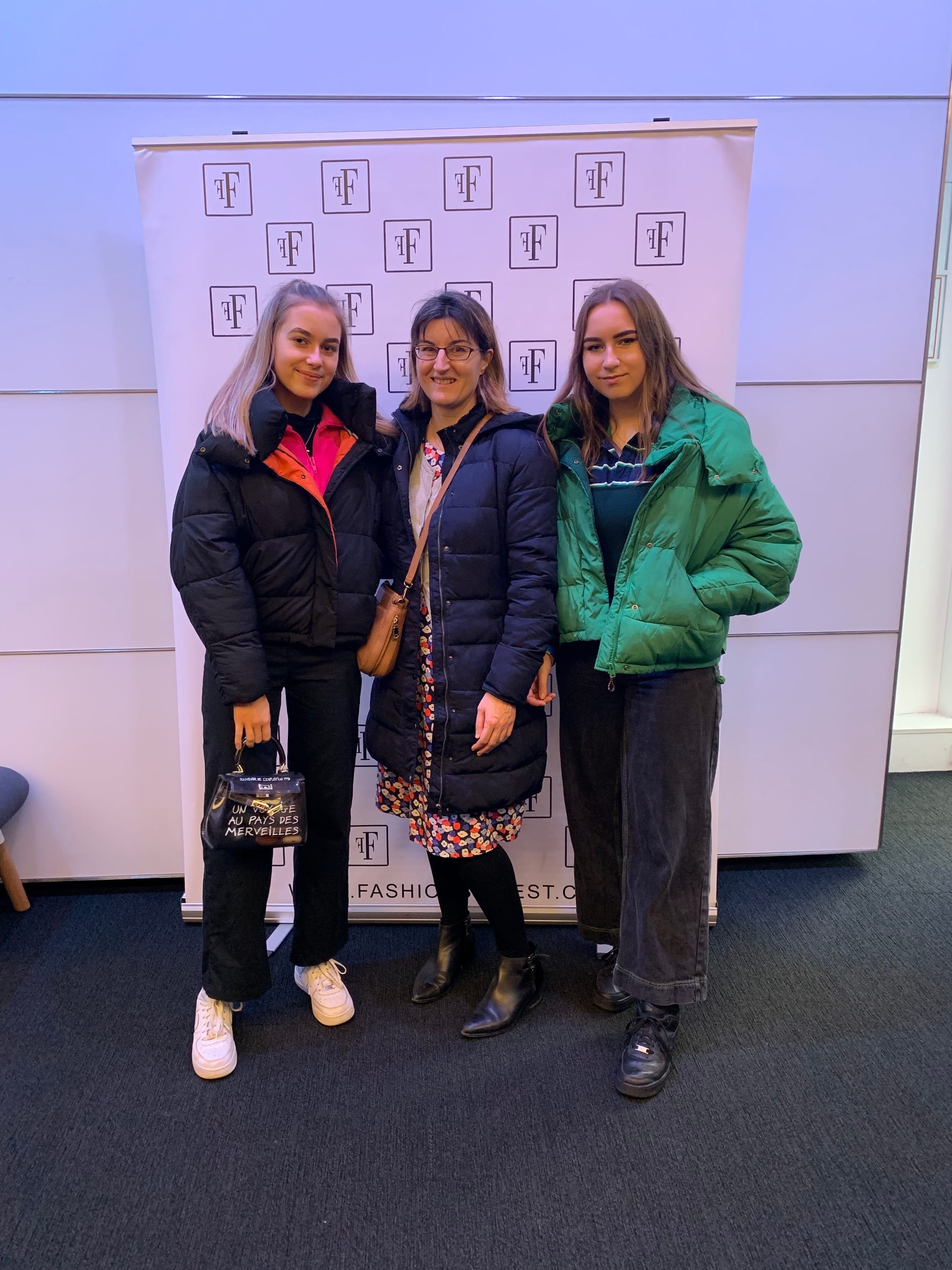
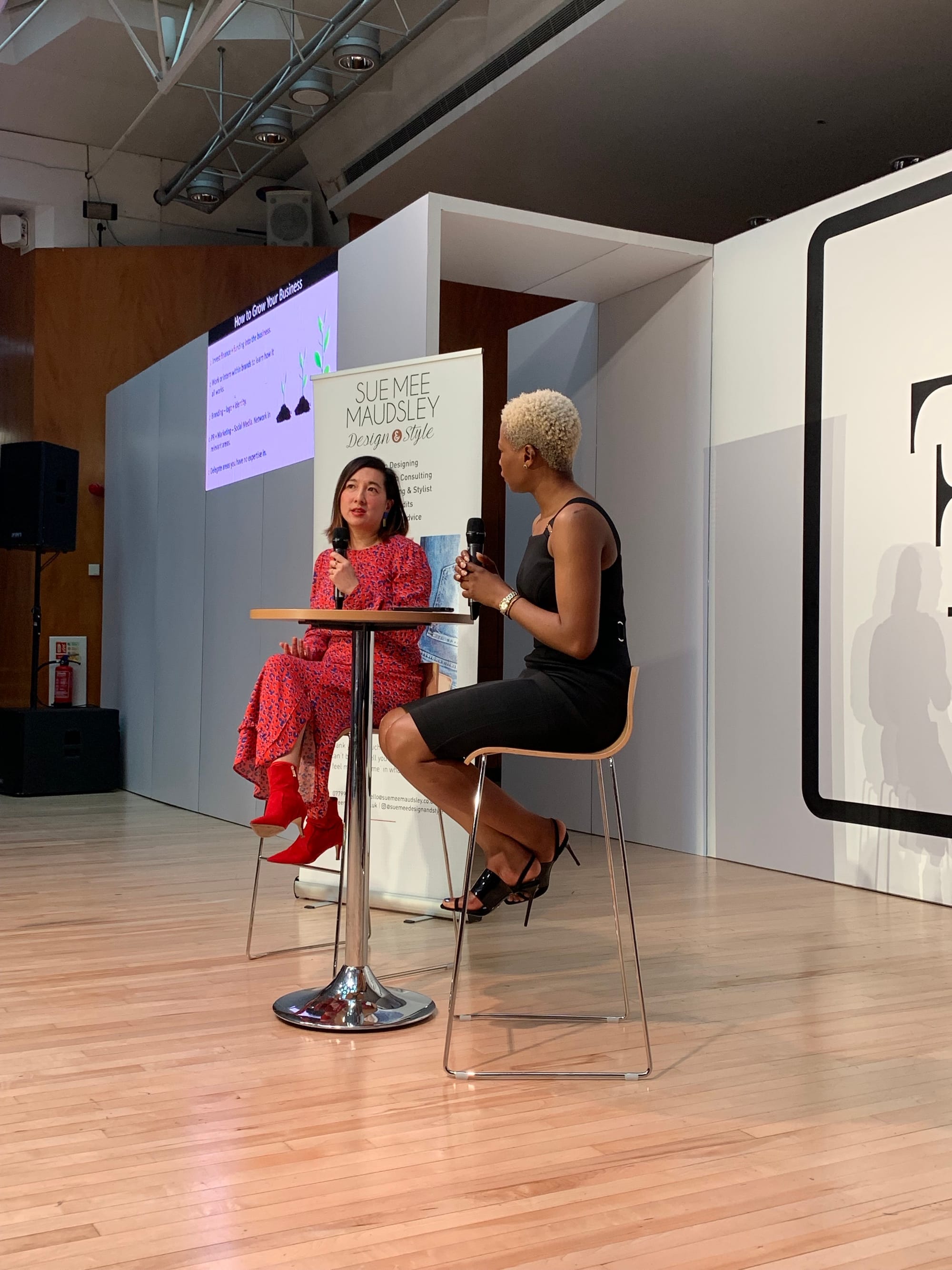
On Saturday the 16th of February 2019, I attended a fashion talk at a Fashion Finest’s event, which was held in Tottenham Court Road. The aim of this talk was for a fashion professional, Sue Mee Maudsley, to talk about her work in the fashion industry and to get to know more about the money and business side of the industry.
The talk started at 12 noon and ended at around 1:30pm so it was a very highly intensive talk and I did learn a lot of insider knowledge through attending and found out a lot about the more business side of fashion. Sue Mee Maudsley is an established designer and consultant with over 25 years in the fashion industry. She has designed for many brands which include Burberry, Topshop, Warehouse, Monsoon, John Lewis, Topman, Simply Be and Racing Green.
In the talk the following points were covered:
- How to be commercial and creative at the same time.
- How to appeal to your target customer.
- How to approach buyers with your collection and ideas.
- How to grow your business after launching.
The structure of the talk was that the host; Gayle Thompson, asked Sue Mee several questions to answer and Sue Mee also had a presentation showing with some key information which also incorporated pictures and quotes on the subject matter. The audience also had several opportunities to ask questions and to know a bit more about the designer’s background and how she got to where she is now.
The first thing the talk focused on was Sue Mee’s career. As I have mentioned she designs and consults brands such as the ones I have listed above. She also designs and consults start up brands with guidance on producing their own collections. As part of her broad range of expertise, Sue has judged twice on the Young Fashion Designer UK competition which showcases design talent across the Midlands and South East England. Alongside judging, designing and consultancy, Sue Mee is a personal shopper and a stylist. Taking in the interest of the client enables her to understand the needs of the consumer and broadens her knowledge of design, production and finished product as a whole.
After learning a bit more about the designer a bit more, the talk plunged straight into the business side of the fashion industry. She started off also talking off how she even got into the designing world, and her background. In her background, she had some textiles in it as her mum was actively involved in the fashion industry as a professional embroiderer. Then she mentioned how she actually got into the industry itself, as one summer she had three internships in three different places. She started off out at a high street shop; River Island, where she designed garments ranging from swim wear and lingerie, to jumpers. After this internship, she went off to intern at a high fashion couture house; Vivienne Westwood. The point that she was trying to get through going to such different fashion aspects, was to see how different high couture worked compared to high street, fast fashion labels. It was also a chance to see for herself which part of the industry she preferred. After these two internships, she went off to work at a small independent shop for fashion, where she found out more about starting your own label. She highly recommended that anyone wanting to get into the industry should get as much work experience and as many internships as possible, as getting a job would be really hard without having this experience. It shows that you are proactive and it really does show that you are hard working which is what big fashion labels or even small fashion labels want to see.
After getting into talking about work experience and internships, Sue Mee then went into talking about her university experience in the fashion courses. So she specialised in knitwear and outerwear and in her degree show, Wallace bought the coat pattern pieces from a coat that Sue Mee had made for the show, and the company commercialised them and sold them nationally. It was a huge success for both Sue Mee and the company Wallace, as it had given Sue Mee an opportunity to shine and succeed right at the beginning of her career and Wallace made a lot of money through her coat design. After this experience, she went straight into work and worked through multiple large scale companies whilst also working as a personal shopper and stylist.
After fully looking at her success and tips on getting work experience, she went on to talking about how to grow your own fashion business. She said that it was crucial to be unique and have a unique selling point as there was a lot of upcoming designers who wanted a consultation with her and had sent her a link on some other already established fashion house’s designs and saying how they wanted to copy the whole collection. This got a lot of gasps and shaking heads from the audience as everyone understood that copying another designers work is completely unethical and wrong as a lot of work and thought goes behind a collection.
She also mentioned that it is highly unlikely that someone becomes an overnight success, you need to produce a collection and have a launch event, but then you have to keep with the work flow, and be on top of the work, coming up with new ideas for a new collection. Timescales and being realistic with money were two things that she particularly focused on, as a large investment is needed before actually being able to start a fashion label. And she did say that a lot of new designers do not actually realise how important and how much this sum actually is worth.
She also said that it was quite difficult to go into the fashion industry as there is so much competition and so many other people who also want the career that you want. She said that when trying to sell your collections, it was extremely difficult to be successful with all the competition out there, so she did say that you should not send an email to the buyer as the buyer would probably be receiving about 300 emails a week from tons of other designers, so it is key to stand out from the crowd and the sea of emails. Therefore she did recommend to send in a package or a letter about your collection so that the buyers could actually see for themselves the quality and designs of your collection and then would be more inclined to buy your collection.
After this she did go on to her last point on talking about fast fashion. She completely disagreed with fast fashion and said that it was completely unstable for both the designers and for the safety of the environment. She went on to say that in fast fashion, designers are expected to realise new collections every week whereas before it was every season. She said that it was completely unrealistic and that it was key that in modern day life in the fashion industry, to go sustainable as that is a key selling point that most, if not all, successful fashion labels incorporate into their designs.
After this, the audience had a chance to ask questions before the event ended. I asked a bit more on work experience at 16 in the fashion industry, which she went on to say that you might ask 50 designing labels and only get an offer for one, so she did say that it was important to keep being persistent and keep going even if it did seem that no one wanted to work with you. She said that she asked almost about 100 places before she got offered those three internships that summer.
Overall, I really enjoyed this talk and found it very interesting and helpful as it offered a clearer insight of the business side of this creative fashion industry.
Fashion Show Reviews:
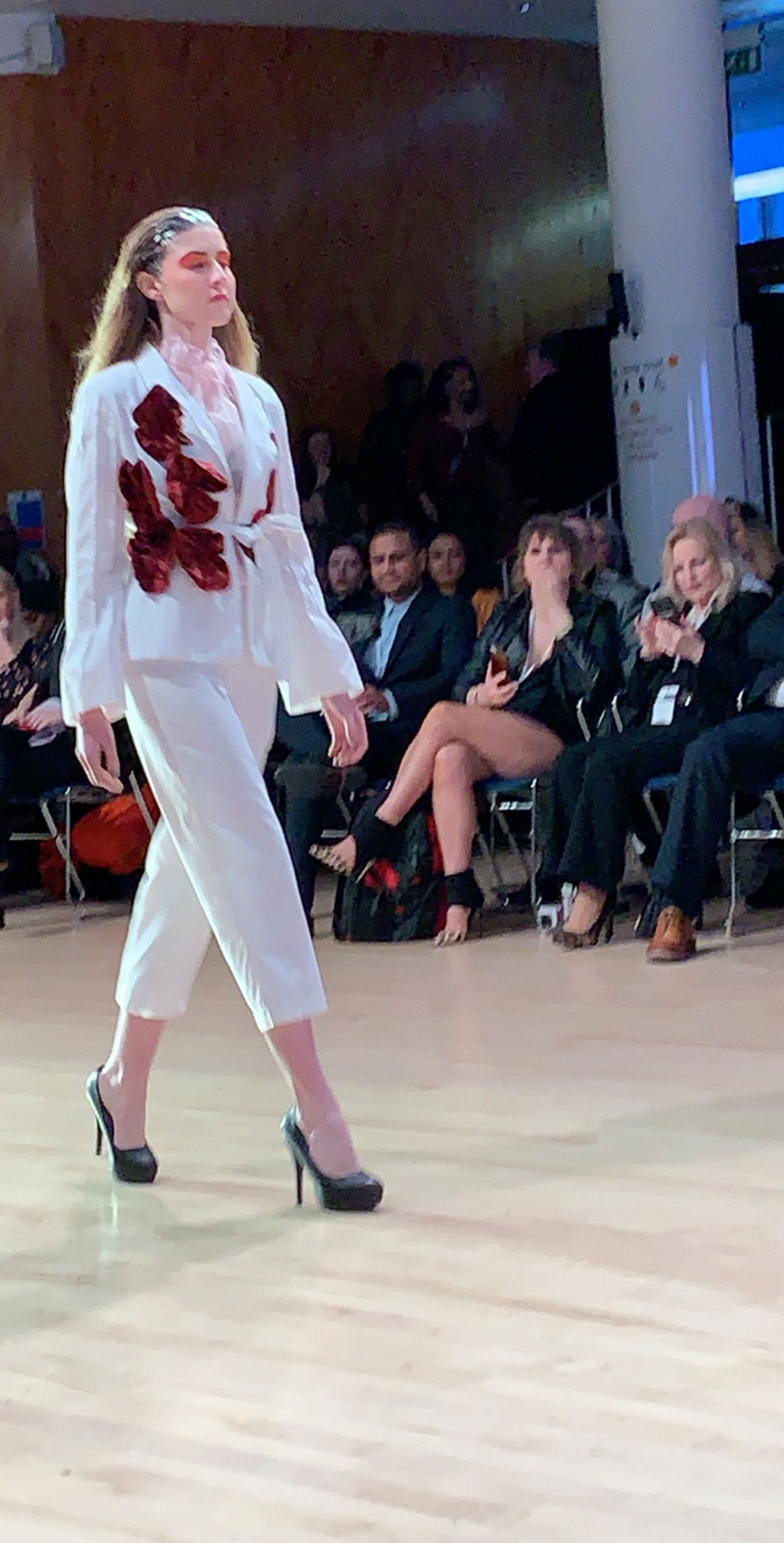
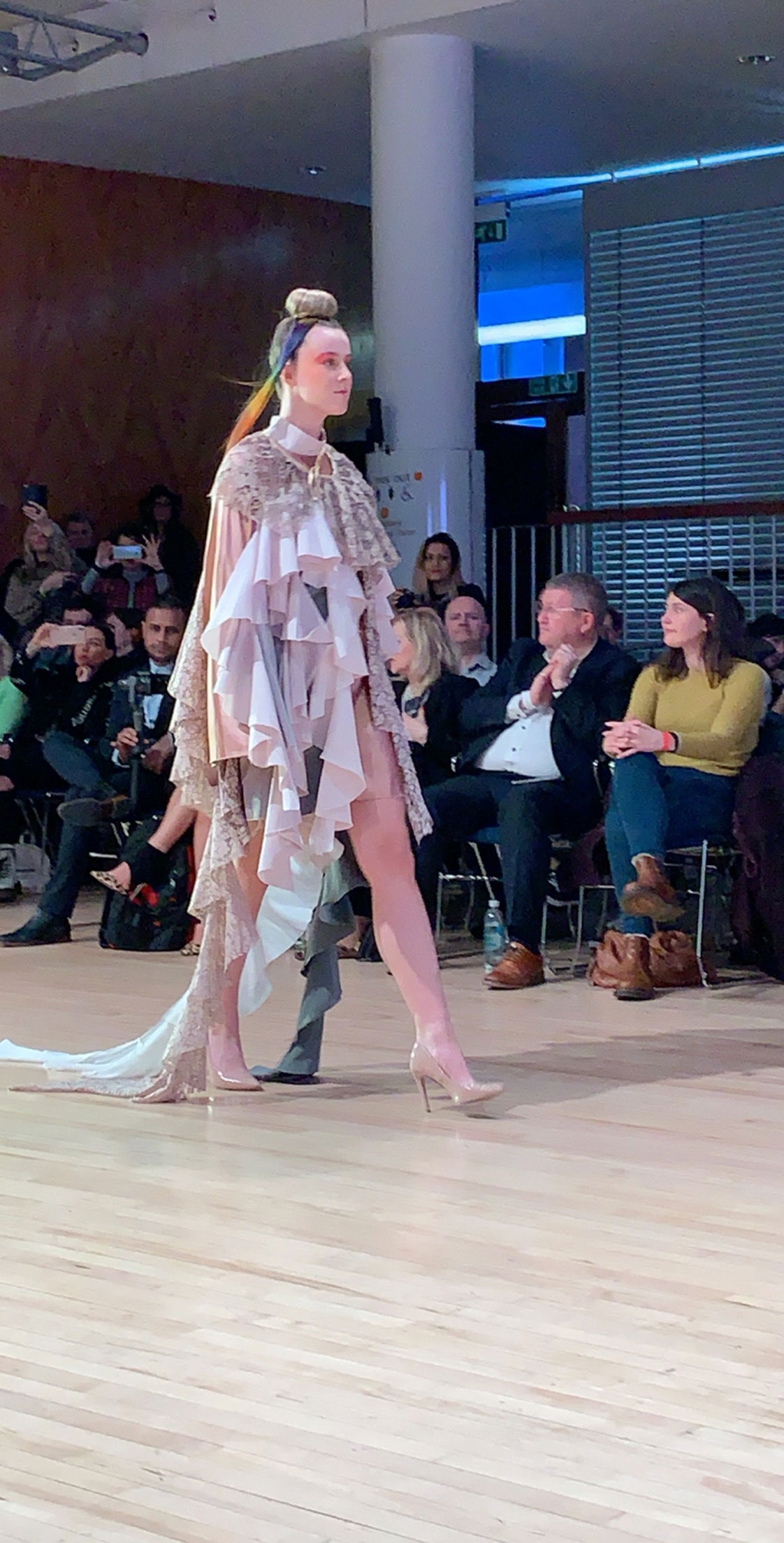
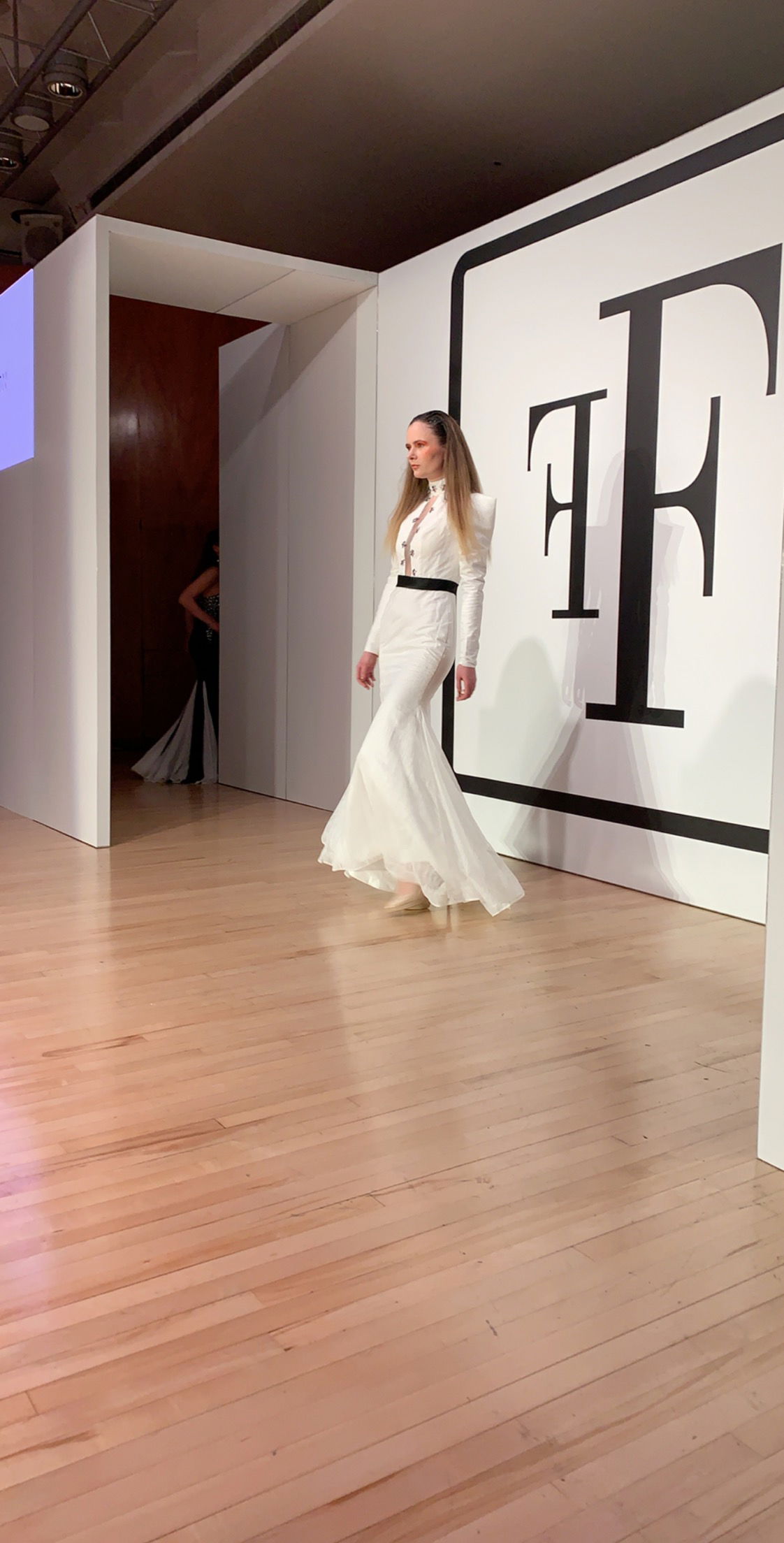
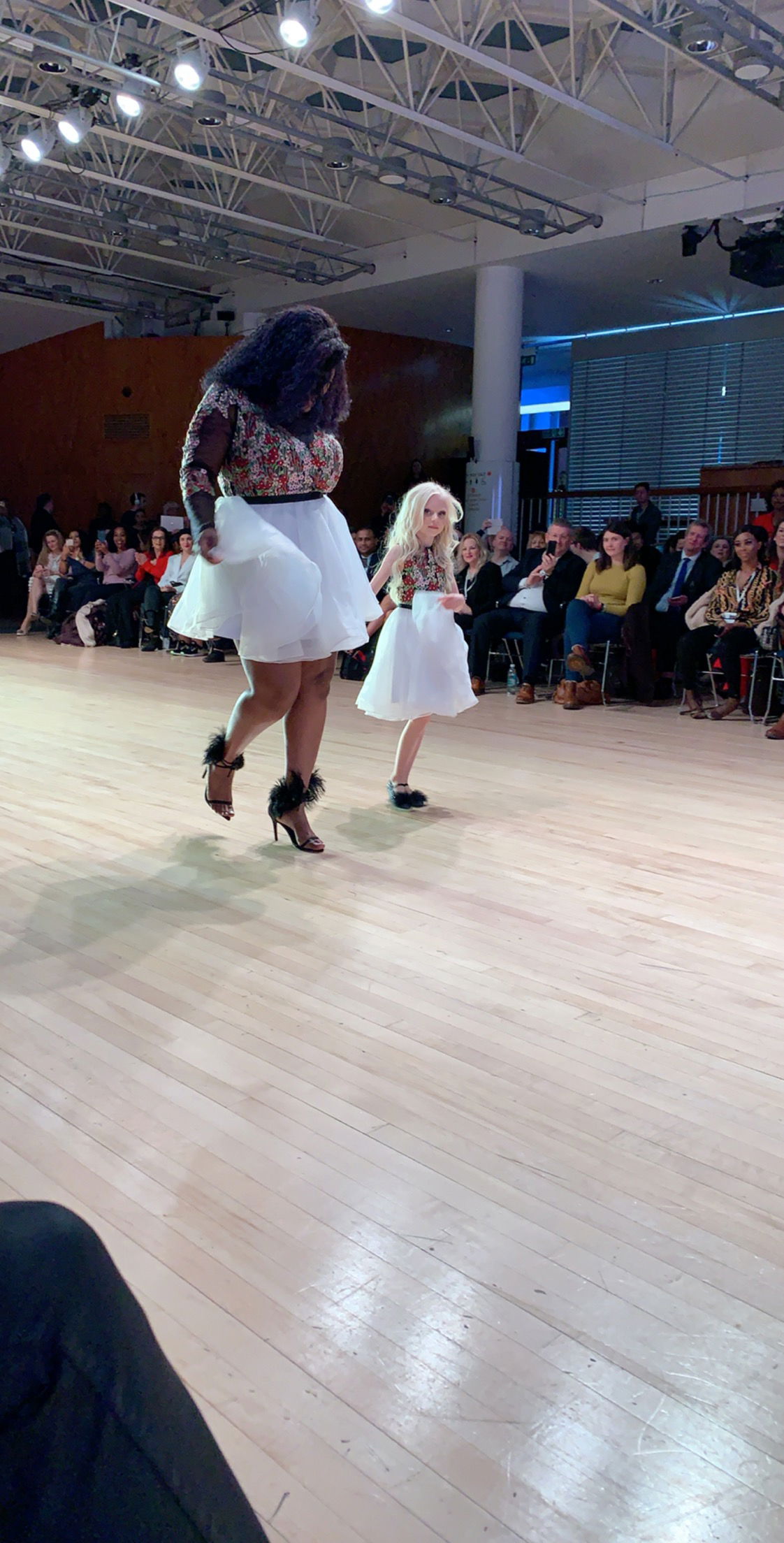
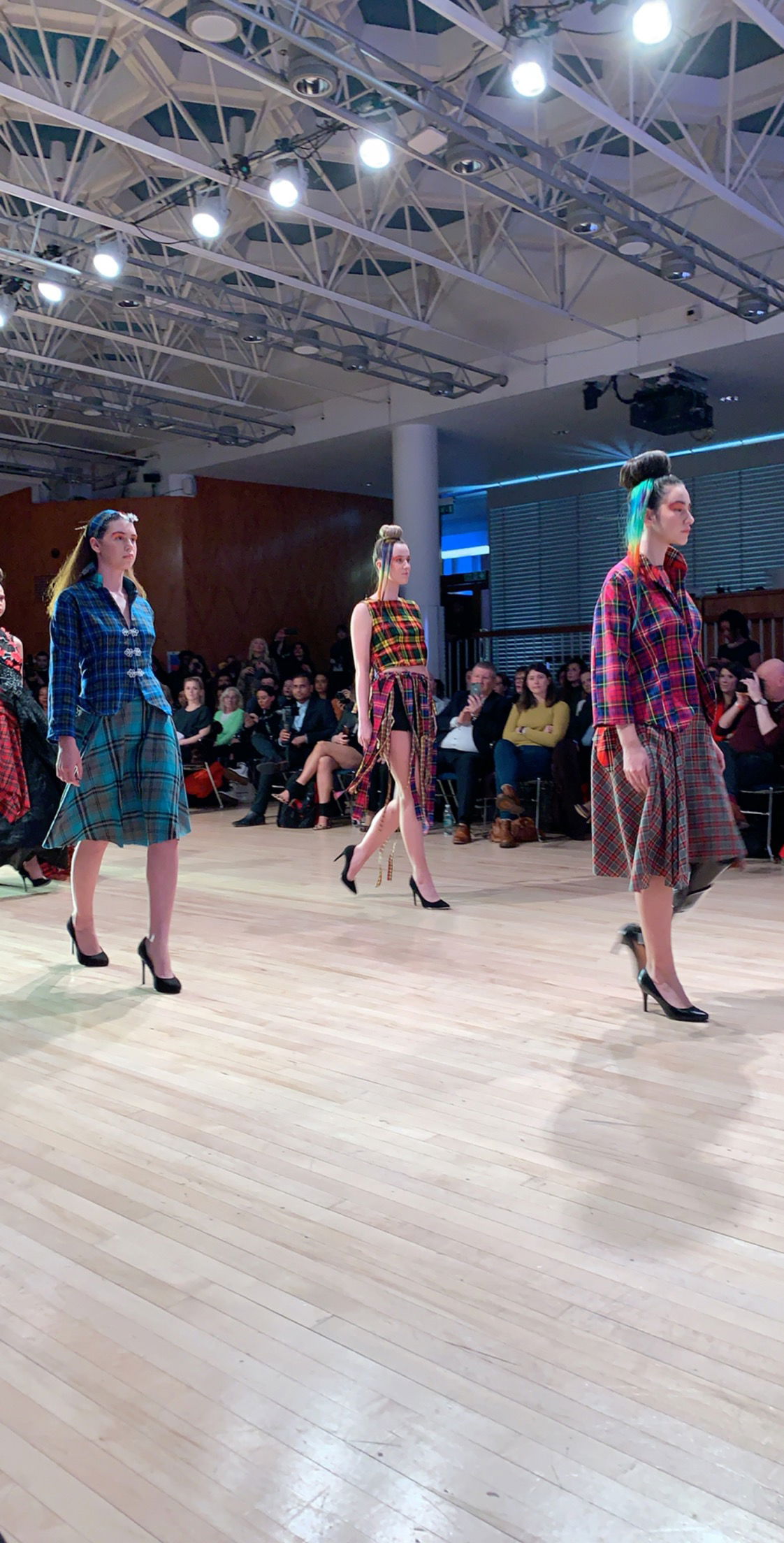
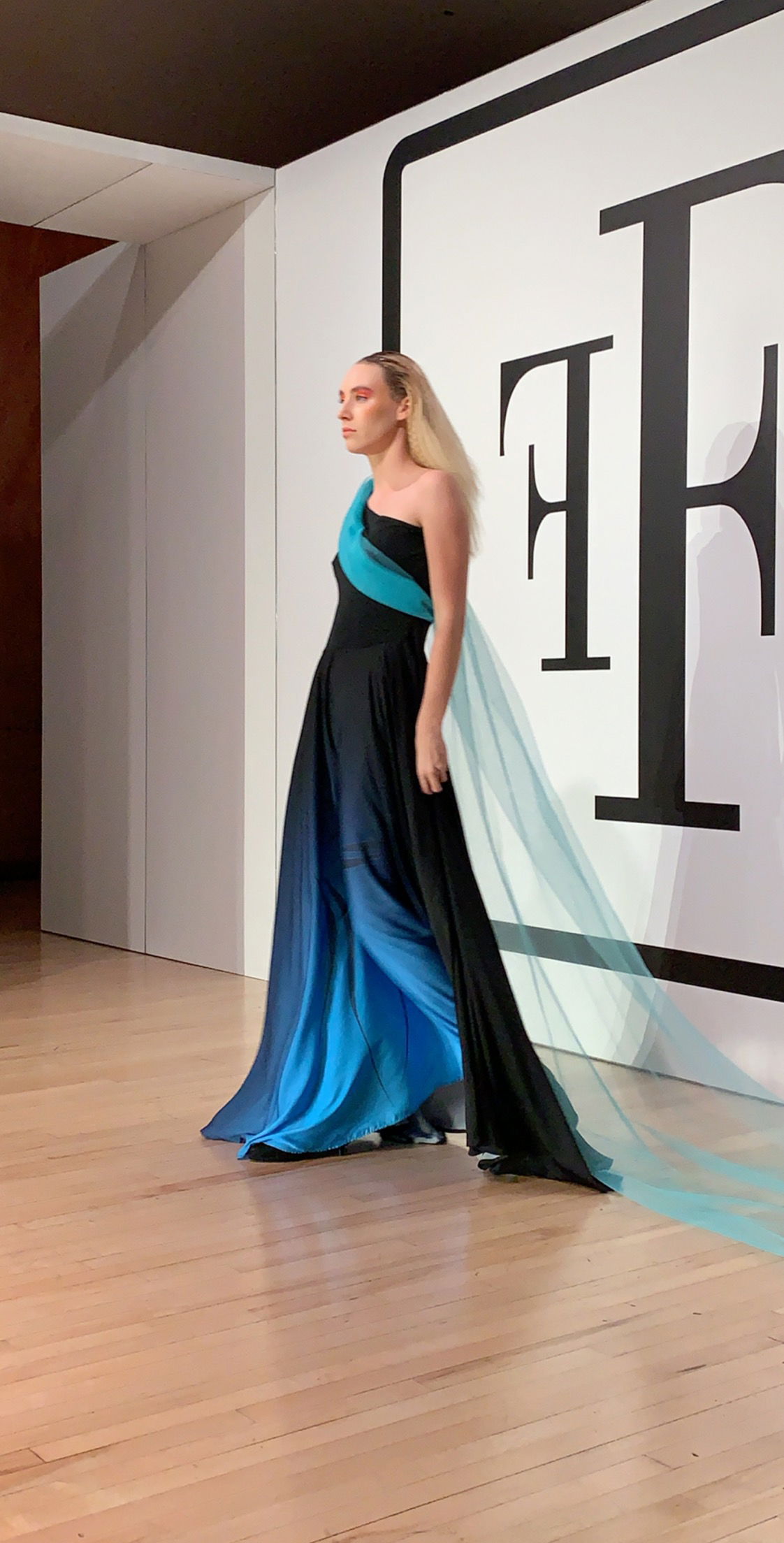
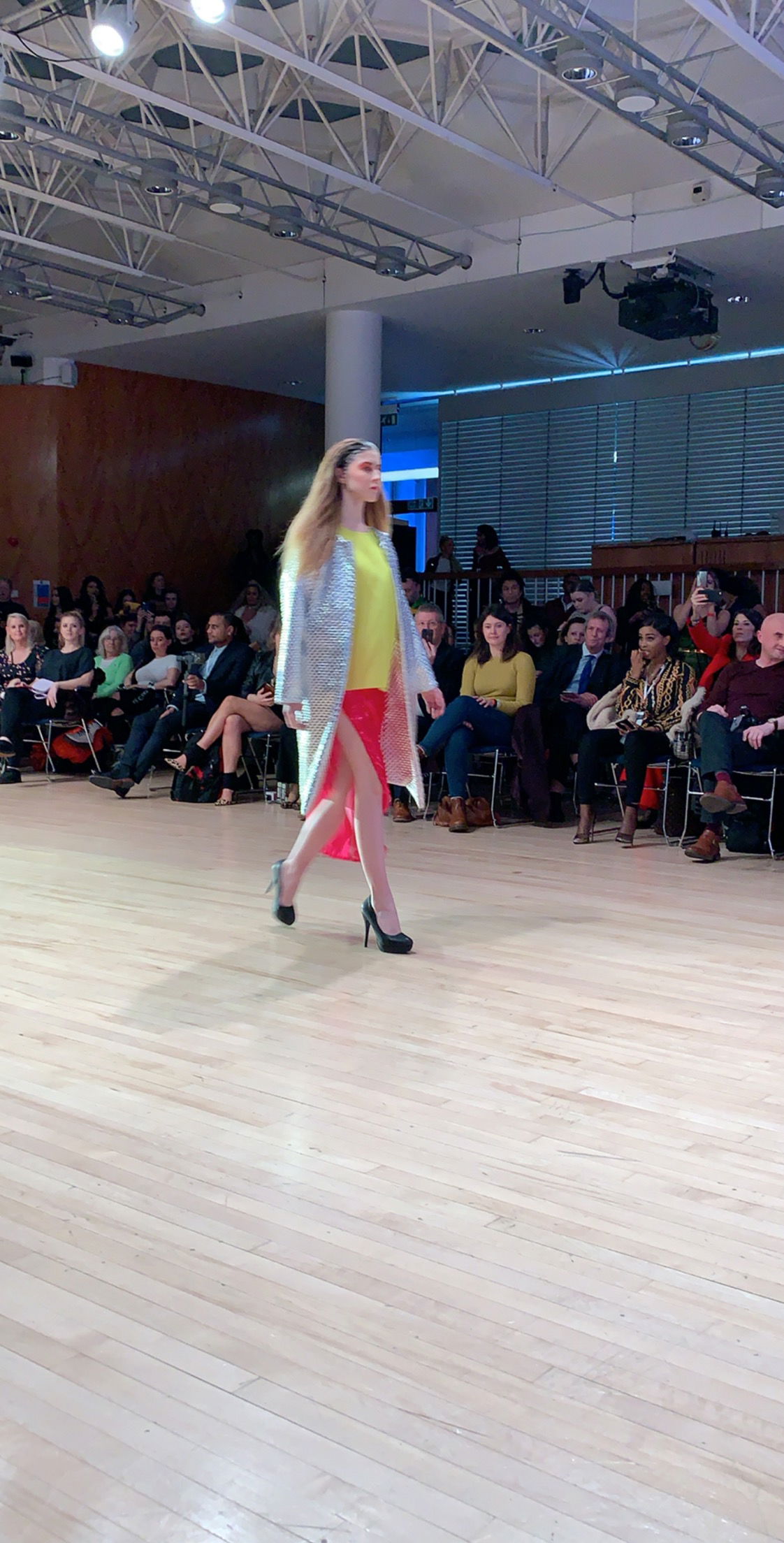
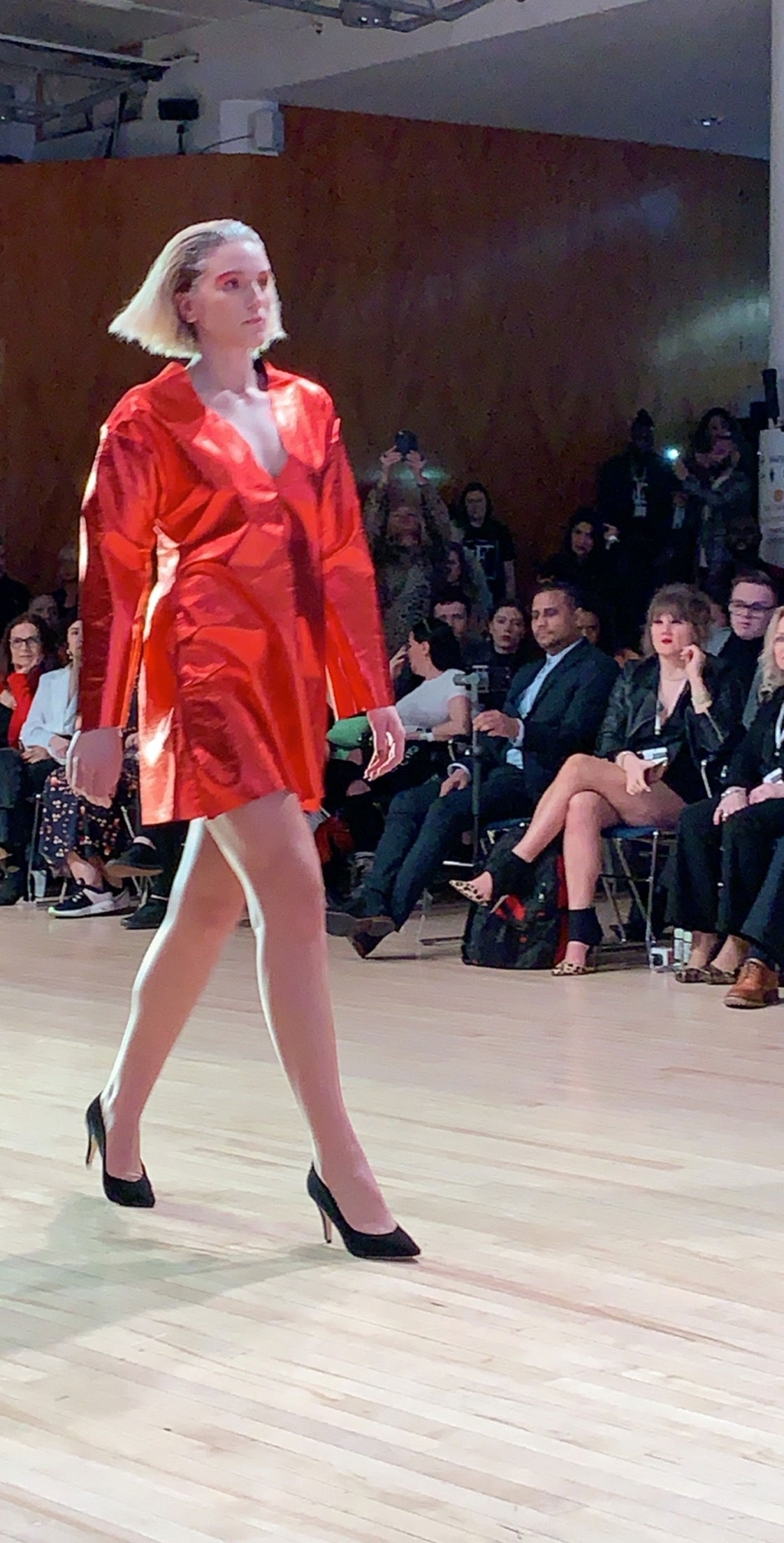
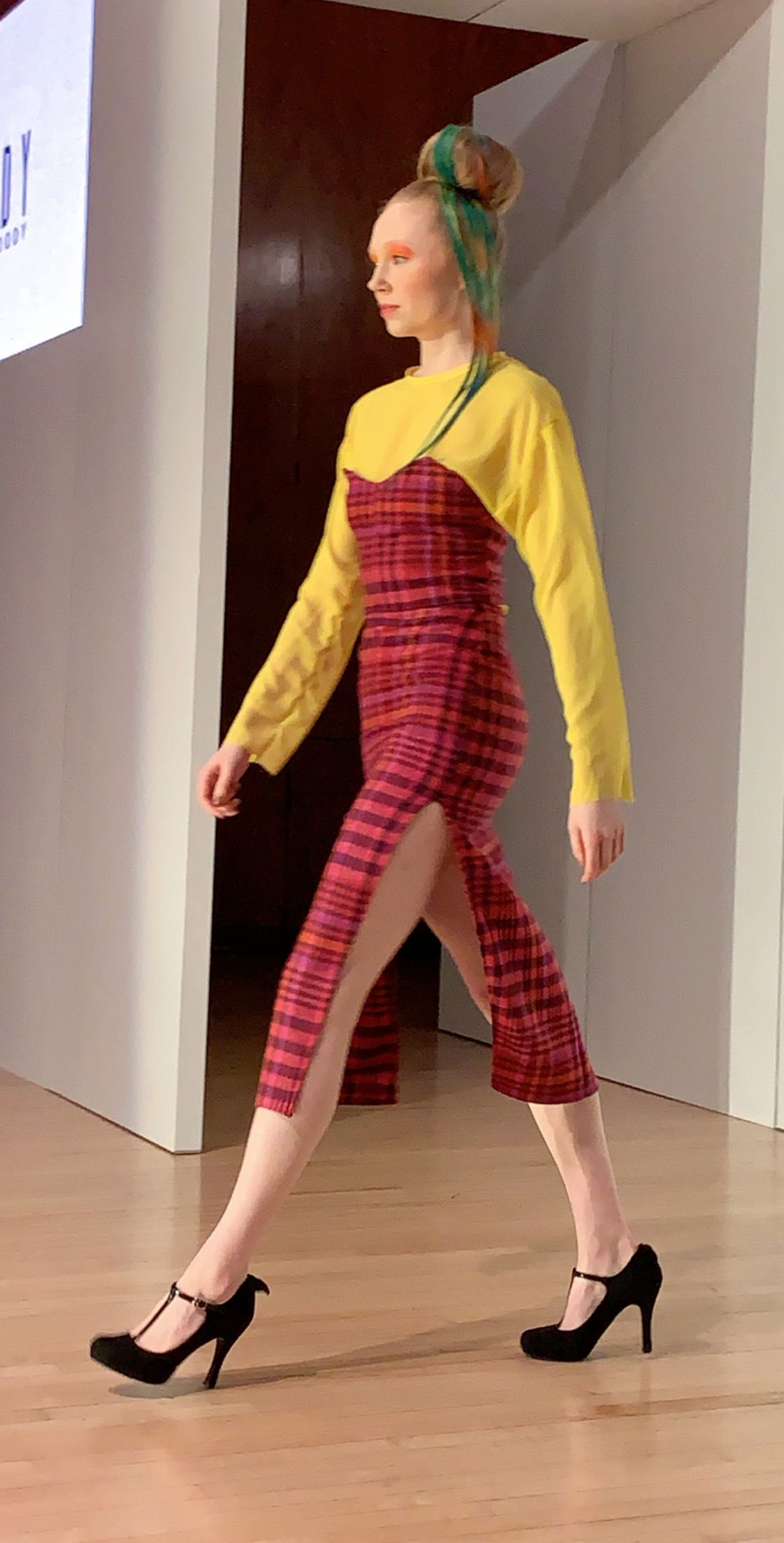
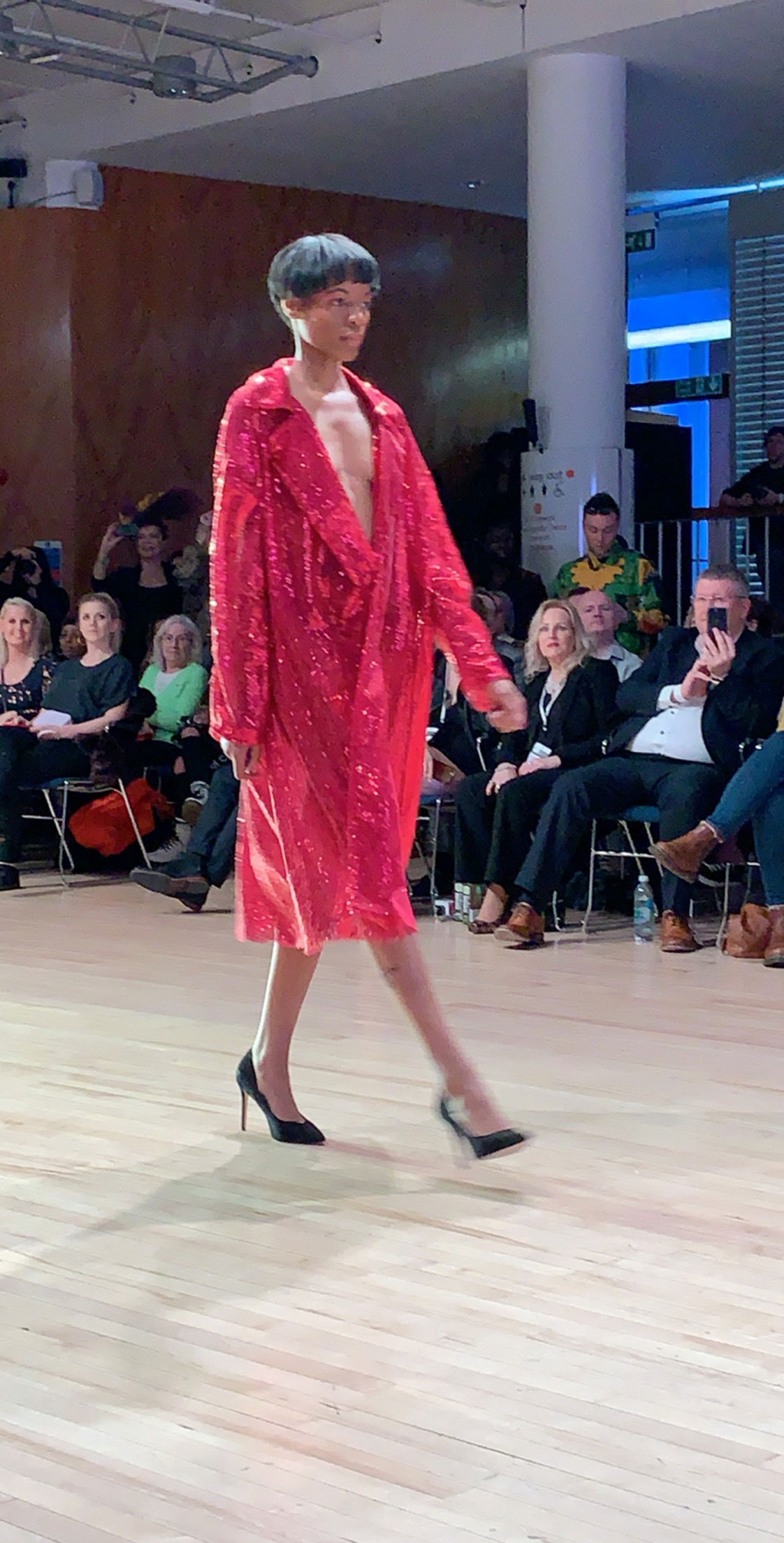
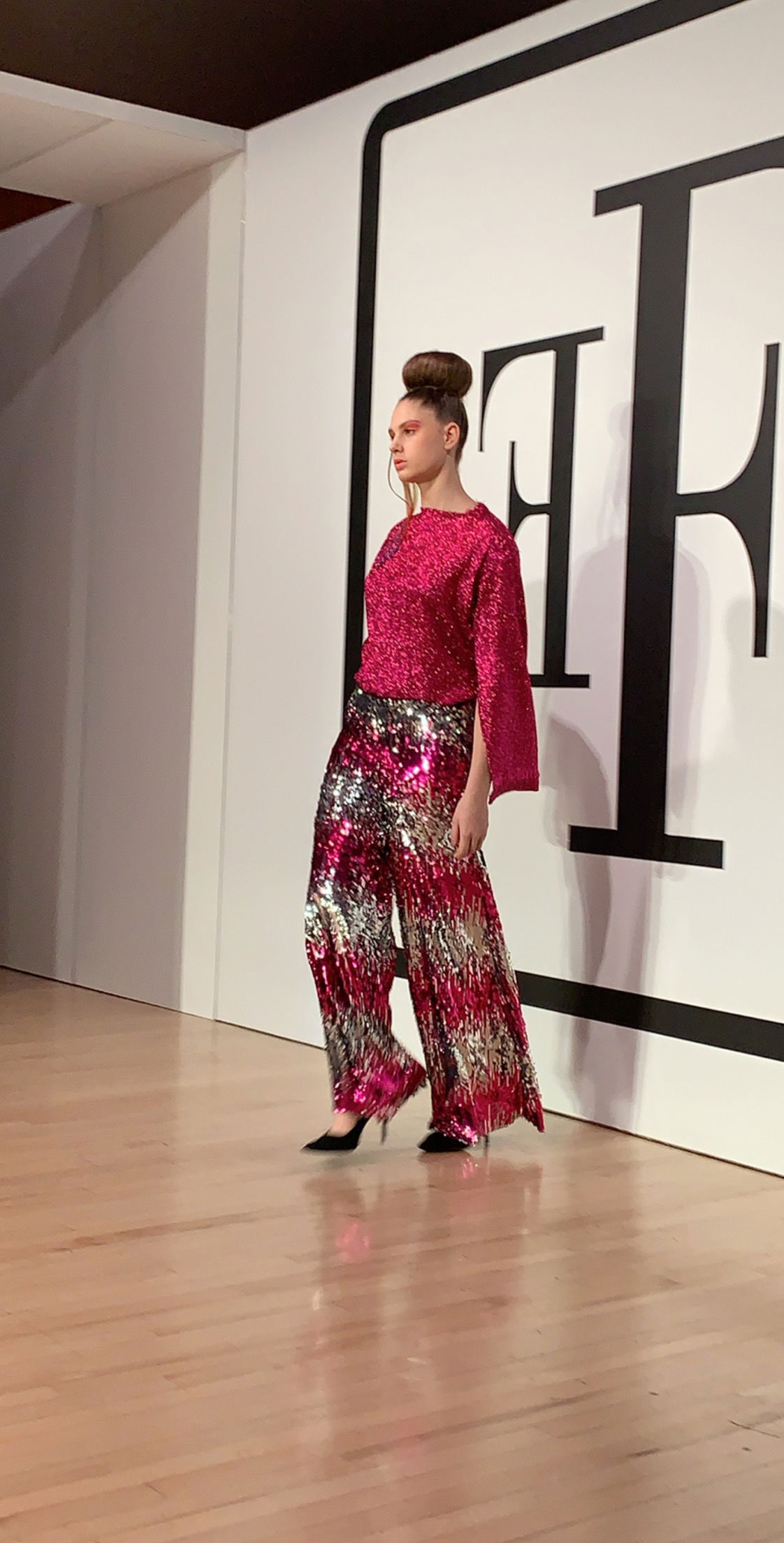
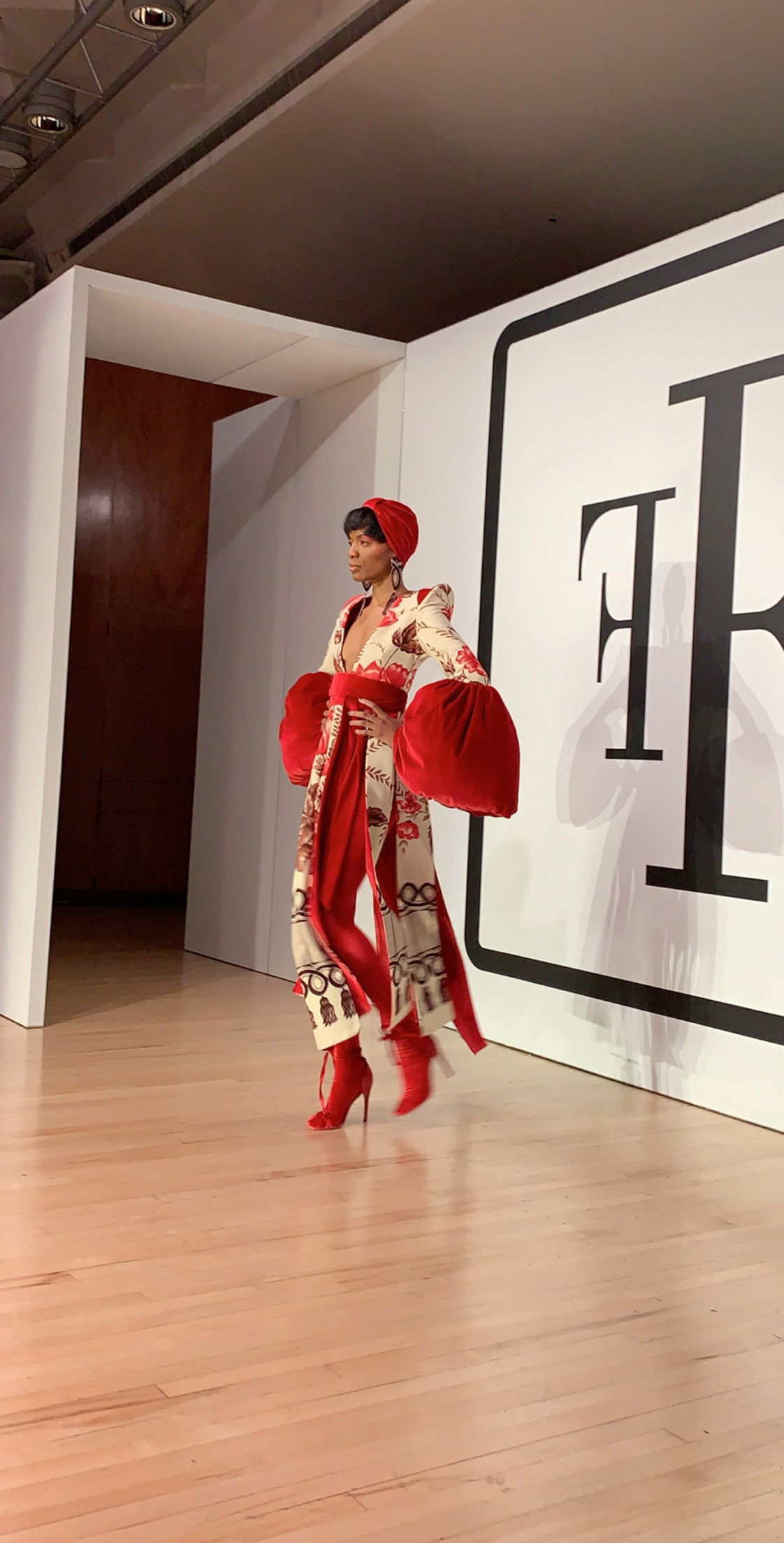
Fashions Finest: AW/19 Catwalk Shows:
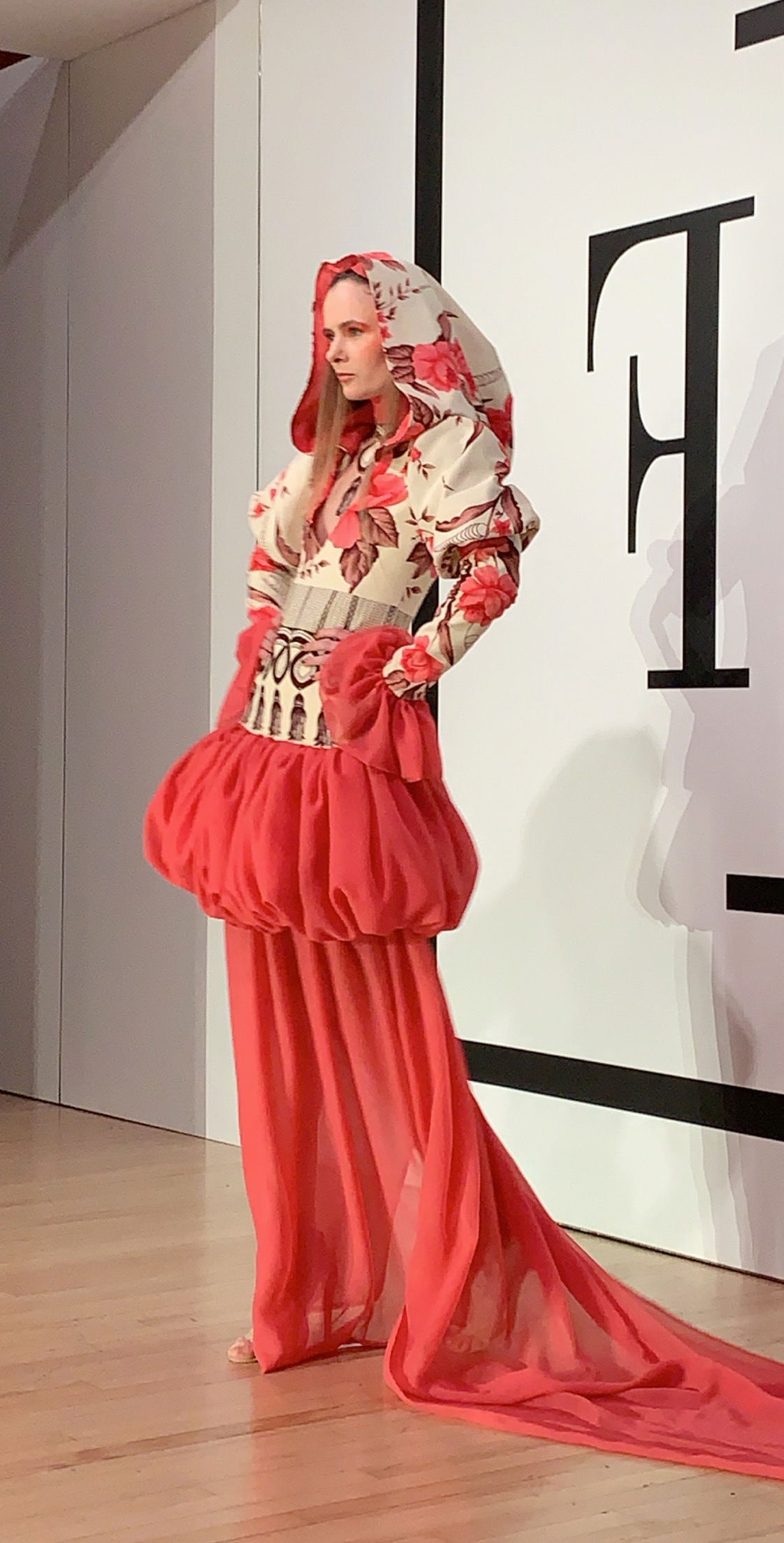
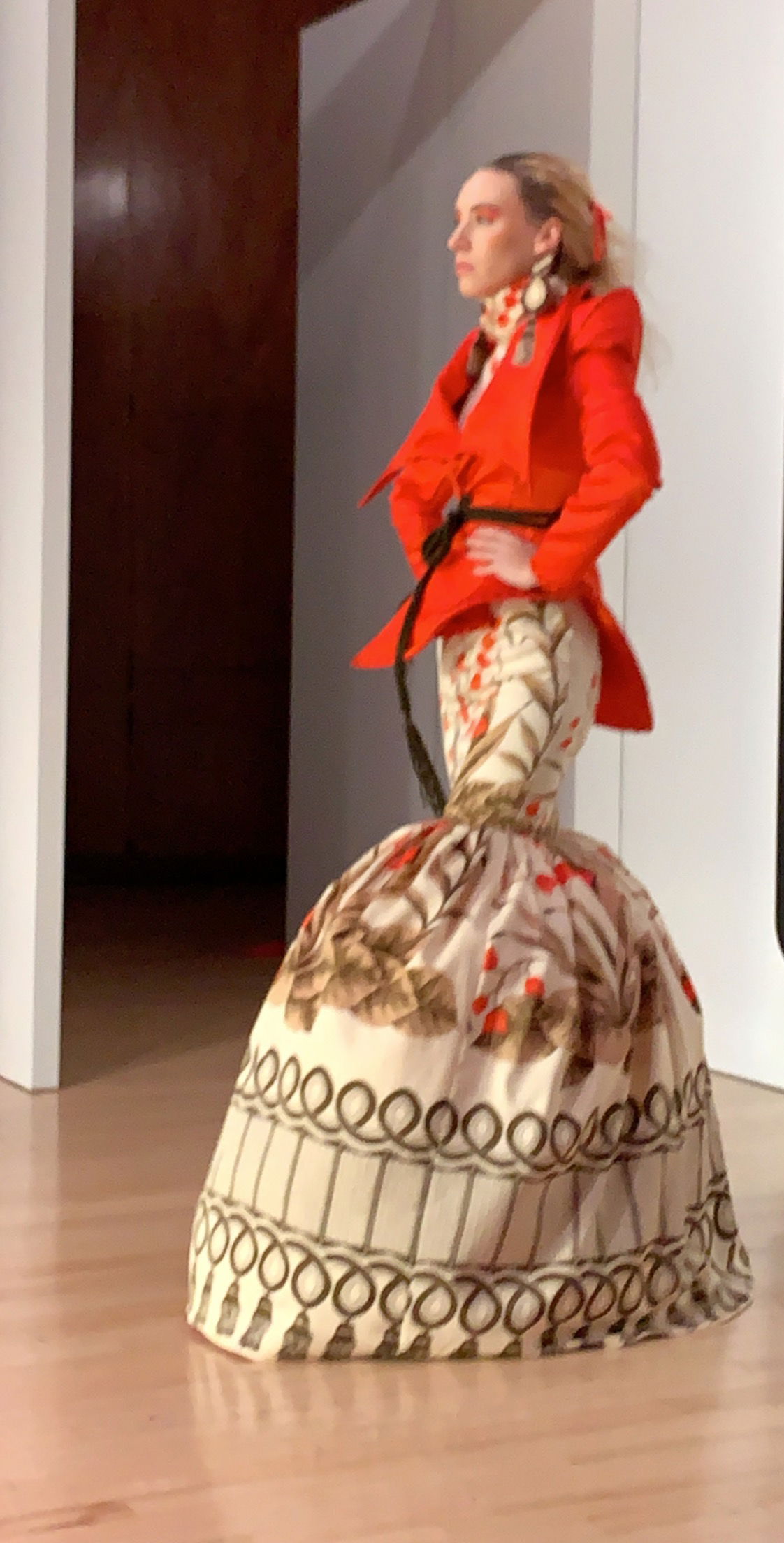
On Saturday 16th February 2019, I went to see Fashions Finest’s Autumn Winter catwalk shows. Fashions Finest is a platform for UK and international emerging designers and is even described as one of the most ‘sought after and popular shows’ during London Fashion Week since 2010. In a time of economic uncertainty and in one of the most competitive industries, Fashions Finest remains committed to its mission to provide a platform with a holistic approach to its designers. This show was held at the Congress Centre located at Tottenham Court Road.
The schedule for these shows were that at 2pm there were six designers who each presented their show one after the other. The six designers were as follows:
- Misora Nakamori, from France
- L’Essayeur, from the UK
- Nitya Singh, from India
- Helen Kaye, form the UK
- The Kemist, from the UK
- Kapaza, from Norway
It was really nice to have a mix of nationalities being represented and having diversity in a time where the UK is leaving the EU, and a division between nations is being placed. Each designer had about ten minutes allocated each were the models would walk on to the stage for everyone to look at the garments made by each particular designer. After each walk and collection had had its limelight on stage, the designers would come out to the stage and take their bow and congratulations from the audience. There was a lot of diversity with the models, usually in stereotypical terms, the models are mostly of fair and pale skin and are very tall and slender. However in this show, there was models of that stereotype and also models of colour who were very slender, but there was also a range of heights in models, difference in races and there was even a disabled model with a prosthetic leg. The diversity in both models and designer’s backgrounds and diversity in the designs/collections themselves was very impressionable and was one of the aspects that particularly struck out and made the environment more inclusive and enjoyable.
After that show ended at around 3:30pm, there was an hour break to go to the stalls located right outside the catwalk room, and there was a chance to see different designers in person and to network, along with the opportunity to make purchases. At 4:30pm there was another catwalk show, this time with eight designers showing their collections. The designers are as follows:
- Mary Dickow, from Denmark
- Pathos, from Spain
- Olya Sookie, from Croatia
- Kanna Yeung, from the UK
- Miss Boss Fashion, from the UK
- Linda Blissett, from the UK
- Louisa Moody, from Wales
- Tuncer Tonun, from the UK
As there was again such diversity in the models and designers themselves, the environment was very inclusive and enjoyable. The designers also could choose whatever theme they wanted in their designs and collections. This in term made the show more enjoyable as there was such a variety in clothing and no two pieces of items were the same. The designer which I particularly liked the designs of had to be Tuncer Tonun. Their designs were incredible, and incorporated fabric manipulations, screen printed fabrics and many more difficult processes. This was the one that stood out to me the most. I have never seen anything quite like their designs. However, the designs which I found the least good was probably L’Essayeur who had the same designs repeated in all of their clothes. All the clothes were suits and were identical. This catwalk was the anomaly out of the rest as it was the only one with identical designs, and designs that have already been done before.
However overall I really enjoyed the experience as I have never seen a catwalk show with so many different catwalks and designers. I also really liked the diversity in the show.
What I thought could have been improved was the quantity of stalls during the break between shows as I do think that there could have been a few more stalls and even more space for people to navigate their way around them.
I would go again as it was a very inspiring event to see so many designers doing what they are passionate about, and it was very enjoyable as a whole.
Canary Wharf Autumn Fashion Show Review:
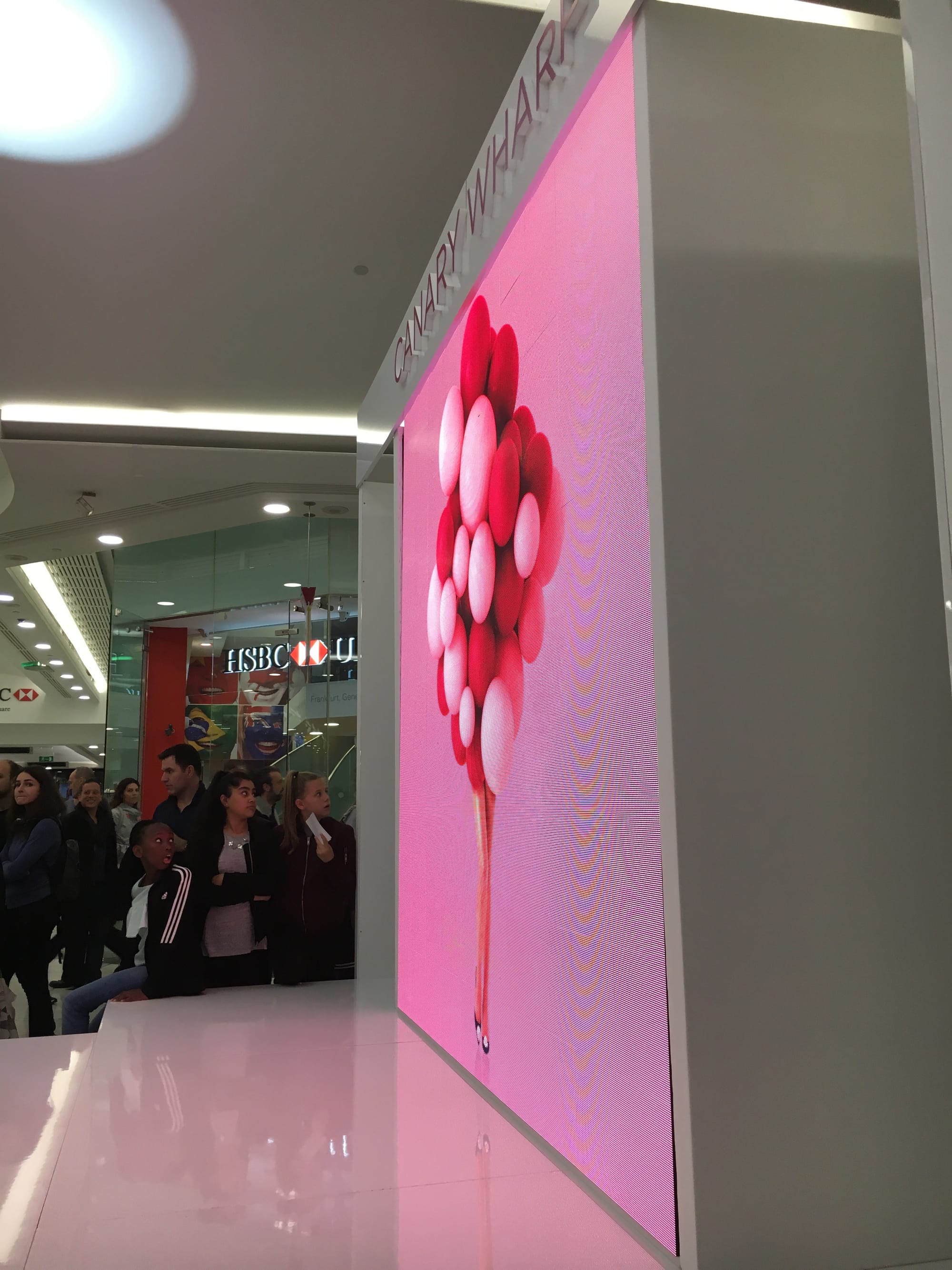
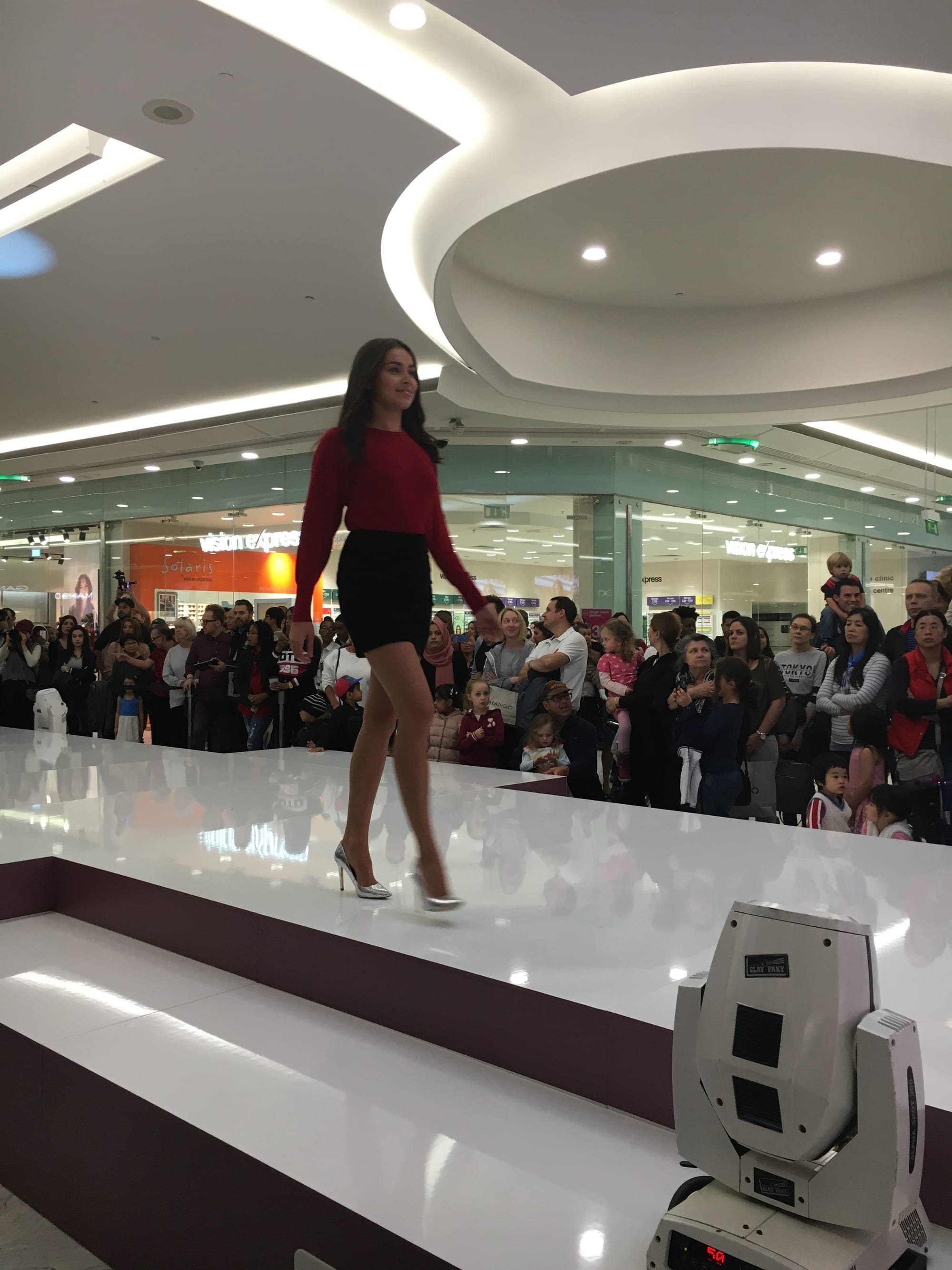
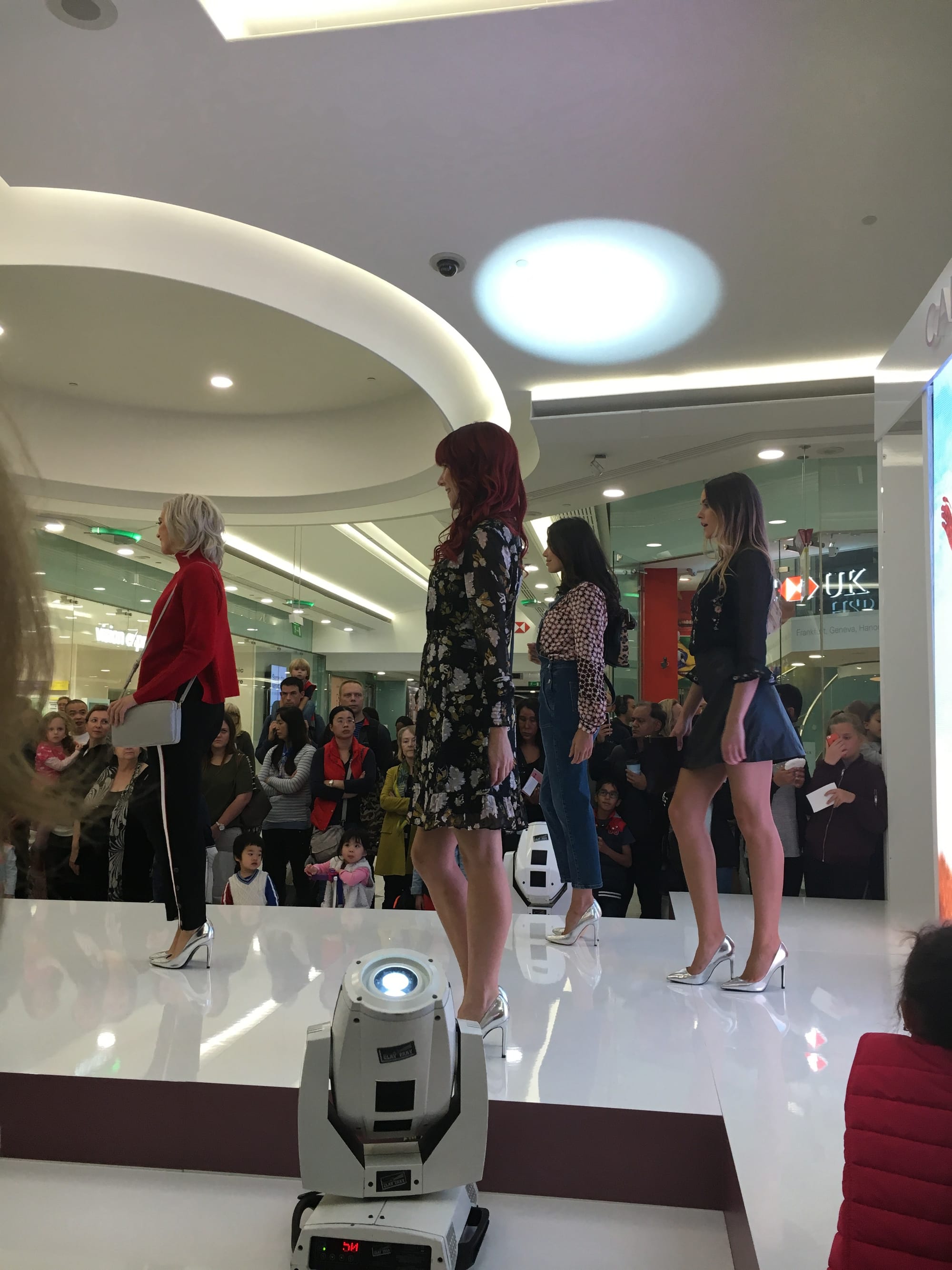
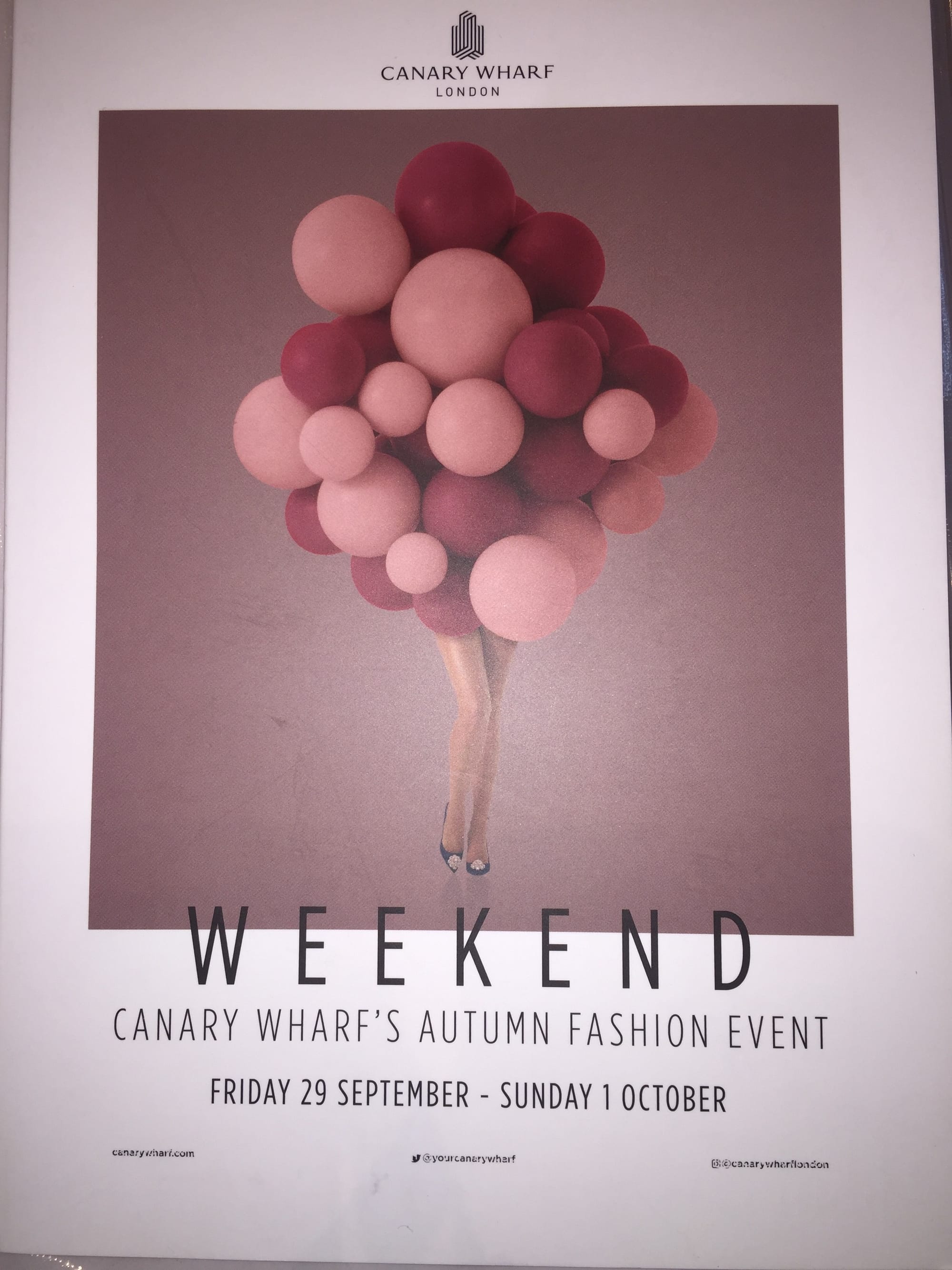
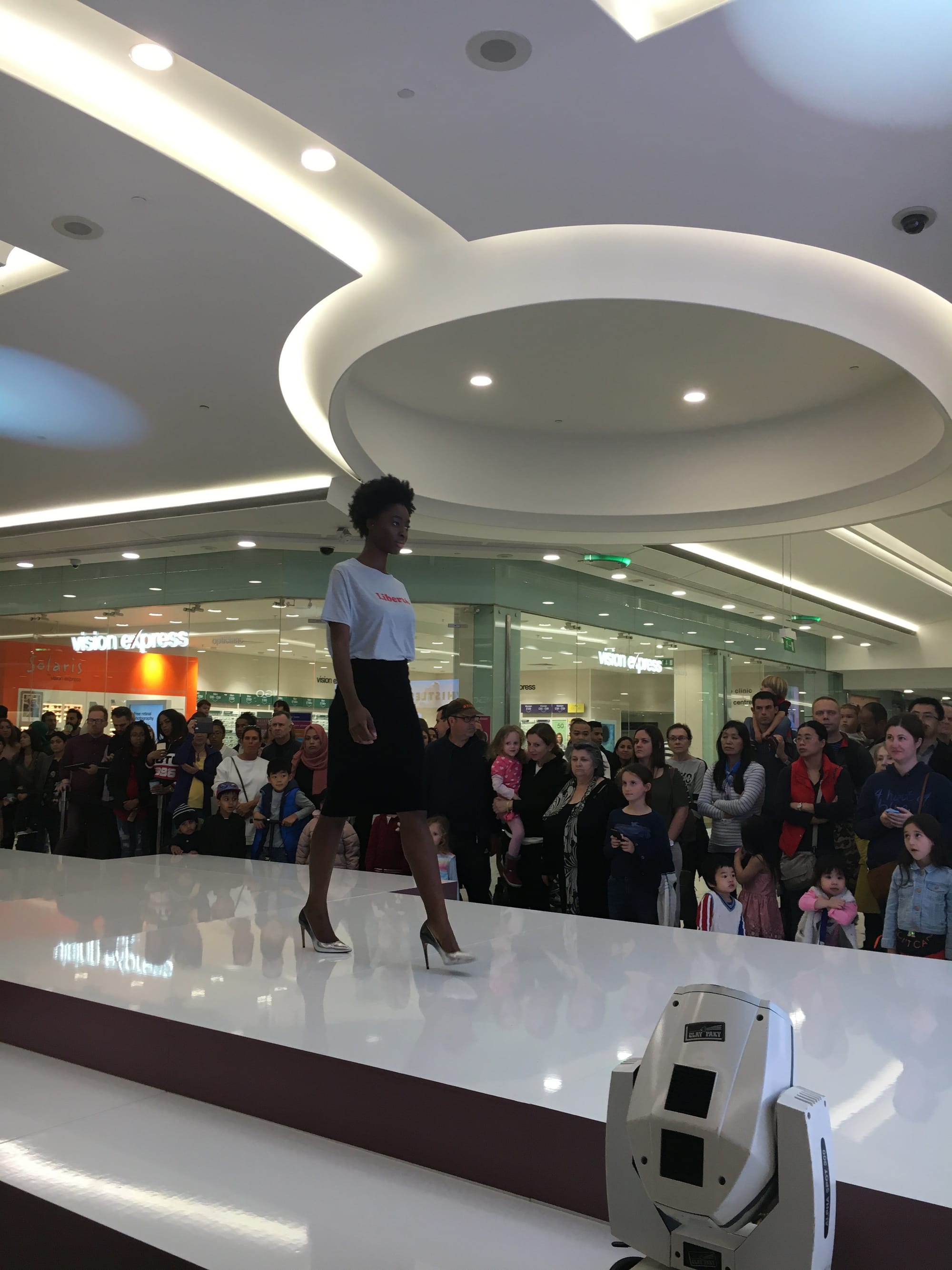
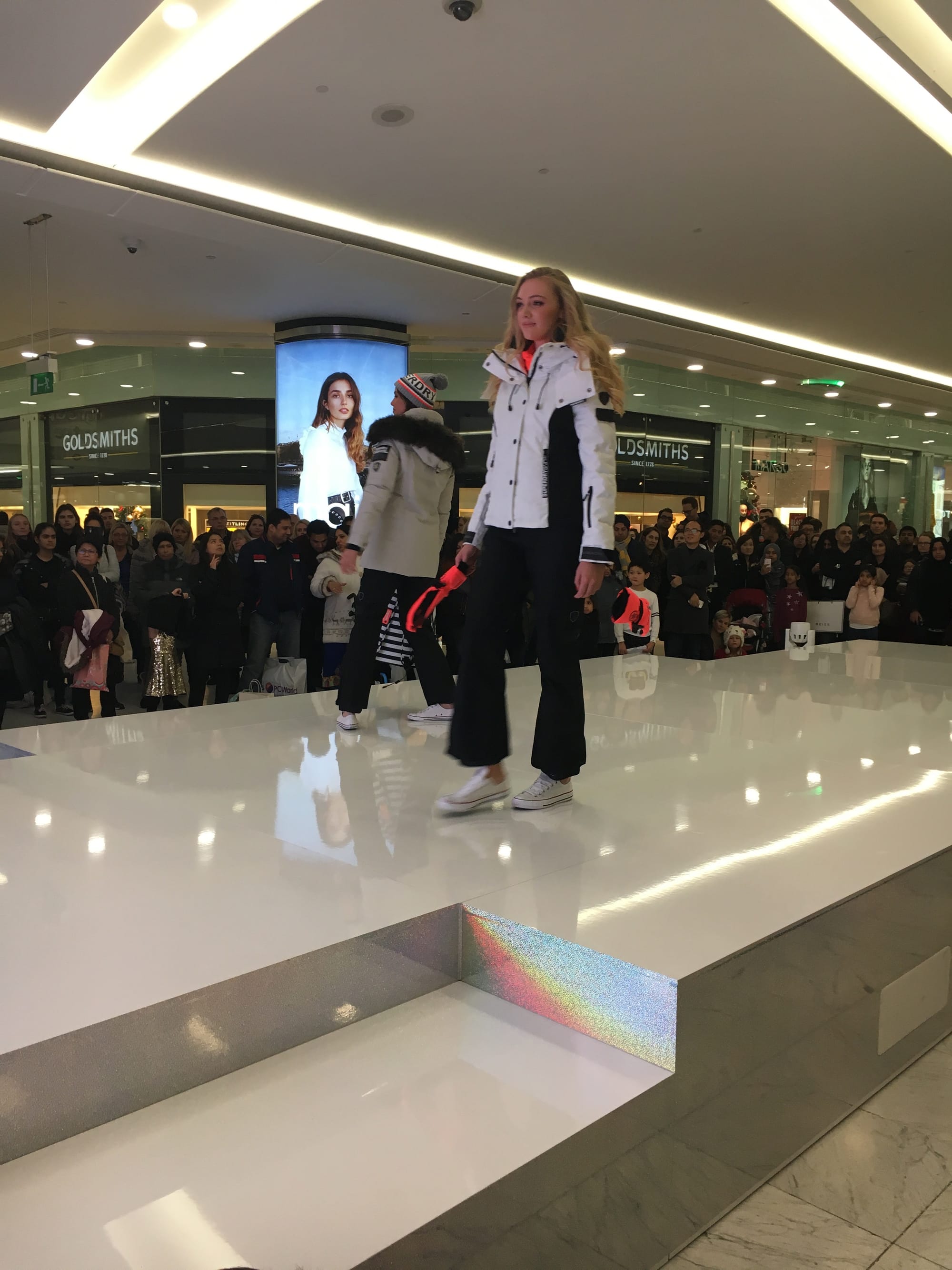
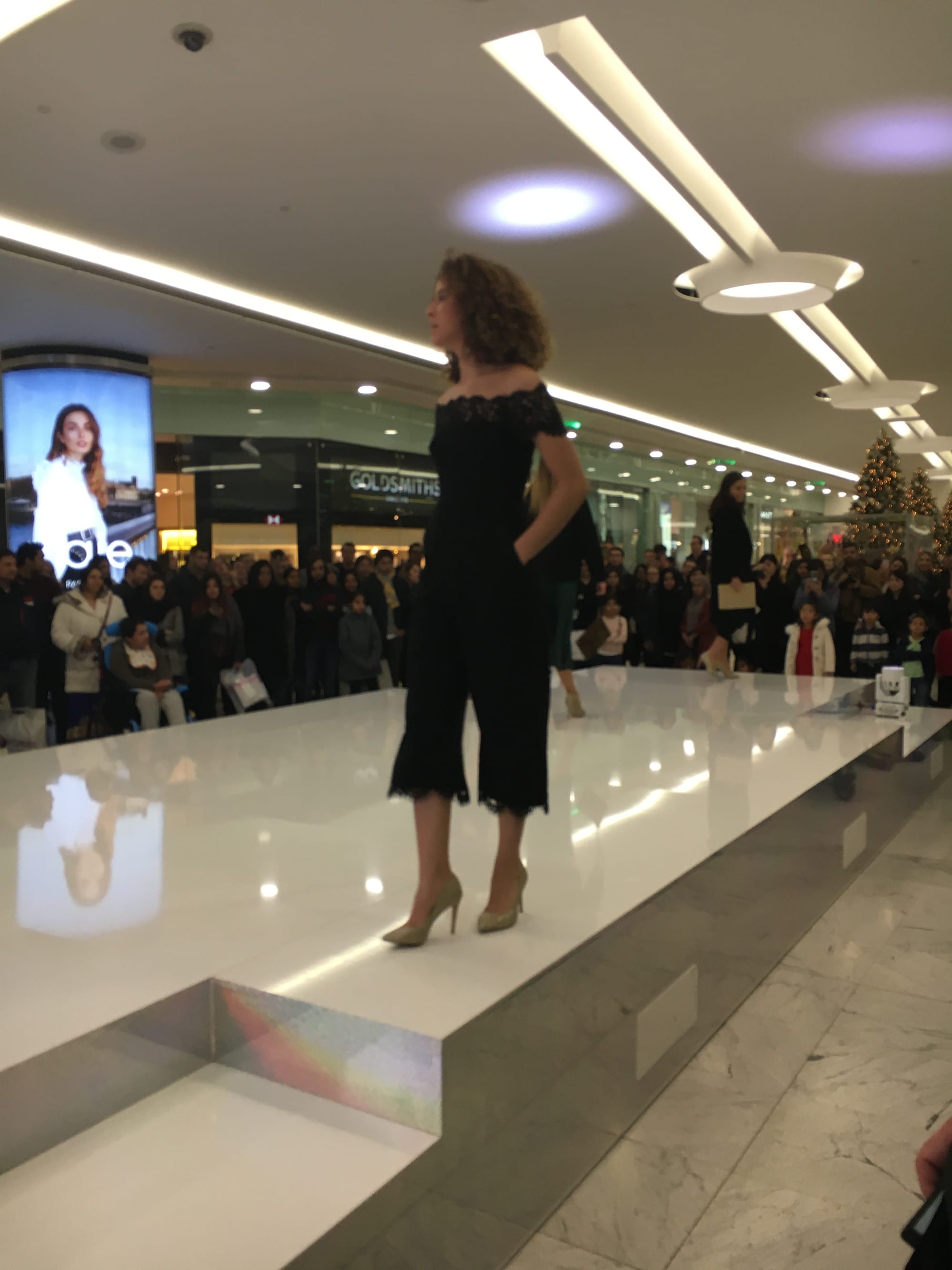
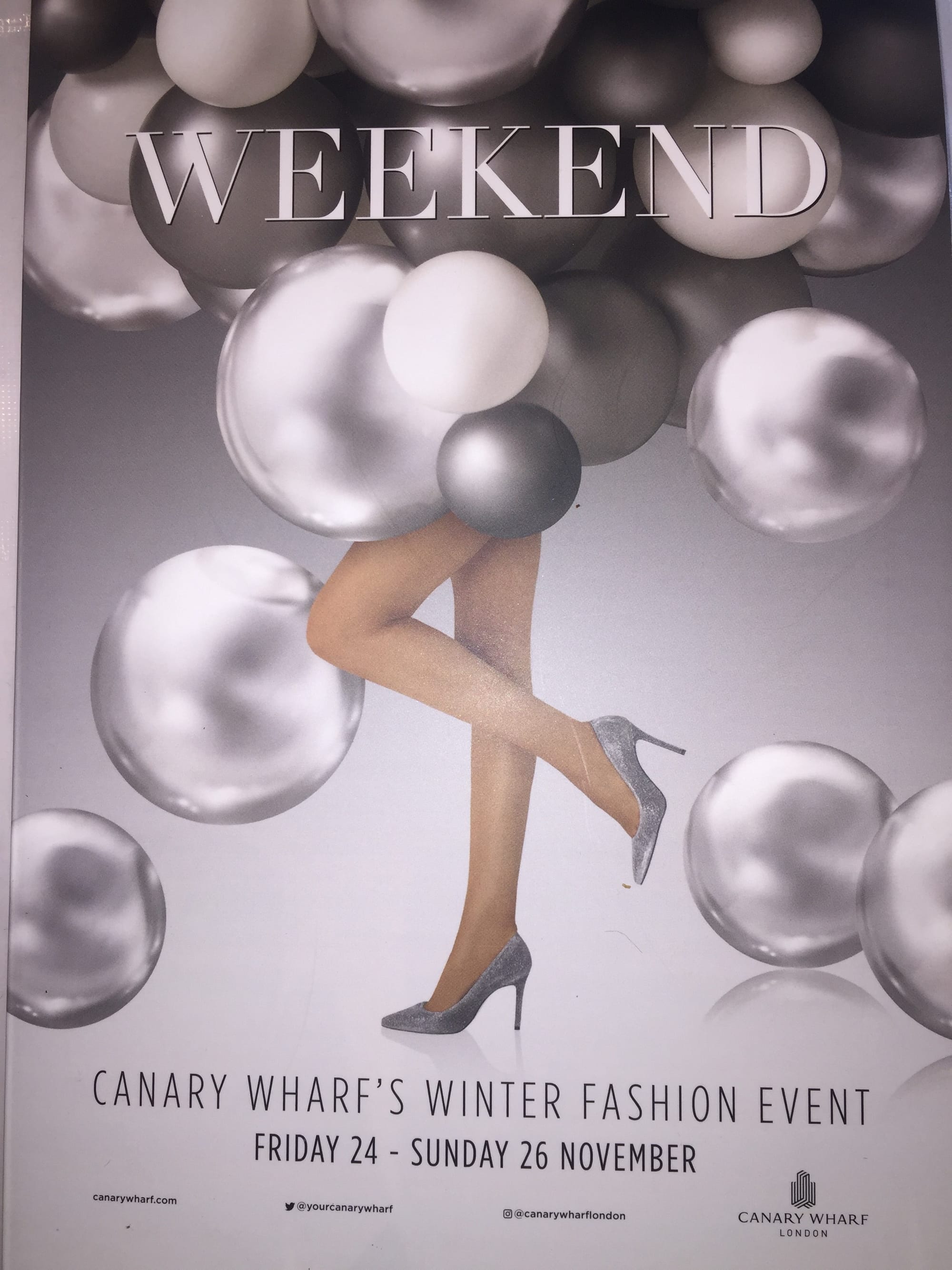
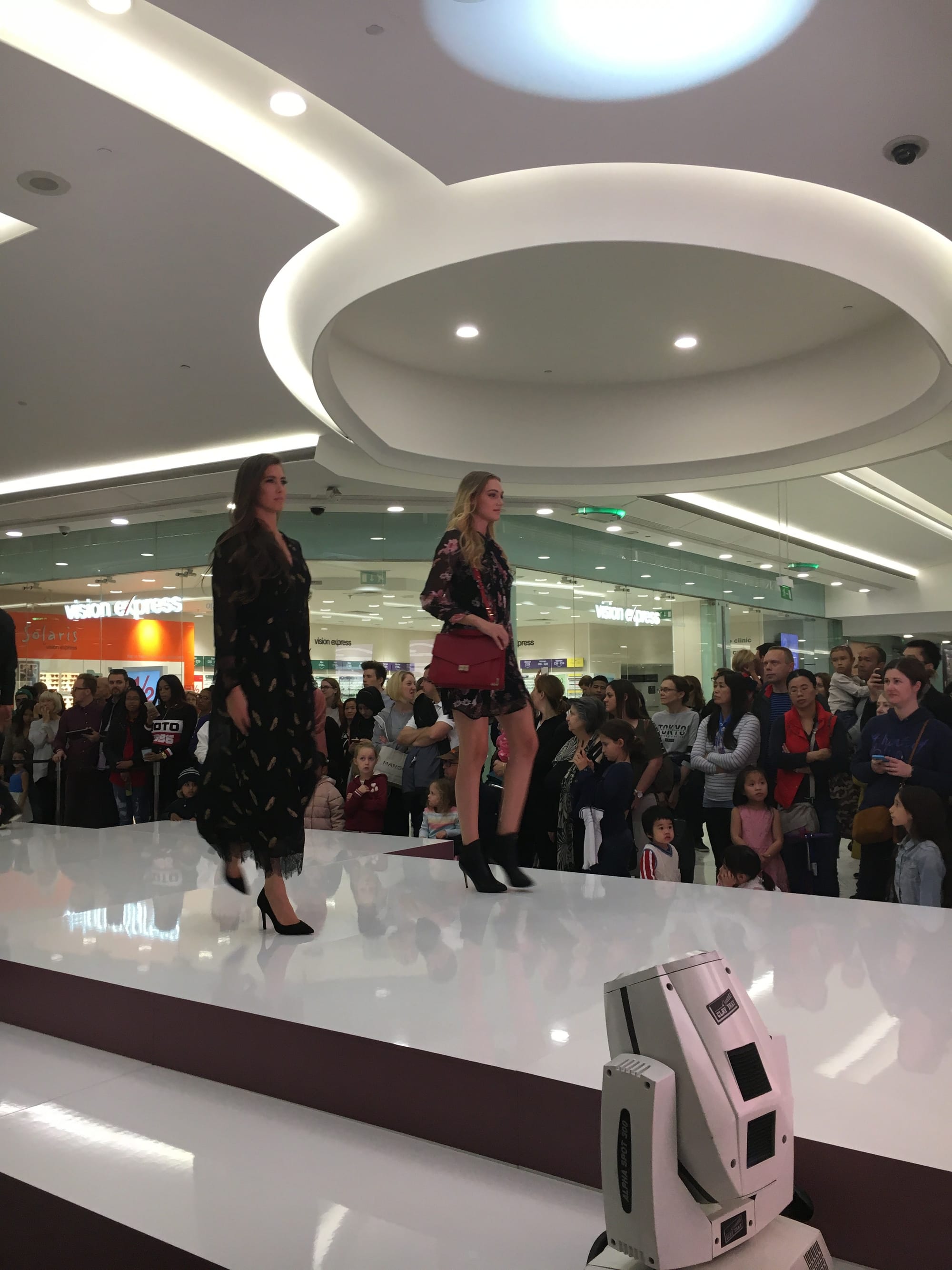
I went to the Autumn Fashion Show in Canary Wharf on Sunday the 1st of October 2017. There was a main stage where the models walked wearing several different brands at different points.
The main point of this fashion show is advertise the shops located in Canary Wharf and their new season of clothes. They also give 20% off those selected shops to drum up even more attention.
I went to the afternoon show as these catwalks go over the period of three days- a Friday and the weekend, and at different times- morning, afternoon and evening.
The whole catwalk went on for about a good 20 minutes including the musicians, which is probably the longest catwalk I have seen before. Starting off the catwalk was Gap with models wearing the autumnal range available at Gap. This was followed by several other brands such as Levis and Monsoon.
There was also live music before the event had started. These musicians included Ember, Jade, Reigns and Andre SaxMan Brown. I had the chance of seeing Ember live, who were a trio of skilled musicians, one played the violin and the other two were cellists. However I also looked into the other musicians such as Jade who is a solo performer who plays the guitar and sings. I got the chance to look at some videos of her performing and although it was not the type of music I would personally listen to, she was really talented. Reigns is also a solo performer and her style is more RnB from the sound of it. And finally Andre is a singer and plays the saxophone and has been booked out playing jazz at parties and looks incredibly successful.
The main art forms involved were music, drawing and designing, and sewing. But also filmmaking was used for the short clips shown to introduce the catwalks as there was no host.
I have seen a Canary Wharf Fashion Show before about last year and other fashion shows before such as the London Fashion Week Festival which was very similar to this one.
The similarities between this particular fashion show and the London fashion week festival catwalks was that this stage was smaller for a smaller audience and it was all standing as it is completely free so people can pop in to see it and leave whenever they want to.
The thing that always surprises me about the fashion show hosted in Canary Wharf is that it is all free to watch. So you can enjoy a while of free music and a well organised catwalk.
The walks themselves were very good and well-organised, but they were very complicated and involved a lot of people and everyone was in sync which proved that it was very well rehearsed by the models. On some of the walks for different brands there was some dancing which was also pulled of very well.
There was not anything that was majorly bad but if I had to change anything, it would probably be some details that were very small such as the fact that all the audience have to stand up for the whole show. So some of the audience at the very back could not see very clearly, this could be changed by adding some chairs for the front couple of rows so at least the people at the front could sit down and are more comfortable and the people at the back could have a clear view of the whole show.
I learnt that a good fashion show can be pulled off with a lot of rehearsals and practice shown by the models themselves as they were all in sync and in time.
Overall, I thought that it was a very enjoyable experience and I would come again to enjoy the catwalks, discounts and music.
Canary Wharf Winter Fashion Show Review:
On Saturday the 25th of October 2017, I went to Canary Wharf to watch their annual winter fashion show.
The first thing that happened at this fashion show was the musicians performing and in this case it was three jazz musicians playing together. Their performance was very uplifting and upbeat, which in turn attracted a huge crowd to watch the show. These musicians played several combined remixes for the introduction of the show and continued to play through the first walk which was advertising Gap clothes.
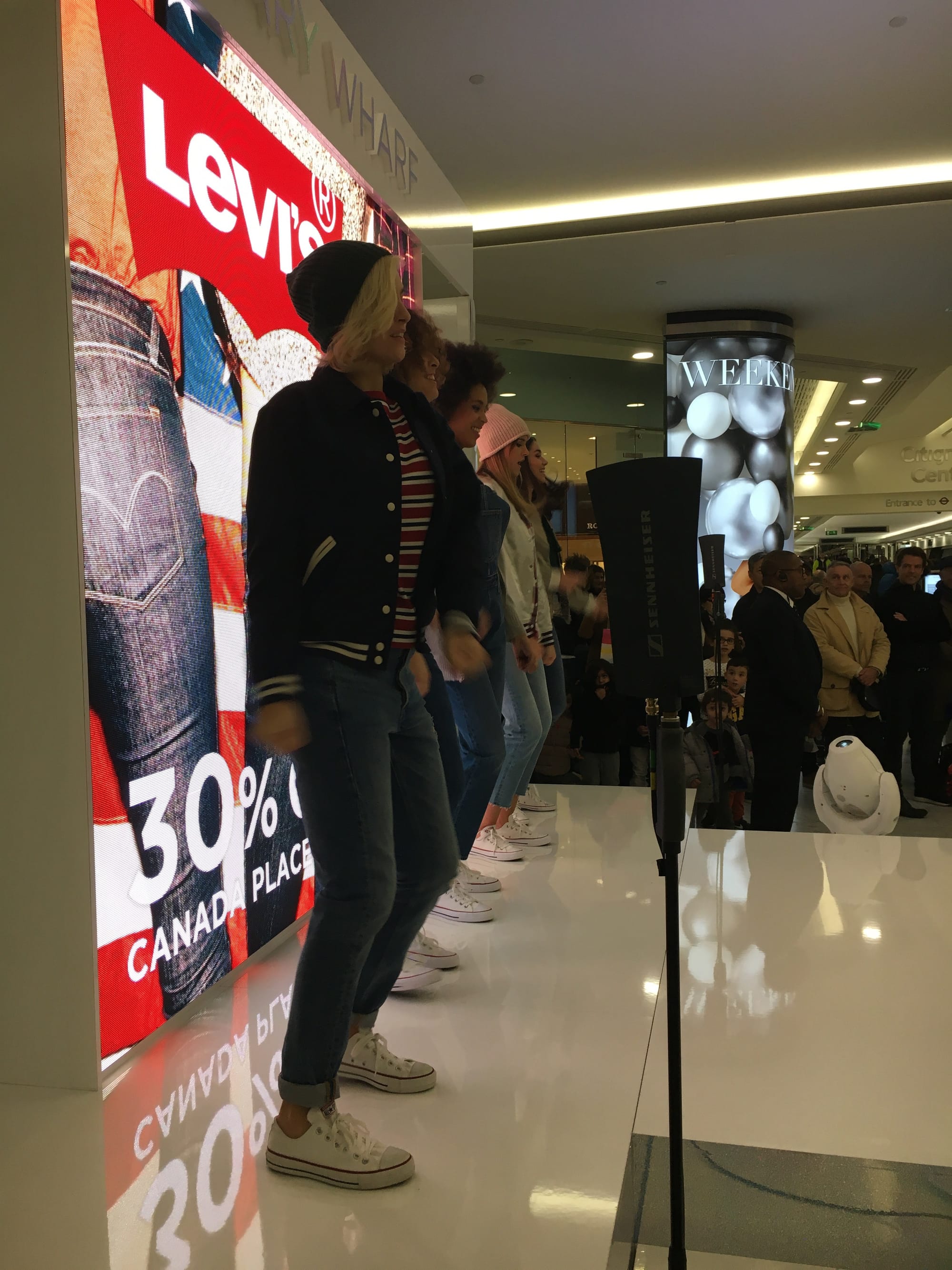
In the Gap walk, the upbeat jazz music really matched the walk as all the models were dancing on the stage. This dance was really well choreographed and there was a lot of movement going on which attracted even more people to come join and watch the show.
Afterwards, there was several more walks, which included brands such as Ted Baker, Hobbs, Levis and a couple more. Most of these brand walks, included dancing just like in the Gap walk, but all of the dances were very different in their own unique way. However there was still a few brands which chose to go with the standard walk instead of dancing.
The main art forms involved in this show were dancing, sewing and making, and also film making as there was short clips shown while the walks went on to advertise the brand even more.
The Canary Wharf Autumn Fashion Show was very similar to this show as all the staging looked the same and there was still the same layout of the order of the show, so the musicians went first and then all the walks came after that.
However what was unexpected in this show was that the musicians stayed on stage for one of the walks and performed at the same which I have not seen been done before. This worked well though as both performances were very complimentary to each other.
The finale of the fashion show was 1920s themed which is the exact theme which I was thinking and planning on using for my own take of a fashion show, which will take place later on.
What I enjoyed most of the show was both the dancing and the music which were very upbeat and full of energy which reflected onto the audiences moods. However, I thought that the voice over in this case did not work well as it took the attention away from the clothes themselves, which was the whole purpose of the show happening. The voice over directed the attention away from the clothes by talking about who was modelling and there was a particular focus on the models.
What still amazes me every time I attend a Fashion Show at Canary Wharf, is that it is all completely free for the audience to watch and attend. How the managers manage to create such a great show all free still awes me.
Another thing that was different to most of the fashion shows I have attended, is that all the models at this show looked very happy, and were all smiling which is unlike the fashion shows I have seen before where all the models looked quite neutral or not smiling at all. This brought the mood up even more at the show.
I took away that a great fashion show does not need to be expensive to be great, but however a lot of practice, organising and effort needs to go in to it.
Overall, I thought that this fashion show was really well organised and enjoyable and I cannot wait for the Spring/Summer Fashion Show to take place.
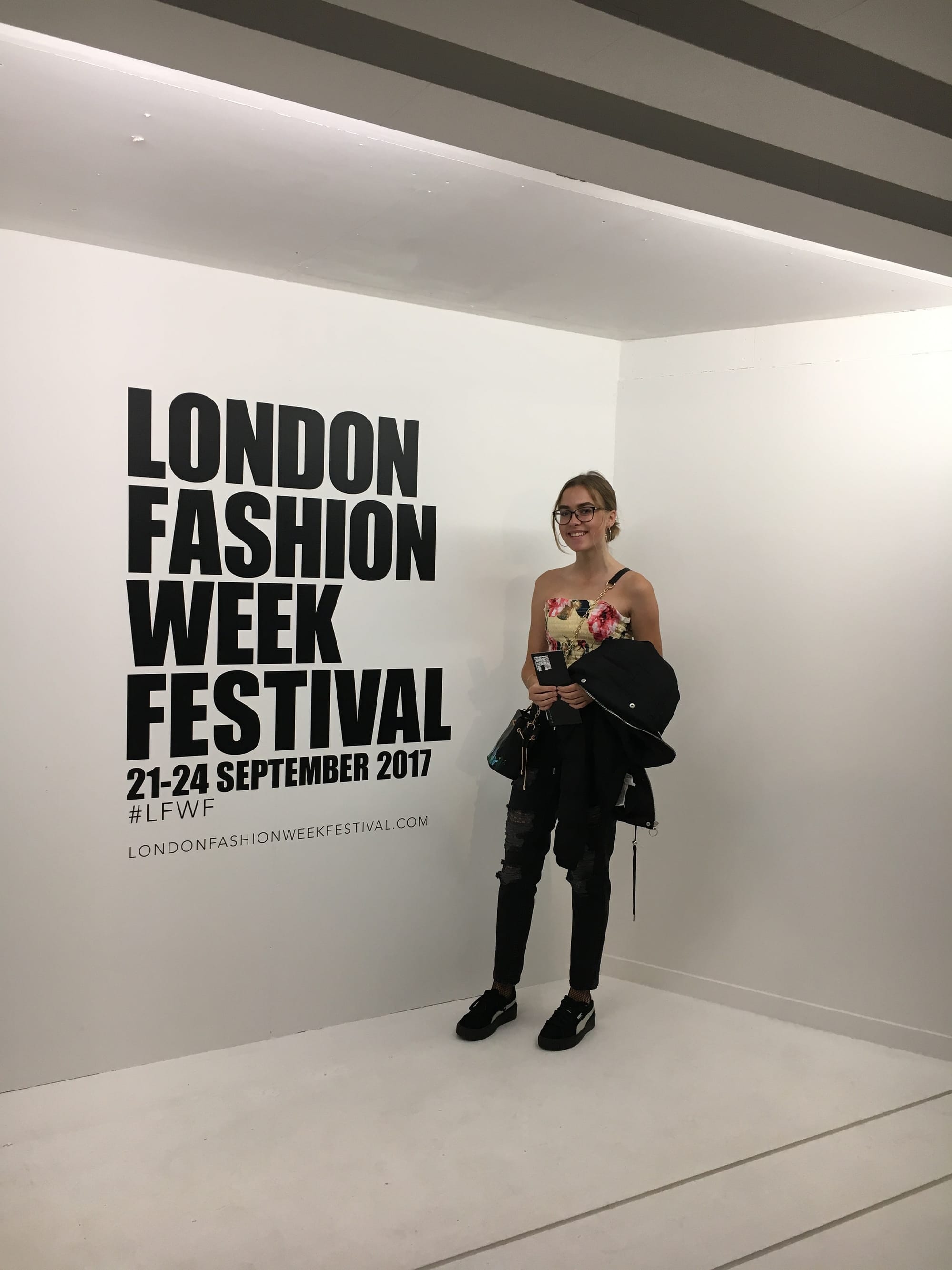
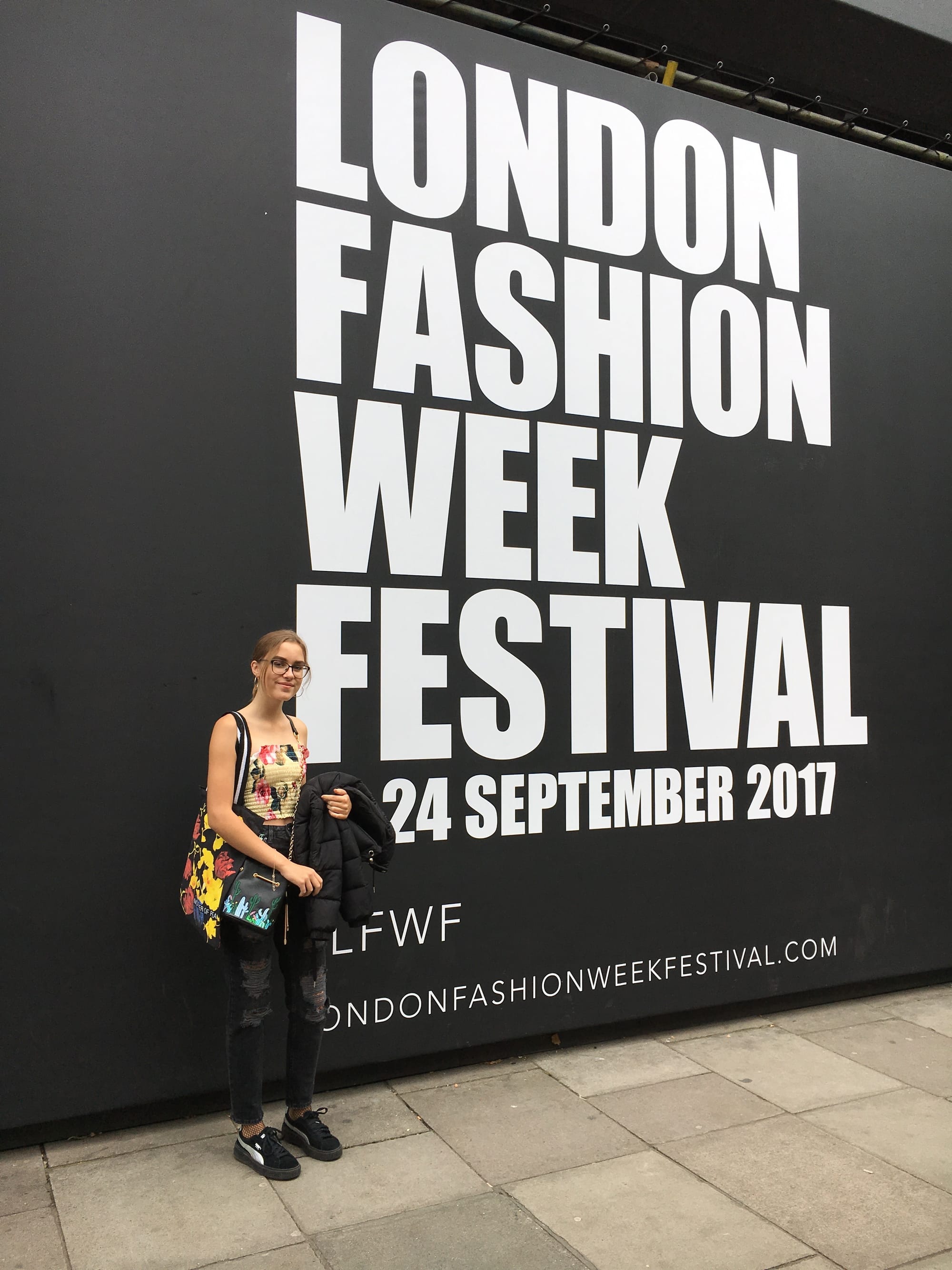
London Fashion Week Festival Review:
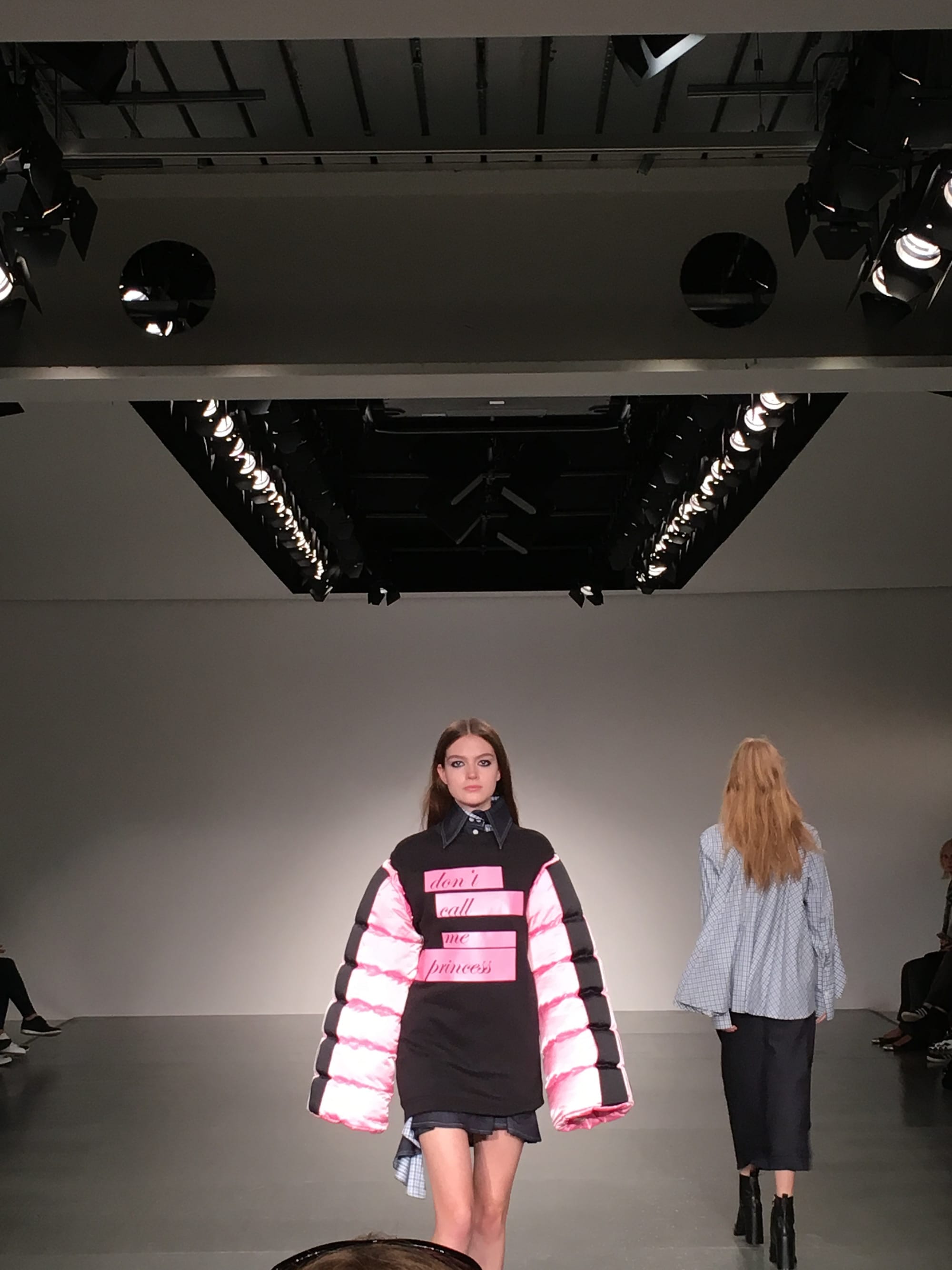
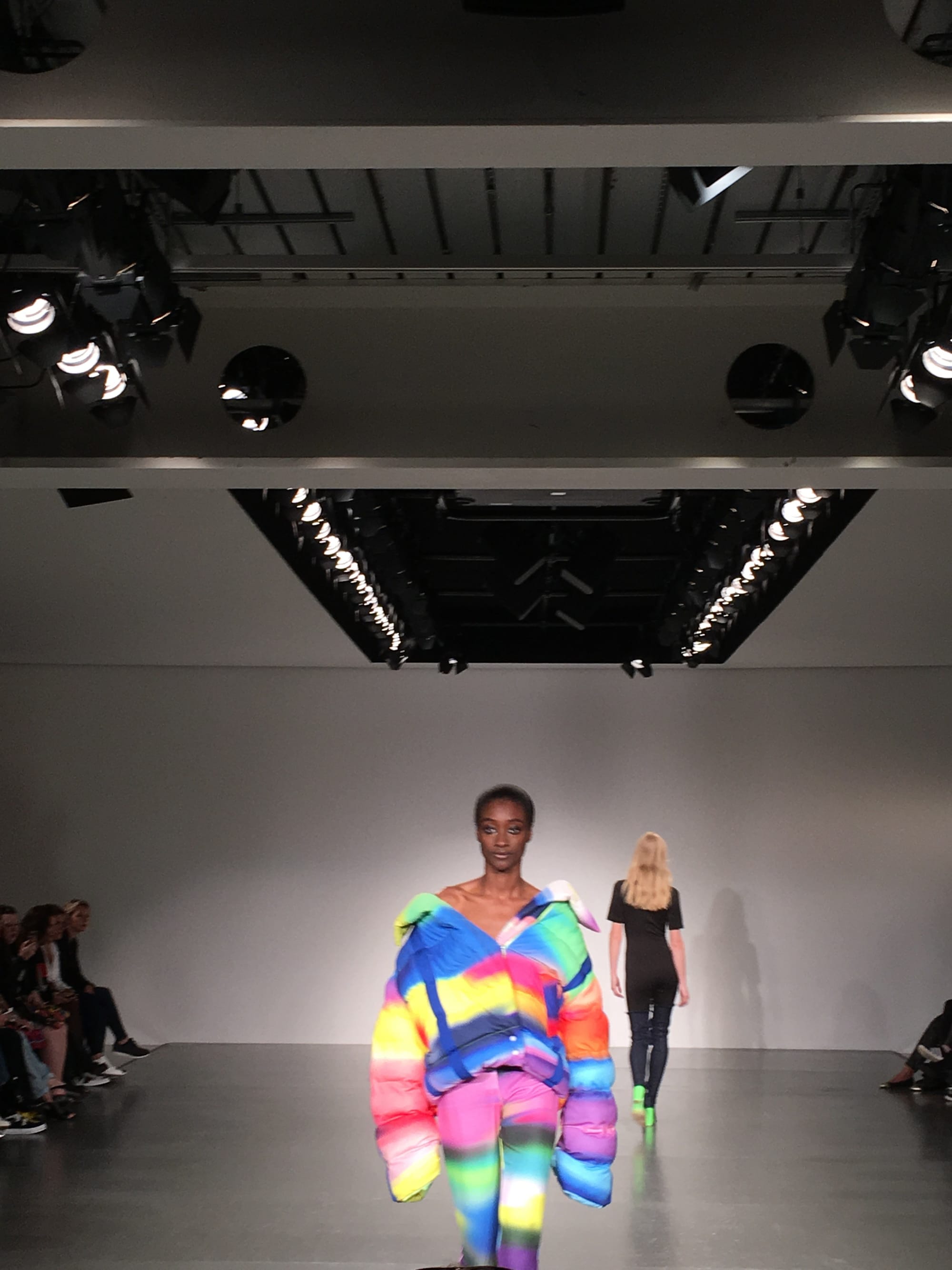
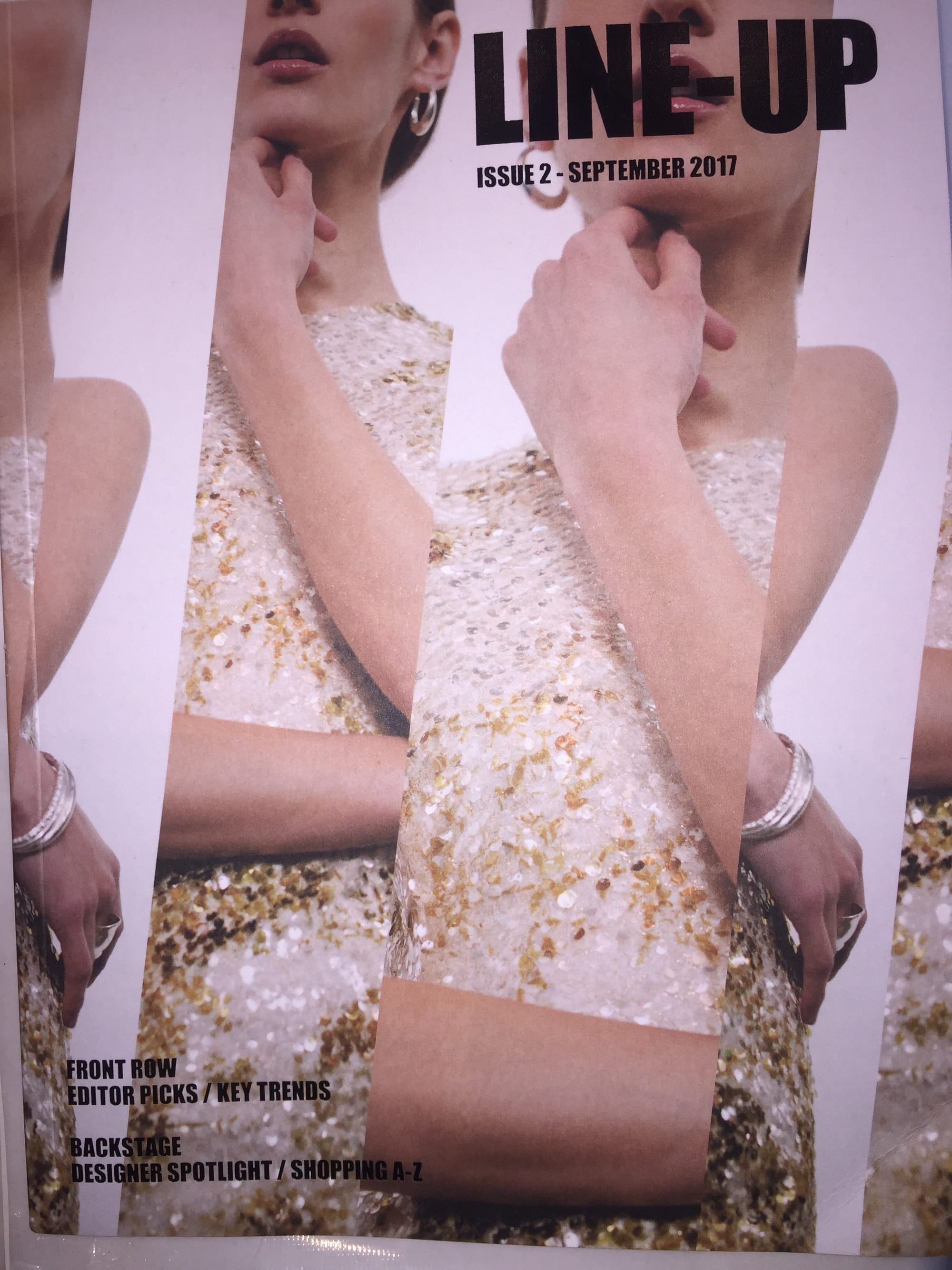
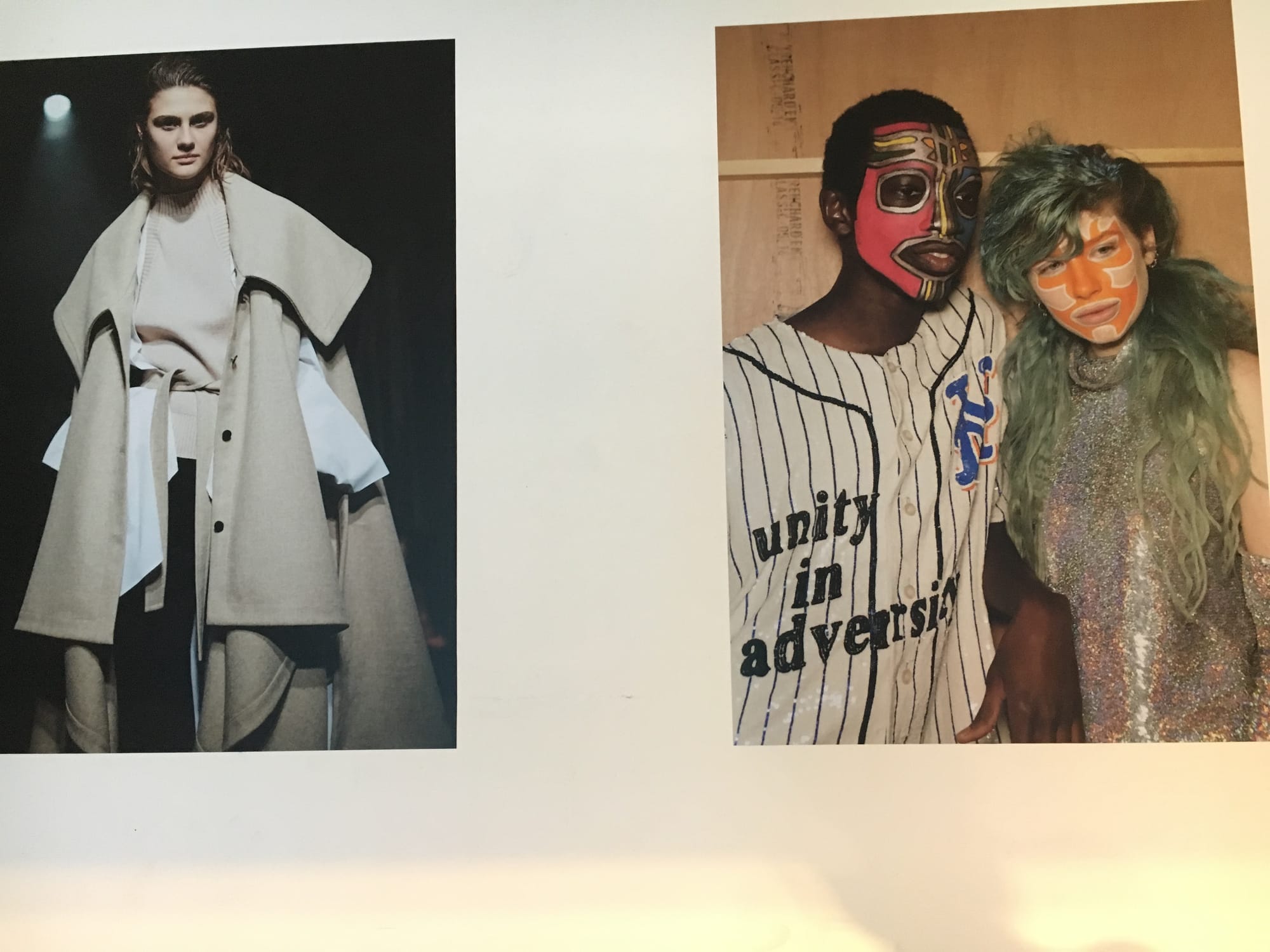
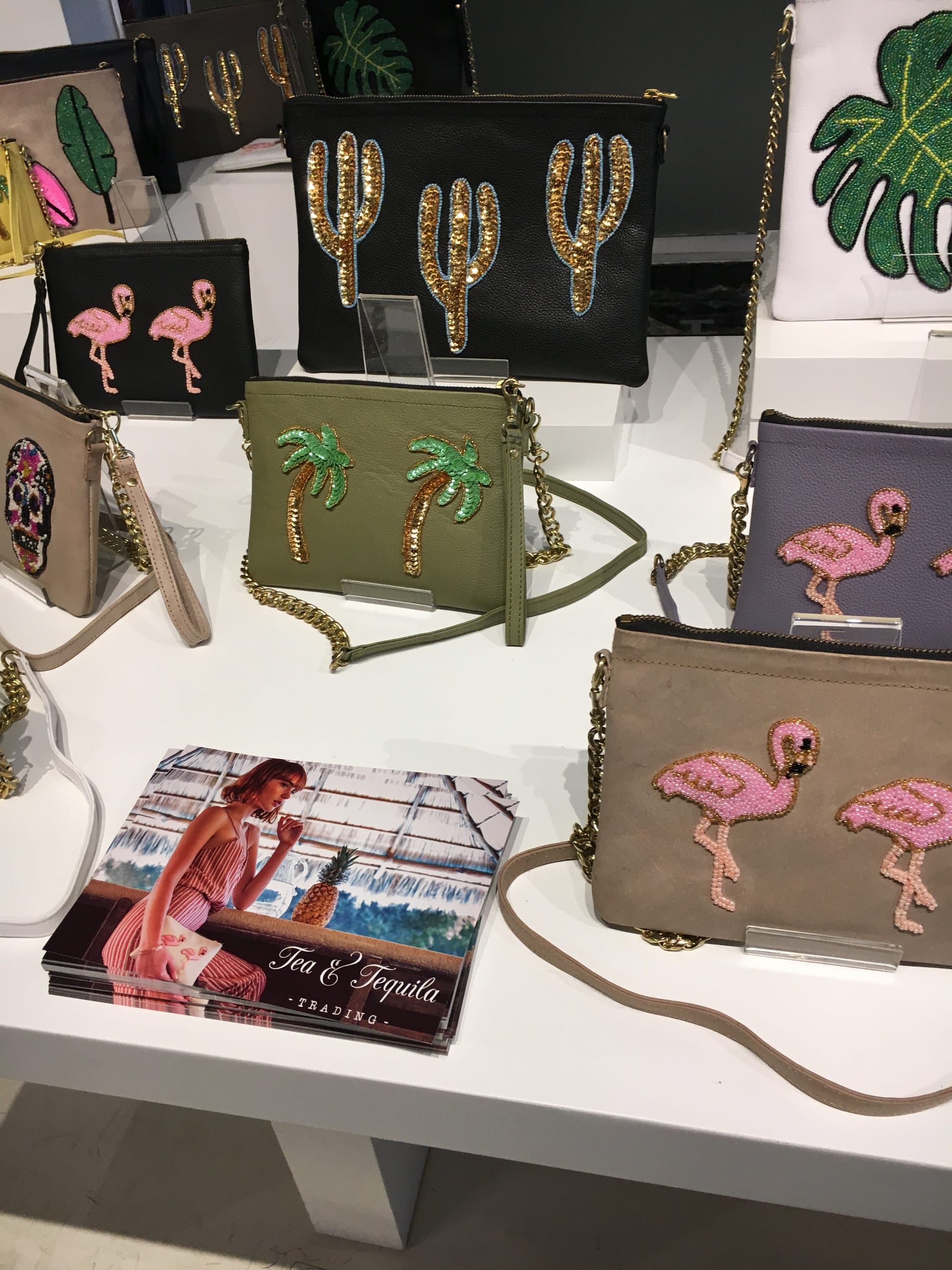
I went to the London Fashion Week Festival on Saturday the 23rd September 2017. The fashion festival was held at the Store Studios located in the Strand. I saw two catwalks, one designer and the other one based on the upcoming trends of the season and I also got to listen to a fashion talk led by industry experts, at this event. After witnessing all of this there was a choice of going shopping around the building with temporary shops set up, which I of course did not hesitate on going to.
The first event of the day on my schedule was to attend the designer catwalk at 10:30 to see the work of Fyodor Golan. I had never seen the work of this brand before so it was really interesting to see all of their ideas come together to form the particular collection I saw. Their collection was colourful and crazy and really out there. None of these features I would personally chose to buy or wear but however their clothes did really call my attention and it was a fun experience to watch.
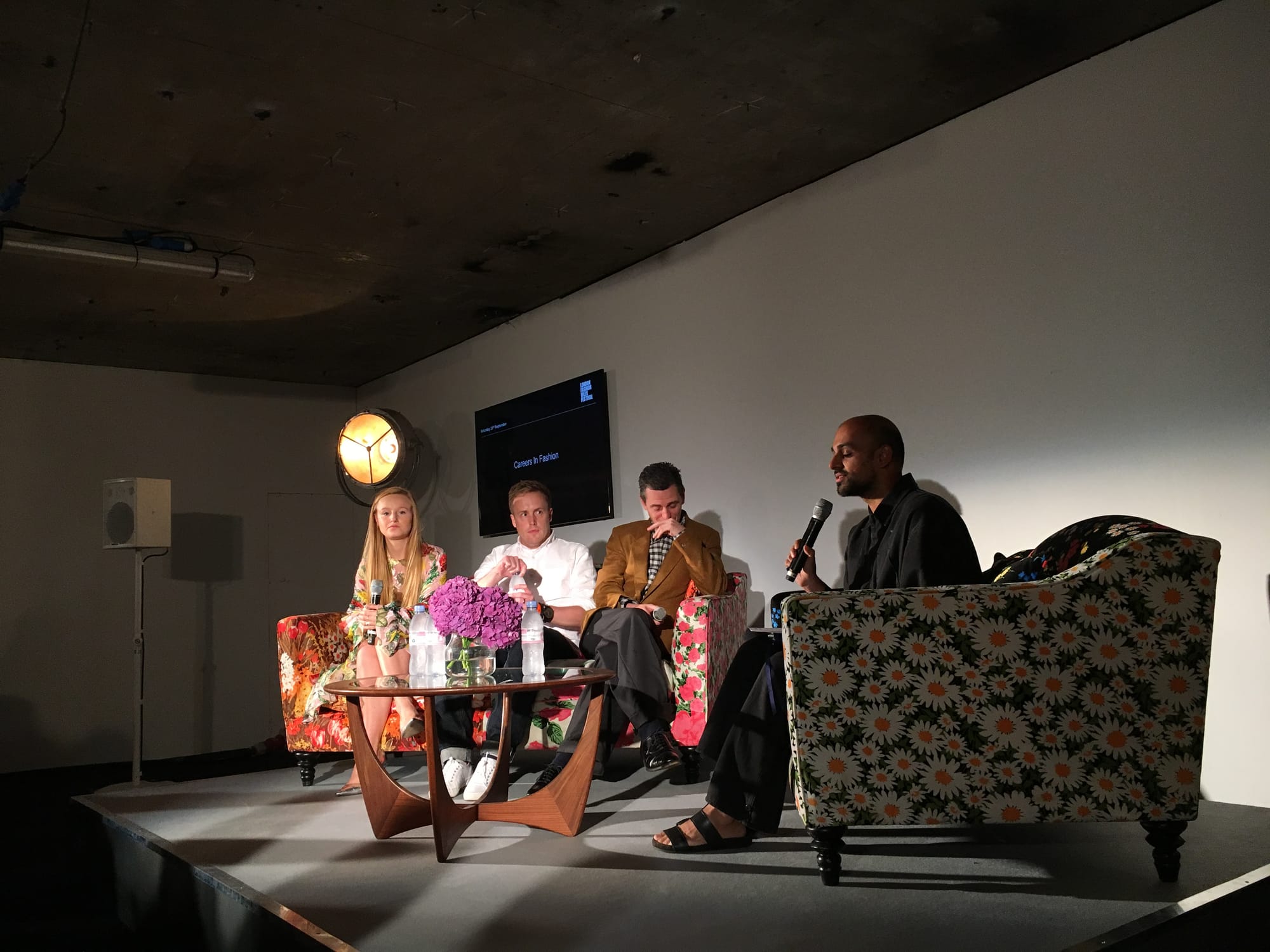
The second event on my schedule was to see a fashion talk led by industry experts. The talk was about careers in fashion and it was very interesting to hear all the questions on everyone’s minds about the truth about working in the fashion sector led by our host and answered by three of the industry experts. The whole talk had a very friendly atmosphere and there was an open Q&A taken at the end with some very interesting questions asked by the audience.
Straight after the careers in fashion talk, we had to rush to the last catwalk to see the upcoming fashion trends of the season. Personally, I found the trend catwalk more enjoyable because the collection was much more wearable and I also felt that it was a bit more relaxed in general. One of the main trends I saw featured again and again in this particular catwalk was a lot of patterns such as florals and chequerboard patterns.
The art forms involved were definitely the use of drawing for the designing stage of the clothing collection, quite a lot of filmmaking for the short videos shown before the catwalks started, and for the making stage, a lot of sewing.
I have attended the London Fashion Week Festival before last year but however it was held at the Saatchi Gallery instead of the Store Studio. I have also attended other fashion shows since the time period of this year to last year, which were quite similar to this particular fashion show.
The similarities between all these fashion shows are the obvious ones such as, in order to create these obscure collections, there must be a lot of planning and designing behind it in all.
The designer collection was very unexpected with all the bright colours, patterns and shapes used. However I am not that surprised that the collection was so bold as I even remember how the collection last year was so out there and I am not so sure that it was very wearable either. But this is a good tactic as its very unforgettable and memorable.
The Fashion Festival in general was very well organised and I cannot wait to go again next year. The catwalk staging and choreographing was clearly very well thought out and although there was a very vast audience, there was very good views from all over.
I also really liked how the host of the catwalks introduced the show very well and was very interactive and also went to some of the audience members and asked for their views and opinions and was so friendly.
However if I could change anything it would be very minor details such as to have more space for the shopping area as I found it slightly cramped to browse and also to move around in general. However it was very well placed in general as there was a limited amount of space in the first place, so the producers did what they could.
I learnt a lot from the careers in fashion talk which was very interesting. Some of the things I learnt is that most of the industry’s workers started working in other sectors such as in business or even law and moved onto the creative side in the fashion industry. So I learnt from them that it is completely fine to do that and other industry insights such as that the hours are very long but as long as you get all the work done, the free time is very flexible and the trips abroad make up for it.
I took away quite a lot of ideas such as some inspiration on my future clothes I want to make and to experiment with colours, shapes and patterns for a bold outfit as shown to me by the designer catwalk.
Overall, I found this particular event very enjoyable and would definitely recommend.
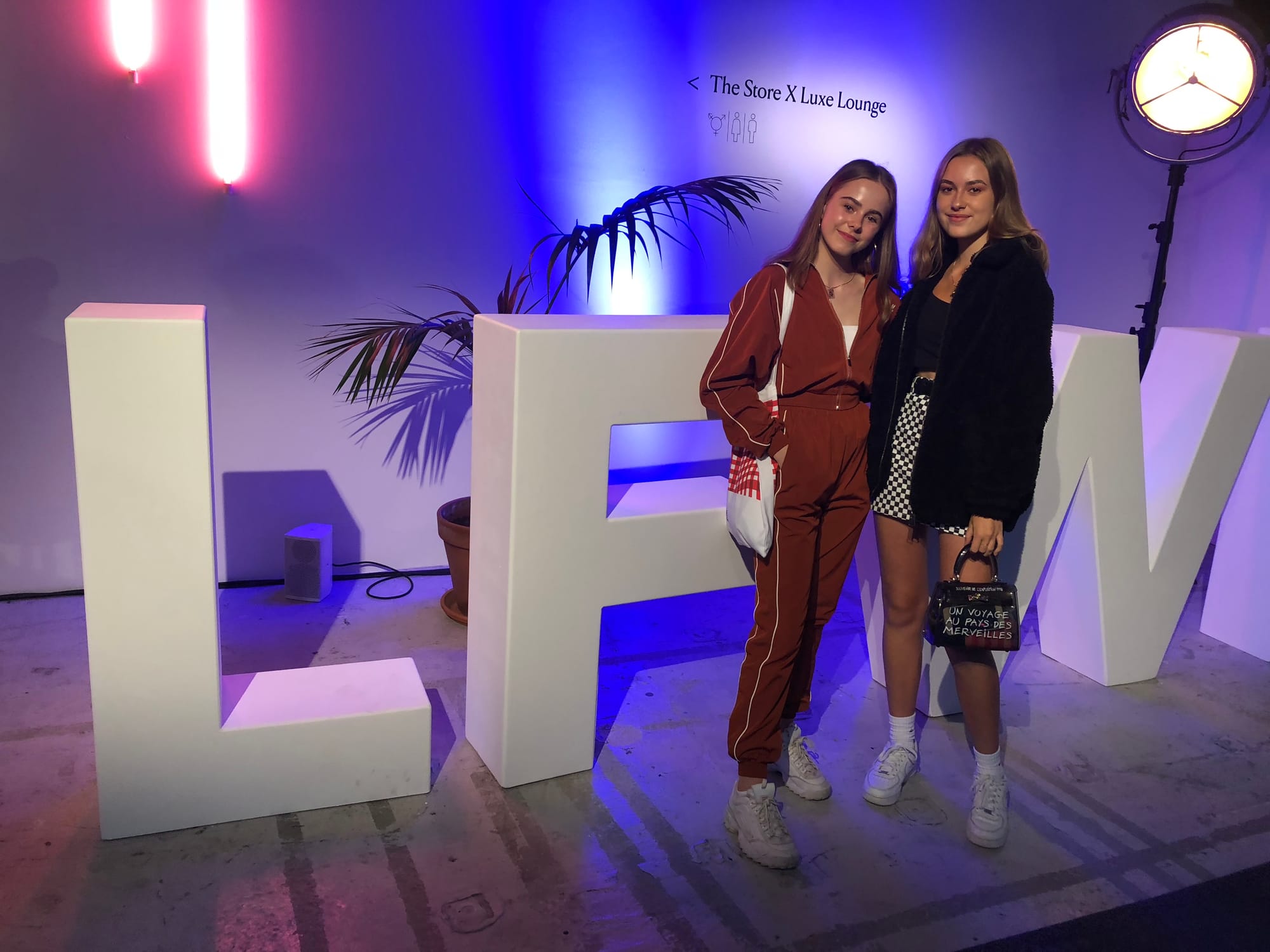
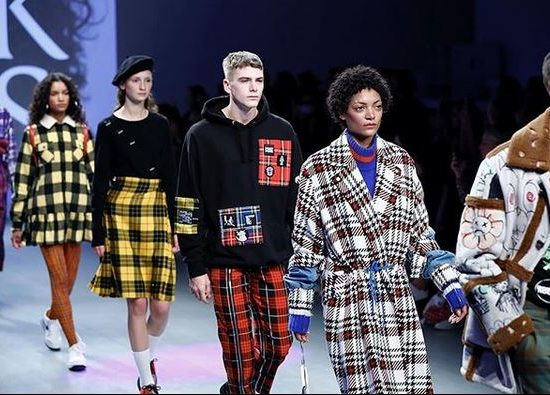
London Fashion Week Festival Review:
On the Saturday 22nd September 2018, I went to the Strand Studios to attend the London Fashion Week Festival. I saw both catwalks; the upcoming trends this autumn/winter season, and the designer catwalk. After going to see the catwalks and before, there was opportunities to go shopping at the temporary shops set around in the building. These stalls included a variety of clothes, bags, shoes and accessories from a variety of designers, whether it was a very known brand such as Chanel or less known brands.
The first thing I went to see at this London Fashion Week Festival was to see the designer catwalk at around 1:30pm. The designer who showed his collection had some very distinct designs and very abstract accessories in particular. For example, his bags that he designed were teddy bears that hung from a chain, as it was a cross body bag. I have seen this design in Topshop, so his designs are quite successful and distinguished in big chain shops. His designs overall were very abstract and used a lot of layering which is a trend currently. His designs I found very fun and creative, but again not something I would personally wear or purchase myself.
The second thing to do on my schedule was to see another catwalk, but this time it was the trend catwalk. The trend show was a lot longer than the designer, as the designer catwalk only has one collection, whereas this trend show had various collections from different designers. The trend show was split into five different sections with five different trends. For example one of the trends was called “Prints Charming” which was a play on words with prince charming and what the actual trend was. The trend “Prints Charming” was all about prints and patterns which are in trend currently. These prints included leopard print and various different animal prints, as well as florals.
The arts forms included in this event were definitely film making for the short clips shown before each catwalk show, as well as a lot of designing, drawing, sewing and making.
I have attended a few London Fashion Week Festivals before such as last year and the year before. The one last year was held in the same venue as in this year; at the Store Studios, but the very first one was held at the Saatchi Gallery, which is my favourite venue. I have also attended several other fashion shows such as the Canary Wharf ones.
All these fashion shows are quite similar as they all have the same set up inevitably. And that the fashion shows all include the designer’s newest collection which requires a lot of time, designing and making on the designers behalf.
This Fashion Week Festival was very well organised and planned out and I cannot wait for next year’s fashion week again. They are always such successful events and held at high standards. The numbers of people attending this event has massively increased every single year and the amount of people coming from abroad to see this specific London Fashion Show Festival has increased so much.
The difference between this years and last years, is that they no longer have a host who introduces the collections and catwalk shows. I honestly thought that this was a shame as the hosts previously were all so interactive and friendly, and made the experience more enjoyable.
If I could change anything, I would add the hosts back. As well as changing the venue maybe, as it is getting a bit small for the large masses who attend the festival. This would mean that there could be more space for shopping and so it would be less cramped in the rooms.
I definitely was inspired after this event, as the short videos about the fashion industry were definitely very moving and made me think that this is what I would like to do as a career.
In general, I found this festival very entertaining and inspiring, and will definitely try to attend the following year as well.
Research into Fashion:
Jobs and Careers in Fashion:
The industry of fashion is very big and diverse, which means that there are so many types of different jobs available. However there are more obvious careers in fashion such as being a designer, model and fashion journalist. But there also many unobvious careers in fashion such as being into fashion merchandising which is to be working in the sales and marketing aspect of fashion. There are also jobs such as working in production management where they have to supply and buy the textiles and clothing made at the manufacturing level. And lastly being a stylist but there are many more careers in fashion as well.
In fashion related jobs, there are many places to work, such as in warehouses and in offices.
These people can display their work in fashion shows where the clothes, accessories and shoes get modelled to a vast audience, to showcase to potential buyers.
Their work can also be exhibited in art museums such as my personal favourites which include the Victoria & Albert Museum and the Fashion and Textiles Museum.
I will be looking in more detail into more examples of specific types of jobs available in the fashion industry and what is required to achieve that role as a career.
Visual Merchandiser:
What they do – visual merchandisers usually design in-store displays to show off their products such as clothes and accessories and advertises what the shop offers.
What is required – successful visual merchandisers need to know how colours, patterns and designs work together, be creative and have a lot of attention to detail, so that all the components of their work go well together and can stand out to the public to attract them to their store. However a degree is not needed for this job.
Salary – when a visual merchandiser starts out, their salary is around £15,000 annually, but once fully qualified, their salary can rise to about £24,000.
Buyer:
What they do – a buyer selects a range of products to sell in retail shops, bearing in mind the costumers buying habits, price, quality and up-coming trends. Buyers need to keep their buying choices as relevant and on-trend as possible.
What is required – a buyer should have a great knowledge on trends and the commercial aspect.
Salary – an assistant buyer or junior buyer can make about £14,000 when they start off. This can go up to £30,000 and up after experience and especially if they are working for a big brand.
Fashion Designer:
What they do – fashion designers design clothes and collections, starting off with the first sketches and seeing it through to the end which include making the product and managing the logistics and production.
What is required – originality is key as designers want their designs to set them apart from competition and other brands. Designing skills such as pattern cutting and sewing are also needed.
Salary – Small or boutique brands can pay around £24,000 but can easily go up to £50,000 and over hundreds of thousands of pounds with experience and success.
Marketing Agents:
What they do – their main goal is to sell the products of the shop. This can mean having to write articles, organising shows and managing social media accounts to gain popularity for the shop.
What is required – a degree in marketing or advertising is crucial. Apart from this, successful marketing agents, should be very open and friendly.
Salary – once marketing agents have started, their salary is around £18,000 but this will rise especially after making a lot of contacts of people in the industry and working alongside them.
Fashion Journalism:
What they do – fashion journalists write up about fashion, this can range from product reviews, about catwalks to interviews with designers.
What is required – a journalism or creative writing degree is best but not compulsory for the job. A successful fashion journalist needs to be good with words and original.
Salary – the starting salary would be around £15,000 to £20,000. However, they can charge per article for hundreds of pounds each, this depends on the size of the employer and how many words are written.
Research into an Advanced Practitioner:
I emailed a designer called Miss Libby Rose, who has taught me before about sewing and designing, so I could not think of a better person to interview about how to get into the fashion industry. Below are the questions I asked and her answers:
Q- How did you get inspired?
A- My mother was a fantastic seamstress, and I would help her after school, which inevitably led me to experimenting with making and designing myself.
Q- Where did you get the skills from? (self taught/lessons/school)
A- After Design & Media Studies at school, I went on to study fashion which led to my working in the textile industry both in Australia and London.
Q- What made you pursue fashion as a career?
A- As I grew, so did my love for all things design related so I knew I wanted to do design.
Q- Did you get or need any fashion qualifications to get where you are now?
A- Yes, I went to Fashion School.
Q- Have you ever opened a designing shop with you designs in it? If so how did you do it/how did you get people interested/what did you sell? And if not do you believe you will in the future?
A- Starting out at a market stall in Greenwich Market to exhibiting at Fairfield Halls in Croydon, where I met the amazing Karen Gilbert and set up a shop and design studio together 'Elegantly Waisted' inevitably leading me to Camden Market 'The Lock' which started my wholesaling into shops.
Q- What are your plans for your fashion future?
A- I run after school clubs for kids, adults evenings and weekend classes for adults at Mycenae House and Gardens (which is a community hub in South East London). I also do knitting and stitching shows at the Twisted Thread. I also do half term workshops at the Ottie and the Be a -which is a fabulous children's shop in Blackheath Standard - where I do kids sewing, making and designing workshops.
After interviewing Miss Libby Rose, I learnt a bit more about what kind of qualifications you need for getting a career in fashion. I also felt more equipped with knowledge about how she worked her way into fashion and I had an insight into the industry. I was really inspired after our interview as I felt as if I knew more on what the next steps were, i.e. what kind of qualifications were needed/what to do after.
Research into Art Organisations:
Museums that incorporate fashion:
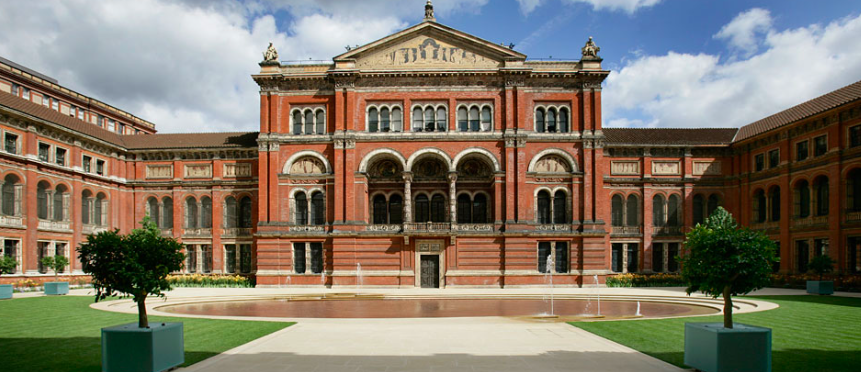
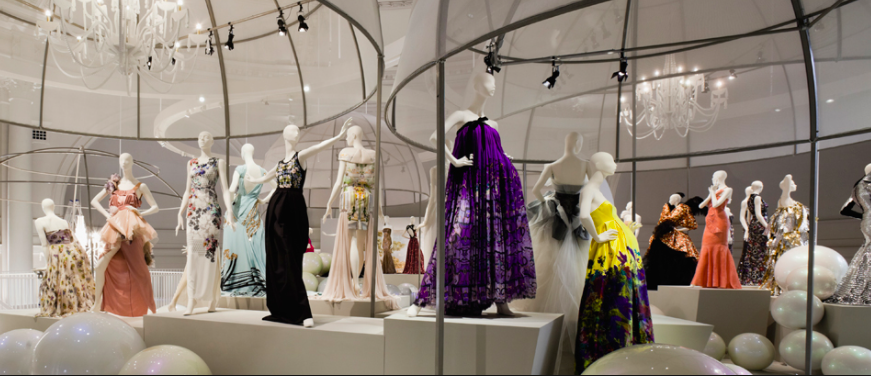
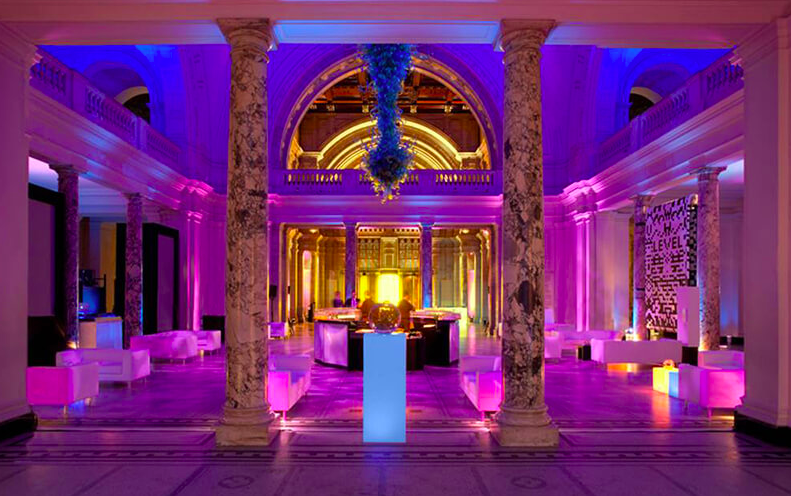
Victoria & Albert Museum:
The Victoria & Albert Museum in London is the world's largest museum of art and design. It was founded in 1852 and named after Queen Victoria and Prince Albert.
Victoria & Albert Museum holds an extensive amount of art and as I am focusing on the fashion aspect overall, I mainly focused at what the V&A offers in terms of fashion.
As part of the fashion area in the V&A, they have a costume collection which is the most extensive in Britain and contains over 14,000 outfits and accessories. Some of these pieces date all the way back to the 15th century and to now. The V&A also holds many costume sketches and design notebooks on display.
Also they began a series of live catwalk events, hosted at the museum, which they called 'Fashion in Motion' which featured items from several fashion collections. Their first show ever in 1999 featured Alexander McQueen, from there they host shows every year. They featured from the likes of Jean Paul, Missoni and Anna Sui.
A couple years later, the museum got ahold of some Vivienne Westwood costumes for display. Several famous designers worked in this collection, featuring the likes of Coco Chanel, Christian Dior and Cristobal Balenciaga.
The museum still continues to add to their fashion displays very often, to have a larger collection of modern fashion.
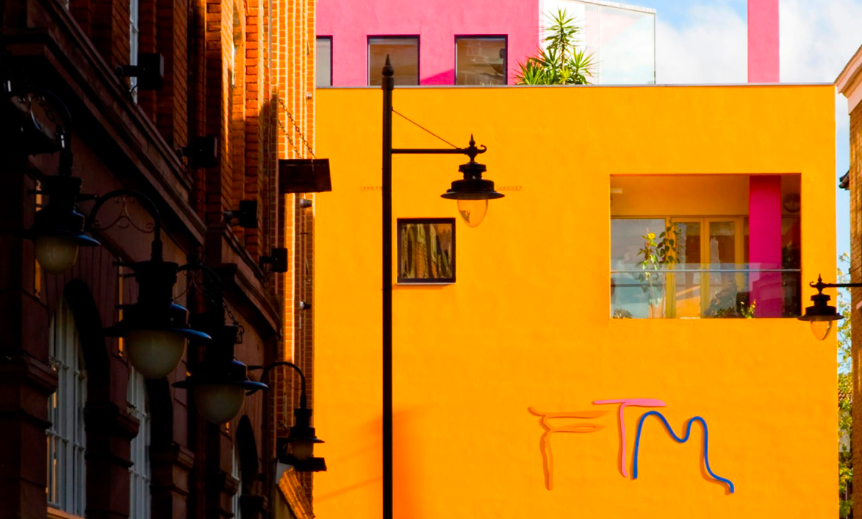
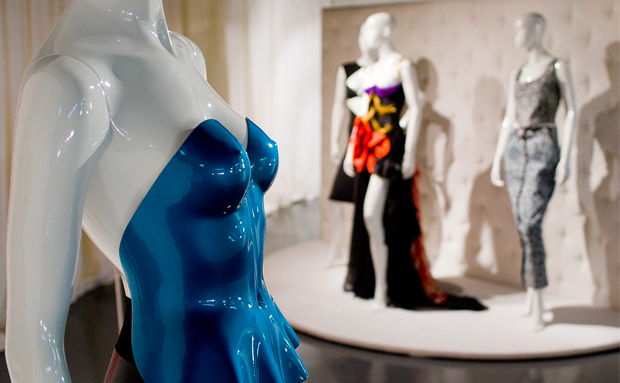
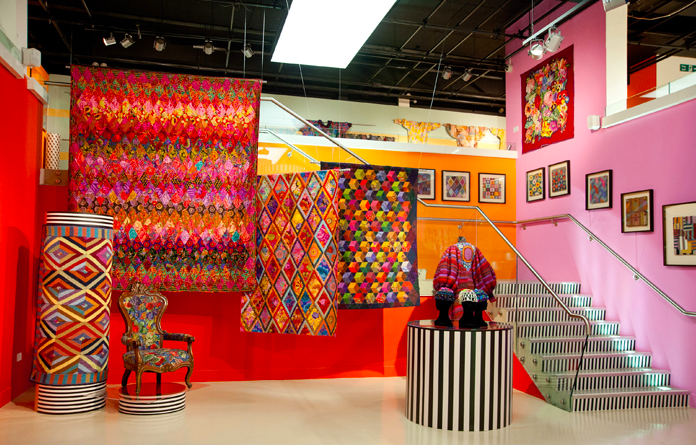
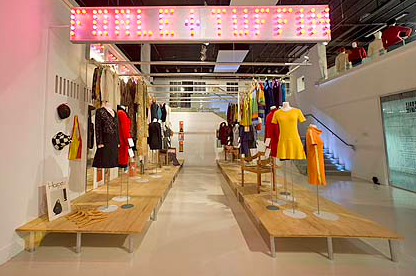
Fashion & Textiles Museum:
The Fashion & Textiles Museum in London is committed to display developments in modern fashion and even providing support and training for those who work in the industry. This museum was founded by a British designer called Sandra Rhodes, and has been open since 2003. This museum shows temporary displays unlike most which hold permanent displays. Some previous displays include; Art Textiles, Liberty in Fashion, 1920s Jazz Age Fashion & Photographs and many more.
I have visited this museum several times, both for workshops and to see the displays. I really enjoy visiting this museum as the displays are always being updated and there is always something new to see.
The fashion and textiles museum is part of the Newham College of Further Education which is one of Europe's largest further education colleges.
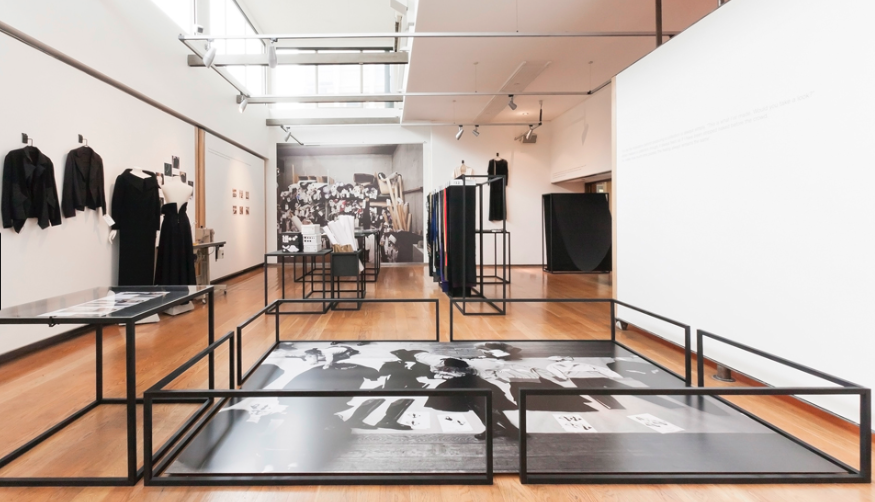
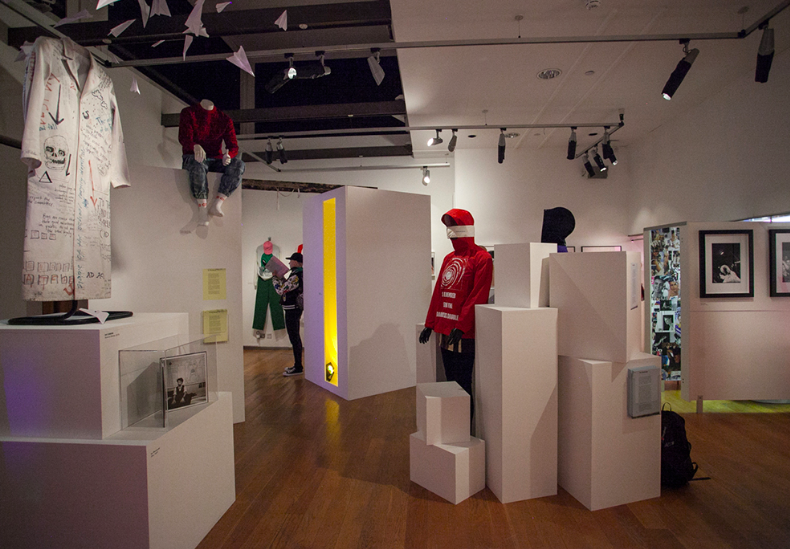
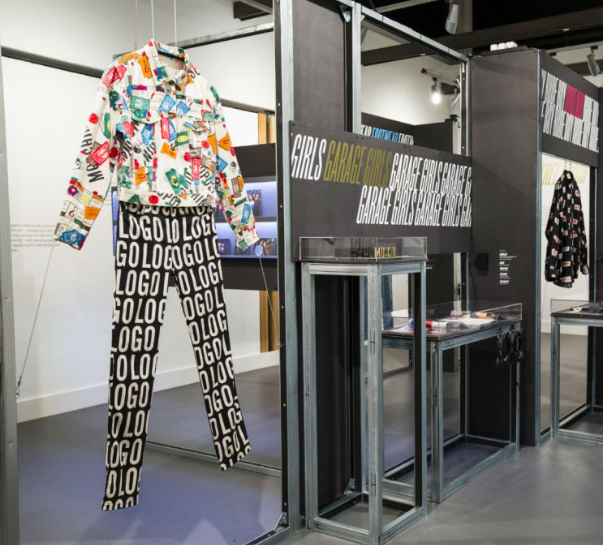
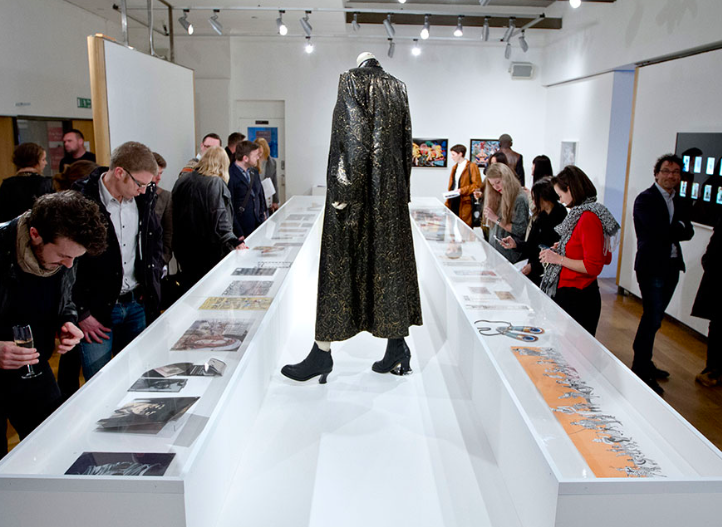
Fashion Space Gallery:
This Fashion Space Gallery is in Oxford Circus and is a part of the London College of Fashion. It is a very modern exhibition space which showcase various changing displays over time. It opened to the public in 2010 to display work by leading artists in the fashion industry. The gallery also includes several performances and installations.
This gallery space also can provide for the London College of Fashion students and graduates to use this gallery as a platform to show off their work and as a step up for them into the fashion industry. It is also easier for their students to get spotted and more known about.
This exhibition space is free to visit and is supported by many events, artists industry talks, lectures and various different performances.
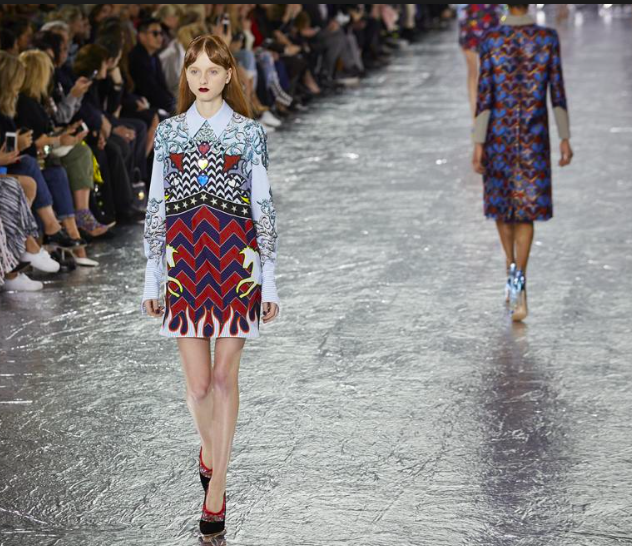
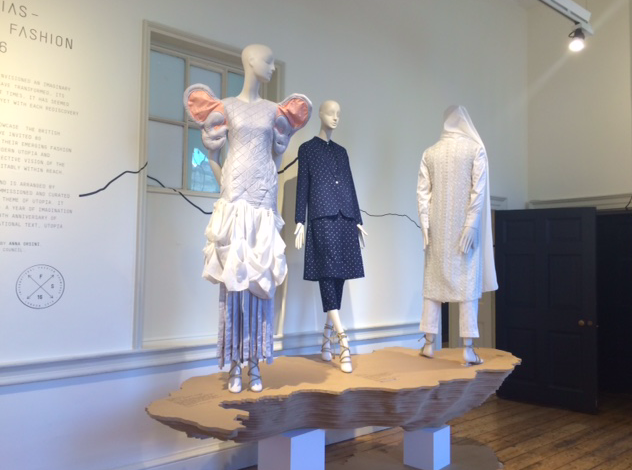
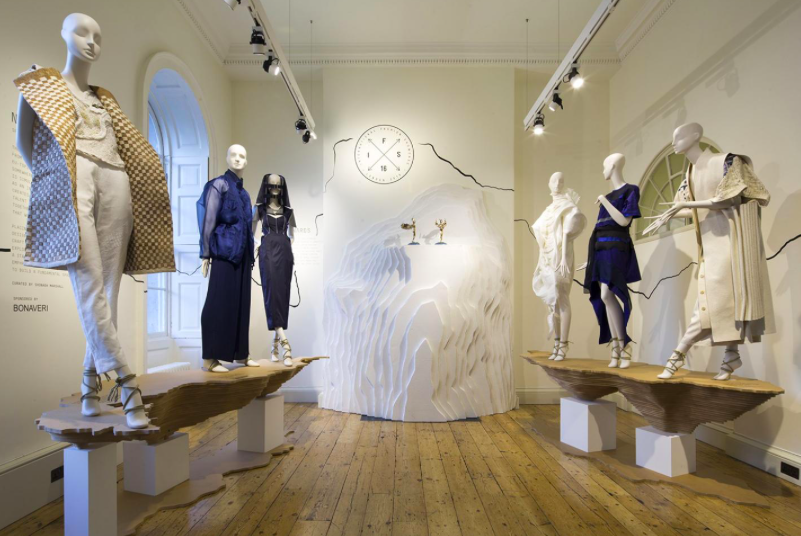
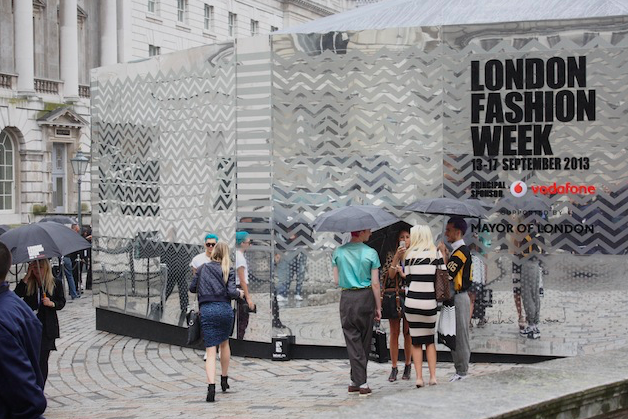
Somerset House:
Somerset House is a large building in central London, that was originally a Tudor Palace but from then was extended with further wings for more space. It was then used for exhibition space to display several different types of components, including fashion.
Somerset House frequently displays different fashion exhibitions, usually in the East wings. The latest exhibition that they held was titled 'North: Fashioning Identity'. This was about people living in the north of England and how their fashion changed since the 1950s.
This exhibition tried to incorporate modern fashion as well as having pieces from the past. As well as being a fashion exhibition, it featured modern photography and multimedia work. There was also a documentary film featuring videos that were captured in the late 1960s.
Alongside this exhibition they display many other fashion exhibitions, that are always held at a big scale.
Fashion Organisations:
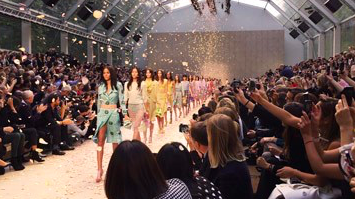
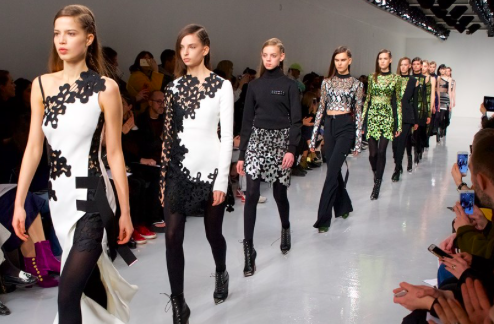
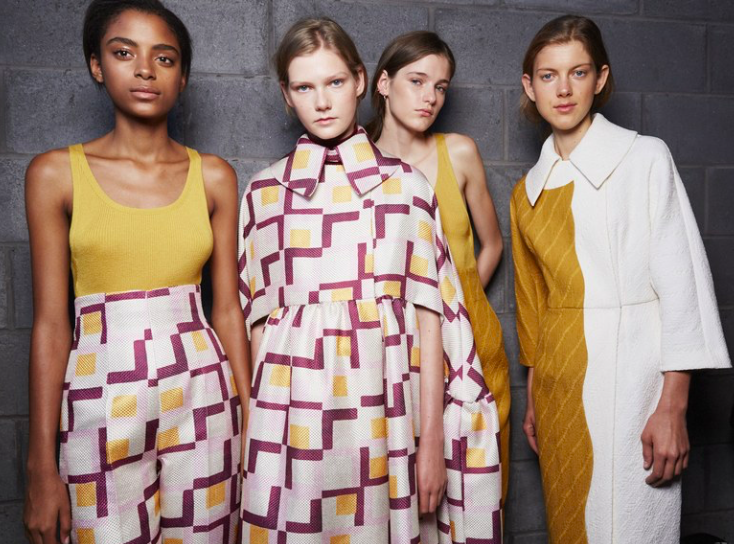
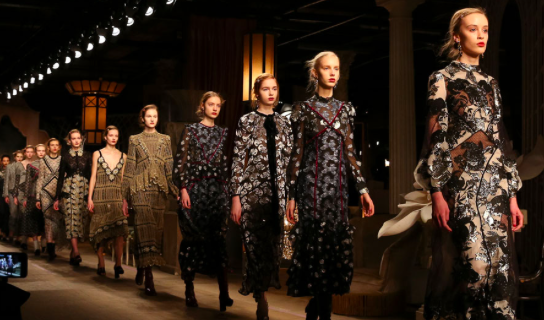
British Fashion Council:
The British Fashion Council is a Fashion Organisation that is not profitable and it tries to look into designer businesses and sharing experiences and resources in the fashion industry. This organisation is based in London and was formed in 1983. It was funded by industry experts, commercial sponsors and the government. They are even funded by the Mayor of London and the European Regional Development Fund. The British Fashion Council leads the industry through artistic influences and is trying to reposition the British Fashion namesake higher and more popular in the global fashion economy.
The British Fashion Council shows off the best of British fashion design to a global audience, which include potential buyers and the press. Their displays of work happens every February and September, as they organise London Fashion Weeks for the public. This is an event done to a large scale for the purpose of displaying designers' work and for the public to shop the latest trends.
They also organise show rooms in London every season, that takes emerging designers to Paris. This gives them the opportunity to get more popular and well known overseas, as well as in England. The British Fashion Council also takes these designers to international markets including destinations to LA, New York, Brazil and Hong Kong.
This organisation also organises the Fashion Awards, which is the UK's annual celebration to show off all the progress in fashion over the year.
The British Fashion Council also helps designers at different stages of their businesses. This includes the Colleges Council which offers MA scholarships and facilitates connections between the fashion industry and fashion graduates.
The BFC also runs and owns several charities, these include the BFC/Vogue Designer Fashion Fund, the BFC Fashion Trust, the Fashion Arts Foundation and the BFC Education Foundation. The British Fashion Council also has published the Designer Fact File, an online handbook for designers and a statistic based report of the fashion industry.
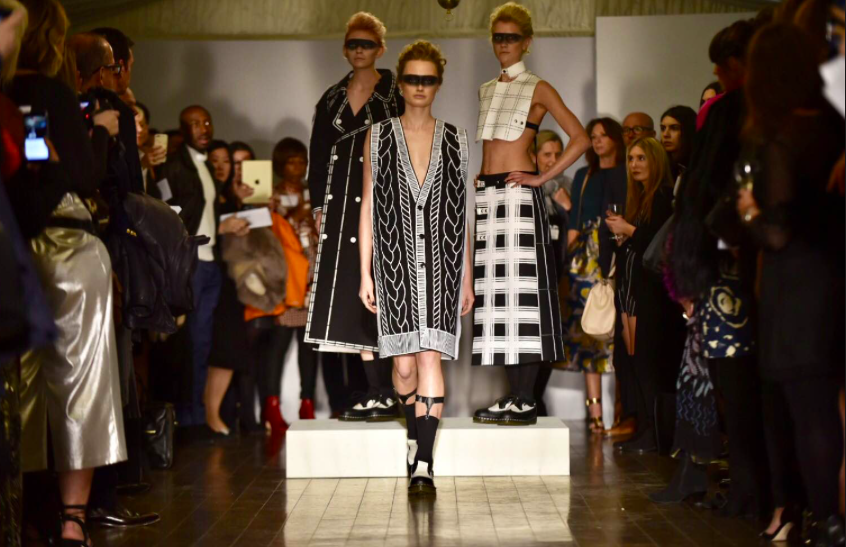
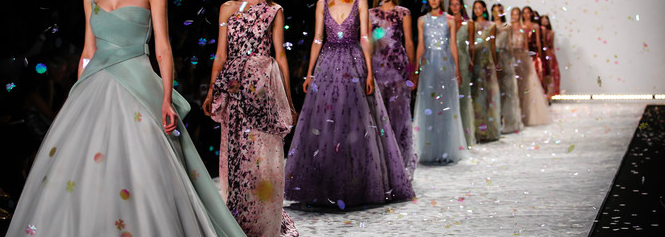
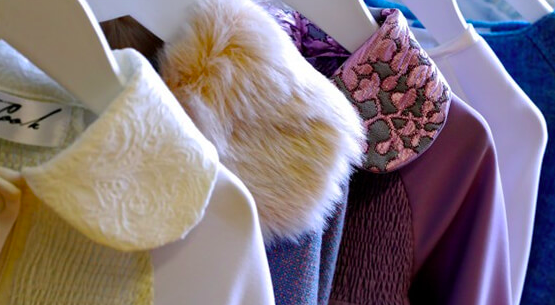
UK Fashion & Textile Association:
The UK Fashion & Textile Association is a very inclusive British network for fashion and textile companies. They unite designers, manufacturers, retailers and agents to promote their work, both nationally and internationally.
To access the resources and help from the UKFTA, you require a membership. This allows companies in the fashion industry to access a wide scale audience through using the UKFTA's contacts in the fashion and textile system.
This association believes that communication is key, so therefore they produce monthly e-newsletters on breaking news and business opportunities that are available for their members.
They also offer many frequent seminars on subjects in the fashion industry, and even offer access to be part of oversea markets.
The UKFTA frequently host various line ups of events including; network opportunities, seminars and discussions. This association is now the Sector Skills Body for the fashion and textiles industry.
The UKFTA has dedicated workers and HR experts to provide help, advice and support to fashion companies of all sizes, whether it is a new business or even large retailers.
One of the most exciting events held by the UK Fashion & Textile Association in my opinion was an exclusive event at the Houses of Parliament to celebrate the Graduate Fashion Week's 25th anniversary. This event hosted guests such as the MP; Damien Collins, who is the chairman of the 'All Party Parliamentary Group for Fashion and Textiles'. There were also many leading figures from the fashion industry who attended the event to unite with the aspiring designers of the industry. This event included a welcome reception to all the guests as well as hosting a large scale fashion show.
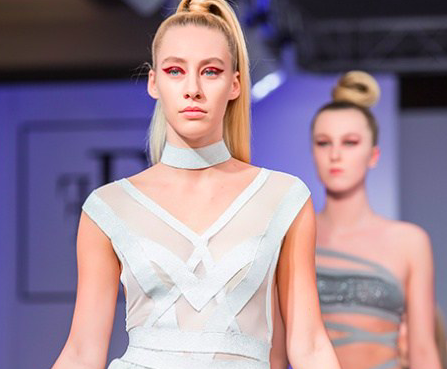
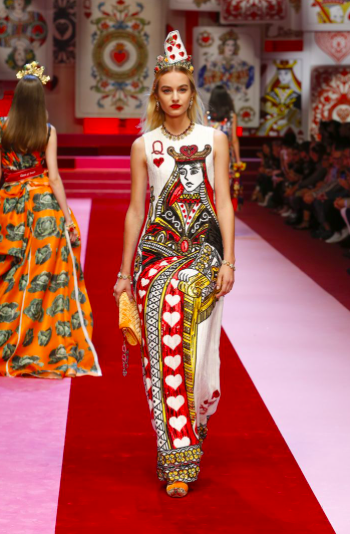
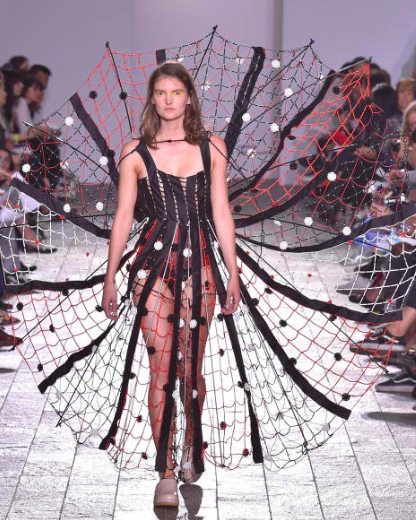
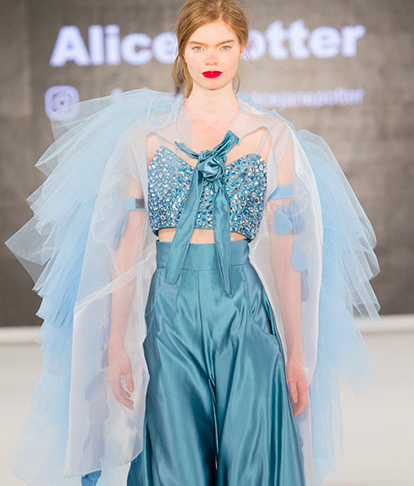
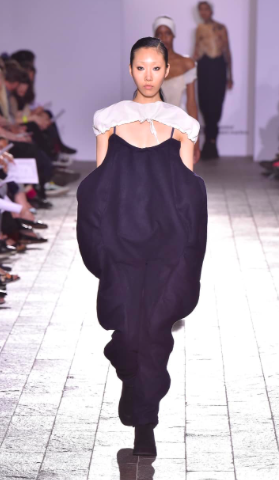
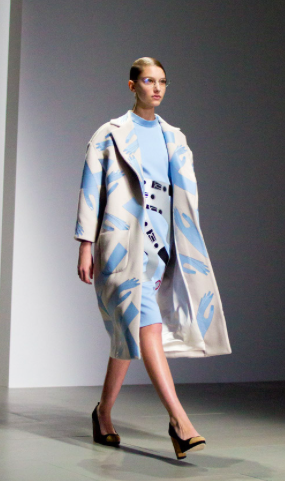
Alternative Arts Organisation:
The Alternative Arts Organisation specialises in the art industry, and they invest in new artists emerging into the industry. They also create highly accessible mixed cultural experiences.
They direct and produce programmes of diverse arts events, which include a variety of mixed media, such as; photography, fashion, literature, music, dance, theatre, art exhibitions and various festivals.
Throughout this art organisation's history, they have successfully helped to regenerate West Soho, Covent Garden, Marylebone High Street, Spitalfields and East London. Their aim is to continue to help and consult on the arts development and urban regeneration.
The Alternative Arts Organisation has directed and hosted major projects in the art industry. These projects include; the Covent Garden Street Theatre, Alternative Art Gallery pop ups shops and the Open Dance Festival with performers from all over the globe. These projects are very diverse and all focus on a certain sector in the arts industry. However, they also focus on fashion, which I will be looking more into.
One of their major projects that focuses on fashion is their 'Alternative Fashion Week' which focuses on discovering new and emerging designers in the fashion industry.
This Alternative Fashion Week event is very different to most other fashion weeks as it is open to absolutely everyone and it is even free to the designers to participate. This event runs for a full week with 15 shows every day. This event attracts over 10,000 people from all over to watch these shows and to visit the diverse fashion market to shop the latest wild and different accessories and trends.
Their target is to show how imagination and resourcefulness can be possible even without having to use a lot of money and how everyone can have a future in the fashion industry without necessarily having to come from a very high economical background. This organisation wants to promote sustainability in the arts and to regenerate certain areas through art.
For example, in 1993, Spitalfields was a deserted, run down area with a big empty market building. However today it is a cultural area in London with several markets, art galleries, shops and much more. These attract millions of visitors every year.
The Alternative Fashion Week has played a major part in regenerating the area by raising its profile to a worldwide audience and promoting hundreds of new designers and new models. This fashion week has worked on building an international reputation with world wide press coverage.
Every year this Alternative Art Fashion Week has had a major amount of young designers that wish to establish their business from all over the world. This unites graduate shows with the more mainstream fashion industry.
Their biggest aim through their Alternative Art Fashion Week is to raise environmental awareness and they actively support recycling and ethical sourcing. Every year, there is an ever growing number of collections put on show that support these very important topics.
The Alternative Arts Fashion Week has hosted shows for over 20 years now and they hope to continue to produce more shows.
Further Education in Fashion:
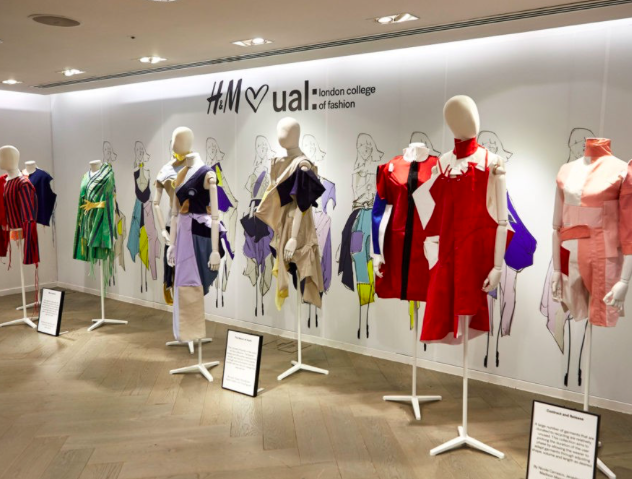

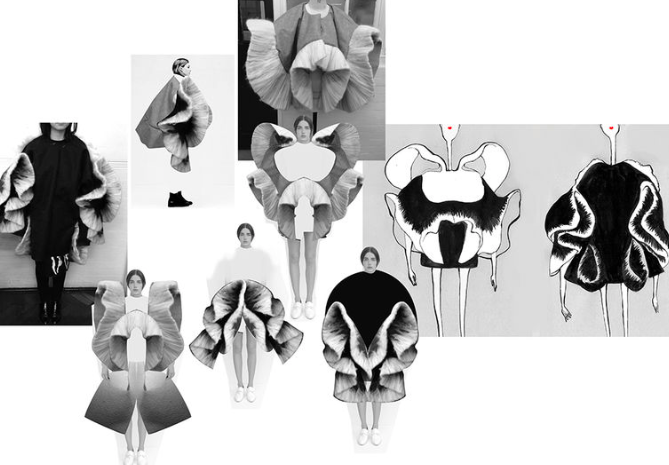
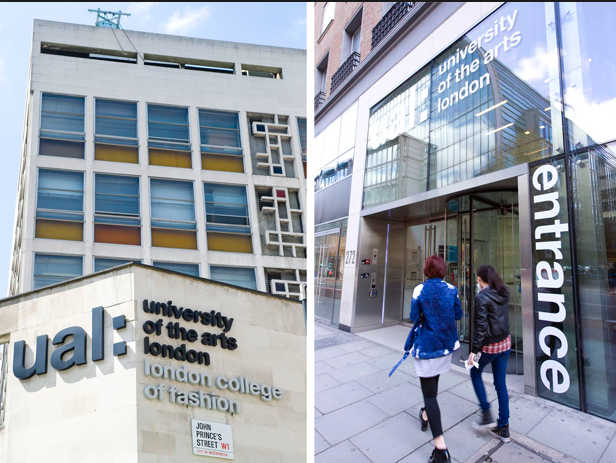
University of the Arts London: London College of Fashion
The London College of Fashion is one of the few colleges that are part of the University of the Arts London which are all based in London as the name refers. They offer many courses and degrees such as; undergraduate, postgraduate, short courses, study abroad courses, business training in fashion, make up, beauty therapy and lifestyle industries.
It is the only college in Britain to focus only in fashion education, research and consultancy.
They have a patron called Sophie who is the countess of Wessex. Their current head of the college is Frances Corner who is also the Pro Vice-Chancellor of University of the Arts London.
They offer over 70 undergraduate and postgraduate degrees, and 165 short courses.
The main college building is situated in John Prince's Street which is in Oxford Circus. They also have other campuses which are located in Lime Grove (which is in west London) and Mare Street (which is in east London).
One of the courses I looked more into which was the BA Fashion Design: Womenswear, looked specifically at building on creative, technical and professional skills needed that a fashion designer would need to be successful in the competitive womenswear market at the moment.
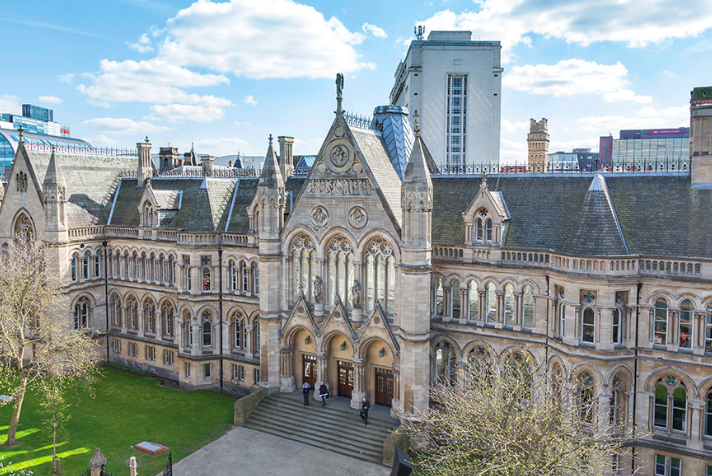
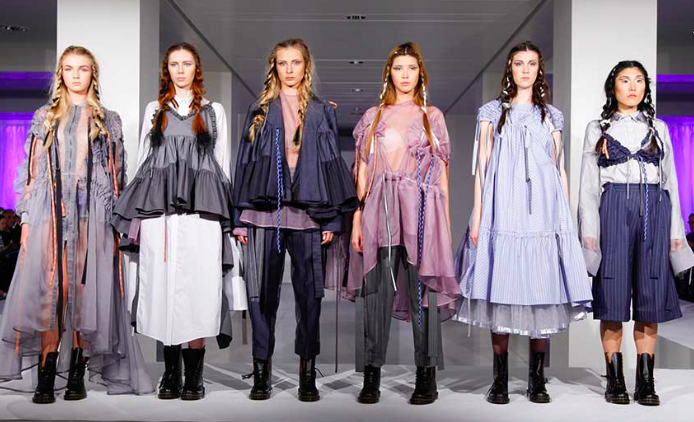
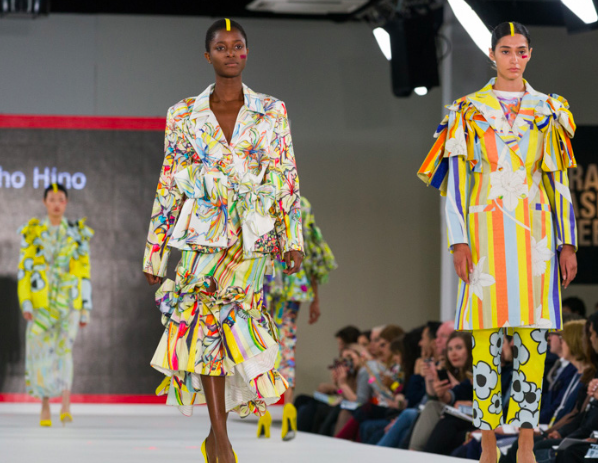
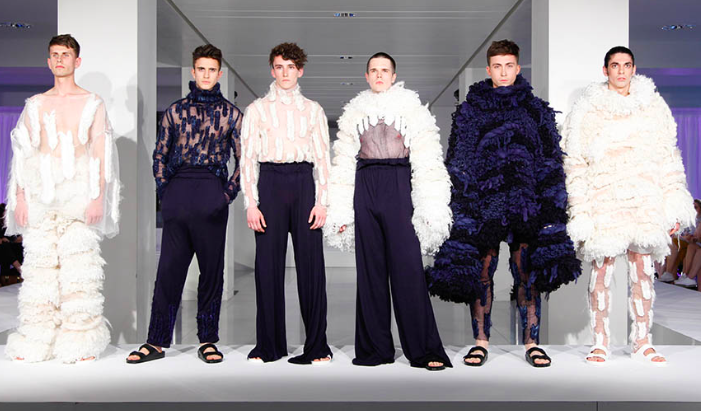
Nottingham Trent University:
Nottingham Trent University offers a BA degree for Fashion Designing and this course is internationally recognised for its industry ready graduates.
The aim of this course is to develop creative skills in fashion drawing and illustration, creative pattern cutting, garment manufacture, market awareness and learning on the latest digital technologies and how to apply these to fashion.
They have connections within the industry as a university which gives graduates very useful opportunities to develop professional skills by entering competitions, working on briefs and going to lectures from visiting professionals.
They are ranked 4th overall in the UK for Fashion and Textiles. Their course has an excellent graduate employment rate with 100% of all graduates in fashion being employed or in further study within the first six months of graduating.
They also get involved in a variety of competitions and projects with successful shops such as the likes of; Oasis, Boohoo, ASOS, River Island and even Burberry.
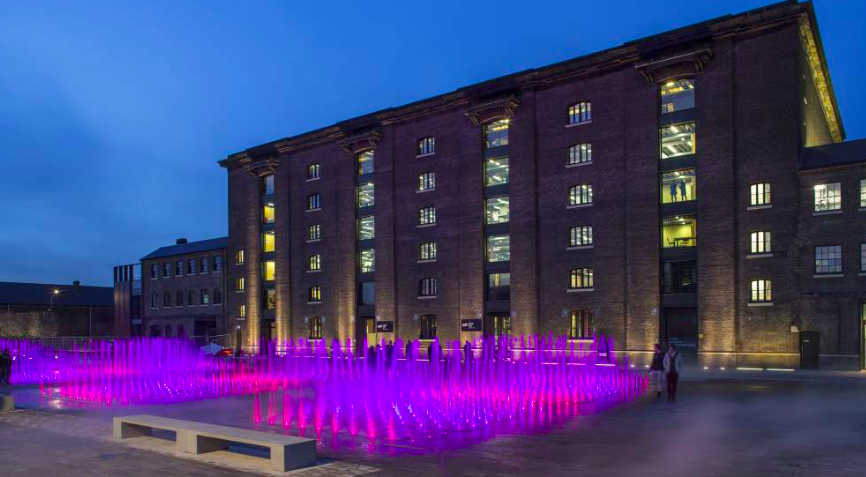
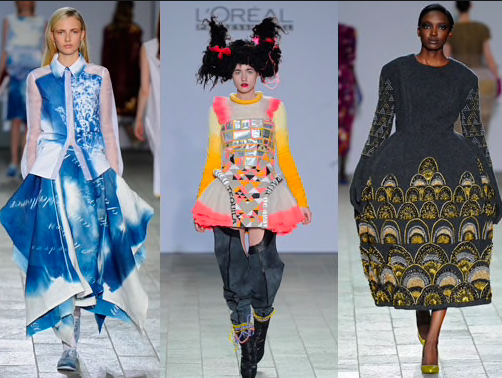
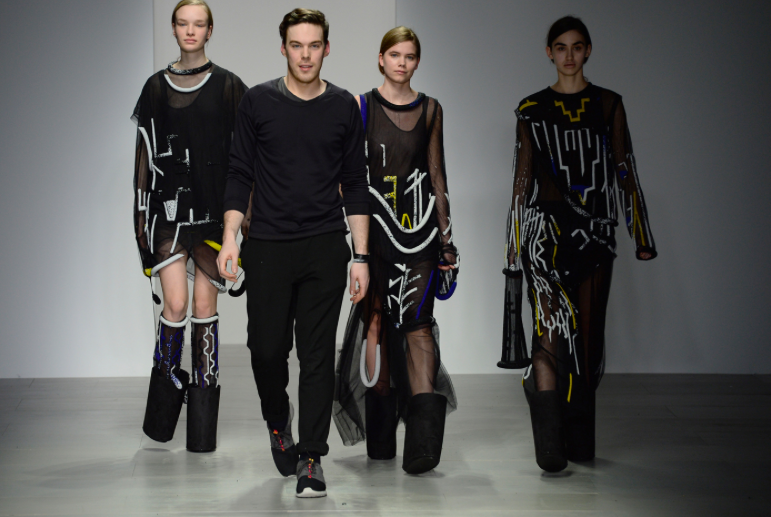
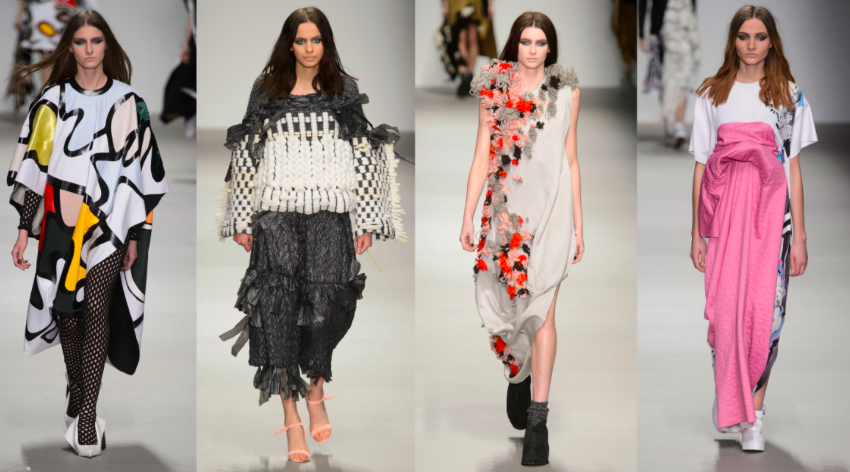
Central Saint Martins:
Central Saint Martins is a public art school located in London. It is one of the few colleges along with London College of Fashion to part of the University of the Arts based in London. They offer full time courses at foundation, undergraduate and postgraduate levels. Along with a wide variety of short and summer courses available.
At Central Saint Martins, the teaching and courses are organised into nine programmes, these include; acting, design, art, graphics, jewellery, textiles, as well as fashion.
Central Saint Martins moved to a converted warehouse building located at King's Cross in Granary Square, however even though most of the college is situated there since the move in 2011, they also use the previous buildings which are located in Holborn, Elthorne Road and Archway.
This art university offers collaborations with professionals and sponsors in the industry, these include the likes of; L'Oreal Professional, Christian Dior, Louis Vuitton, Liberty, Paul Smith and the Victoria & Albert Museum.
There is an opportunity to take a break from your course after two years full time study to do a work placement and qualify additionally for the Diploma in Professional Studies.
Their previous graduates work across a wide variety of jobs in the fashion industry including working as company designers, freelancers, consultants, journalists, stylists, photographers, illustrators, editors and retailers.
Workshop Reviews:

Digital Textiles Course Review:
I attended a course at the V&A on the Saturday 14th of October 2017. The aim of the course was to teach the students present how to use Photoshop for textiles purposes, such as how to create patterns to then put on fabric and how to create repeat patterns.
At the course we firstly learnt a basic understanding of Photoshop and how to actually use the program. Examples of what we looked at specifically were things such as how to use threshold and colour correction.
After this basic introduction to Photoshop to everyone, we visited an exhibition at the V&A itself to examine patterns for inspiration. Our group was there for about 20-30 minutes and in that time we looked around the exhibition individually as we were all attracted to different pieces of art such as I was really drawn in to a massive, intricately detailed sheet of fabric hanging on the wall and it was really fascinating to see so much nature based imagery used in that one particular piece of wall art in the exhibit. In that time at the exhibition, I also looked at more interesting pieces of art and drew several of these patterns that I saw to use as inspiration going into the course after the exhibit.
After the exhibition, we went back to the computer lab and got pieces of paper to draw our own patterns. However we only had to draw one singular thing as we would transfer it onto the computers by scanning it, in order to create repeat patterns using our drawings. As I finished early, I got the chance to draw more singular objects to transfer to the computer and I could then experiment and chose which repeat pattern I found the nicest and ended up using that one. I went for a more natural side in my drawings, using the inspiration that I saw at the exhibit. However, I ended choosing my drawing of the bee as I thought it was the most appealing looking drawing I had done and it was also quite detailed.
I then evolved and adapted my designs, especially my bee design, and created a final product based around my bee motif, which we could keep for future uses and we also got a chance to put our pattern on a couple outfits to see how it would look.
The art forms used were mainly just designing.
I have not done anything like this since I have not used Photoshop before this course. So it was very helpful and beneficial to me as I learnt something completely new and I learnt a lot about the program.
Something similar from this course to some other courses I have done before is that at the V&A, when I usually go to the workshops, they take the participating students to visit their exhibitions which they did at this particular course, which is good to find inspiration and to get our minds thinking about art.
It was a good course because I learnt a whole new aspect of textiles and pattern/fabric making. Which I will use again, most likely in my art GCSE lesson to make actual fabrics using our own patterns printed on using methods such as foiling the fabric using our patterned stencils.
The only thing I would change would be that I felt that it was quite rushed so I would either suggest to make the course longer or to do less things as it over ran anyways and some students were unfortunately not available to finish their work.
I learnt a lot from this course such as new knowledge and a Photoshop file of my work which I could use in the future if I wanted to.
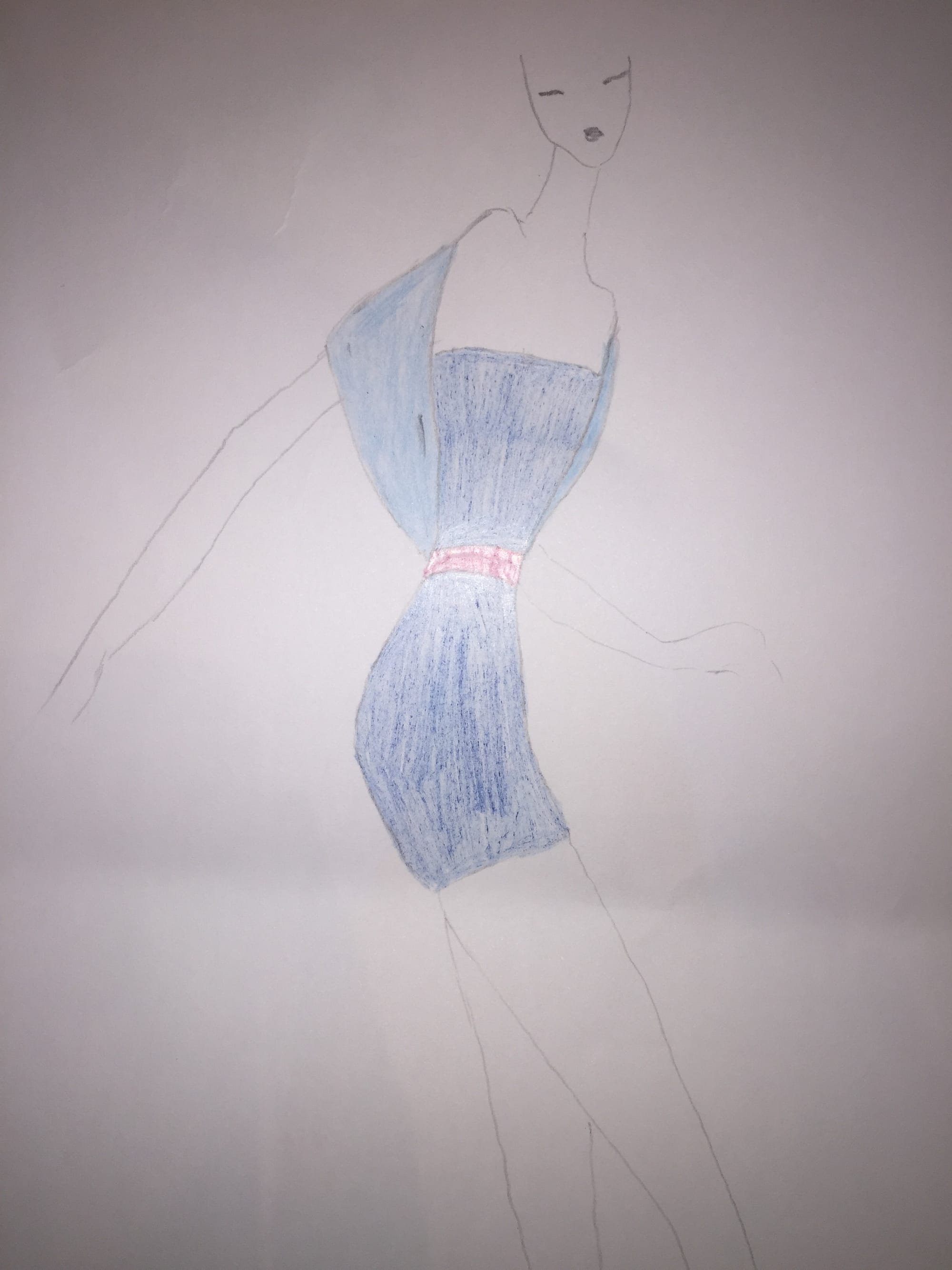
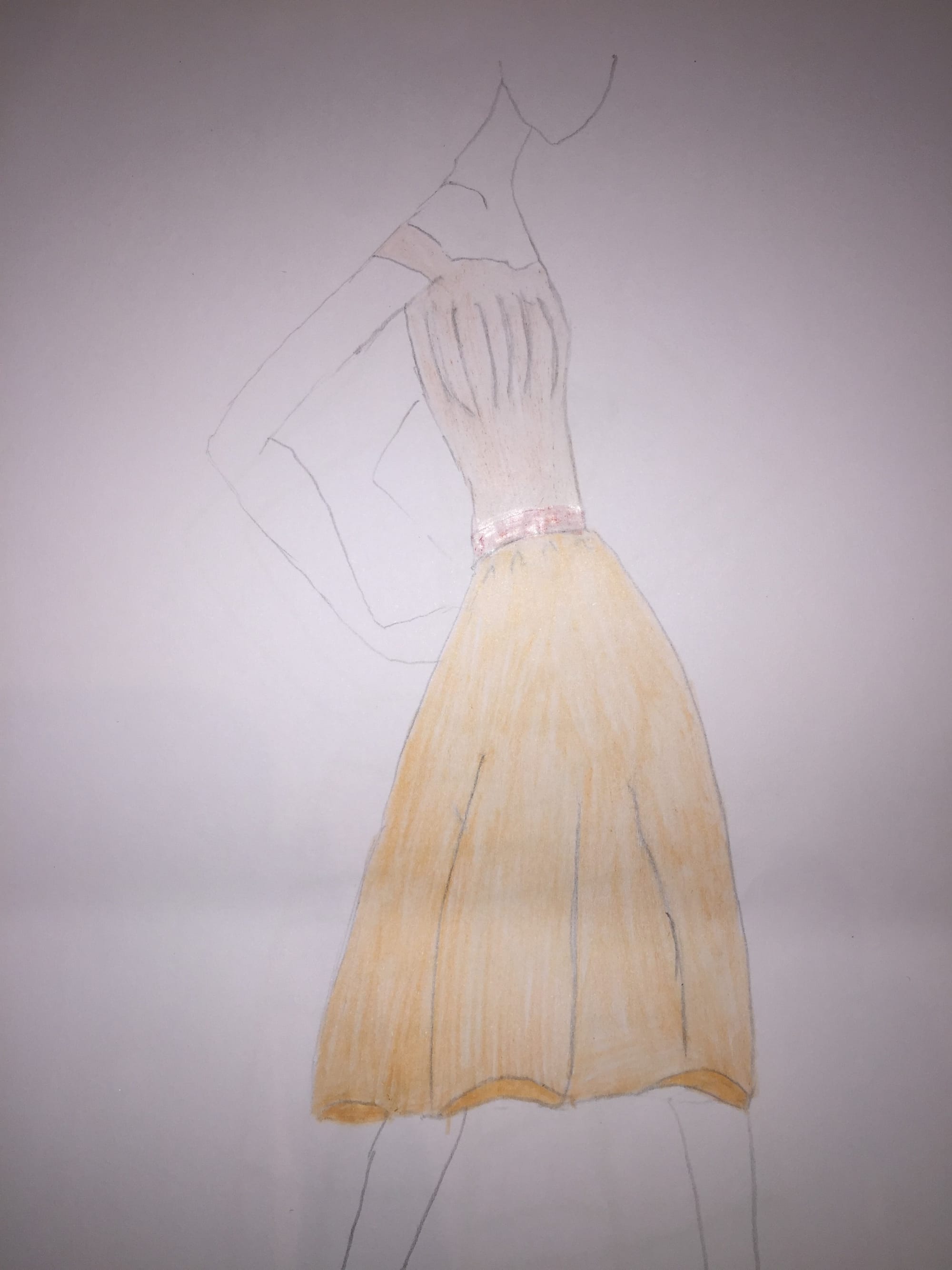
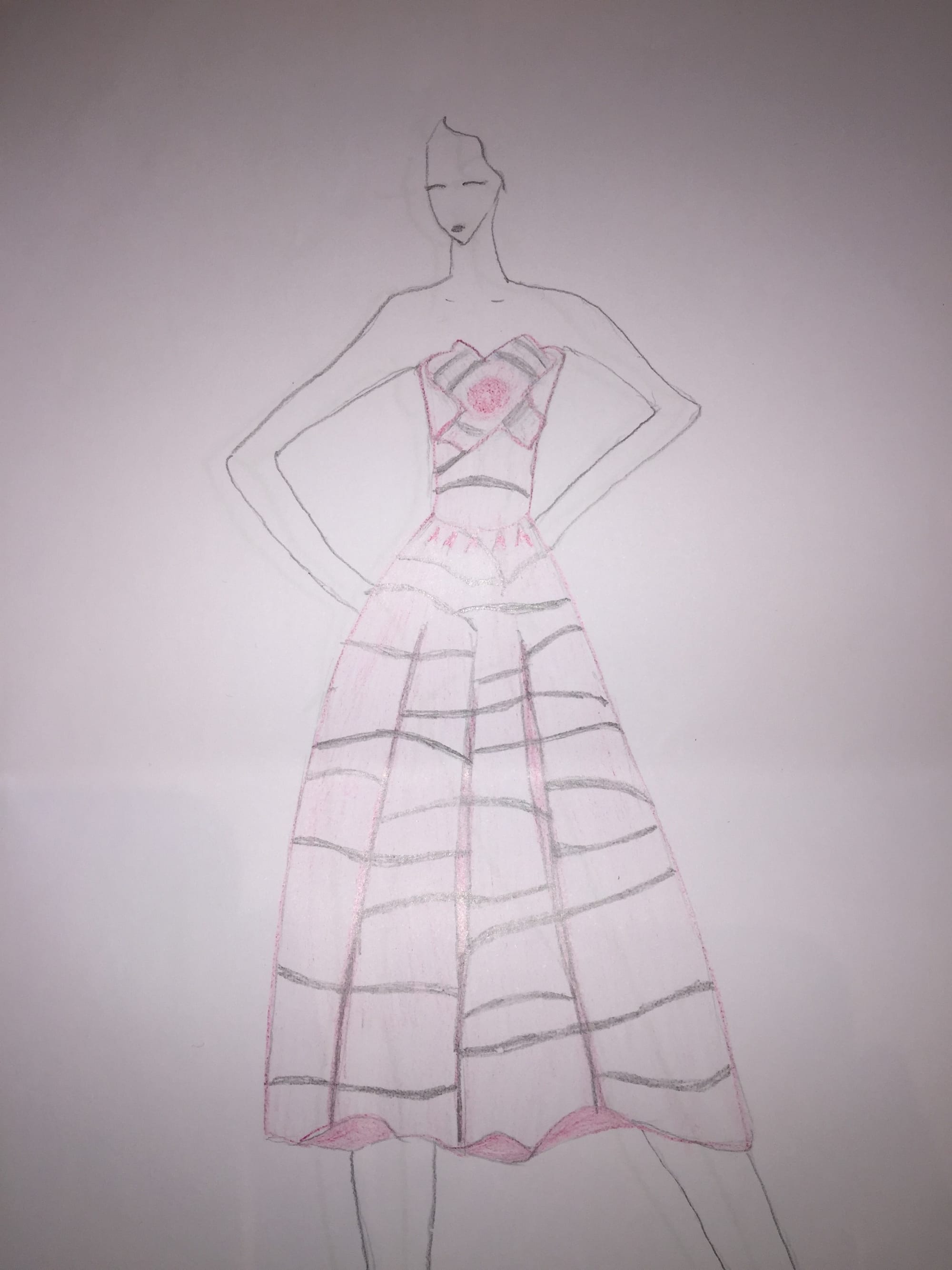
Draw Like a Fashion Designer Workshop Review:
I went to a course at the Fashion & Textiles Museum on Wednesday the 25th of October 2017. The course was designed to aid students to develop their drawing skills, specifically looking at drawing our own outfit creations towards the end but there was also a major focus on how to draw an average model/mannequin with the proportions correctly drawn to then use as a guide to draw our creations on top of them.
The first thing we did at the course was introductions and examined some detailed examples which were drawn by the tutor herself before the session. Then using her work we took inspiration and drew our own interpretation of her drawing. This aimed to show the tutor our drawing skills so she knew where we all were at. Then she took out a full real-sized mannequin with a long, polka dotted dress on it, and we got told to draw it out using colours. This proved challenging as the bottom of the dress was complex to draw as it was not straight but not extremely flowy so we had to find and figure out the exact balance to draw it.
The main art forms involved were drawing, designing and colouring.
I have not done anything quite like this course before, because I found this course required everyone to be practically completely independent, probably because the class size was so big and the tutor would only come around to help only so often. This was unlike the courses I have done previously as there was always a lot of help available there. Being independent was not a big issue at this particular course however as everyone got really into the drawing and developing their own styles so not a lot of help was needed anyways, just the use of the resources which were provided to us at the course.
The similarities to other courses compared to this one that I have just done is probably that our tutor was very talented and experienced in what she was doing, just like the tutors back at the V&A Museum.
The fact that it was so independent was unexpected because looking back on it, when I arrived at the creative studios at this museum, I thought we would receive much more help but then I realised we did not need a lot of guidance anyways since were just drawing. However when the tutor came around occasionally, I felt it was very helpful personally when she critiqued everyone’s work to make us think what we needed to do and change in order to improve our drawings and also our drawing skills too.
In my opinion the course was quite enjoyable and helpful to me, because I definitely think that I have developed my drawing skills especially with drawing the model/mannequins as I think I have improved drawing the proportionality right with them. I also begin to understanding how to draw a bit more like a designer.
However I would have wanted it to be even slightly longer as compared to other courses I have done before, this course was only about an hour or two, which is incredibly short compared to the courses at the V&A museum, where the courses run on a full day so from early on in the morning till about 4/5pm. Drawing is also such a vast topic of area so to it all have been compacted into one or two hours is not the best thing in my opinion and it was very enjoyable in the short time I was there so I definitely would think we could have learnt more and covered more about drawing like a fashion designer if we had a longer time with the tutor and the resources.
I learned various things such as how to draw the proportionality of an average model/mannequin in order to draw outfits on top. This skill is particular helpful to me because I did not know exactly how to draw the proportions of the mannequin/model in the first place properly to then draw my designs on top.
Overall, in my opinion, I think that the course was helpful personally as it taught me to improve my drawing style and shaped me into using less sketchy lines and much more defined lines which as my tutor said, improved clarity of the design.
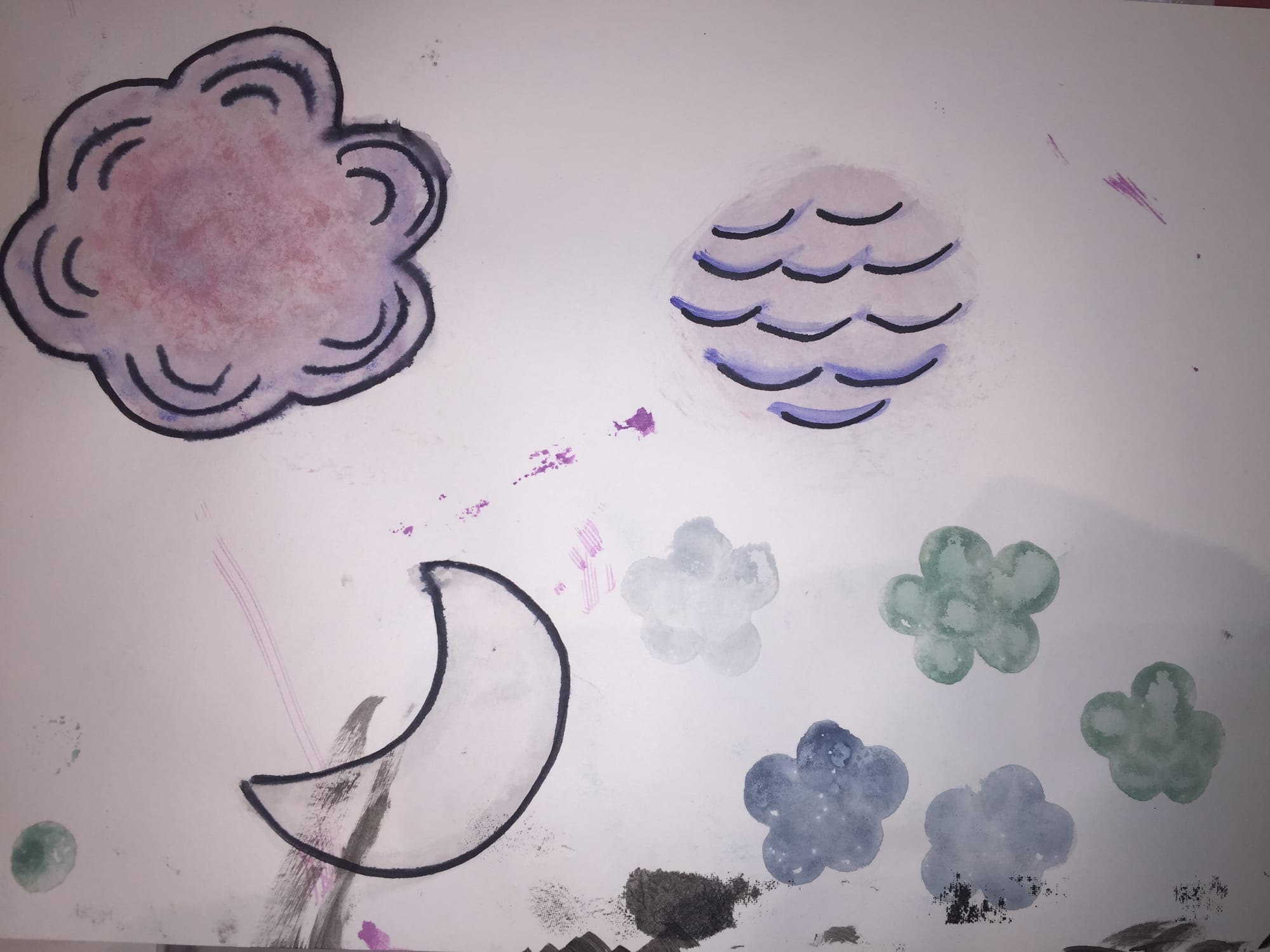
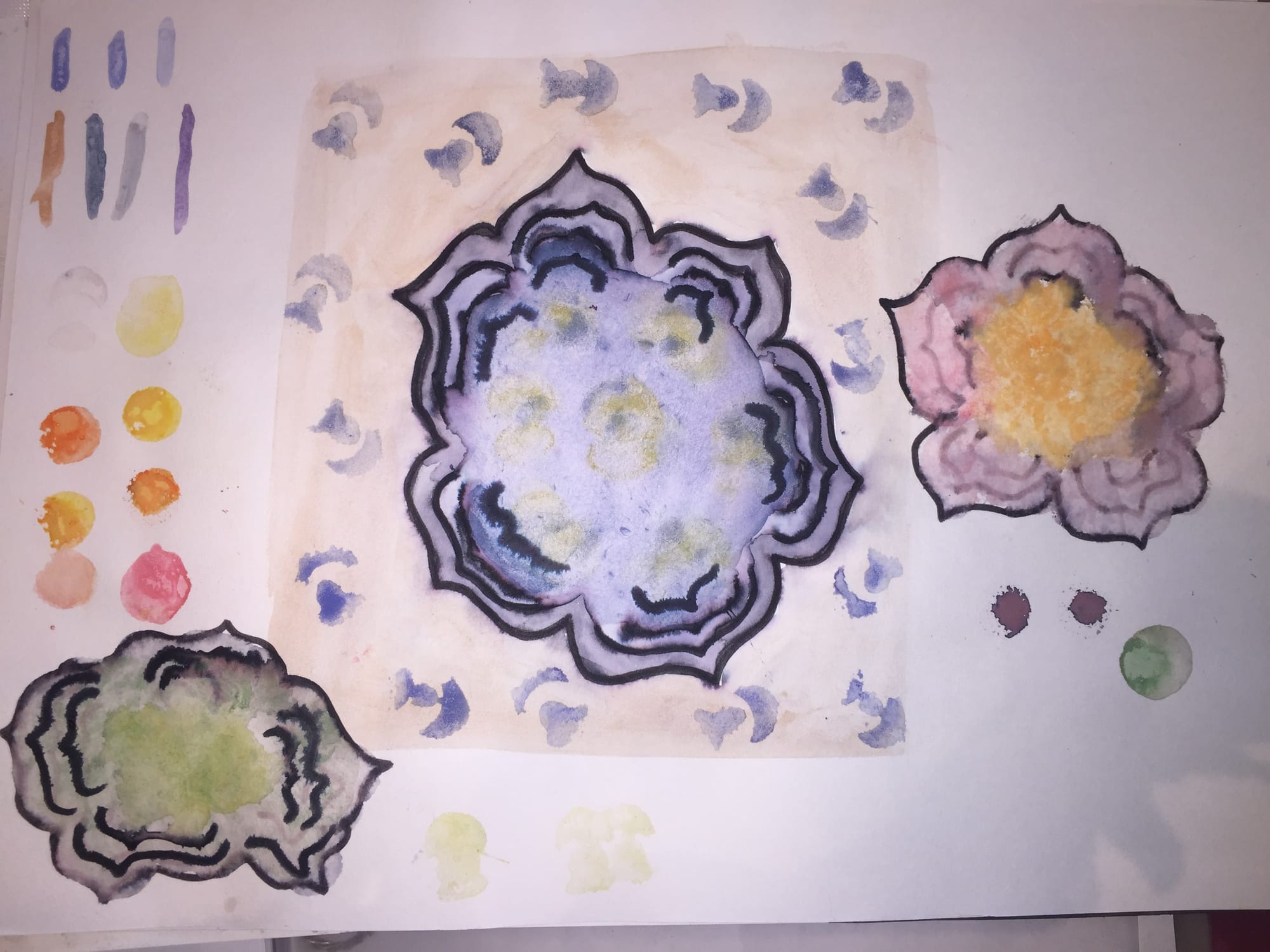
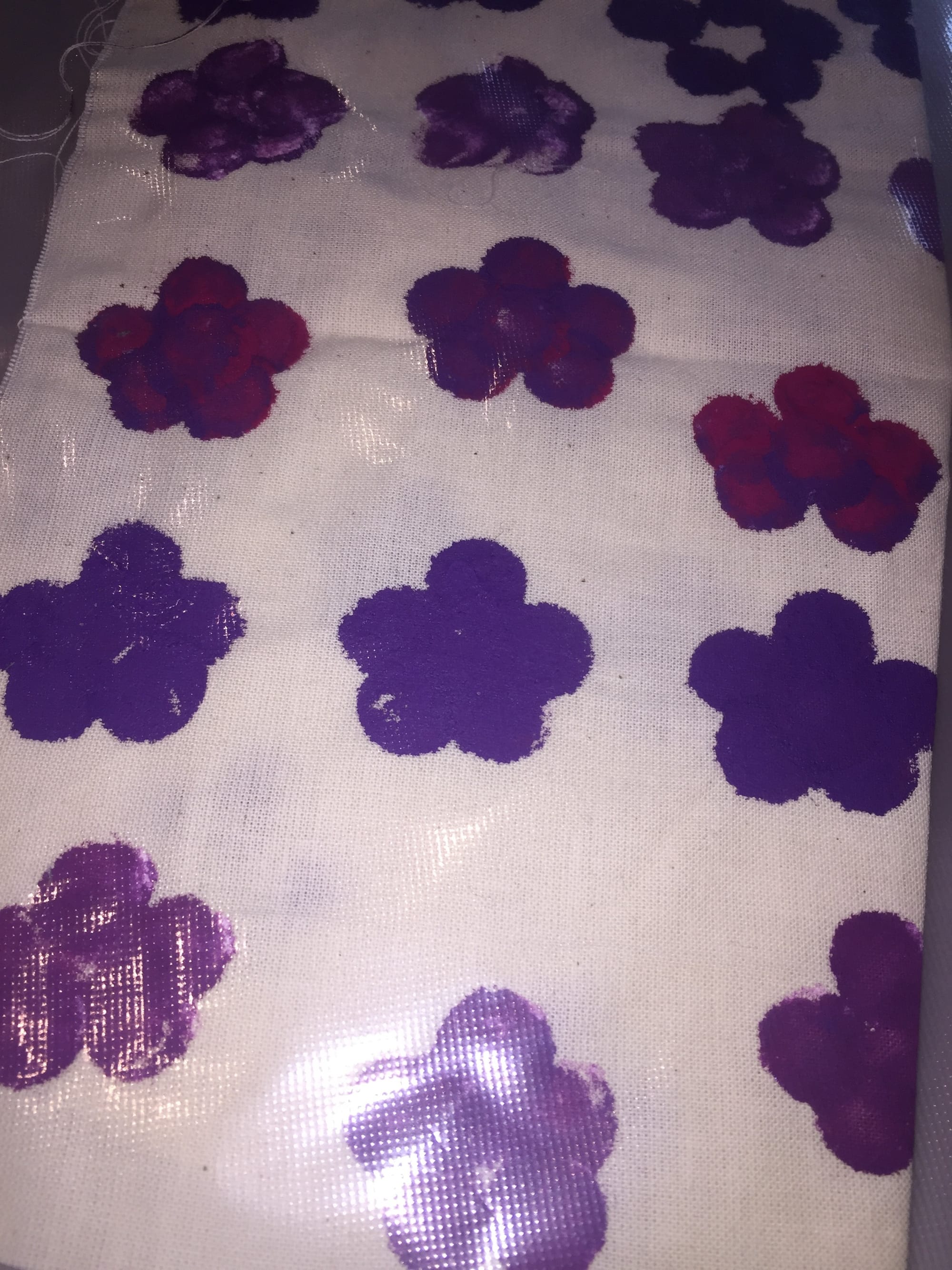
Fabric Design Workshop Review:
I attended a course on Saturday the 21st of October 2017 at the V&A to learn more about fabric designing.
I arrived at the course and there was a couple of introductions of what we would be doing throughout the day and introductions to the other students there and of the tutor.
Then we went to visit the Indian exhibit to get inspiration from the objects and art there, in particular to look at all the intricate patterns and designs there. I drew a couple of patterns for inspiration for later use throughout the day.
Once everyone had looked at the whole exhibition, we were led back into the room we were in originally and were shown around and were all the equipment was and how to use it.
Then we were allowed to experiment on scrap pieces of cotton to use acrylic paint with several different paint brushes and sponges or using special pens to draw on the fabric. After this experiment, I had an idea of a pattern so I got given a bag to design and make.
In the end, a bit more than an hour after I got given the bag to design, I had a finished product of a black bag which I had painted with very subtle chequerboard patterns on the back and gold flowers painted on top of everything. I was very happy with what I had created thanks to some help and directions from the tutor.
The art forms involved were designing and painting.
I have done workshops slightly similar to this certain one, for example I did one last year which had to do with painting using acrylics as well. So it extended my knowledge on what to use acrylic paint for.
The thing that was unexpected in my opinion was the amount of all the fabrics that were laid out in the beginning for us to look at and examine. All these fabrics were examples of the tutor’s work that she has done before and I was surprised how original and different the designs were and how many different patterns she had.
The good part of this workshop in my opinion, was how at the very end all of the students hung their work up on the wall and we could look at all the work as a collective and as a mini exhibition made by us.
If I could change anything, it would be that we did not spend enough time in the exhibition and I would have wanted to spend a longer while looking and drawing some objects and patterns I saw there.
I learnt quite a few things from this workshop such as how to make and design patterns using just a few materials and the versatility of using different shaped sponges.
I will take away that I can always make the pattern of the fabric in my future designs instead of just buying the patterned fabric straight away.
Overall, I have to admit it was not the best organised workshop as it all felt a bit rushed but it was still very enjoyable.
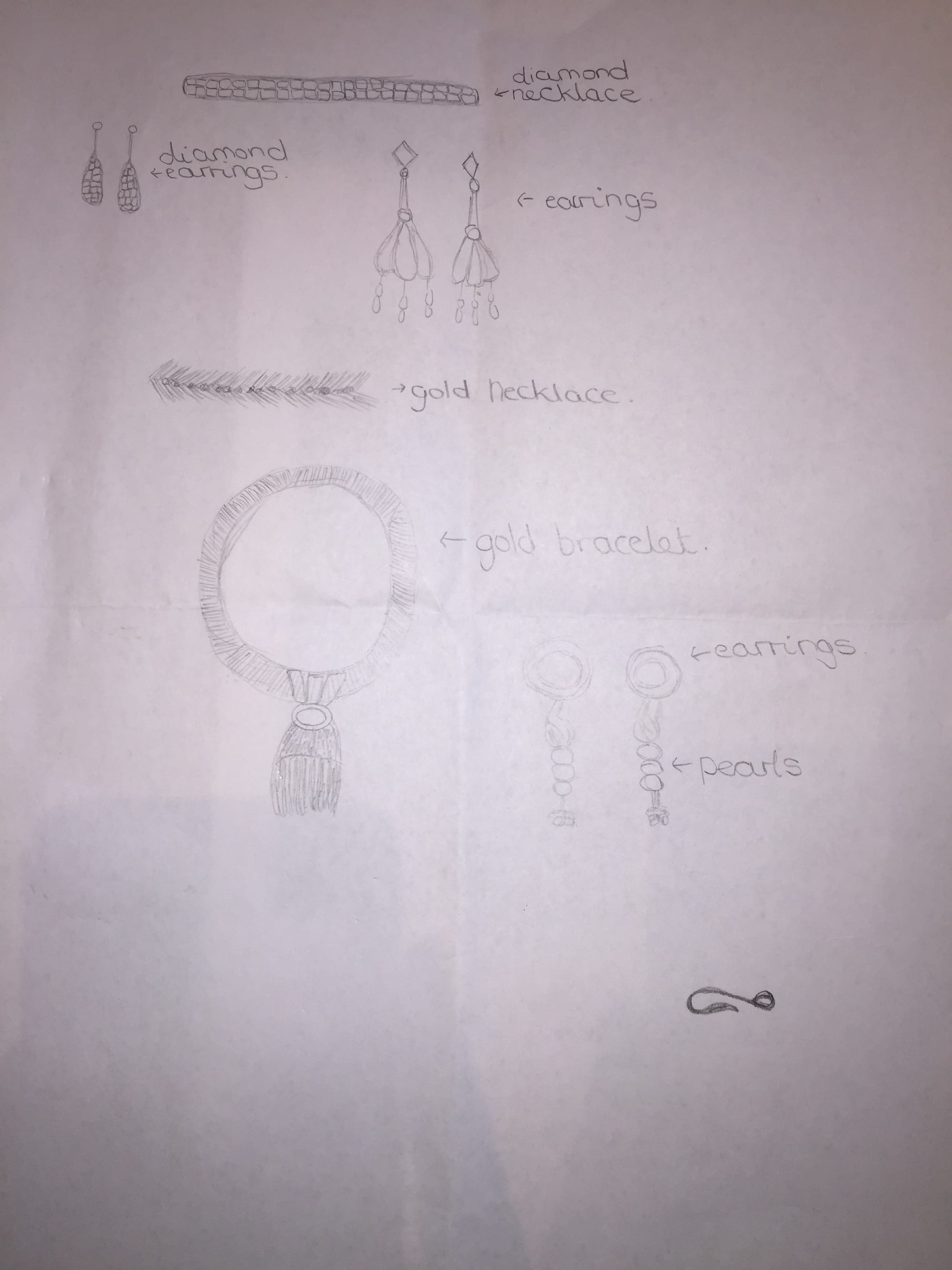
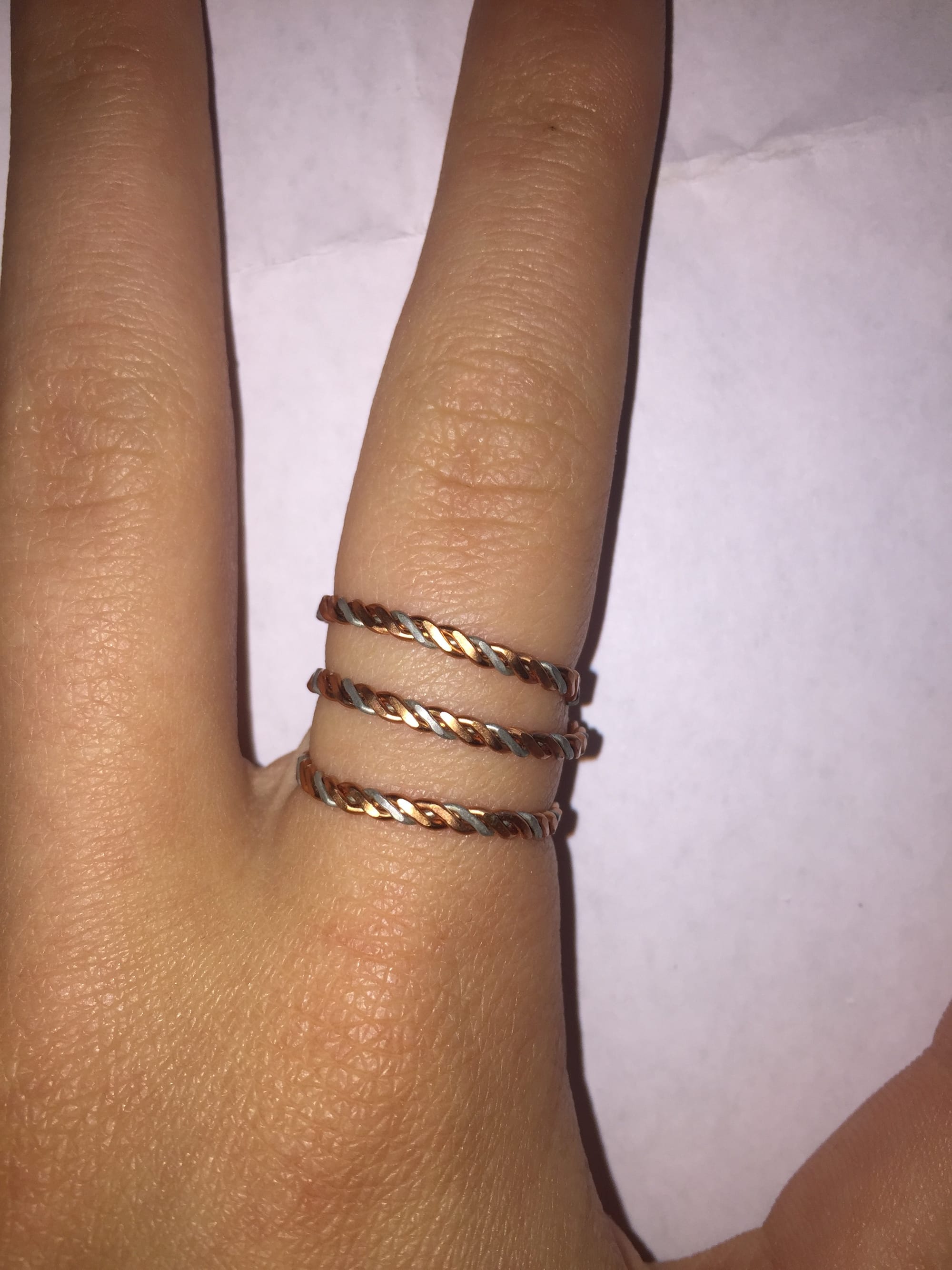
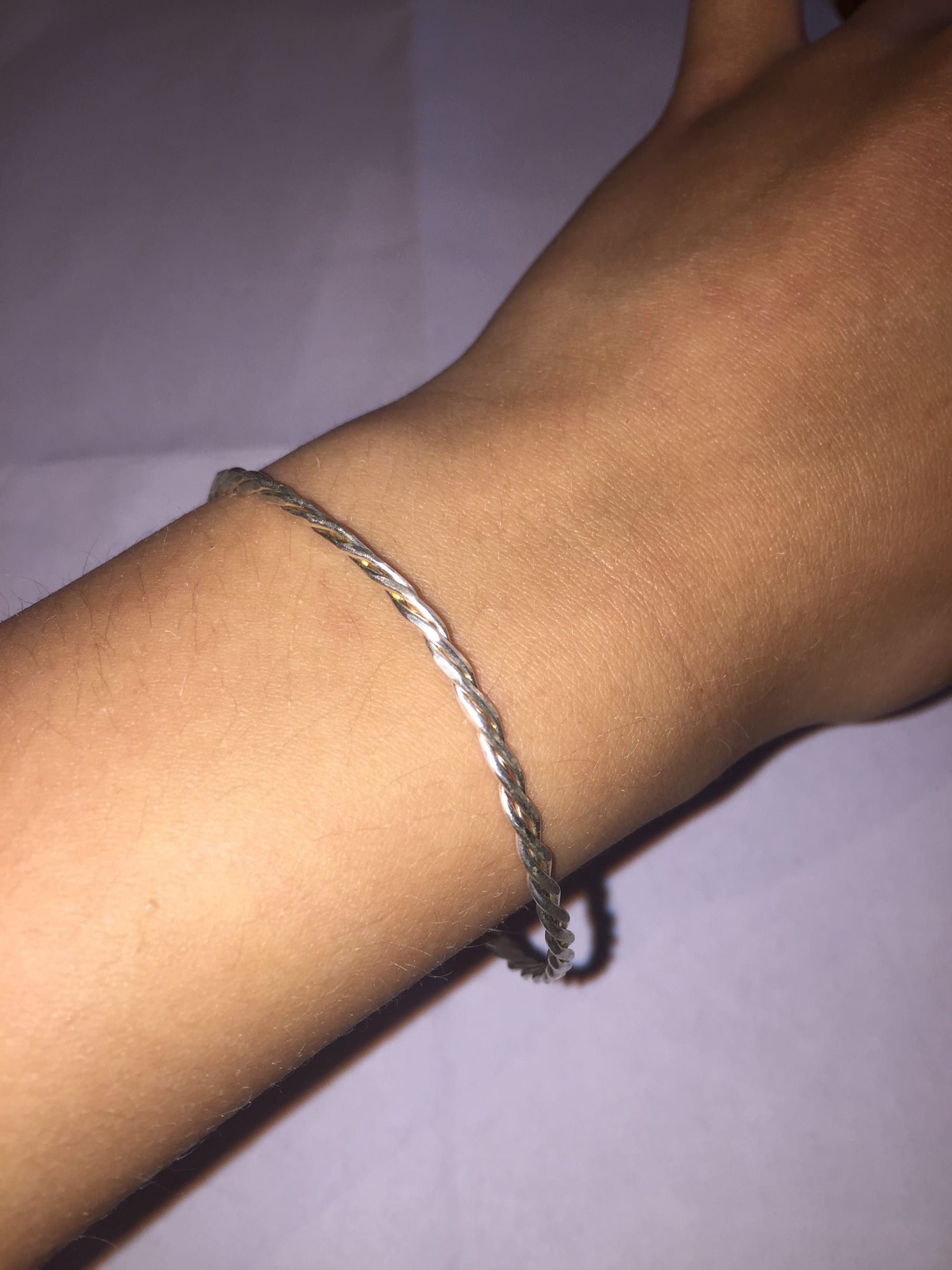
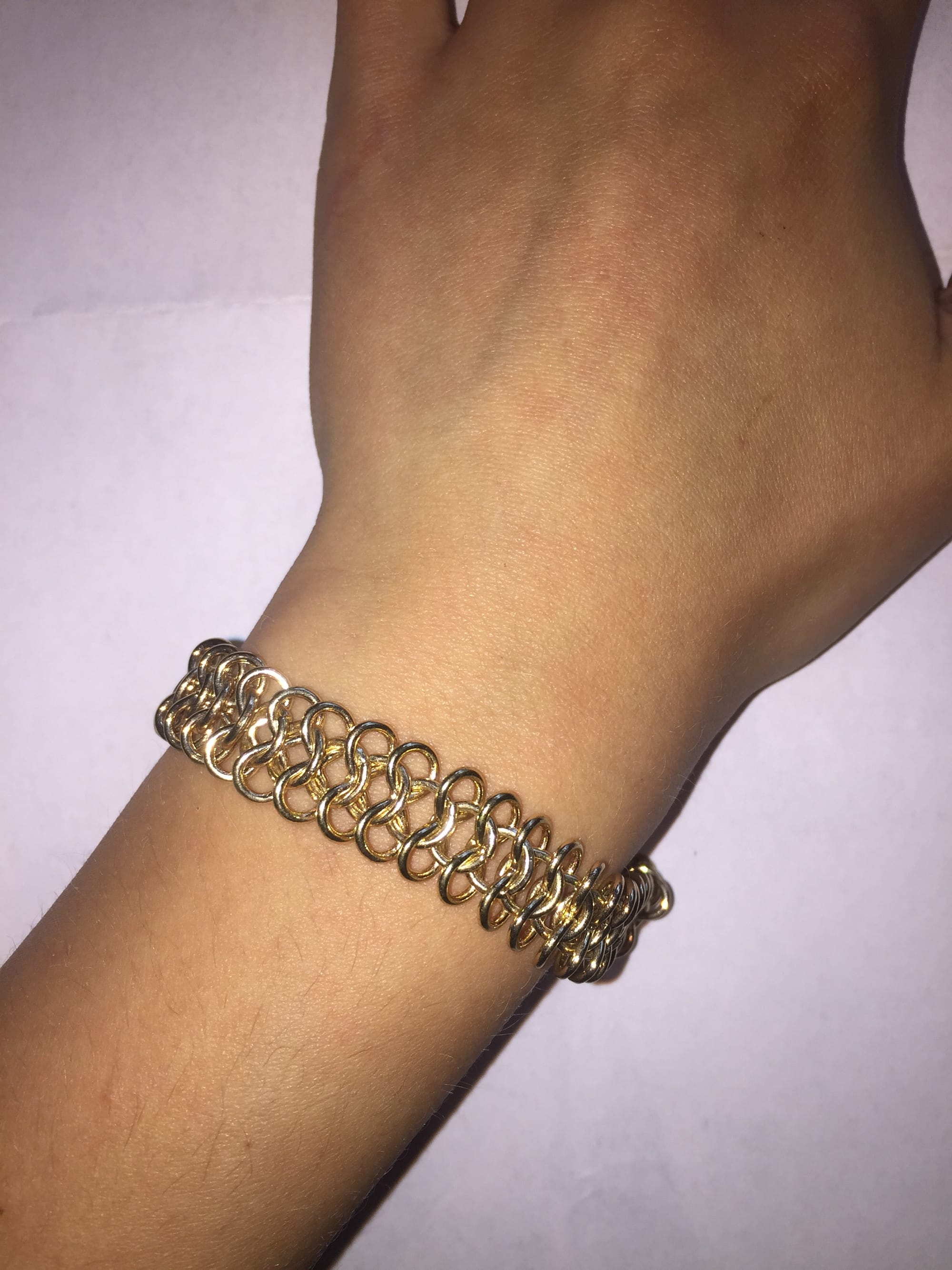
Jewellery Workshop Review:
I attended a workshop on Saturday the 7th of October 2017 at the V&A Museum to learn a bit more about the jewellery making process and make some jewellery.
I arrived at the workshop and immediately was welcomed by the jeweller herself and she invited me to look at all the equipment, materials and examples she had made before. All the equipment had nice, big labels next to them to help us learn the names of important equipment used in jewellery making, such as chain-nose pliers and the milling machine.
After this, the jeweller showed us a presentation so we could understand the designing process a bit more and what she does on her day-to-day life working as a jeweller. Then she showed us how to use every piece of equipment which was very helpful for when we got to our making time.
After this we had a couple of hours to investigate and experiment all the equipment and I found out that I really liked using the milling machine and a pin vise in my creations.
In the end I created three rings, a couple of bracelets and a necklace.
The art forms involved were designing and making.
I have not done anything much like this so it was nice to do something different for a change. I have done workshops at the V&A before but nothing quite like this with a lot of equipment and freedom to choose what to do and using what and when.
However some similarities to this workshop to some I have done before in general and at the V&A is that it was laid out in the same format. For example, in other workshops I have done, we also got a demonstration on how to use everything at the beginning.
However the fact that we got such a lot of freedom with using all the equipment was a very good surprise.
It was a very good course to go to as the atmosphere was very friendly and the tutor was so friendly and welcoming as well. I really liked how she brought some of the equipment from her own studio to give us a full proper experience on jewellery making.
There was not much I would change because it was pretty satisfactory but if I had to change something it would probably be the fact that we did not get a chance to visit an exhibition at the museum as the V&A usually organises for people doing their workshops to find inspiration and the chance to view and draw some of the art and objects found in their exhibitions. This is usually done after the introduction to the course and before the designing process and creativity starts.
I learnt a lot from this course such as all names of the four main type of pliers and their uses, such as bent-nose pliers, chain-nose pliers, crimping pliers and flat-nose pliers. I also learnt how to use the milling machine along with other different bits of equipment.
I learnt how to hammer down a piece of wire or copper using a mould to create a circular shape to make a ring or a bracelet.
I took away a lot from this course as well as connections to the jeweller, and the basis I need to know on making jewellery. I also took away a lot of jewellery that I made myself and that I was very proud of making, which I will be definitely be using especially the rings as I took a particular liking to them.
Overall, I thought this course was so well done and has been one of my favourite courses I have done to date. I also plan on attending this course again next season to make even more jewellery.
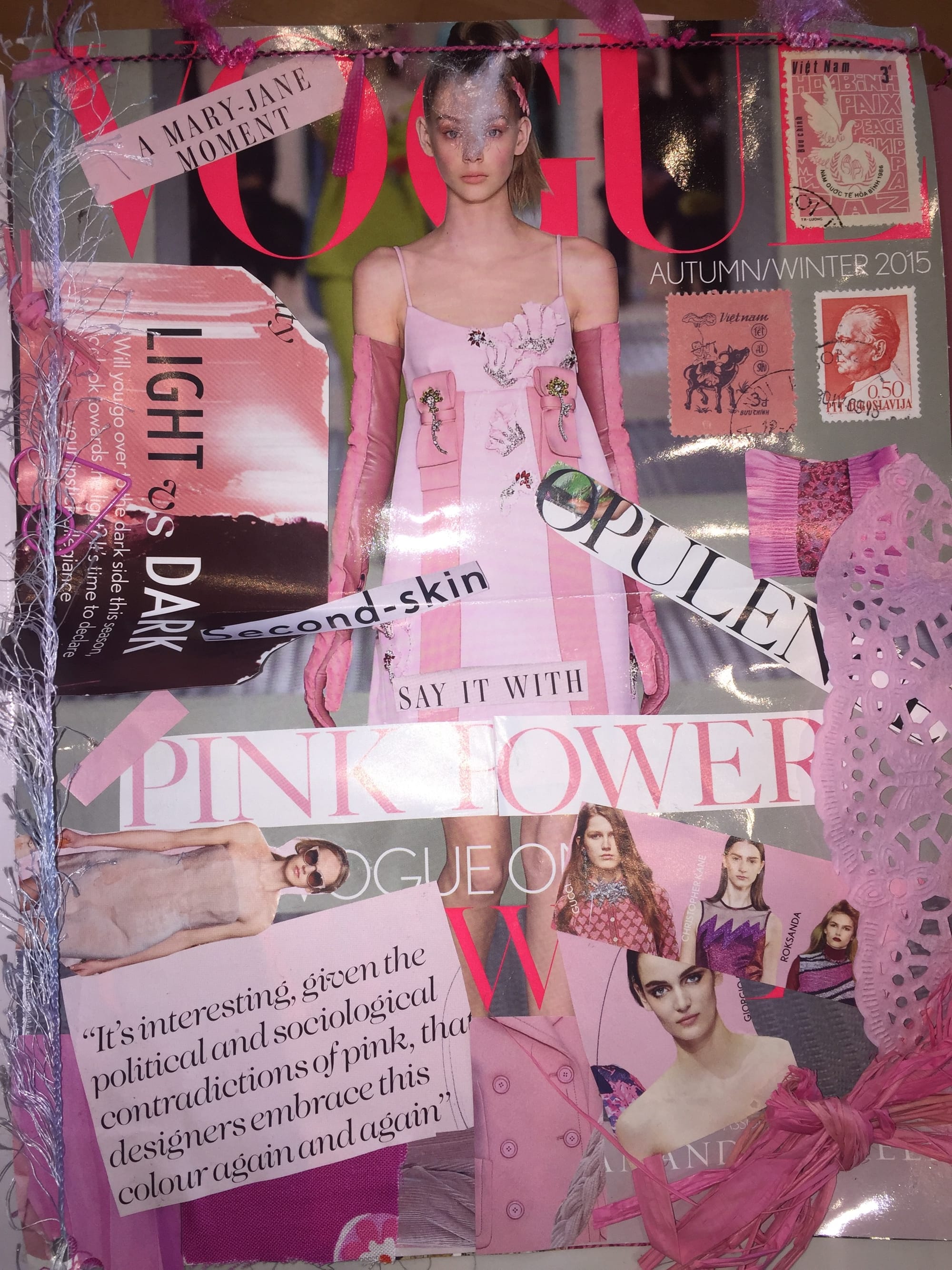
Sketchbook Workshop Review:
On Thursday the 26th of October 2017, I attended another course located at the Fashion & Textiles Museum. This workshop aimed to help the students participating to channel their creativity into developing their sketchbook work.
When I arrived at the creative studios in the museum for the course, it just so happened that the tutor had already taught me before at a different museum at the V&A. We recognised each other from the fabric designing course that had happened a couple weeks prior to this event.
After some talking, we decided to crack on with the task ahead of me and the rest of the students at the event which was to create our own sketchbooks with filled in pages. We got an immense ton of support from our tutor which I was really grateful for and a lot of resources available to us which I can admit all of us had a good rummage through. As the tutor had plenty of experience at her job related to design, she admitted to collecting a lot of these resources from 50 years back so there was for example stamps dating back from the time the world was at war for example which was truly very interesting for me.
We had two hours to work on our creations, which looking back is not a lot of time compared to the courses I do at the V&A which take up the whole of the day. However much to our disbelief we all managed to finish our work off and we managed to create a final piece in the end so our hastiness was not done in vain.
I used some old Christmas cards that I found in the scrap drawer of card for my first try at making a sketchbook and some Christmas themed sequins that I also happened to find around the resources table and put that all together to create the first sketchbook. Also using some of the old unused stamps, I completed the look.
However for my second and last sketchbook idea, I had a pink theme and I looked into several fashion magazines such as Vogue and Harper’s Bazaar and teared out some pages from the magazines which in fact went my pink theme. I also added some other small things I had found at the resources table which linked to my theme.
The art forms involved were mainly just designing.
I have done several courses a bit like this such as the one I had done the day before this course, where the course was aimed at drawing like a fashion designer, they were both similar in the sense that they were both quite compact courses in the sense that we got so much done in such a small time frame.
The fact that we were given so many resources to use was really unexpected and really helpful at the course. This was what made the course very enjoyable because we knew that we had an unlimited amount of supplies.
I would have preferred if the course was longer again just like the one I had done the day before. I find that usually the courses at the Fashion & Textiles Museum are usually quite short and compact and I would have preferred them to have been longer sessions.
I learnt a lot from this course about how to be more quick thinking with my ideas and how to improvise with the resources available to me.
Overall I thought this course, although compact was quite relaxing and very fun. I took away that it does not matter what resources are available, just like as in this course as we had quite a random range of resources and in the end it all came together and tied up neatly.
Reflection on Research:
All this research made on the fashion and textiles industry has influenced me vastly as a practitioner. Firstly, the research on different arts organisations such as the British Fashion Council, definitely gave me more of an insight on how different organisations operate in the fashion industry and what they do, alongside most importantly, who they are and the purpose of them. Then the research on different universities and courses definitely gave me more of an insight on what further education options and possibilities there are available, which gives me more of an idea of what course and universities I would like to visit and explore and find out more on when thinking of my further education choices, which is something I have to figure out and think about very soon. I also felt incredibly immersed in the amount of workshops, exhibitions and events I attended and definitely was very inspired through all these experiences and they specifically inspired me in particular to keep working hard on my textiles skills and I learnt so many different and new techniques and skills, alongside with new knowledge of the industry and how it all works.
